


On warehouse floors, the pattern is hard to miss: labor is tight, space is precious, and customers want everything faster. That’s exactly where Automated Storage and Retrieval Systems (ASRS) earn their keep. Drawing on what we’ve seen across e-commerce, cold chain, and manufacturing sites, I’ll walk through the core challenges, the features that make modern ASRS tick—robotics, precision handling, flexible configurations, deep software integration, and safety—and show how Zikoo Smart Technology’s R-bot, H-bot, U-bot, and PTP software come together to boost density, throughput, accuracy, and scalability in real operations.
Understanding the Core Challenges in Modern Warehousing Operations
The contemporary warehouse environment presents numerous obstacles for businesses striving for efficiency and profitability. These challenges often stem from a combination of economic pressures, evolving consumer expectations, and technological advancements. Addressing these issues effectively is crucial for maintaining a competitive edge.
1. Addressing labor shortages and rising operational costs
Labor shortages remain a stubborn reality in logistics and warehousing. With fewer hands available and wages climbing, operating costs rise quickly. Manual workflows that once seemed manageable now strain budgets, especially when you factor in training, benefits, and large-team management overhead. To keep service levels intact, companies need to trim dependency on manual labor and automate the repeatable, strenuous work so people can focus on higher-value tasks—without sacrificing productivity.
2. Overcoming space constraints and maximizing storage density
As real estate costs climb, squeezing more from existing footprints becomes nonnegotiable. Traditional layouts with wide aisles and low stacking heights leave vertical capacity on the table and can force premature expansions. Unlocking higher storage density—particularly by utilizing vertical space—lets businesses scale inventory within the same walls and defer costly builds or leases. The aim is clear: store more, in the same or smaller footprint, with safe, reliable access.
3. Mitigating human error and improving inventory accuracy
Any workflow with heavy human-touch steps invites error—mis-picks, mislabels, and miscounts that ripple into returns, reshipments, and unhappy customers. The resulting inaccuracies distort inventory signals, causing stockouts or overstocking that tie up working capital. Tightening accuracy isn’t just about clean data; it’s about stable, predictable operations that protect sales and strengthen customer trust.
4. Meeting demands for faster throughput and order fulfillment
E-commerce growth reset the clock on fulfillment speed. Manual processes struggle with today’s volumes and variability, creating bottlenecks at picking, sorting, and dispatch. To stay relevant, operations need systems that move high order volumes quickly and consistently, with accuracy baked in. Throughput—and the ability to maintain it during peaks—has become a real competitive lever.
If you’re interested, check 《E-commerce Warehousing Revolution: Fast, Flexible and Smart》.
Essential Features That Define Advanced Automated Storage and Retrieval Systems
Automated Storage and Retrieval Systems (ASRS) are sophisticated solutions designed to overcome the challenges prevalent in modern warehousing. These systems integrate advanced technologies to automate various storage and retrieval tasks, offering a comprehensive approach to warehouse optimization. We see specific features as fundamental to their effectiveness.
1. Exploring the role of robotics and intelligent automation in ASRS
In modern ASRS, robotics take on the heavy lifting—literally and figuratively—while intelligent automation coordinates the flow. Robots run repetitive, strenuous moves around the clock, and the control logic orchestrates them for continuous, high-speed operation. The payoff is consistent throughput, fewer errors, and the ability to adapt on the fly as order patterns shift. People are freed for exceptions and higher-skill work where they add the most value.
2. Detailing the precision and speed of automated handling mechanisms
Purpose-built conveyors, cranes, and robotic arms give ASRS their speed and repeatable accuracy. They place and retrieve with millimeter-level consistency to minimize damage and ensure each SKU lands exactly where it belongs. That predictability accelerates inbound and outbound flows, trims lead times, and outperforms manual rates by maintaining pace without fatigue or variance.
3. Examining the flexibility and adaptability of ASRS configurations
One size never fits all, so modern ASRS are modular and highly configurable—pallets, cartons, or eaches—across diverse layouts. As product lines or order profiles evolve, systems expand or reconfigure without wholesale redesigns. This keeps the investment future-ready, whether it’s a greenfield deployment or a retrofit woven into an existing building and process stack.
4. Understanding the integration capabilities with existing warehouse management systems
The value multiplies when ASRS connects seamlessly with WMS and ERP. Unified data flow delivers real-time visibility into inventory, tasks, and system health, while eliminating silos. This connectivity lets operators optimize workflows and make decisions quickly on accurate data—synchronizing upstream and downstream processes for smoother end-to-end execution.
5. Highlighting the safety protocols and operational reliability of ASRS
Safety and uptime are nonnegotiable. ASRS lean on sensors, cameras, and advanced controls to prevent collisions and keep people and products safe. Systems are stress-tested for reliability, with redundancy and predictive maintenance built in to cut unplanned downtime. That combination protects assets, prevents incidents, and keeps operations humming.
For further insights, consider reading 《Understanding ASRS Systems for Modern Warehouse Efficiency》.
How Zikoo Smart Technology’s Solutions Elevate ASRS Performance
At Zikoo Smart Technology, we develop cutting-edge ASRS solutions that push the boundaries of warehouse efficiency and automation. Our product lineup features advanced robotics and intelligent software, designed to meet the complex demands of modern logistics. We focus on delivering systems that provide tangible improvements in storage density, throughput, and operational flexibility.
1. Showcasing the R-bot Four-way Shuttle’s dense storage capabilities
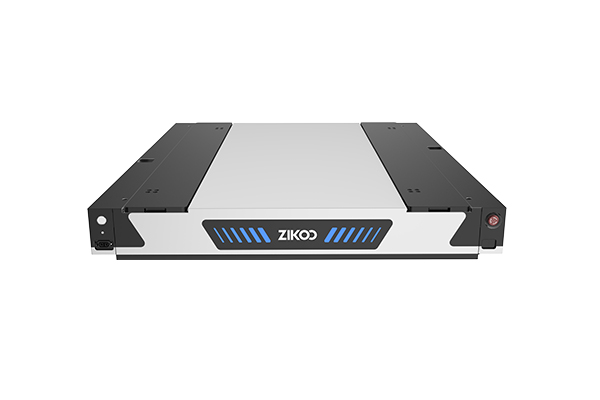
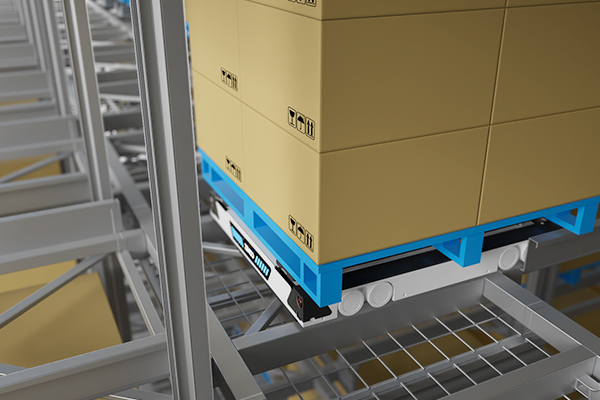
The R-bot Four-Way Pallet Shuttle is a core handling solution specifically engineered for dense storage scenarios. Its slim body, measuring only 125 mm in height, allows for maximum utilization of vertical space. It handles loads up to 1.5 tons with flexible four-way movement. This intelligent robot facilitates autonomous handling and multi-shuttle collaborative operation, creating highly efficient storage systems. When integrated with our H-bot vertical bidirectional shuttle, it forms a six-way shuttle system, further enhancing its capabilities.
| Model Options | Weight (kg) | Rated Load (kg) | Body Dimensions (L×W×H mm) | Pallet Sizes (mm) | Empty Speed (m/s) | Loaded Speed (m/s) | Battery Life (hours) |
|---|---|---|---|---|---|---|---|
| R1200B (Standard) | 270 | 1200 | 1000 × 972 × 125 | 1200 × 800–1000 | 1.6 | 1.2 | 8 |
| R1200A (American) | 265 | 1200 | 1192 × 840 × 125 | 1016 × 1219 | 1.6 | 1.2 | 8 |
| R1500J (Japanese) | 270 | 1500 | 1192 × 900 × 125 | 1100 × 1100 | 1.6 | 1.2 | 8 |
| R1500B (Heavy-duty) | 275 | 1500 | 1192 × 972 × 125 | 1200 | 1.6 | 1.2 | 8 |
| R2000B (Heavy-duty Large Pallet) | 400 | 2000 | 1250 × 1300 × 150 | 1400 | 1.35 | 1.0 | 7 |
The R-bot is ideal for dense storage in e-commerce, cold chain, and manufacturing warehouses. We also offer specialized solutions for cold chain environments, featuring -25℃ low-temperature batteries and automatic charging. For new energy applications, our vehicles avoid metal contaminants and use stainless steel frames with blackening treatment.
2. Demonstrating the H-bot Vertical Bidirectional Shuttle’s vertical transportation efficiency
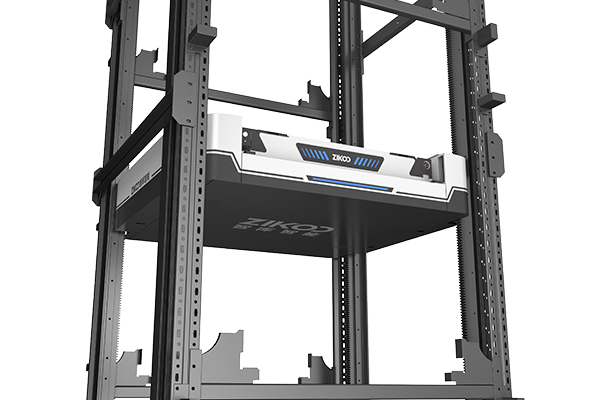
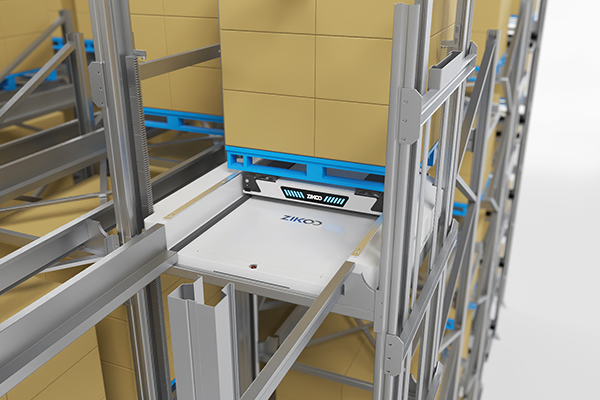
The H-bot Vertical Two-Way Shuttle acts as the vertical transportation hub in our intelligent warehousing systems. It occupies only a single storage location, maximizing floor space. This shuttle collaborates with the R-bot Four-way Shuttle to create a three-dimensional warehousing network, enabling movement in all six spatial directions. This integration significantly improves overall system throughput and efficiency. The H-bot is perfect for high-rack stereoscopic warehouses and urban warehousing centers.
| Model Options | Body Weight (kg) | Body Dimensions (L×W×H mm) | Rated Load (kg) | Pallet Sizes (mm) | Empty Speed (m/s) | Loaded Speed (m/s) | Acceleration Empty (m/s²) | Acceleration Loaded (m/s²) |
|---|---|---|---|---|---|---|---|---|
| H1800B (Standard) | 345 | 1300 × 1464 × 288 | 1800 | 1200 × 800–1200 | 1 | 0.5 | 1 | 0.3 |
| H1800A (American) | 325 | 1300 × 1332 × 288 | 1800 | 1016 × 1219 | 1 | 0.5 | 1 | 0.3 |
| H1800J (Japanese) | 335 | 1300 × 1392 × 288 | 1800 | 1100 × 1100 | 1 | 0.5 | 1 | 0.3 |
| Heavy-duty Large Pallet (Custom) | Customized | Customized | 1800 | Customized | Customized | Customized | Customized | Customized |
All H-bot models operate in temperatures from -25℃ to 45℃, ensuring reliability in diverse environments. They achieve a positioning accuracy of ±1 mm.
3. Explaining the U-bot Omnidirectional Stacking Robot’s narrow aisle maneuverability
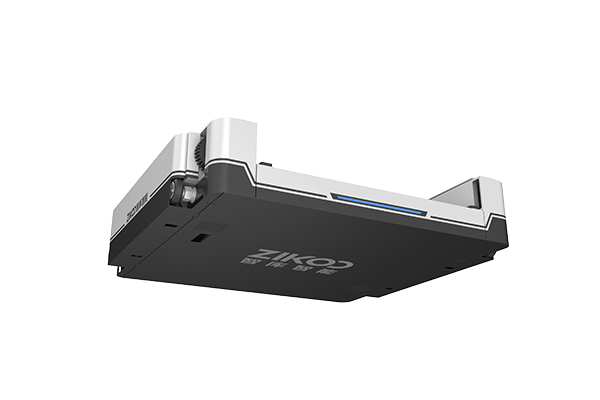
The U-bot Omnidirectional Stacker Robot is an intelligent robot designed for narrow aisle storage, requiring a minimum aisle width of only 2100 mm. Its U-shaped body and 1370 mm turning radius provide exceptional maneuverability in tight spaces. The U-bot lifts up to 1000 kg to heights of 8 meters, operating collaboratively with other automated equipment. This robot is ideal for high-density storage in e-commerce, pharmaceutical, and manufacturing warehouses. It also supports intelligent transformation projects for existing warehouses.
| Model | Dimensions (mm) | Rated Load (kg) | Self-Weight (kg) | Lifting Height (mm) | Min. Aisle Width (mm) | Driving Positioning Accuracy (mm) | Battery Configuration | Continuous Operation (hours) |
|---|---|---|---|---|---|---|---|---|
| U1045 | 2198 × 1784 × 2100 | 1000 | 3000 | 4500 | 2100 | ±10 | 48 V / 210 Ah LiFePO4 | 6–8 |
| U1060 | 2198 × 1820 × 2685 | 1000 | 3300 | 6000 | 2140 | ±10 | 48 V / 210 Ah LiFePO4 | 6–8 |
| U1080 | 2198 × 1820 × 3465 | 1000 | 3500 | 8000 | 2140 | ±10 | 48 V / 210 Ah LiFePO4 | 6–8 |
Our narrow aisle storage solution incorporates dual laser SLAM hybrid navigation for safe operation and a 3D depth camera for precise pallet positioning.
4. Illustrating the U-bot + AMR Narrow Aisle Picking System’s collaborative picking efficiency
The U-bot + AMR Narrow Aisle Picking System offers a highly efficient solution for hybrid scenarios involving both palletization and split-case picking. This innovative architecture uses U-bots for high-level storage access and AMRs for low-level handling and picking. This vertical functional complementarity enhances scenario adaptability, enabling full-category outbound picking through multi-functional workstations. The system achieves picking efficiency of ≥300 pieces per hour and inbound/outbound efficiency of ≥80 pallets per hour. It also improves storage density by over 30% and supports up to 10,000 SKUs. This system is ideal for multi-SKU e-commerce warehouses, manufacturing, and pharmaceutical industries.
For more information, see 《Flexible Smart Warehousing: Tackling Multi-SKU Challenges in the Fast Fashion Era》.
5. Presenting Zikoo’s PTP Smart Warehouse Software for comprehensive control
Zikoo’s PTP Smart Warehouse Software (WMS/WES/WCS/RCS) provides comprehensive control over all automated warehouse operations. This integrated software platform optimizes inventory management, streamlines order fulfillment, and coordinates robotic movements. It offers real-time data and analytics, enabling informed decision-making and continuous process improvement. The PTP software ensures seamless communication between all hardware components, maximizing efficiency and minimizing errors. It acts as the central nervous system for the entire intelligent warehousing system.
The Tangible Benefits of Implementing Automated Storage and Retrieval Systems
Implementing ASRS brings numerous tangible benefits that significantly impact a warehouse’s bottom line and operational capabilities. These advantages extend beyond simple automation, transforming the entire logistics ecosystem. We consistently observe these improvements in our clients’ operations.
1. Achieving significant reductions in operational expenses and labor requirements
By shifting repetitive tasks to automation, ASRS ease labor constraints and reduce wage exposure. Energy-efficient operation further trims utilities. Combined, these effects lower operating costs without compromising service, improving financial resilience.
2. Maximizing warehouse storage capacity and optimizing floor space utilization
Dense, vertical storage configurations unlock substantial capacity gains inside the same four walls. That additional headroom delays or removes the need for expansion. Solutions like the R-bot Four-way Shuttle make high-density layouts practical and safe, driving stronger returns on real estate.
3. Enhancing inventory accuracy and streamlining order fulfillment processes
Real-time tracking and automated placement mean each item is exactly where the system says it is. Near-perfect accuracy reduces rework and speeds picking, so orders move from request to ship faster—with fewer mistakes and happier customers on the other end.
4. Improving workplace safety and reducing product damage
Robots take on high-rack, cold, and heavy-load environments, reducing exposure for people and lowering the risk of incidents. Precise, repeatable handling also cuts product damage during putaway and retrieval, protecting both margins and brand.
5. Providing scalability and adaptability for future business growth
Modular ASRS designs scale with demand—add capacity, lift throughput, or reconfigure to fit new product mixes. That flexibility safeguards the investment, keeping systems aligned with business growth over time.
To learn more, read 《The Future of Automated Warehousing: From ASRS Warehouse to Fully Intelligent Storage》.
Transform Your Warehouse Operations with Zikoo Smart Technology
Are you ready to revolutionize your warehouse operations with advanced Automated Storage and Retrieval Systems? Zikoo Smart Technology offers intelligent, flexible, and efficient solutions tailored to your specific needs. Contact us today to discuss how our R-bot Four-way Shuttles, H-bot Vertical Bidirectional Shuttles, U-bot Omnidirectional Stacking Robots, and PTP Smart Warehouse Software can unlock new levels of efficiency and profitability for your business.
Email: info@zikoo-int.com
Phone: (+86)-19941778955
About the Author
John Smith, Senior Engineer, helps warehouses and fulfillment centers maximize efficiency, reduce costs, and scale operations through ASRS, 4-Way Shuttle systems, and intelligent robotic picking solutions.
FAQs
1. What is an Automated Storage and Retrieval System (ASRS)?
An ASRS is a computer-controlled system that automatically places and retrieves loads from storage locations in a warehouse. It typically consists of storage racks, retrieval machines (like shuttles or cranes), and a control system. ASRS minimizes human intervention, improves efficiency, and maximizes storage density.
2. How do ASRS systems improve warehouse efficiency?
ASRS systems improve efficiency by automating storage and retrieval, enabling faster throughput, lower labor costs, and higher inventory accuracy. They make better use of space, operate 24/7, and reduce error rates—together delivering a more streamlined, productive operation.
3. What types of products are best suited for ASRS?
ASRS suit a broad range of products, especially where high-density storage, rapid access, or tight inventory control is critical. Typical fits include e-commerce, cold chain logistics, pharmaceuticals, and manufacturing—environments that benefit from consistent handling and precise tracking.
4. Can ASRS integrate with existing warehouse management software?
Yes. Modern ASRS are built for seamless integration with existing Warehouse Management Systems (WMS) and Enterprise Resource Planning (ERP) software. This ensures real-time data exchange, unified control, and optimized workflows across the supply chain.
5. What are the typical ROI considerations for implementing an ASRS?
ROI commonly comes from reduced labor costs, increased storage capacity, improved accuracy, and faster fulfillment. Added benefits include better safety, lower product damage, and scalable growth—together delivering substantial long-term savings and competitive advantage.


