


When procurement teams first receive a warehouse automation quote, the total often lands well above initial expectations. That gap between anticipated and actual cost isn’t because suppliers inflate their pricing. It’s because warehouse automation costs are shaped by a chain of technical decisions that start long before the first shuttle arrives on site. System architecture, software integration depth, facility readiness, and throughput requirements all cascade into the final number. I’ve spent over a decade engineering these systems, and the single most expensive line item in most projects isn’t the hardware. It’s the integration work required to make every component function as one reliable system under real operating conditions.
What Makes Up the Hardware Cost of a Warehouse Automation System
Hardware is where most buyers focus their attention, and it’s the easiest cost to quantify. But the range is wide, and it is driven by choices that extend well beyond the shuttle count.
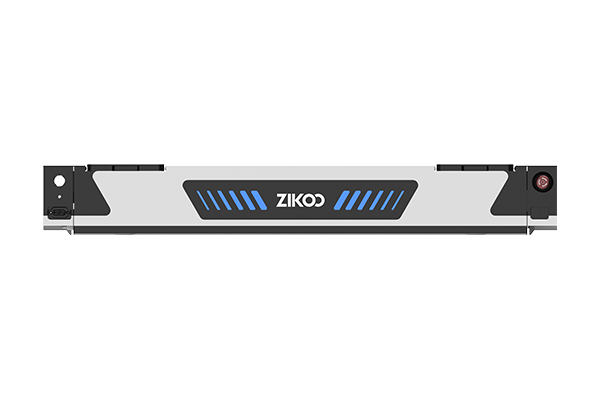
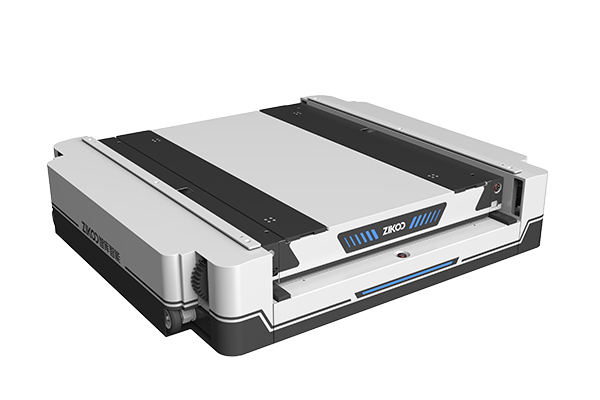
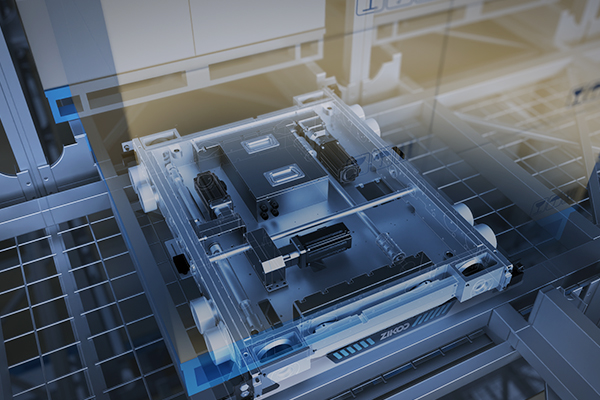
The core hardware bill in a pallet automation system typically includes the storage and retrieval machines, the racking structure itself, conveyor or transfer car interfaces at pick stations, and the control hardware that ties everything together. Shuttle pricing varies by load capacity, travel speed, and environmental rating. A standard 1,200 kg four-way shuttle for ambient warehouse conditions has a different cost structure than a 1,500 kg heavy-duty model rated for -25°C cold storage operation. The lithium battery chemistry, PCBA coating, and material specifications that make cold storage operation possible all add to the unit cost.
Racking is another variable that catches procurement teams off guard. Automated systems require tighter manufacturing tolerances on racking than manual warehouses. A four-way shuttle travels on guide rails integrated into the racking structure. If the racking isn’t installed to the specified straightness and leveling tolerances, the shuttle’s positioning accuracy degrades, and with it, system reliability. This isn’t a place to save money by sourcing cheaper racking. The cost of rectifying racking that doesn’t meet spec after installation far exceeds the upfront savings.
What I’ve observed across projects in multiple industries is that hardware costs scale almost linearly with throughput requirements, but in steps rather than a smooth curve. Adding a second elevator to the system might increase hardware cost by 15%, but it could double throughput. The engineering judgement is knowing where those step changes sit for your specific pallet profile and order pattern.
Here is how different shuttle specifications affect the hardware cost baseline:
| Specification | Standard Ambient | Cold Storage (-25°C) | Heavy-Duty (2,000 kg) |
|---|---|---|---|
| Shuttle body thickness | 125 mm | 125 mm | 150 mm |
| Rated load | 1,200 kg | 1,200-1,500 kg | 2,000 kg |
| Battery type | Standard lithium | Low-temp lithium | High-capacity lithium |
| Continuous operation | 8 hours | 6-8 hours | 7 hours |
| Relative unit cost | Baseline | +30-50% | +60-80% |
These multipliers are approximate because every project’s configuration — aisle count, level count, number of shuttles per level — changes the total. A system with four shuttles on each of six levels has a different cost per pallet position than one with two shuttles on four levels, even using identical shuttle models.
How Do Software and System Integration Drive Up Automation Costs
Software is the cost category that generates the most confusion during procurement. A warehouse automation system isn’t a collection of machines that happen to be in the same building. It’s a distributed control network where every shuttle movement, elevator call, and conveyor transfer is orchestrated in real time by a software stack that spans multiple layers.
At the bottom sits the equipment control layer — the RCS (Robot Control System) that sends motion commands to individual shuttles and elevators, manages battery charging schedules, and handles fault recovery. Above that, the WCS (Warehouse Control System) coordinates the flow of pallets between zones, manages pick station sequencing, and optimizes equipment utilization. At the top, the WMS (Warehouse Management System) handles inventory tracking, order processing, and the business logic that determines which pallet gets retrieved for which order.
Each of these layers requires configuration and, in most projects, a significant amount of customization. A WMS that works perfectly for a third-party logistics provider handling multiple clients with different billing rules won’t work out of the box for a manufacturer running production-line replenishment. The data structures, workflow rules, and interface requirements are genuinely different. I’ve seen projects where the software customization effort exceeded the hardware installation timeline by two months. That timeline translates directly to cost — both in engineering hours and in delayed go-live.
Integration with existing enterprise systems adds another layer. If your ERP system needs real-time inventory synchronization with the WMS, that interface has to be specified, developed, tested, and validated across every edge case. A poorly specified interface that drops inventory records during peak throughput isn’t a software bug. It’s an operational failure that stops the warehouse.
If your warehouse automation project involves multiple temperature zones or integration with an existing ERP that handles complex order rules, the software scope can easily exceed hardware costs. Reach out at info@zikoo-int.com with your high-level requirements and we can help you map what the software footprint would look like before you go to tender.
What Facility Modifications Does Warehouse Automation Require
The building itself is often the largest variable that doesn’t appear on any equipment quote. Automated storage systems impose requirements on floor flatness, column spacing, ceiling height, and power availability that manual warehouses simply don’t have.
Floor flatness is the most common issue we encounter during site surveys. A four-way shuttle traveling at 1.6 meters per second on rails integrated into racking needs a floor that meets specific flatness and levelness tolerances. If the existing slab doesn’t meet those tolerances, you’re looking at grinding, leveling compounds, or in severe cases, slab replacement. The cost of floor remediation alone can run into six figures for a mid-sized facility, and it has to be completed before racking installation can begin.
Power infrastructure is another pre-requisite that gets underestimated. An automated warehouse with multiple shuttles, elevators, conveyors, and charging stations needs clean, reliable power with appropriate redundancy. If your facility’s electrical service is already near capacity, upgrading the transformer and distribution panels becomes part of the project cost. For cold storage applications, the power demand is higher still — the refrigeration load runs alongside the automation load, and both need backup.
Network infrastructure matters more than most buyers expect. A wireless network that drops packets during peak operation doesn’t slow the system down gradually. It causes safety stops, lost task assignments, and recovery sequences that cascade through every connected device. Industrial-grade access points with redundant coverage aren’t optional for a production automation system. They’re part of the core infrastructure budget.
What Hidden Costs Surprise First-Time Automation Buyers
Every experienced project manager in this industry has a story about the cost item that blindsided an otherwise well-planned budget. These aren’t truly hidden. They’re just absent from most early-stage ROI models because no one thought to model them.
Spare parts inventory is the first one. A shuttle fleet of 20 units operating 16 hours a day will experience component wear. You need spare drive wheels, batteries, sensors, and communication modules on site from day one. The recommended spares package for a mid-sized system typically runs 3-5% of the hardware cost, and it’s a working capital outlay that sits on your balance sheet as inventory.
Training is the second. An automated warehouse doesn’t eliminate labor. It changes the nature of the labor from manual material handling to technical system operation and first-line maintenance. Your team needs to understand not just how to operate the software interface, but how to diagnose common fault conditions, perform preventive maintenance, and execute safe recovery procedures. The training program for operators, maintenance technicians, and warehouse supervisors typically spans two to four weeks and should be factored into the project budget at the quoting stage, not discovered during commissioning.
Software license renewal is the third hidden line item that catches buyers after year one. Most WMS and WCS platforms carry an annual license fee based on the number of users, connected devices, or facility throughput tier. This isn’t a one-time cost buried in the initial quote. It’s a recurring operating expense that needs to be modeled into your five-year TCO (total cost of ownership) calculation. When evaluating supplier proposals, ask explicitly: what is the annual license cost for years two through five, and under what conditions does it increase?
On the maintenance side, I recommend budgeting 2-4% of the total system hardware cost annually for preventive and corrective maintenance after the warranty period. Systems operating in cold storage or high-dust environments trend toward the upper end of that range. The lithium batteries in shuttle systems have a finite cycle life. Depending on utilization intensity, you should model battery replacement at roughly the four-to-six year mark. That’s a capital refresh event worth planning for from the start.
How Do Supplier Choices Affect Total Warehouse Automation Costs
The supplier you choose doesn’t just set the equipment price. It determines the cost of integration, the quality of after-sales support, and the system’s long-term scalability. These downstream costs often outweigh the upfront price difference between quotes.
When evaluating suppliers, the most valuable reference isn’t the polished case study on the website. It’s the project that went through a difficult commissioning and came out the other side operational. Ask for a reference where something went wrong during deployment — a delayed equipment delivery, an unexpected site condition, an integration issue — and ask how the supplier handled it. The answer tells you what your own project support will look like when things don’t go to plan.
Customization capability is another cost factor tied directly to supplier choice. If your operation requires non-standard pallet sizes, specialized handling for hazardous materials, or integration with legacy material handling equipment, a supplier that only offers standard configurations will either decline the work or quote change orders that inflate the budget. A supplier with in-house engineering capability for mechanical, electrical, and software customization can absorb that complexity into the base project scope rather than treating it as an exception.
After-sales service geography matters for long-term cost. If the supplier’s nearest service engineer is a flight away, your response time for critical faults stretches from hours to days. For a production warehouse where downtime stops the entire operation, that difference has a direct cost. When comparing supplier quotes, look past the equipment line items and examine the service level agreement: guaranteed response time, spare parts availability commitment, and whether remote diagnostics are included as standard.
Understanding what drives warehouse automation costs is the first step toward building a realistic budget. The next step is getting a system design that matches your actual throughput requirements, facility constraints, and operational profile — not a generic configuration that leaves cost on the table or under-specs critical components.
If you’re planning a pallet automation project and want to understand what your specific facility and throughput requirements mean for total system cost, send your project parameters — warehouse dimensions, pallet types, throughput targets, and any special environmental conditions — to info@zikoo-int.com or call (+86)-19941778955. We’ll work through the cost drivers for your specific case and help you build a budget that reflects what you actually need, not what a standard proposal assumes.
Common Questions About Warehouse Automation Pricing
How long does it take to get a return on investment from a warehouse automation system
ROI timelines depend heavily on labor cost savings, throughput improvements, and space utilization gains in your specific operation. In markets with high labor costs and facilities where space is expensive, payback periods of three to five years are achievable for four-way shuttle systems. In lower-cost labor markets, the ROI calculation shifts toward throughput and accuracy gains rather than pure labor reduction. The key is modeling your specific numbers — building size, labor rates, order volumes, and growth projections — rather than relying on industry averages that may not reflect your conditions.
Why do quotes from different suppliers vary so much for the same system
It’s a fair question, and the short answer is that two quotes specifying the same headline system are almost never describing the same scope. One supplier might be quoting single-deep racking while another prices double-deep. One might include a full WMS while another only provides basic WCS functionality. One might budget for two weeks of on-site commissioning while another allows six. The only way to compare quotes accurately is to break each one down into its component scope items — hardware, software, installation, training, warranty, and post-warranty service — and compare line by line.
Does warehouse automation reduce labor costs enough to justify the investment
In most two- or three-shift operations with significant pallet movement, yes — but the labor savings alone rarely justify the full investment. A four-way shuttle system can reduce direct warehouse labor by 50-70% compared to forklift-based operations, depending on the throughput profile. The stronger case usually combines labor savings with improved inventory accuracy, which reduces stockouts and write-offs, increased storage density, which defers or eliminates the need for facility expansion, and faster order turnaround, which improves customer service levels and competitive positioning.
What guarantees should I expect from an automation supplier
A credible supplier commits to a system performance guarantee tied to specific, measurable metrics: throughput rate under defined conditions, system availability percentage, and positioning accuracy. These should be validated during a formal site acceptance test before final handover. The warranty period for hardware is typically 12-24 months, with software warranty covering defect correction for a similar period. Beyond the warranty, the service level agreement should specify guaranteed response times, spare parts availability, and whether remote monitoring and diagnostics are included. If a supplier is reluctant to put performance metrics in writing, that’s a conversation worth having before signing, not after commissioning.
What happens if the system goes down
Most well-designed automation systems include degraded-mode operation capabilities. If one shuttle fails, the WCS automatically reroutes tasks to the remaining shuttles in that aisle. If an elevator goes down, the system continues operating on the remaining elevators at reduced throughput. Complete shutdowns are rare in properly maintained installations. Ask your supplier to walk through their fault recovery procedures for common failure scenarios. If the answer is vague, their support probably is too. For operations where downtime is not acceptable, discuss redundant hardware configurations and hot-spare strategies during the design phase. Share your uptime requirements and we’ll evaluate what redundancy level makes sense for your operation — reach out at info@zikoo-int.com.
If you’re interested, check out these related articles:
Six-Way Shuttle Unlocks the Era of True 3D Intelligent Warehousing
Six-Way Shuttle Powers Dense Storage: Breaking Space Limitations
Six-Way Shuttle: Pioneering the Future of Smart Warehousing


