


Modern warehouses are being asked to move more, store more, and do it with less waste. Pairing advanced automation with thoughtfully engineered racking has shifted from a nice-to-have to a practical necessity for staying competitive. When these pieces operate as one, material flow tightens from receiving through dispatch. Here, we look at how integrated systems elevate storage and retrieval and keep operations running at peak efficiency.
The Synergy of Racking and Automation in Modern Warehouses
Modern warehouses face increasing pressure to maximize space, accelerate throughput, and reduce operational costs. The traditional separation of racking infrastructure and material handling equipment is no longer sufficient. We advocate for a holistic approach where warehouse racking and automation solutions are designed as a single, cohesive system. This integration is foundational for achieving the efficiency and adaptability required in today’s dynamic logistics environment.
Defining Integrated Warehouse Systems
An integrated warehouse system combines physical storage structures (racking) with advanced automated material handling technologies. This includes robotics, conveyors, and sophisticated software that orchestrates their movements. The goal is to create a unified flow of goods, minimizing manual intervention and optimizing every cubic foot of storage space. Such systems ensure that products are stored efficiently and retrieved precisely when needed.
Why Integration is Key for Operational Excellence
Integrating racking and automation offers significant benefits for operational excellence. It allows for higher storage density, faster order fulfillment, and reduced labor costs. It also enhances safety by minimizing human interaction with heavy machinery and improves inventory accuracy through real-time tracking. This strategic combination leads to a more agile and resilient supply chain.
Core Technologies Driving Automated Racking Solutions
At Zikoo Smart Technology Co., Ltd., we develop core technologies that drive automated racking solutions. Our pallet-to-person robotics, including the U-bot, R-bot, and H-bot, are designed for tight integration with diverse racking configurations. These robots, managed by our PTP Smart Warehouse Software, form the backbone of highly efficient automated storage and retrieval systems (ASRS). This integrated approach ensures optimal performance and adaptability across various industrial applications.
Pallet-to-Person Robotics and Their Role
Our pallet-to-person robotics are central to optimizing storage and retrieval within automated racking systems. The U-bot Omnidirectional Stacking Robot, for instance, excels in narrow aisle scenarios, navigating spaces as tight as 2100 mm. It lifts pallets up to 8 meters, bringing goods directly to operators. This significantly reduces travel time and enhances picking efficiency.
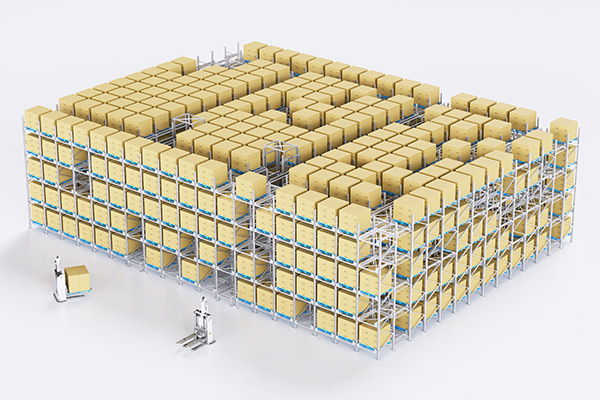
The R-bot Four-way Shuttle is a core handling solution for dense storage. It moves pallets weighing up to 1.5 tons in four directions. This flexibility allows for dynamic storage and retrieval within deep-lane racking. When combined with the H-bot Vertical Bidirectional Shuttle, it forms a six-way shuttle system.
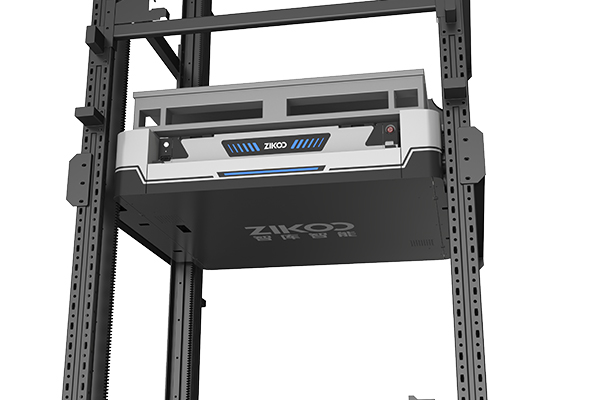
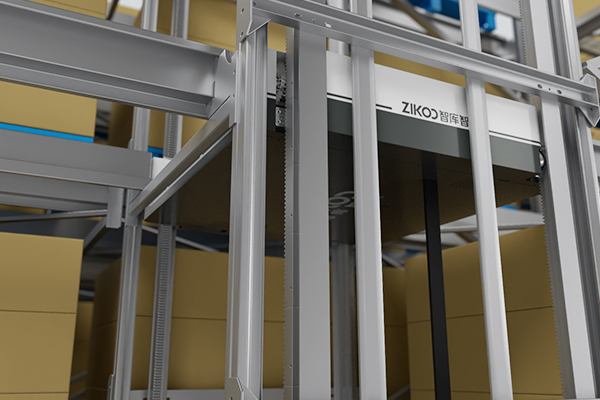
The H-bot Vertical Bidirectional Shuttle acts as a vertical transportation hub. It moves pallets between different levels of the racking system. This collaboration with the R-bot creates a three-dimensional warehousing network. This significantly enhances overall throughput and space utilization.
Our PTP Smart Warehouse Software (WMS/WES/WCS/RCS) orchestrates these robots. It manages inventory, optimizes storage locations, and directs robot movements. This keeps operations synchronized with real-time control across the entire system. This software-driven approach maximizes the efficiency of our automated racking solutions.
Benefits of Integrating Racking and Automation
Integrating advanced racking with automation provides numerous tangible benefits, addressing critical pain points in warehousing. We see significant improvements in space utilization, often exceeding 30%, by enabling denser storage configurations. Operational efficiency is boosted through faster cycle times and reduced manual handling. This directly translates into lower labor costs and increased throughput.
| Benefit Category | Traditional Warehouse | Integrated Automated Warehouse |
|---|---|---|
| Space Utilization | Moderate | High (30%+ improvement) |
| Operational Speed | Manual/Semi-automated | High (Automated retrieval) |
| Labor Costs | High | Reduced |
| Inventory Accuracy | Manual checks | Real-time tracking |
| Safety | Moderate | High (Reduced human interaction) |
Safety is strengthened by limiting human exposure to heavy loads and machinery. Automated systems take on repetitive and hazardous tasks, reducing workplace injuries. Inventory accuracy reaches near-perfect levels thanks to precise tracking and automated data capture. This integration supports better decision-making and reduces stockouts or overstocking. The overall result is a more streamlined, cost-effective, and responsive warehouse operation. For more details on optimizing warehouse operations, see 《Six-Way Shuttle: The Smart Warehousing Tool for Cost Reduction and Efficiency》.
Overcoming Challenges in Implementation
Implementing integrated racking and automation systems presents several challenges. Initial capital investment can be substantial, requiring careful financial planning and a clear return on investment (ROI) projection. System integration complexity is another hurdle, as hardware and software components from various vendors must communicate reliably. This demands expert planning and execution.
Scalability must be considered from the outset to accommodate future growth and changing business needs. Warehouse layout planning is critical; existing infrastructure may require modifications. We recommend a phased implementation approach to mitigate risks and ensure a smooth transition. Zikoo provides end-to-end consultation and project management to address these challenges.
Real-World Applications and Future Outlook
Integrated racking and automation systems are reshaping various industries. In e-commerce, these systems enable rapid order fulfillment and handle vast SKU ranges. Cold chain logistics benefits from automated solutions like our R-bot’s -25℃ low-temperature battery, ensuring product integrity and efficiency in extreme conditions. Manufacturing facilities use these systems for high-density storage of raw materials and finished goods, supporting just-in-time production.
The future of warehousing points towards even greater automation and intelligence. We anticipate further advancements in AI-driven optimization, predictive maintenance for robotic fleets, and enhanced human-robot collaboration. The goal is to create fully autonomous, self-optimizing warehouses that can adapt instantly to market demands. This evolution will continue to redefine efficiency and productivity in logistics. To learn more about how these systems drive warehouse upgrades, explore 《Six-Way Shuttle Drives Warehouse Upgrades: Building an Intelligent Automatic 3D Warehouse》.
Frequently Asked Questions
What is the primary benefit of combining warehouse racking with automation?
The primary benefit is a significant increase in operational efficiency, space utilization, and accuracy, while simultaneously reducing labor costs and improving safety. Automated systems like pallet-to-person robotics (e.g., Zikoo’s U-bot) can retrieve and deliver goods directly to operators, optimizing workflow and storage density.
How do Zikoo’s robots integrate with existing racking systems?
Zikoo’s Omnidirectional Stacker Robots, R-bot Four-Way Shuttles, and H-bot High-Speed Elevators are designed to work smoothly within various racking configurations, including narrow aisle, deep lane, and multi-level systems. Our PTP Smart Warehouse Software (WMS/WES/WCS/RCS) orchestrates their movements for optimal storage and retrieval.
Is combining racking and automation suitable for all warehouse sizes?
While the benefits are substantial for large-scale operations, scalable automation solutions can also be tailored for small to medium-sized warehouses. The key is a thorough analysis of current operations and future growth plans to design a system that offers the best ROI and efficiency gains.
What role does software play in an automated racking system?
Software is the brain of an automated racking system. Zikoo’s PTP Smart Warehouse Software (WMS/WES/WCS/RCS) manages inventory, directs robot movements, optimizes storage locations, and integrates with other enterprise systems, ensuring smooth and intelligent operation from receiving to dispatch.
What are the initial steps to implement an integrated racking and automation solution?
The process starts with a comprehensive assessment of your current warehouse layout, operational challenges, and business goals. This is followed by system design and simulation, technology selection (including specific robots and racking types), software integration, installation, and rigorous testing. Zikoo offers expert consultation to guide you through each step.
Transform Your Warehouse with Zikoo Robotics
Ready to optimize your warehouse operations with state-of-the-art integrated racking and automation? Contact Zikoo Smart Technology Co., Ltd. today for a personalized consultation. Discover how our U-bot, R-bot, H-bot, and PTP Smart Warehouse Software can drive your efficiency forward. Email: info@zikoo-int.com | Phone: (+86)-19941778955


