


Warehouse automation ROI is not a single payback number. It is a system-level calculation that changes with storage density, throughput patterns, and software and service costs over the life of the equipment. I have spent more than ten years designing pallet-to-person systems, and the projects that paid back were rarely the ones with the largest labor savings on paper. They were the ones where the buyer tested the assumptions behind throughput, capacity, and expansion before committing. A long-term investment becomes worthwhile when the financial model includes energy, maintenance, reconfiguration, and integration work, not only the initial price of the shuttles and rack.
What Changes After a Warehouse Automation Investment?
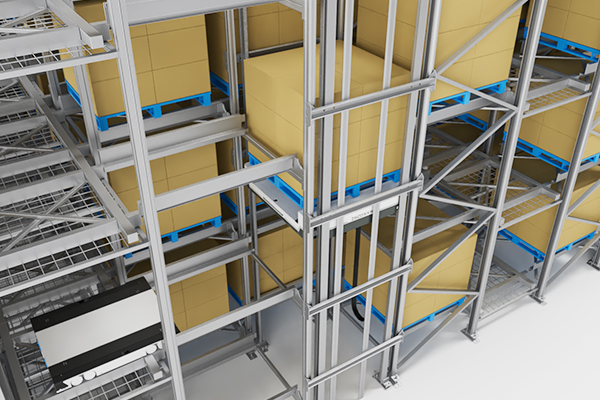
Pallet movement changes first. A four-way shuttle system removes the need for wide aisles and puts the robot inside the rack lane. The shuttle carries pallets in four directions within the storage level, while an H-bot or lift handles vertical movement. Workers meet pallets at a workstation instead of driving around the rack. The result is not just fewer operators. Inventory location accuracy improves because the WMS and WCS record every move.
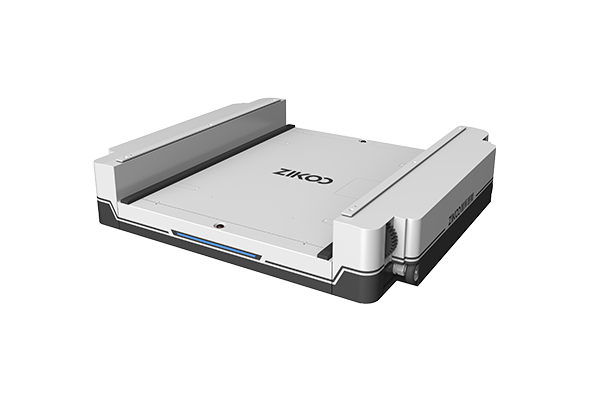
Storage density changes too. A U-bot omnidirectional stacking robot can work in an aisle as narrow as 2100 mm, while the R-bot four-way shuttle sits 125 mm high and handles up to 1500 kg in standard models. That combination lets a building hold more pallets without adding square meters. In an existing facility, this can be the difference between adding an off-site warehouse and staying in place.
How Do You Calculate Warehouse Automation as a Long-Term Investment?
A useful evaluation starts with three numbers: peak pallet moves per hour, pallet positions needed, and labor tasks that disappear. Average daily throughput is not enough because a peak shift decides the system size. If the model starts from average volume, it misses the worst hour.
| Variable | What to model | Common error |
|---|---|---|
| Throughput | Peak pallet moves per hour by shift | Using daily average hides peak load |
| Storage density | Pallet positions per square meter | Ignoring rack depth and building height |
| Labor | Tasks removed, not headcount | Counting full-time equivalents without shift coverage |
| Energy | Battery charging, lift motors, HVAC | Assuming constant power draw |
| Software | WMS, WES, WCS, RCS fees and upgrades | Treating software as a one-time purchase |
| Expansion | Extra shuttles, lifts, and rack modules | Designing without future bays |
If the model cannot show positive cash flow within the planned operating horizon, the project is not automatically wrong. It may be sized badly. I have seen a four-way shuttle proposal lose on paper because it was designed around annual averages while the facility actually ran two short, intense dispatch windows per day. Resizing the shuttle count changed the return.
Software is often the least visible part of a warehouse automation investment, but it sets the limits on how easily the system adapts later. <PTP [Intelligent Warehousing](https://www.zikooint.com/asrs-automated-storage-and-retrieval-system-solutions) Platform: Building a Flexible and Smart Logistics Ecosystem> covers how WMS, WES, WCS, and RCS coordinate shuttle and lift tasks and why that affects reconfiguration cost.
Where Do the Real Costs and Payback Appear?
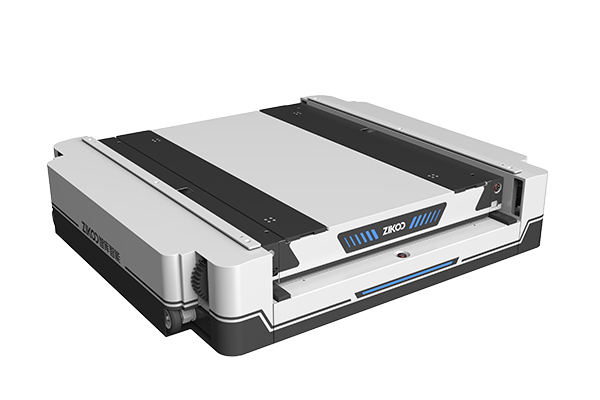
Payback often comes from space and accuracy, not only labor. A four-way shuttle system can cut order cycle time because pallets arrive at the workstation in the sequence the WMS assigns. That reduces double handling. In cold storage, the savings are stronger because a -25°C shuttle keeps working through conditions that slow manual teams. Zikoo’s cold chain R-bot uses a low-temperature lithium battery rated for six to eight hours of continuous operation, which matters when every door opening adds energy load.
The hidden costs are usually building-side. Floor flatness, fire protection, network reliability, power supply, and host WMS integration can exceed the robot quote if the site has not been surveyed. I ask for a slab survey early. A shuttle that positions pallets to tight tolerances can still be hurt by a floor that drifts outside specification.
Initial equipment pricing can hide how much rack, installation, and building work change the final budget. <Smart Warehousing Starts Here: Cost-Effective Four-Way Shuttle Systems> covers why standard pallet dimensions and rack modules affect cost more than shuttle count alone.
If your program includes mixed pallet sizes, floor irregularities, or a legacy host system, it is worth confirming rack compatibility and software integration before you finalize the model. Send your layout and pallet specification to info@zikoo-int.com.
When Is Automation the Right Fit for Your Building and Product Mix?
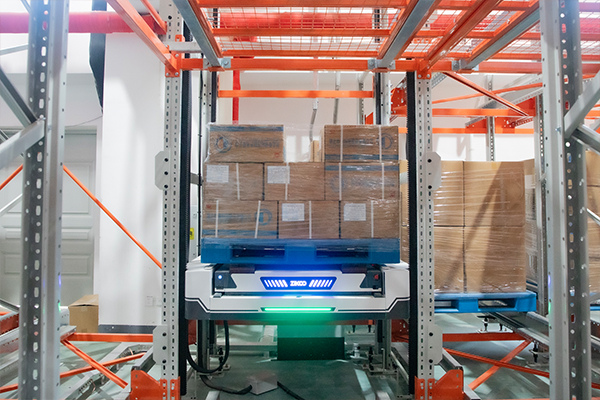
The answer starts with the building, not the robot. A high roof makes dense storage pay faster because every layer of rack adds capacity without adding floor area. A low roof compresses the savings. The floor must hold the rack and shuttle loads, and the slab should be surveyed before any rack design. Pallet quality matters as much as the system. A four-way shuttle locates pallets by their base dimensions, so broken boards, missing support blocks, or inconsistent pallet sizes create faults that no software can fully solve.
Product mix decides whether the system fits. High pallet counts per SKU, stable storage periods, and predictable peak windows favor four-way shuttle systems. High item-level picking with very shallow pallet quantities usually needs a different workstation design, such as the U-bot plus AMR picking configuration. The R-bot includes heavy-duty models for 1500 kg and 2000 kg loads, so the pallet weight itself is rarely the limiting factor. The bottleneck usually appears at the picking station, not inside the rack.
What Should a Supplier Prove Before You Commit?
Price is the last thing I would use to choose a warehouse automation supplier. The first questions are about testing, references, software control, and after-sales service. I want to see a factory acceptance test that includes the same pallet type the buyer will use. I want to walk through a reference site with similar rack depth and peak throughput. I want to see how the WCS recovers from a shuttle fault without stopping all inbound work.
Supplier quality is not only about quoted availability. <Looking for Reliable Four-Way Shuttle Manufacturers? Choose Zikoo Robotics> covers what to check in manufacturing, testing, and delivery records before selecting a vendor.
Warehouse automation becomes a worthwhile long-term investment only when the supplier can prove the system under your operating conditions. If you are evaluating a four-way shuttle or pallet-to-person project, send us your CAD layout, SKU profile, and inbound/outbound peak data. We will confirm feasible rack depth, shuttle count, and software integration scope before any pricing discussion: info@zikoo-int.com or (+86)-19941778955.
What Do Buyers Ask About Warehouse Automation Investment?
How long does it take for warehouse automation to pay back?
My pallet-to-person projects usually land between three and seven years, but that range means nothing without the input assumptions. A dense four-way shuttle project in a cold store can recover cost faster because space and labor savings happen at the same time. A low-throughput building with low labor costs may never reach the same return. The honest calculation uses after-tax cash flow, energy, software fees, and spare parts, not the equipment invoice.
Is warehouse automation still worthwhile for a small or medium warehouse?
It depends on how many pallet positions the building can hold and how many shifts the operation runs. If the building has several thousand pallet positions and at least two shifts, a narrow-aisle or four-way shuttle system can be the lower-cost path per pallet position. Below that scale, the rack and software costs spread across too few pallets, and the return weakens. Small warehouses should compare against adding racking, changing slotting, or leasing off-site space before buying shuttles.
What hidden costs do buyers miss in a warehouse automation investment?
The biggest hidden cost is not usually the robot. It is the building and the software integration. Buyers often compare shuttle prices and ignore floor grinding, fire system changes, network upgrades, power supply, and the work needed to connect the WCS to an older host system. Those items can add a large share of the total cost, especially in an existing facility. A site survey and a software interface review should happen before the budget is locked.
Does warehouse automation lock a warehouse into a single vendor?
In projects I have reviewed, the lock-in risk comes less from the equipment and more from the software interfaces. A shuttle can be inspected and maintained by a trained team, but the WCS and host integration determine how easily a replacement or expansion can be added. Ask the supplier to document the interface, the data model, and the recovery process before you sign. If you are comparing proposals, send us your SKU table and peak hourly movements to info@zikoo-int.com, and we will confirm whether a four-way shuttle configuration fits before you commit.
If you’re interested, check out these related articles:
Reshaping Warehouse Value: Six-Way Shuttle Leads the Digital Transformation
Six-Way Shuttle System Leads the Shift from Machines to Robots in Dense Storage Automation
Six-Way Shuttle: The Ultimate Warehousing Solution for Cost Reduction and Efficiency


