


Modern warehouses run on timing. When thousands of pallets move through a facility each day, the difference between smooth flow and gridlock often comes down to one layer of software most people never think about. A Warehouse Control System sits between the planning tools and the physical equipment, translating high-level instructions into the precise, moment-by-moment commands that keep conveyors running, robots moving, and goods arriving where they need to be. It’s the operational layer that makes automation actually work.
What a Warehouse Control System Actually Does
A Warehouse Control System is software that directs automated material handling equipment in real time. It doesn’t manage inventory or process orders—that’s the job of a Warehouse Management System. Instead, a Warehouse Control System takes the tasks a WMS generates and turns them into specific commands for conveyors, sorters, robots, and automated storage and retrieval systems.
Think of it as the difference between a dispatcher and a driver. The WMS decides a pallet needs to move from location A to location B. The Warehouse Control System figures out which robot should grab it, what path it should take, and how to coordinate that movement with everything else happening in the facility at that exact moment.
This real-time coordination is what separates functional automation from chaos. When multiple robots share the same aisles, when conveyors feed into sorting stations, when elevators move goods between floors—all of that requires split-second decision-making. The Warehouse Control System handles it.
Zikoo’s PTP Smart Warehouse Software includes a Warehouse Control System component built specifically for pallet-to-person robotics. It orchestrates the movement of goods with the kind of precision that manual coordination simply can’t match.
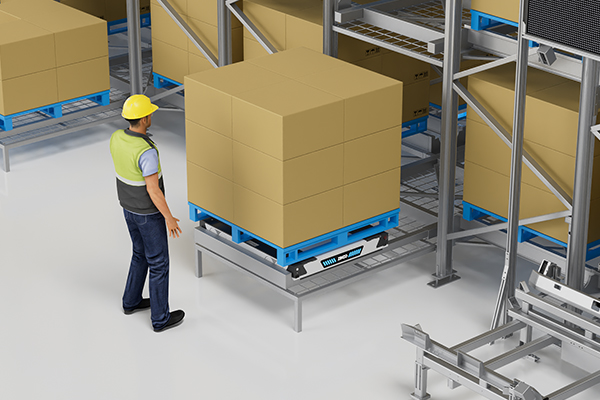
The WMS plans what needs to happen and where. The Warehouse Control System dictates how and when the physical equipment executes those plans. It balances workloads, optimizes equipment utilization, and responds to operational changes as they happen. When a conveyor jams or a robot needs to reroute, the Warehouse Control System adjusts in real time rather than waiting for human intervention.
Why Modern Warehouses Need This Layer of Control
The benefits of a Warehouse Control System show up in measurable ways. These systems exist to squeeze more performance out of automated equipment while reducing the friction that slows operations down.
Higher throughput comes from optimized paths and intelligent task sequencing. A Warehouse Control System doesn’t just send robots to pick up pallets—it calculates the most efficient routes, avoids traffic conflicts, and sequences tasks so equipment spends less time waiting. The result is more goods processed per hour without adding equipment.
Fewer errors follow naturally from reduced human intervention. When a Warehouse Control System directs picking, packing, and shipping, the rate of mistakes drops significantly. Inventory accuracy improves. Returns decrease.
Better labor allocation happens because automation handles the repetitive work. Workers focus on exceptions, quality checks, and tasks that actually require human judgment. The Warehouse Control System handles the routine movements that would otherwise consume hours of manual effort.
Easier scaling becomes possible when the control layer is designed for flexibility. Adding new equipment or expanding capacity doesn’t require rebuilding the system from scratch. A well-designed Warehouse Control System adapts to changes in operational demands.
Real-time visibility gives operations teams the data they need to make decisions. Equipment performance, material flow, bottlenecks—all of it becomes visible in ways that manual tracking can’t provide.
Zikoo’s robotics—U-bot Omnidirectional Stacker Robots, R-bot Four-Way Shuttles, and H-bot High-Speed Elevators—depend on Warehouse Control System integration to operate in sync. The Warehouse Control System ensures these robots work together rather than competing for space or duplicating effort. That coordination is what drives the efficiency gains.
The Difference Between WCS and WMS
The distinction matters because these systems do fundamentally different jobs. A Warehouse Management System operates at the strategic level. It manages inventory, processes orders, schedules tasks, and optimizes storage locations. The WMS decides what to do and where to do it.
A Warehouse Control System operates at the execution level. It takes those strategic directives and translates them into real-time commands for physical equipment. The Warehouse Control System focuses on how tasks get performed by automated systems.
Here’s a concrete example: the WMS instructs the system to move a pallet from location A to location B. The Warehouse Control System then directs the specific robot to execute that movement, calculates the optimal path, times the movement to avoid conflicts with other equipment, and confirms completion.
Zikoo’s PTP Smart Warehouse Software integrates both WMS and Warehouse Control System functionalities. This integration eliminates the communication gaps that can occur when these systems come from different vendors. Strategic planning and real-time execution stay coordinated because they share the same platform.
How WCS Coordinates Robotics and Material Handling
The Warehouse Control System acts as the central nervous system for automated warehouses. It orchestrates complex movements across diverse equipment types, ensuring everything works together rather than creating conflicts.
When a WMS requests a specific pallet, the Warehouse Control System determines which R-bot Four-Way Shuttle should retrieve it, which H-bot High-Speed Elevator should transport it vertically, and which conveyor should move it to the next station. This choreography happens continuously across hundreds or thousands of movements per hour.
The R-bot Four-Way Shuttle handles dense storage retrieval. It relies on the Warehouse Control System for intelligent autonomous handling and multi-shuttle collaborative operation. When paired with the H-bot Vertical Bidirectional Shuttle—which functions as the vertical transportation hub—the Warehouse Control System creates a three-dimensional warehousing network. This six-way shuttle system significantly enhances operational efficiency because the Warehouse Control System manages the precise positioning and movement for all robots. H-bot models achieve positioning accuracy of ±1 mm, but that precision only matters if the Warehouse Control System coordinates the timing correctly.
The same Warehouse Control System manages conveyor systems, automated storage and retrieval systems, and other equipment. All components communicate through the Warehouse Control System, executing tasks in synchronized fashion. Without this coordination layer, each piece of equipment would operate in isolation, creating bottlenecks and conflicts.
If you’re interested, check 《Six-Way Shuttle System Leads the Shift from Machines to Robots in Dense Storage Automation》.
Integrating with Existing Equipment
Modern Warehouse Control Systems are built for flexibility. They can integrate with existing material handling equipment and robotics from various manufacturers, which matters for businesses upgrading gradually or combining new systems with legacy infrastructure.
Zikoo’s PTP Smart Warehouse Software connects with different brands of conveyors, sorters, and robotic solutions through standardized communication protocols and configurable drivers. The integration process involves assessing existing equipment and developing tailored strategies that maximize the return on current automation investments.
This adaptability means businesses don’t have to replace everything at once. A Warehouse Control System can bring coordination to a mixed environment of old and new equipment, providing a cost-effective path to enhanced automation.
Getting Implementation Right
Implementing a Warehouse Control System requires planning. The technology works, but the transition needs structure to avoid disruption.
Start with clear objectives. Define what success looks like—whether that’s increased throughput, reduced labor costs, improved inventory accuracy, or some combination. These goals shape every decision that follows.
Assess what you have. Evaluate existing warehouse processes, equipment, and IT infrastructure before designing the new system. This step identifies integration points and potential challenges before they become problems.
Choose vendors carefully. Look for Warehouse Control System providers with proven expertise and successful implementations. Consider their support capabilities, scalability, and integration track record.
Phase the rollout. A pilot area lets you test the Warehouse Control System, make adjustments, and build confidence before full deployment. This approach reduces risk compared to switching everything at once.
Test thoroughly. Equipment control, data exchange, exception handling—all of it needs rigorous testing before go-live. System stability matters more than speed.
Plan data migration. Moving existing data to the new Warehouse Control System requires attention to detail. Data integrity issues create problems that compound over time.
Train people. Operators and maintenance staff need to understand the new system. Change management matters because user adoption determines whether the technology delivers its potential benefits.
Establish ongoing support. Post-implementation monitoring and clear support channels address issues as they arise. Continuous optimization keeps the Warehouse Control System performing at its best.
Zikoo provides support throughout the implementation process, helping businesses move from planning through deployment to ongoing optimization.
If you’re interested, check 《PTP Intelligent Warehouse Software Empowers Enterprises for Smart Upgrades》.
Where Warehouse Control Systems Are Heading
The technology keeps advancing. Artificial intelligence, the Internet of Things, and predictive analytics are reshaping what Warehouse Control Systems can do.
AI enhances decision-making by optimizing task allocation, path planning, and resource management in real time. Algorithms learn from operational data, predict potential bottlenecks, and adjust equipment movements dynamically. A Warehouse Control System with AI capabilities adapts to changing conditions rather than following static rules.
IoT devices embedded in equipment and inventory provide continuous streams of real-time data. This information feeds into the Warehouse Control System, offering visibility into every aspect of operations. Tracking individual items, monitoring equipment health, detecting anomalies—IoT connectivity gives the Warehouse Control System rich, actionable information.
Predictive analytics uses this data to forecast equipment failures, optimize maintenance schedules, and anticipate demand fluctuations. A Warehouse Control System with predictive capabilities addresses potential issues before they cause downtime. This shift from reactive to proactive management changes how warehouses operate.
Zikoo’s robotics are designed to leverage these advancements. U-bot, R-bot, and H-bot solutions use AI for intelligent navigation and task execution, and IoT for seamless data exchange. The integration creates warehouse environments capable of self-optimization and continuous improvement.
The direction is toward increasingly autonomous operations, where Warehouse Control Systems learn, adapt, and make intelligent decisions with minimal human intervention.
If you’re interested, check 《Software-Driven Hardware: Six-Way Shuttle Maximizes Warehouse Efficiency》.
Common Questions About Warehouse Control Systems
What operational improvements should businesses expect from a Warehouse Control System?
A Warehouse Control System typically delivers higher throughput, fewer errors, and better labor utilization. The real-time visibility it provides enables faster identification of bottlenecks and more informed operational decisions. The specific improvements depend on the starting point—facilities with older manual processes often see dramatic gains, while already-automated warehouses may see more incremental but still significant improvements in coordination and efficiency.
How does Zikoo’s software work with its robotics?
Zikoo’s PTP Smart Warehouse Software includes a Warehouse Control System that serves as the central orchestrator for U-bot Omnidirectional Stacker Robots, R-bot Four-Way Shuttles, and H-bot High-Speed Elevators. The Warehouse Control System provides robot control system functionality, managing precise movements, optimizing task execution, and synchronizing operations across the entire robotic fleet for pallet-to-person applications.
What kind of return on investment is realistic?
ROI varies based on facility size, existing automation levels, and operational complexity. The returns typically come from reduced labor requirements, increased throughput, fewer errors, and lower maintenance costs through predictive capabilities. Most implementations show positive returns within one to three years, though facilities with high labor costs or significant error rates often see faster payback periods.
Start the Conversation
Zikoo Smart Technology Co., Ltd. builds PTP Smart Warehouse Software and pallet-to-person robotics designed to work together. Our U-bot, R-bot, and H-bot solutions operate under Warehouse Control System coordination that maximizes efficiency and precision. If you’re evaluating automation options, we can discuss how these systems might fit your specific situation.
Email: info@zikoo-int.com
Phone: (+86)-19941778955


