


Warehouse operations have changed dramatically over the past decade. What used to work—adding more staff during peak seasons, expanding floor space, accepting a certain error rate—no longer holds up against current market pressures. Rising labor costs, customer expectations for next-day delivery, and tighter margins have forced a fundamental rethink of how goods move through a facility. The warehouses that thrive today are the ones treating workflow optimization as an ongoing discipline rather than a one-time project.
Why Warehouse Workflow Optimization Has Become Non-Negotiable
The logistics landscape has shifted in ways that make traditional approaches increasingly untenable. Labor shortages have become structural rather than cyclical in many regions, driving up wages while simultaneously limiting available talent pools. Inventory accuracy problems compound quickly—a 2% error rate sounds manageable until you calculate the downstream effects on customer satisfaction and return processing costs.
Space utilization presents another persistent challenge. Real estate costs continue climbing in logistics corridors, yet many facilities operate with significant dead zones and inefficient aisle configurations. These warehouse efficiency challenges directly inflate logistics operational costs and create friction when demand spikes unexpectedly.
Bottleneck identification warehouse analysis often reveals surprising culprits. The obvious chokepoints—receiving docks, packing stations—get attention, but hidden constraints in replenishment cycles or pick path routing frequently cause more cumulative delay. Without systematic optimization, warehouses find themselves perpetually reactive, scrambling to meet supply chain demand rather than anticipating it.
Foundational Approaches to Warehouse Workflow Optimization
Effective warehouse workflow optimization builds on proven methodologies adapted to specific operational contexts. Lean warehouse principles provide a useful starting framework: eliminate waste, reduce unnecessary movement, and ensure every process step adds value. However, lean thinking requires careful application in warehousing—what constitutes “waste” in a manufacturing cell differs from what slows down an order fulfillment process.
Process mapping remains one of the most underutilized tools available. Walking the floor with a clipboard, documenting actual workflows rather than assumed ones, consistently reveals disconnects between standard procedures and daily reality. These gaps represent immediate improvement opportunities.
Warehouse layout optimization deserves particular attention because physical configuration constrains everything else. A poorly designed layout forces longer travel distances, creates congestion at intersections, and limits future flexibility. Inventory management best practices similarly cascade through operations—accurate stock positioning reduces search time and prevents the expedited handling that disrupts normal flow.
Continuous improvement cycles matter more than initial gains. The warehouse that achieves 15% efficiency improvement and maintains it outperforms the one that achieves 25% improvement but gradually regresses to baseline.
Using Data Analytics to Surface Hidden Problems
Data analytics transforms warehouse optimization from intuition-based to evidence-based. Tracking warehouse performance metrics and KPIs logistics provides objective visibility into operational health, replacing anecdotal impressions with measurable trends.
The most valuable metrics vary by operation, but certain indicators prove consistently useful: order cycle time, pick accuracy, inventory turns, labor productivity by function, and equipment utilization rates. Monitoring these over time reveals patterns that daily observation misses.
Predictive analytics warehousing takes this further by anticipating demand fluctuations before they materialize. Historical data combined with external signals—promotional calendars, seasonal patterns, economic indicators—enables proactive resource adjustment rather than reactive scrambling. This enhanced supply chain visibility supports decisions about staffing levels, inventory positioning, and equipment deployment.
The analytical capabilities embedded in modern warehouse software make this level of insight accessible to operations that previously lacked dedicated data science resources.
How Automation and Robotics Transform Warehouse Workflow Optimization
Automation has moved from experimental to essential in warehouse operations. The economics have shifted decisively—robotic implementation now delivers clear returns across a wider range of applications than even five years ago. Labor cost reduction remains significant, but throughput improvements and accuracy gains often prove equally valuable.
Pallet-to-person solutions represent a particularly impactful category of material handling systems. Rather than sending workers to inventory, these systems bring inventory to workers, eliminating travel time that typically consumes 50% or more of picking labor. The benefits of warehouse automation become tangible quickly: faster cycle times, reduced physical strain on workers, and consistent performance regardless of shift or season.
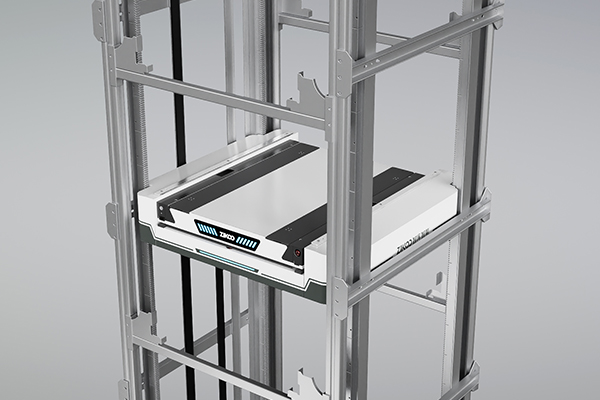
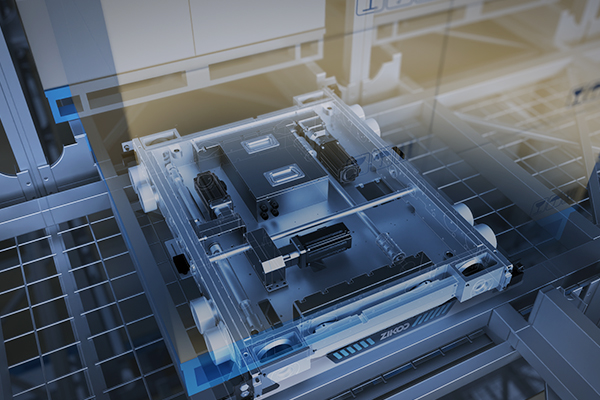
The R-bot Four-way Shuttle addresses dense storage scenarios where conventional equipment struggles. Its four-directional movement capability and 1.5-ton load capacity enable flexible operation within tightly configured rack systems. Multiple shuttles coordinate through intelligent autonomous handling, adapting to varying demand patterns without manual intervention.
When paired with the H-bot Vertical Bidirectional Shuttle, the combination creates a six-way shuttle system capable of serving diverse palletized storage and picking requirements. The R-bot product line includes Standard, American, Japanese, and Heavy-duty configurations, with empty speeds reaching 1.6 m/s and loaded speeds of 1.2 m/s. Lithium battery operation provides 7-8 hours of continuous runtime, and the system functions reliably at temperatures down to -15℃—a critical capability for cold chain food storage and pharmaceutical constant temperature warehouses.
| Feature | Manual Picking System | Automated Picking System (Zikoo Robotics) |
|---|---|---|
| Labor Cost | High | Low |
| Throughput | Moderate | High |
| Accuracy | Variable | High |
| Space Utilization | Moderate | High (e.g., Dense storage |
| Safety | Moderate | High |
The H-bot Vertical Bidirectional Shuttle functions as the vertical transportation hub within these systems. Occupying just a single storage location, it collaborates with R-bot units to create a three-dimensional warehousing network that maximizes cubic utilization. Models including the Standard H1800B, American H1800A, and Japanese H1800J handle loads up to 1800 kg with positioning accuracy of ±1 mm. Operating temperature range spans -25℃ to 45℃, making the system suitable for vertical cargo transfer in high-rack stereoscopic warehouses and space-constrained urban warehousing centers.
The U-bot Omnidirectional Stacking Robot excels in narrow aisle storage applications, requiring minimum aisle width of only 2100 mm. Its U-shaped design enables maneuverability that conventional stackers cannot match. With lifting height up to 8 meters and 1000 kg capacity, the U-bot integrates with AMRs and robotic arms for hybrid operations.
The U-bot + AMR Narrow Aisle Picking System addresses scenarios combining palletization and split-case picking. Performance benchmarks include picking efficiency of ≥300 pieces per hour and inbound/outbound efficiency of ≥80 pallets per hour, with storage density improvements exceeding 30% compared to conventional configurations.
For operations evaluating these capabilities, detailed technical specifications are available in our documentation on Six-way shuttle system.
Smart Warehouse Software as the Coordination Layer
Hardware automation delivers its full potential only when orchestrated by capable software. The PTP Smart Warehouse Software integrates Warehouse Management System (WMS), Warehouse Execution System (WES), and Warehouse Control System (WCS) functionality into a unified platform.
Each layer serves a distinct purpose. WMS handles inventory tracking and order processing—the transactional backbone of warehouse operations. WES optimizes task execution, determining how work gets sequenced and assigned across available resources. WCS directly controls automated equipment, translating higher-level instructions into precise machine movements.
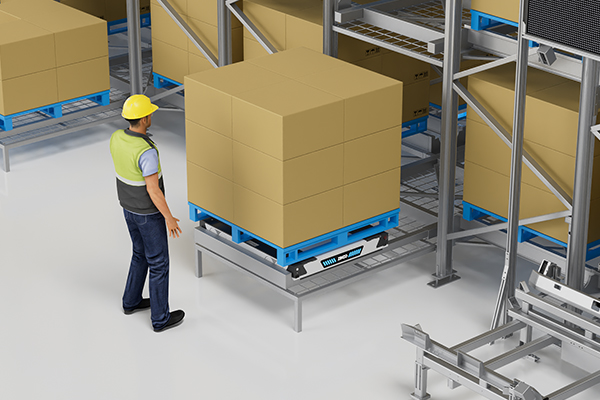
The integration between these layers matters as much as the individual capabilities. Disconnected systems create information gaps, forcing manual coordination and introducing delays. Unified software provides real-time visibility across inventory, labor, and equipment, enabling the kind of dynamic resource allocation that keeps operations running smoothly during demand fluctuations.
WMS/WES/WCS software enhances warehouse efficiency through improved coordination and data flow. Orders route to optimal pick locations, equipment schedules adjust automatically based on workload, and exceptions surface immediately rather than accumulating unnoticed.
Quantifying Returns and Maintaining Gains Over Time
Measuring ROI for automation investments requires looking beyond simple payback calculations. Labor cost reduction provides the most straightforward metric, but throughput improvements and accuracy gains often contribute equally to financial returns. A system that enables 40% more orders per shift while reducing error rates from 1.5% to 0.3% delivers compounding value.
Sustaining optimization in dynamic warehouse environments demands ongoing attention. Market conditions shift, product mixes evolve, and customer expectations continue rising. The processes and configurations that optimize performance today may become constraints tomorrow.
Regular process reviews, combined with attention to emerging logistics technology trends, help operations stay ahead of these shifts. Scalability warehouse operations planning ensures that efficiency gains persist as volume grows rather than degrading under increased load.
| Investment Area | Key Benefit | Typical ROI Period |
|---|---|---|
| Robotics & Automation | Reduced labor, increased throughput | 1-3 years |
| Smart Warehouse Software | Improved accuracy, enhanced visibility | 6-18 months |
| Workflow Redesign | Process efficiency, bottleneck removal | 3-9 months |
| Training & Development | Enhanced productivity, reduced errors | Ongoing |
Take the Next Step
Zikoo Smart Technology Co., Ltd. specializes in pallet-to-person robotics and intelligent software solutions designed for warehouse workflow optimization. Our U-bot, R-bot, and PTP Smart Warehouse Software address the specific challenges facing modern distribution operations. Contact info@zikoo-int.com or call (+86)-19941778955 to discuss your requirements and schedule a demonstration.
Frequently Asked Questions About Warehouse Workflow Optimization
What measurable improvements can warehouse workflow optimization deliver?
Warehouse workflow optimization typically produces results across several dimensions simultaneously. Operational costs decrease through streamlined processes and better resource utilization. Order accuracy improves, which reduces costly returns and customer service interventions. Fulfillment times shorten as bottlenecks get eliminated. Inventory management becomes more precise, reducing both stockouts and excess carrying costs. Safety metrics generally improve as well, since optimized workflows reduce the rushed, improvised handling that causes injuries. Perhaps most importantly, optimized operations scale more gracefully—volume increases don’t require proportional increases in labor or space.
How do Zikoo’s pallet-to-person robots support warehouse workflow optimization?
The U-bot Omnidirectional Stacker Robots, R-bot Four-Way Shuttle, and H-bot High-Speed Elevators each address specific aspects of warehouse workflow optimization. Together, they reduce manual labor requirements by bringing inventory to workers rather than sending workers to inventory. This approach increases throughput while maximizing space utilization within existing facilities. The robots handle heavy loads and repetitive tasks consistently, reducing both physical strain on workers and the error rates that accompany fatigue. Cold chain and temperature-controlled operations benefit particularly from equipment rated for extended low-temperature operation.
What does smart warehouse software contribute to overall optimization?
Smart warehouse software like the PTP Smart Warehouse Software (WMS/WES/WCS/RCS) provides the coordination layer that makes other optimization investments effective. Real-time operational visibility enables decisions based on current conditions rather than assumptions. The software orchestrates automated systems and manual processes together, ensuring that tasks flow efficiently between different handling modes. Inventory positioning, order processing, and equipment control all operate from a shared data foundation, eliminating the coordination overhead that fragmented systems require. The result is a warehouse environment where different components work together rather than creating friction at their interfaces.


