


Modern warehouses run on timing. When a pallet needs to reach a picking station in under 90 seconds, there’s no room for miscommunication between robots, conveyors, and sortation systems. A warehouse control system handles that coordination layer, translating high-level instructions into the precise, millisecond-level commands that keep automated equipment moving in sync. Without it, even the most advanced robotics operate as isolated machines rather than a unified operation.
What a Warehouse Control System Actually Does
A warehouse control system sits between planning software and physical equipment. It receives directives from warehouse management systems or execution systems, then converts those into specific commands for conveyors, sortation lines, and robotic fleets. The distinction matters because planning systems deal in orders and inventory locations while the warehouse control system deals in motor speeds, routing decisions, and collision avoidance.
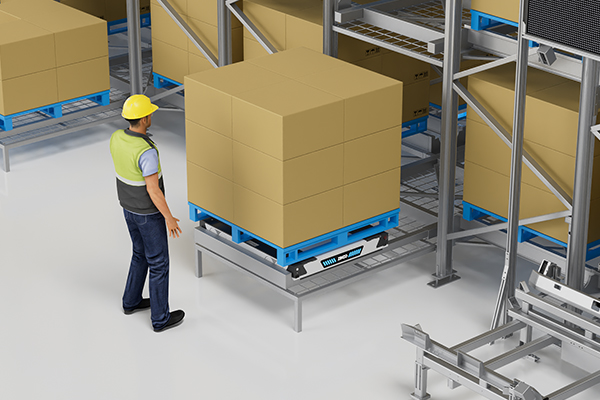
In a pallet-to-person setup, this means the warehouse control system tracks every robot’s position, calculates optimal paths, and sequences movements so that products arrive at workstations exactly when operators need them. When a four-way shuttle retrieves a pallet from dense storage, the warehouse control system coordinates handoffs to vertical transport systems and final delivery robots. Each step requires real-time adjustments based on current conditions, not pre-programmed sequences.
The feedback loop runs continuously. Equipment status, material flow rates, and task completion data feed back into the warehouse control system, which adjusts operations dynamically. A conveyor slowdown in one zone triggers rerouting in another. A robot battery dropping below threshold prompts the system to reassign tasks before the unit needs to charge. This constant recalibration is what separates functional automation from optimized automation.
Warehouse Control System vs WMS vs WES
These three systems handle different questions. A warehouse management system answers what needs to happen and where inventory sits. A warehouse execution system determines how to sequence work across available resources. A warehouse control system executes the physical movements that make both happen.
The warehouse management system operates at the strategic level. It processes orders, manages inventory records, plans waves, and tracks labor. When a customer order comes in, the WMS determines which items need picking and from which locations. It handles the business logic of warehouse operations.
The warehouse execution system bridges strategy and execution. It looks at current conditions, including equipment availability, order priorities, and workforce capacity, then decides the best sequence for completing tasks. The WES might determine that three orders should be batched together because their items sit in adjacent zones, or that a particular robot cluster should handle urgent shipments while another handles standard fulfillment.
The warehouse control system translates those decisions into physical reality. It sends specific commands to individual pieces of equipment: move this conveyor at this speed, route this pallet to lane 7, dispatch robot 23 to location B-14. The granularity here is what enables high-speed operations. A warehouse control system might issue thousands of commands per minute to maintain smooth material flow.
| Feature | Warehouse Management System | Warehouse Execution System | Warehouse Control System |
|---|---|---|---|
| Primary Role | Strategic Planning & Inventory | Workflow Optimization & Resource Mgmt. | Real-time Equipment Control |
| Focus | What & Where | How & When | Direct Physical Execution |
| Scope | Entire Warehouse Operations | Workflow Across Systems | Specific Automated Equipment |
| Key Functions | Order, Inventory, Labor Mgmt. | Task Prioritization, Resource Alloc. | Direct Robot/Conveyor Commands |
| Data Flow | High-level to WES/WCS | WMS to WCS | WES/WMS to Equipment |
Complex automation requires all three layers working together. The warehouse control system handles the real-time coordination that makes high-throughput operations possible. Without it, there’s no mechanism for the split-second decisions that prevent collisions, optimize paths, and maintain continuous flow.
How Warehouse Control Systems Coordinate Pallet-to-Person Robotics
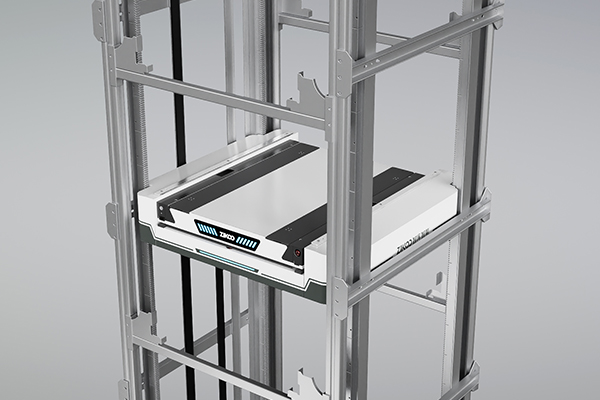
The warehouse control system serves as the central coordinator for robotic fleets in pallet-to-person operations. Zikoo’s PTP Smart Warehouse Software integrates WMS, WES, WCS, and RCS into a unified platform, with the warehouse control system component directly supervising robots including the U-bot, R-bot, and H-bot.
When the system receives a retrieval task, the warehouse control system calculates which robot should handle it based on current positions, battery levels, and queue depths. An R-bot Four-way Shuttle might be directed to pull a pallet from Dense storage, then the warehouse control system coordinates timing with an H-bot Vertical Bidirectional Shuttle for level changes. The final handoff to a U-bot Omnidirectional Stacking Robot for workstation delivery requires precise synchronization, since any delay cascades through the entire sequence.
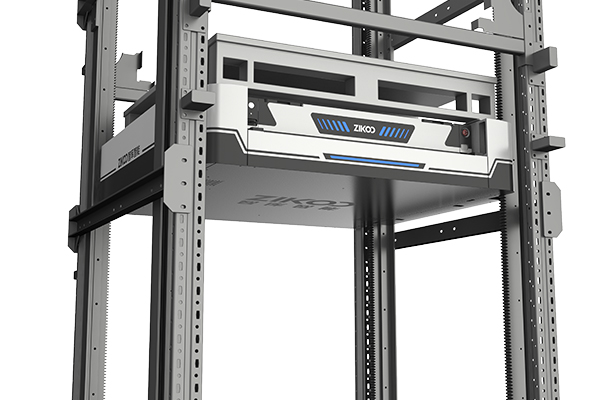
Path optimization happens continuously. The warehouse control system maintains a real-time map of robot positions and predicts future locations based on current tasks. When two robots would otherwise converge on the same aisle, the system reroutes one or adjusts speeds to prevent conflicts. This dynamic traffic management is invisible to operators but critical for maintaining throughput.
During demand surges, the warehouse control system reallocates resources automatically. If order volume spikes in one zone, additional robots shift from lower-priority areas. The system balances workload across the fleet while accounting for charging schedules and maintenance windows. Individual robots become interchangeable units within a coordinated system rather than standalone machines requiring manual oversight.
Operational Benefits of Modern Warehouse Control Systems
A warehouse control system delivers measurable improvements across several operational dimensions. The benefits compound because efficiency gains in one area reduce constraints elsewhere.
Real-time visibility changes how managers respond to problems. Instead of discovering a conveyor jam during a shift review, the warehouse control system flags the issue immediately and often resolves it through automatic rerouting before throughput drops. This proactive capability prevents small issues from becoming significant delays.
Order accuracy improves because the warehouse control system eliminates manual handoff errors. When robots and conveyors follow precise digital instructions, the opportunities for mispicks and misroutes decrease substantially. Fewer errors mean fewer returns and higher customer satisfaction.
Labor costs shift rather than simply decrease. The warehouse control system handles repetitive coordination tasks that would otherwise require human attention. Operators focus on exception handling, quality checks, and complex decisions that automation handles poorly. The result is better utilization of human capabilities alongside automated execution.
Scalability becomes practical rather than theoretical. Adding new equipment to a well-designed warehouse control system requires configuration rather than custom integration. The system already understands how to coordinate diverse equipment types, so expansion follows established patterns. This adaptability matters as businesses respond to seasonal demand or growth.
Data collection happens automatically as a byproduct of operations. The warehouse control system logs equipment performance, task completion times, error rates, and throughput metrics continuously. This operational data supports both immediate troubleshooting and longer-term process improvement. Patterns that would be invisible in manual operations become clear in the data.
Selecting a Warehouse Control System Provider
The choice of warehouse control system provider shapes your automation capabilities for years. Several factors deserve careful evaluation before committing.
Integration capability determines whether the warehouse control system can actually coordinate your equipment. The system needs to communicate with existing WMS and WES platforms while also controlling physical automation from potentially multiple vendors. Zikoo’s PTP Smart Warehouse Software addresses this through a unified platform that handles WMS, WES, WCS, and RCS functions together, eliminating integration gaps between separately sourced components.
Scalability requires more than marketing claims. Ask how the system handles equipment additions, throughput increases, and new automation types. A warehouse control system that works well at current volumes might struggle when you double capacity or add a new product category with different handling requirements.
Support responsiveness matters because downtime costs accumulate quickly in automated operations. A conveyor stoppage that takes four hours to resolve costs far more than one resolved in 30 minutes. Evaluate the provider’s support structure, response time commitments, and track record with existing customers.
Industry experience translates into faster implementation and fewer surprises. A provider who has deployed warehouse control systems in your sector understands the specific challenges, whether that’s cold chain requirements, hazardous materials handling, or high-SKU complexity. Generic solutions often require extensive customization that specialized providers have already completed.
| Feature | Description | Importance |
|---|---|---|
| Integration | Compatibility with existing WMS/WES and diverse automation. | Ensures smooth data flow and equipment coordination. |
| Scalability | Ability to expand and adapt to future growth and new technologies. | Protects investment, supports business evolution. |
| Support | Availability of technical assistance and maintenance services. | Minimizes downtime, ensures operational continuity. |
| Industry Exp. | Provider’s understanding of specific sector needs and regulations. | Tailored solutions, faster implementation. |
| Holistic Solution | Integrated software stack (WMS/WES/WCS/RCS) from a single provider. | Streamlined deployment, optimized performance. |
A provider offering integrated software across the full stack simplifies both initial deployment and ongoing operations. When WMS, WES, WCS, and RCS come from the same source, data flows smoothly and troubleshooting doesn’t require coordination between multiple vendors. Consider exploring 《PTP Intelligent Warehouse Software Empowers Enterprises for Smart Upgrades》 for additional perspective on integrated approaches.
Frequently Asked Questions About Warehouse Control Systems
What separates a warehouse control system from WMS and WES?
The warehouse management system handles inventory records and order processing at the strategic level. The warehouse execution system optimizes workflow and resource allocation across operations. The warehouse control system directly controls physical equipment in real time, converting higher-level instructions into specific commands for robots, conveyors, and sortation systems. Each layer addresses different operational questions, and complex automation requires all three working together.
How does a warehouse control system coordinate pallet-to-person robotics?
The warehouse control system assigns tasks to specific robots based on current positions and workload, calculates optimal paths while avoiding conflicts with other units, and sequences handoffs between different robot types. For Zikoo’s U-bot, R-bot, and H-bot systems, this means continuous coordination of retrieval, transport, and delivery movements. The system adjusts dynamically as conditions change, reallocating resources during demand spikes and rerouting around equipment issues.
What operational improvements come from implementing a warehouse control system?
A warehouse control system provides real-time visibility into equipment status and material flow, enabling immediate response to issues. Order accuracy improves through precise digital control of movements. Labor shifts toward higher-value activities as the system handles routine coordination. Scalability becomes practical because adding equipment follows established integration patterns. Operational data accumulates automatically, supporting both troubleshooting and process improvement.
Can a warehouse control system function without a WMS?
A warehouse control system can manage automated equipment independently, but it operates most effectively when integrated with a warehouse management system or warehouse execution system. The WMS provides order and inventory data that the warehouse control system needs to determine what tasks to execute. Without that upstream data, the warehouse control system lacks context for prioritization and sequencing. Integration between layers produces better results than isolated operation.
What data does a warehouse control system generate?
The warehouse control system continuously logs equipment status, task completion times, throughput rates, error events, and performance metrics for all automated systems. This data supports real-time monitoring, historical analysis, and predictive maintenance. Managers can identify bottlenecks, track efficiency trends, and make informed decisions about capacity and process changes based on actual operational data rather than estimates.
Transform Your Warehouse Operations with Zikoo Smart Technology
Zikoo Smart Technology’s PTP Smart Warehouse Software brings WMS, WES, WCS, and RCS together in a unified platform designed for pallet-to-person automation. Our U-bot, R-bot, and H-bot robotics work as a coordinated system rather than separate machines, delivering the throughput and accuracy that modern fulfillment demands. Contact us at info@zikoo-int.com or call (+86)-19941778955 to discuss how integrated warehouse control can transform your operations.


