


Warehouse operations have reached a point where the gap between planning and execution creates real friction. Orders pile up, robots wait for instructions, and human operators end up making decisions that software should handle. A Warehouse Execution System sits in that gap, translating high-level directives into moment-by-moment task assignments. The difference between a warehouse that flows and one that stutters often comes down to this layer of real-time orchestration.
What a Warehouse Execution System Actually Does
A Warehouse Execution System functions as the decision-making layer between strategic planning and physical equipment control. It takes broad instructions from management software and converts them into specific, prioritized tasks for robots and human workers. The system watches everything happening on the warehouse floor simultaneously. When conditions change, it adjusts.
The real value shows up in how WES handles competing priorities. Say three orders need the same picking zone at once while a robot needs to pass through for replenishment. The system calculates which sequence minimizes total delay. It might re-route the robot, stagger the picks, or pull forward a different order entirely. These micro-decisions happen continuously, thousands of times per shift.
WES manages interactions between different automated systems. Four-way shuttles, vertical bidirectional shuttles, and omnidirectional stacking robots each have different capabilities and constraints. The execution system understands these differences and assigns tasks accordingly. A vertical shuttle handles certain retrieval patterns better than a four-way unit. The WES knows this and routes work appropriately.
Order fulfillment progress gets monitored against service commitments. If an order risks missing its cutoff, the system can escalate its priority and reassign resources. This proactive adjustment prevents the cascade of delays that plague warehouses running on static scheduling.
How WES Differs from WMS and WCS
The three systems occupy different layers of warehouse technology, and confusing them leads to poor implementation decisions.
A Warehouse Management System handles inventory records, order processing, and strategic planning. It knows what products exist, where they should go, and which orders need fulfillment. WMS answers the question of what needs to happen.
A Warehouse Control System talks directly to machines. It sends commands to conveyors, sortation equipment, and automated storage systems. WCS handles the mechanical execution of individual equipment movements.
WES occupies the space between these layers. It receives the “what” from WMS and determines the optimal “how” for both equipment and people. The execution system decides task sequences, assigns resources, and adapts to real-time conditions. WCS then carries out the specific equipment commands that WES generates.
| Feature | WMS | WES | WCS |
|---|---|---|---|
| Primary Role | Inventory and order management | Real-time task orchestration | Direct equipment control |
| Focus | What to do, where to store | How to execute efficiently | How machines move |
| Scope | Entire warehouse operations | Workflow and resource allocation | Individual equipment |
| Decision-Making | Strategic, longer-term | Dynamic, adaptive | Pre-programmed, immediate |
| Integration | ERP systems, WES | WMS, WCS, robotics | WES, physical hardware |
Why Automated Warehouses Need This Layer
Warehouses running multiple types of automation face coordination problems that neither WMS nor WCS can solve alone. WMS lacks the real-time responsiveness. WCS lacks the cross-system visibility. The execution layer provides both.
Consider a facility using omnidirectional stacking robots alongside four-way shuttles and vertical bidirectional shuttles. Each system has different speed profiles, path constraints, and task suitability. Without intelligent orchestration, these systems compete for resources and create traffic conflicts. WES prevents this by understanding the full operational picture and sequencing work accordingly.
Labor coordination adds another dimension. Human operators and robotic systems share space and sometimes share tasks. The execution system balances workloads across both, directing people to locations where their flexibility adds value while routing predictable work to automation. This hybrid approach maximizes total throughput without requiring proportional labor increases as volume grows.
E-commerce fulfillment patterns make this coordination more critical. Order profiles shift throughout the day. Morning might bring bulk replenishment while afternoon sees single-item picks spike. WES adjusts resource allocation as these patterns emerge, rather than waiting for manual intervention.
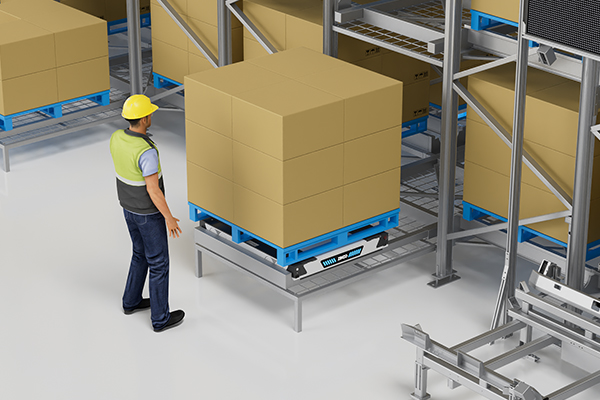
Faster and More Accurate Order Fulfillment
Speed and accuracy improvements from WES come from several interconnected capabilities.
Dynamic slotting continuously repositions inventory based on current demand patterns. Fast-moving items migrate toward efficient picking locations. This happens automatically as the system observes order frequency, reducing travel distances without manual analysis.
Wave management groups orders intelligently. Rather than processing orders in arrival sequence, the system identifies combinations that share picking locations or can move through the same zones efficiently. Batch picking, zone picking, and cluster picking strategies get assigned dynamically based on current conditions.
Real-time routing calculates optimal paths for both people and equipment. Four-way shuttles receive movement instructions that account for traffic, task urgency, and equipment positioning. Human operators get directed to locations in sequences that minimize backtracking.
Bottleneck identification happens before problems cascade. If a particular zone starts falling behind, the system can redirect resources or adjust downstream scheduling. This prevents the situation where one delay compounds into missed cutoffs across multiple orders.
Error reduction comes from tighter process control. The system validates picks, confirms quantities, and catches discrepancies before items leave the warehouse. Real-time tracking means problems get identified at their source rather than discovered during shipping or by customers.
For more on how shuttle systems contribute to these efficiency gains, explore 《Six-Way Shuttle: The Smart Warehousing Tool for Cost Reduction and Efficiency》.
Getting Implementation Right
Successful WES implementation requires attention to several areas that often get underestimated.
Infrastructure assessment comes first. The system needs accurate data about physical layout, equipment capabilities, and current workflows. Gaps in this understanding create problems during integration. Walking the floor and documenting actual operations matters more than reviewing design documents.
Data migration carries significant risk. Inventory records, location assignments, and order histories need accurate transfer from existing systems. Data quality issues in legacy systems become visible during migration. Cleaning this data before cutover prevents operational disruptions.
Integration architecture determines long-term flexibility. The execution system needs reliable connections to WMS, WCS, and any other operational software. API design and data exchange protocols should support future expansion. Proprietary integrations that lock out other vendors create problems as operations evolve.
Testing should simulate realistic conditions, not just verify basic functionality. Peak volume scenarios, equipment failures, and unusual order patterns all need validation. The system should degrade gracefully when components fail rather than creating cascading problems.
User training affects adoption more than most technical factors. Operators and supervisors need to understand what the system does and trust its decisions. When people override the system unnecessarily, efficiency gains disappear. Building confidence through training and early wins matters.
Common Implementation Problems
Data quality problems appear in almost every implementation. Legacy systems accumulate errors over years of operation. Location codes that don’t match physical reality, inventory counts that drift from actual quantities, and order records with missing fields all create issues. Addressing these problems requires time and resources that often get underestimated.
Change management challenges arise because WES changes how people work. Operators accustomed to making their own routing decisions now follow system instructions. Supervisors who managed by walking the floor now monitor dashboards. These transitions require communication, training, and patience. Resistance typically decreases as people see the system working effectively.
Vendor selection mistakes create long-term problems. Some vendors have strong software but limited understanding of physical automation. Others know equipment well but struggle with integration complexity. Evaluating both capabilities matters. Reference checks with similar operations reveal how vendors perform under real conditions.
System compatibility issues surface during integration. Equipment from different manufacturers may use incompatible protocols. Existing WMS platforms may have limited API capabilities. These technical constraints need identification early in the project. Workarounds developed under deadline pressure tend to create ongoing maintenance burdens.
Measuring Return on Investment
WES investments generate returns across multiple operational dimensions.
Labor cost reduction comes from better task assignment and reduced wasted movement. Operators spend more time on productive work and less time walking, waiting, or correcting errors. The system also enables higher throughput without proportional staffing increases.
Order cycle time improvements result from optimized sequencing and reduced bottlenecks. Orders move through the warehouse faster, enabling later cutoff times or same-day shipping commitments.
Inventory accuracy increases through tighter process control and real-time tracking. Better accuracy reduces safety stock requirements and prevents stockouts.
Equipment utilization improves when the execution system coordinates multiple automated systems effectively. Robots spend less time waiting and more time moving product. Storage density can increase because the system manages complex retrieval patterns that would overwhelm manual coordination.
| Metric | WES Impact |
|---|---|
| Operational Costs | Reduced through optimized resource allocation |
| Labor Productivity | Increased via task automation and streamlined workflows |
| Order Cycle Time | Decreased due to real-time orchestration |
| Inventory Accuracy | Improved through dynamic slotting and real-time tracking |
| Throughput | Enhanced by optimizing equipment and labor coordination |
| Customer Satisfaction | Boosted by faster, more accurate fulfillment |
Measuring these improvements requires baseline data from before implementation. Establishing clear metrics and tracking methods during project planning enables accurate ROI calculation afterward.
Where WES Technology Is Heading
Artificial intelligence and machine learning are expanding what execution systems can do.
Current WES platforms optimize based on rules and algorithms designed by engineers. AI-enhanced systems learn from operational data and discover optimization opportunities that humans might miss. They identify patterns in order flow, equipment performance, and labor productivity that inform better decision-making.
Predictive capabilities are emerging. Rather than just reacting to current conditions, advanced systems forecast problems before they occur. Equipment showing early signs of degradation can be scheduled for maintenance before failure disrupts operations. Demand patterns can be anticipated based on historical data and external signals.
Integration with broader supply chain systems is increasing. Execution systems that understand inbound shipment timing, transportation constraints, and customer delivery windows can make better local decisions. This visibility extends optimization beyond warehouse walls.
Autonomous decision-making is expanding. Current systems typically require human approval for significant changes. Future systems will handle more situations independently, escalating only truly exceptional conditions for human judgment.

Moving Forward
Warehouse operations that feel stuck between planning and execution have options. The technology for real-time orchestration exists and continues improving. Implementation requires careful attention to data, integration, and change management. The returns show up in faster fulfillment, lower costs, and better equipment utilization.
Zikoo’s PTP Smart Warehouse Software provides execution system capabilities designed to coordinate pallet-to-person robotics with broader warehouse operations. The platform integrates with existing systems while enabling the real-time optimization that modern fulfillment demands.
Email: info@zikoo-int.com
Phone: (+86)-19941778955
Frequently Asked Questions About Warehouse Execution Systems
What distinguishes WES from WMS and WCS in practical terms?
WMS maintains inventory records and processes orders at a strategic level. It knows what products you have and which orders need fulfillment. WCS sends commands directly to automated equipment, controlling how conveyors move and how storage systems retrieve items. WES sits between these layers, making real-time decisions about task sequencing and resource allocation. It translates WMS directives into optimized instructions for both WCS-controlled equipment and human operators, adapting continuously as conditions change.
How does a Warehouse Execution System reduce fulfillment errors?
The system validates operations at multiple points. It confirms that picks match order requirements, verifies quantities, and tracks items through each process step. When discrepancies appear, they get flagged immediately rather than discovered downstream. Real-time visibility means problems are caught at their source. The system also reduces errors indirectly by optimizing workloads and reducing the rushed, chaotic conditions where mistakes tend to happen.
What makes WES implementation challenging?
Data quality creates the most common problems. Legacy systems accumulate errors that become visible during migration. Integration complexity varies based on existing infrastructure. Some WMS platforms have limited API capabilities. Equipment from different manufacturers may use incompatible protocols. Change management matters because the system alters how people work. Operators and supervisors need training and time to trust system decisions. Partnering with vendors who understand both software and physical automation helps navigate these challenges.


