


Calculating the true payback period for warehouse automation systems is where most investment decisions stall. Generic ROI formulas hand you a neat 3-year average but ignore the specifics that actually determine whether you recoup your capital in 18 months or five years. In practice, the warehouse automation ROI timeline depends far more on system fit and operational alignment than on the sticker price. Over dozens of dense storage and pallet-to-person deployments across manufacturing, cold chain, and e-commerce, we have seen projects reach breakeven in under two years while others stretch past four. The gap often traces back to how well the automation matches the actual throughput and storage density needs.
The True Meaning of Warehouse Automation ROI
Warehouse automation ROI is the period required for the net savings the system generates to equal the total capital invested. The concept is simple, but the inputs are where most analyses fail. A meaningful calculation must account not only for hardware and installation but also for software licensing, integration with existing WMS, operator training, facility modifications, and the inventory carrying cost changes that come with higher density.
We often see companies focus heavily on the equipment line item while overlooking the operational savings that arrive faster when the system eliminates redundant travel, reduces handling steps, and maximizes vertical cube utilization. In a pallet-to-person four-way shuttle configuration, for instance, a storage density gain of 40 to 60 percent reduces real estate costs directly, a figure that flows straight into the ROI numerator. Until you capture those interdependent effects, the payback number remains a guess.
The Factors That Drive or Delay Payback
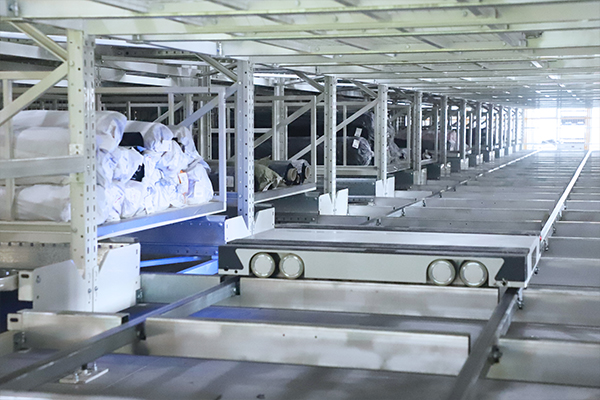
A handful of operational variables determine whether an automated storage system pays back quickly or drags on for years, and they rarely carry equal weight. The table below captures the ones we see repeatedly in project reviews.
| Factor | Impact on ROI Timeline | Typical Effect |
|---|---|---|
| Throughput increase | Accelerates | Every 20 percent throughput gain can shorten payback by 8 to 12 months in multi-shift operations. |
| Labor reduction | Accelerates | Replacing four to five full-time pickers typically saves USD 100,000 to USD 150,000 annually. |
| Storage density gain | Accelerates | A 40 to 60 percent density improvement shrinks building footprint and rent or construction cost. |
| Energy consumption | Delays | Cold storage automation can add 15 to 30 percent to energy bills without low-temperature-rated batteries. |
| Implementation time | Delays | Each month of installation delay postpones the start of savings and pushes breakeven further out. |
| System scalability | Mixed | Over-specifying adds upfront cost; under-specifying forces expensive retrofits later. |
In a recent pharmaceutical distribution project, we projected a 3.5-year payback from baseline assumptions. After the four-way shuttle system went live and the actual storage density exceeded design estimates by 22 percent, the client reached breakeven at 2.2 years. That shift occurred because the technology accommodated more SKUs in less space, eliminating a planned mezzanine expansion. This is the kind of real-world variable that spreadsheet models miss but that actual installations reward.
Comparing Automation Technologies for the Fastest ROI
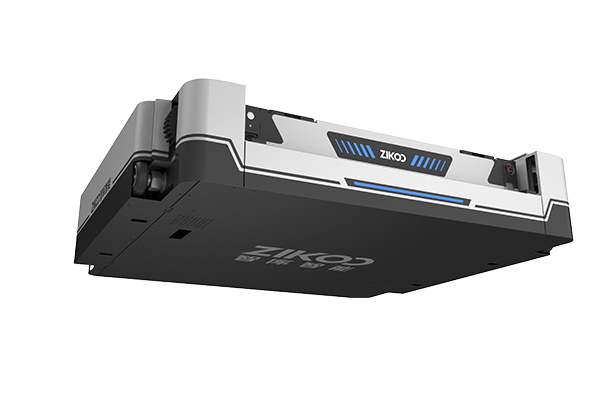
The specific automation technology you choose directly governs the payback period. The table below compares commonly deployed systems on the metrics that matter most to ROI.
| Technology | Storage Density | Typical Capex per Position | Hourly Throughput (Pallets) | Typical Payback Range |
|---|---|---|---|---|
| Four-way shuttle system | Very high | Moderate to high | 60 to 120+ | 1.5 to 3 years |
| Stacker crane AS/RS | High | High | 30 to 50 | 3 to 5 years |
| AGV-based storage | Medium | Moderate | 20 to 40 | 3 to 6 years |
| Manual selective racking | Low | Low | Human-dependent | Not applicable |
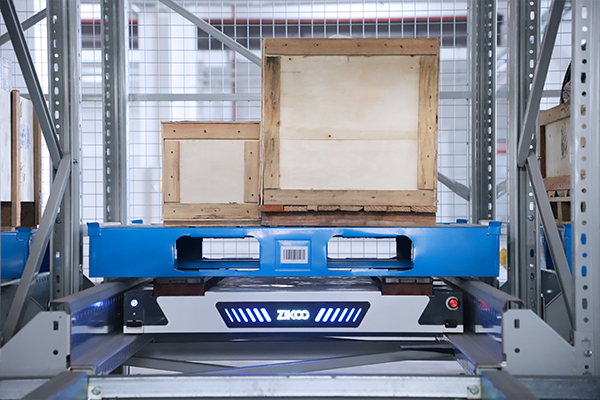
A four-way shuttle system such as the Zikoo R-bot, with a body thickness of 125 mm and a load capacity up to 1.5 tons, can double the number of pallet positions in the same footprint compared with standard selective racking. In cold storage environments, every square meter saved carries disproportionate value. For a frozen food distribution project, that density gain reduced the required building size by 1,200 square meters, effectively covering the shuttle system investment within the first two years.
If your application involves frozen food or pharmaceutical storage, the battery specification and corrosion-resistant design of the shuttle become critical to ROI. A standard shuttle will not survive repeated deep-freeze cycles. Before finalizing your technology comparison, it is worth confirming that the shuttle materials and battery chemistry match your environment. Reach out at info@zikoo-int.com to discuss how our R-bot cold chain customisation affects your operating costs.
Hidden Costs That Can Extend Your Payback Timeline
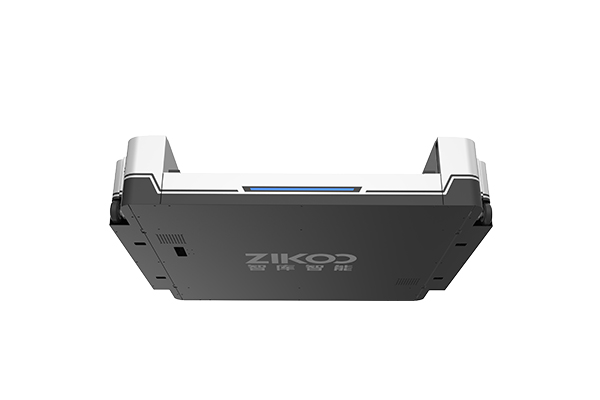
Even a well-chosen system can deliver a disappointing ROI timeline if the less visible costs are ignored during planning.
We have seen projects where stitching together a third-party WCS with a legacy ERP consumed an extra USD 80,000 in custom development and pushed go-live back by three months. Those delays do not merely postpone savings; they erode internal confidence and stall expansion plans. Software integration issues, whether between WMS, WES, WCS, and RCS modules or with host IT systems, remain the single largest hidden cost in warehouse automation.
Cold chain projects add another layer. When you automate a freezer chamber, battery performance at minus 25 degrees Celsius is not a footnote. Using standard lithium batteries without low-temperature protection causes rapid degradation, converting a one-time purchase into a recurring expense. Facility modifications, such as reinforced floor slabs or fire suppression adjustments, also often appear late in the project and can inflate the capital budget by 10 to 15 percent if not scoped early.
Proven Strategies to Accelerate Warehouse Automation ROI
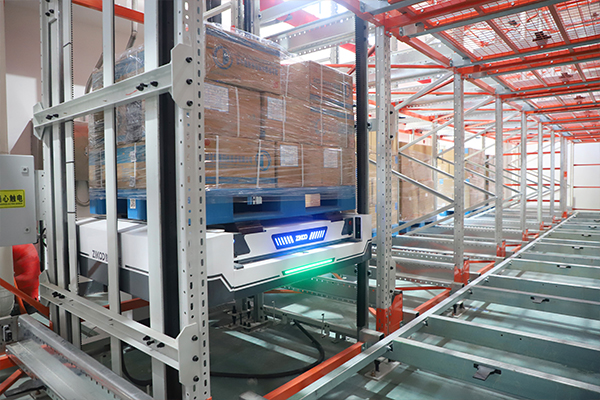
Shortening the payback period usually comes down to four decisions that experienced project teams make early.
First, prioritize storage density from the start. Systems that maximize cube utilization, like four-way shuttles with vertical elevators, deliver savings that compound year over year. Second, optimize internal workflows before automation. Automating a broken process merely accelerates the waste. Third, select a hardware and software platform that is natively integrated. A single vendor who supplies both the shuttle robots and the control software, WMS, WES, WCS, and RCS on one architecture, eliminates the integration tax that silently extends your ROI timeline. Fourth, partner with a provider that offers lifecycle support and can model your specific throughput profile during design.
For operations spanning ambient, cold, and deep-freeze zones, one vendor supplying the mechanical hardware, the cold-rated batteries, and the software stack removes the finger-pointing that multiplies integration expense. We have helped new energy sector clients accelerate payback by deploying R-bot four-way shuttles with customized stainless-steel construction and all-rubber buffer wheels that prevent metal contamination, eliminating a secondary handling and quality inspection step.
Turning Projections Into a Concrete Plan
Uncertainty around hidden costs, integration risks, and technology selection makes an accurate ROI timeline hard to project without a technical review. A system specified without accounting for battery chemistry in cold storage, or one that requires multiple software interfaces stitched together, can add months to your payback.
If you are evaluating pallet-to-person automation and need a technology-specific ROI analysis, send your warehouse dimensions, throughput targets, and storage temperature requirements to info@zikoo-int.com. We will map your site and provide a realistic payback assessment based on the hardware and software configuration that fits your operation. You can also reach us at (+86)-19941778955.
Common Questions About Warehouse Automation Payback
How long does a four-way shuttle system take to break even?
In most projects we have supported, the break-even point lands between 18 and 36 months. The exact figure depends on the number of shifts, the local labor rate, and the storage density gain achieved. For a three-shift manufacturing raw material store that replaced forklift-based pallet racking, the combined labor reduction and space savings returned the full investment in 20 months. Where throughput is lower and the facility runs a single shift, the timeline naturally stretches toward the longer end of that band.
Can small and mid-size warehouses see a fast ROI?
It is a common misconception that automation is only viable for mega-distribution centers. A compact four-way shuttle system can target a specific high-volume, high-SKU zone without automating the entire building. That focused approach keeps capital outlay low while delivering the storage density and picking speed that directly reduce operating cost. We have designed systems for warehouses as small as 3,000 square meters that reached payback in under two years because the automation concentrated on the zone where labor and space were most expensive.
If my throughput requirements grow over time, will that harm the system’s payback?
It depends on whether the system was planned with modular expansion in mind. A shuttle system that permits adding more robots or vertical elevators without rebuilding the rack structure can scale output without a second installation cost. The key is to specify a software platform that coordinates additional robots seamlessly. When growth is handled by simply plugging in extra shuttle units and reconfiguring the software parameters, the ROI period stays on track because incremental investment is small relative to the throughput gain.
How do maintenance costs affect the ROI timeline?
Maintenance of electric shuttle robots is modest compared to forklift fleets, but it is not zero. Battery replacement every three to five years, sensor recalibration, and occasional drive wheel replacement add roughly 3 to 5 percent of the initial system cost to the annual operating budget. These costs matter most in cold storage, where battery life can shorten if the wrong chemistry is selected. When the system is specified with lithium batteries rated for the correct temperature band, those maintenance items become predictable and do not derail the payback. If your project involves multi-temperature zones, sharing the temperature profiles helps us confirm the right battery selection and spare parts strategy.
If you’re interested, check out these related articles:
PTP Intelligent Warehouse Software Empowers Enterprises for Smart Upgrades
Six-Way Shuttle System Leads the Shift from Machines to Robots in Dense Storage Automation
Six-Way Shuttle: Pioneering the Future of Smart Warehousing
Smart Storage Revolution: Comprehensive Overview of Four-Way Shuttle Systems for Automatic 3D Warehouses


