


Warehouse automation does improve customer satisfaction, but not because robots move pallets faster. The gains come from a tighter order promise: the quantity is right, the shipment leaves on time, and the receiving team can trust what arrives. In my experience with pallet-to-person systems, a missed slot at a production line or a wrong carton at a distribution hub erases months of goodwill. This article explains where warehouse automation actually moves customer satisfaction, the tradeoffs buyers often overlook, and the checks that make the improvement repeatable.
Warehouse Automation Starts With the Order Promise
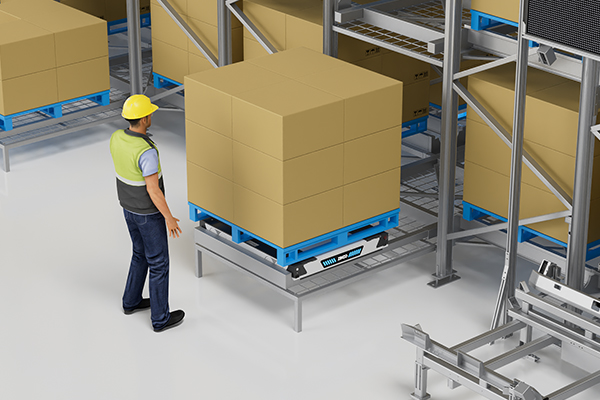
Most customer complaints do not start with a slow truck. They start with a mismatch between what the supplier confirmed and what the receiving team counts. In a manual warehouse, the order promise depends on a picker walking long aisles, remembering the exact SKU, and reading a dispatch note. Any one of those steps drifts, and the customer sees late lines or wrong cases. Warehouse automation changes this because the system does not rely on memory or walking distance. The R-bot Four-way Shuttle travels at 1.2 meters per second loaded and handles up to 1.5 tons, so a pallet moves to the picking station without a forklift driver searching for an open lane.
The software layer decides whether that hardware speed turns into a better promise. <PTP Intelligent Warehouse Software Empowers Enterprises for Smart Upgrades> covers how task allocation and wave logic keep multiple shuttles from competing for the same lift, which is where many outbound promises fall apart.
Order Accuracy Becomes the Satisfaction Mechanism
A clean line fill report hides the real issue when one carton is missing from the pallet or the wrong lot is loaded. Customers judge service on exceptions, not averages. Automation shifts accuracy from picker memory to location confirmation. Pallets are retrieved from assigned storage locations by a shuttle, delivered to a station, and scanned against the task before dispatch. The U-bot Omnidirectional Stacking Robot holds driving positioning accuracy of ±10 mm in narrow aisles, so the system knows which pallet it lifted and where it should go. That single change cuts the most common source of mis-shipment: a person picking from an adjacent location and not noticing.
| Customer failure | Manual cause | Automated control |
|---|---|---|
| Wrong carton shipped | Picker selects adjacent lane | Pallet location confirmed by task |
| Missing line on pallet | Paper pick list out of sync | Scan at station before dispatch |
| Wrong lot or batch | Manual data entry | Storage location recorded by software |
Warehouse Automation Speed Alone Does Not Win Customer Trust
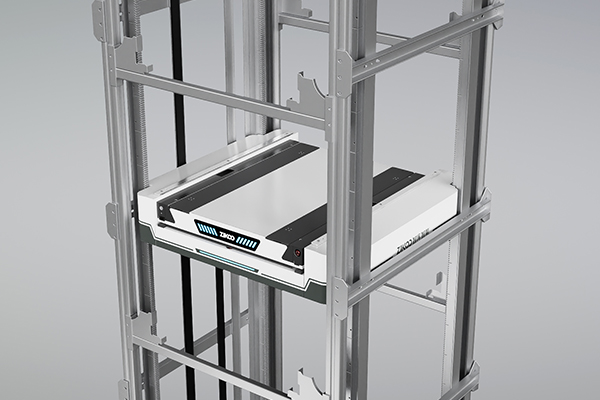
A warehouse can cut picking time from hours to minutes and still disappoint a customer if the advertised cutoff time does not match physical flow. Speed creates trust when it widens the order cutoff window and makes next-day dispatch repeatable. Four-way shuttles and vertical lifts can process outbound pallets without waiting for a full shift, and R-bot lithium batteries run for about eight hours on a full charge, so one shift can hand off without losing flow. But the customer-facing value is not the peak speed. It is the consistency: orders placed by 16:00 leave the same evening every day, not only on days with extra overtime.
If your service level relies on a late cutoff or frozen storage at -25°C, the shuttle count and lift configuration need to be simulated against your largest outbound hour, not your average day. Send your peak-hour dispatch volume and storage temperature range to info@zikoo-int.com. We can check whether the planned system protects the delivery window.
Exceptions Reveal the Real Service Difference
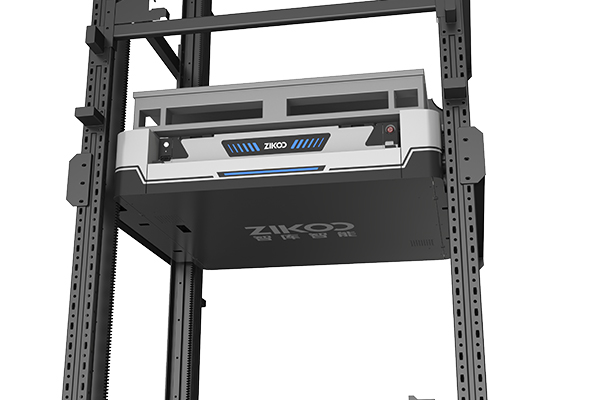
The best automation design is not the one with zero failures. It is the one that fails in a way the customer never sees. In a manual warehouse, one missing forklift driver can stop the dock for an hour. In a shuttle system, a single R-bot can be taken offline for service while the remaining robots continue retrieving pallets. The H-bot vertical shuttle handles pallets at positioning accuracy of ±1 mm, so lifts do not jam under misaligned loads. Network interruptions still require a fallback sequence, and peak-season surges can expose a system sized only for average flow. Buyers who expect satisfaction gains need to ask what happens when one robot stops at 14:00 on a peak day, because that answer matters more than the brochure speed.
If the conversation keeps coming back to storage density and labor cost, the economics need a sharper look. <Six-Way Shuttle: The Smart Warehousing Tool for Cost Reduction and Efficiency> covers how multi-level shuttle configurations lower cost per pallet position while keeping throughput high enough to hold customer order windows.
Warehouse Automation Buyers Should Run These Checks First
Customer satisfaction improves when the automation purchase starts from the outbound constraint, not from the storage chart. Four checks separate systems that move pallets from systems that move the customer’s score:
- Measure the true order promise. List the promised cutoff, delivery window, and pallet condition per customer class before sizing any shuttle.
- Map exceptions, not average throughput. Count late lines, wrong lots, and damaged pallets over eight weeks. These are the complaints automation must remove.
- Model the peak hour. A system that hits average demand will fail exactly when the customer needs the service most.
- Review the recovery path. Ask the supplier what happens when a shuttle fails, a lift stops, or the WCS loses connection. The answer should be a sequence, not a slogan.
If the audit shows a tight cutoff, a fragile peak hour, or mixed temperature zones, work from the outbound constraint rather than a generic equipment list. Send your SKU profile, pallet dimensions, and peak-hour dispatch target to info@zikoo-int.com or call (+86)-19941778955. We can confirm which R-bot and H-bot configuration will hold the order promise without overbuilding.
Buyers Ask These Warehouse Automation Questions
Does warehouse automation improve customer satisfaction for every business?
The common assumption is that automation always lifts service scores. It does not. Customer satisfaction improves when the system removes one of the failures the customer already sees: late departures, wrong pallets, wrong lots, or damaged goods. If a warehouse has no dispatch pressure and very low error rates, adding robots mostly changes the cost structure, not the customer experience. For operations with a tight cutoff, many SKUs, or repeated mis-shipments, the effect is usually visible within weeks. The right first step is to identify which service failure automation should remove, not to buy speed for its own sake.
Which matters more for customer satisfaction: faster picking or better order accuracy?
Better order accuracy matters more. A customer can accept a pallet arriving at 09:40 instead of 09:00 because the truck schedule usually has slack. A wrong carton or wrong lot stops a production line or a retail putaway process, and the customer remembers the cost of that stoppage. Fast picking is valuable when it extends the daily cutoff window, but it matters only after the accuracy baseline is stable. If we could improve only one, we would fix mis-shipment and mis-count rates first and add speed later.
What if our customers mostly care about lowest price?
It depends on how price sensitivity connects to reliability. If the customer truly switches suppliers for a minor price difference, automation may not change satisfaction because service was never the deciding factor. If price is a qualifier and late lines or stockouts are the hidden reason they keep an alternative supplier, automation can reduce the cost of service failures and protect the order margin. The test is simple: when your service fails, do you get another order? If yes, reliability is already part of the customer’s buying decision even if they describe themselves as price driven.
How long before customers notice the difference after automation goes live?
In projects we have worked on, customers notice the change when a concrete service promise shifts. That can happen quickly if the system extends the daily cutoff by several hours, removes a recurring mis-shipment, or makes weekend dispatch predictable. If the automation only reduces internal labor, the customer may never notice. We usually tell buyers to pick one customer-facing metric before commissioning: cutoff time, fill rate, damage rate, or lot accuracy. After go live, measure that metric weekly. Send your current dispatch targets to info@zikoo-int.com and we can confirm which automation change would show up first.
If you’re interested, check out these related articles:
Six-Way Shuttle System Leads the Shift from Machines to Robots in Dense Storage Automation
Six-Way Shuttle: Pioneering the Future of Smart Warehousing
Smart Cold Chain Era: Six-Way Shuttle System Redefines Storage Efficiency with Maximum Density
Software-Driven Hardware: Six-Way Shuttle Maximizes Warehouse Efficiency


