


Most 3PL integration failures show up first as inventory records that have drifted half a lane from physical pallets. The robot is not lost; the system producing the task and the system moving the pallet no longer agree on what is available, where it sits, and which client account owns the next move. WMS and robotics integration in 3PL operations changes that coordination from a manual reconciliation exercise into a structured data handoff. The practical question is which layer controls each decision, and how a facility verifies the sequence before accepting a supplier’s performance claims.
What Changes When a 3PL Connects WMS and Robotics?
A WMS that only prints work orders leaves the most important decisions to the warehouse floor. The supervisor reads the queue, decides which client is most urgent, assigns a forklift, and resolves exceptions by walking to the location. Robotics removes the forklift but does not remove the decision. If the WMS cannot release individual orders to an execution layer, a robot fleet can arrive before the control logic is ready to name the next move.
In a 3PL, the difficulty is not moving pallets. It is that multiple client accounts share the same building but carry different order priorities, pallet footprints, temperature requirements, and billing rules. Once WMS and robotics are connected, those rules must live in a machine-readable handoff. When a client account sells a pallet to a new customer or requests a same-day wave, the WMS has to communicate whether that pallet is reserved, movable, or still in quality hold before any robot is assigned.
The first measurable change is usually inventory timing. The system knows where a pallet should be and what the robot just moved, so the front office does not need a daily cycle count to find missing stock. The second change is labor direction. Workers stop chasing equipment and start managing exceptions: a damaged pallet, a barcode that will not scan, a lane blocked by a punctured bag. That is the operation a 3PL should design toward, not a fully dark warehouse on day one.
Which Integration Interfaces Keep WMS and Warehouse Robots Synchronized?
The failure point is rarely the robot drive motor. It is the handoff between systems that speak different timing languages. A WMS works in transactions and inventory states. A robot control system works in positions, speed curves, and battery windows. Between them, the integration layer must decide which system is allowed to make which decision, and what happens when one system’s answer arrives late.
Why WCS and WES sit between WMS and robot fleets
The WCS receives a work request, translates it into equipment steps, and releases the physical move after satisfying all interlocks. The WES sits above the WCS and manages order orchestration: which wave runs first, which workstation has capacity, and whether an order should be released before its transport path is free. In 3PL facilities with many client accounts, the WES also protects service-level commitments that a pure equipment controller cannot see.
| Layer | Owns | Typical 3PL failure mode |
|---|---|---|
| WMS | Inventory records, order pool, client billing | Inventory shows available, but the pallet is blocked in a quality area |
| WES | Order release, priority rules, wave orchestration | Two client waves compete for the same equipment and neither queue rule declares a winner |
| WCS | Equipment workflow, destination assignment, interlock checks | A robot receives a move without a confirmed destination |
| RCS | Robot dispatch, path planning, charging, fault recovery | Peak demand drains the fleet while charging tasks are held back |
Where data ownership issues usually appear
The easiest way to create a problem is to let two systems update the same inventory field. A 3PL WMS may be the billing system of record, but a WES may know more accurately that a carton has been dropped at a rework station. If both write status changes to the same record, reconciliation becomes a permanent background job. Define one owner for each state transition before go-live. The WMS may own “available for order” while the WCS owns “physically moving” and the RCS owns “fault recovery.”
The execution layer that brokers order release, destination assignment, and exception handling belongs in a purpose-built warehousing platform rather than a generic ERP module. <PTP [Intelligent Warehousing](https://www.zikooint.com/asrs-automated-storage-and-retrieval-system-solutions) Platform: Building a Flexible and Smart Logistics Ecosystem> covers how WMS, WES, WCS, and RCS functions are split across system layers so dispatch decisions do not get trapped in one module.
Where Do Pallet-to-Person Robots Fit in a 3PL Warehouse?
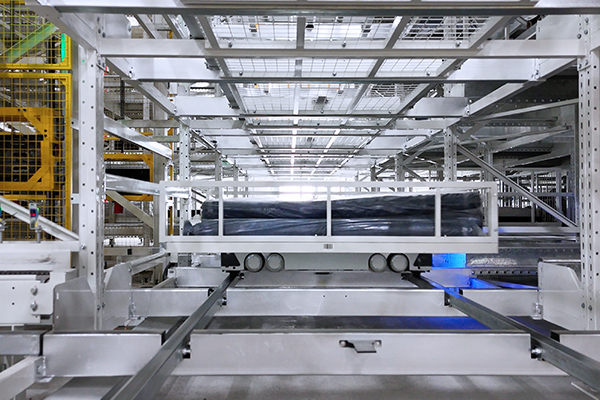
Pallet-to-person automation is not a single robot. It is a storage and retrieval chain: a shuttle moves inside a rack lane, a vertical transfer device moves that pallet between levels, and a workstation completes the operator-facing task. In a 3PL, this chain makes the most sense when pallets are dense, movement volume is high enough to keep the fleet busy, and the facility would otherwise spend labor walking between far rows.
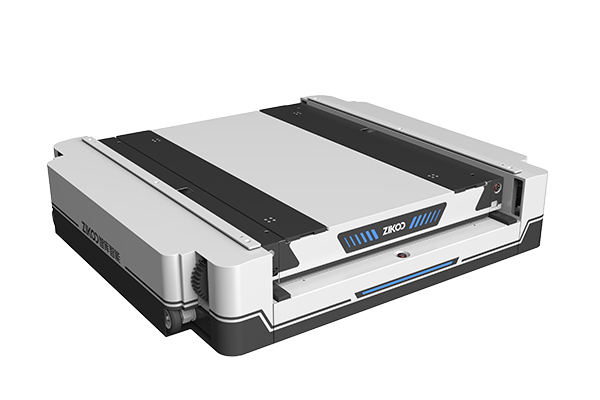
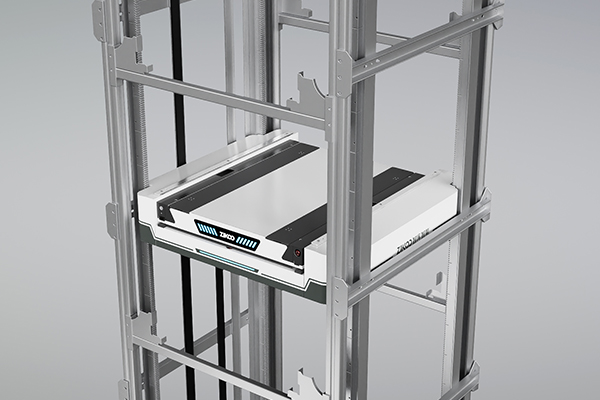
The R-bot Four-way Shuttle is built for dense storage and moves in four directions within a lane grid. A body thickness of 125 mm keeps rack layers shallow without losing load stability, and its rated load reaches 1.5 t on the Japanese and heavy-duty standard models, with a 2 t option for large pallets. The H-bot vertical bidirectional shuttle then takes over floor-to-level transfer, extending the system from horizontal movement to vertical transport so a six-way shuttle network can handle pallet movements across aisles and levels.
| Model | Rated load | Pallet compatibility | Empty speed | Loaded speed |
|---|---|---|---|---|
| R1200B standard | 1200 kg | 1200 × 800 to 1000 mm | 1.6 m/s | 1.2 m/s |
| R1200A American | 1200 kg | 1016 × 1219 mm | 1.6 m/s | 1.2 m/s |
| R1500J Japanese | 1500 kg | 1100 × 1100 mm | 1.6 m/s | 1.2 m/s |
| R1500B heavy duty | 1500 kg | 1200 mm | 1.6 m/s | 1.2 m/s |
| R2000B large pallet | 2000 kg | 1400 mm | 1.35 m/s | 1.0 m/s |
Most models run about 8 hours on a full charge; the large-pallet model runs about 7 hours. The H-bot positions at ±1 mm, which keeps lane-to-level transfer aligned when different pallet types enter the same port. In a mixed-client facility, the value is not only density. The same hardware family can accept standard, American, Japanese, and large pallets without forcing the operator to maintain a separate storage aisle for each client.
Pallet-to-person automation works best when robots can move across all four horizontal directions and still connect to vertical transfer points without a separate conveyor loop. <Six-Way Shuttle Unlocks the Era of True 3D Intelligent Warehousing> explains why adding vertical bidirectional movement to a four-way shuttle changes inventory access patterns in high-density storage.
If your 3PL operation handles several client pallet types across ambient and cold rooms, the shuttle model will not be decided by load rating alone. Confirm rack depth, pallet overhang, and temperature band before locking the lane profile, because a pallet that overhangs even 30 mm can interrupt docking or damage adjacent loads. Send your pallet dimensions, load weight, and temperature range to info@zikoo-int.com and we can check which configuration fits before you finalize the storage layout.
What Risks Should 3PL Teams Validate Before WMS and Robotics Integration?
The risk profile is not the same as a private warehouse. A 3PL cannot simply switch off one client’s activity to test the system. Multiple client accounts share rack positions, dock doors, and labor. The integration design must plan for what happens when two clients need the same equipment in the same minute, when one account changes its pallet type, or when an inbound trailer arrives without a promised ASN.
The test scenarios most sites forget
Most teams test the happy path: one order, one pallet, one destination. The more valuable tests are exception paths. What happens when a pallet is not at the expected location? What if a barcode is damaged and the operator needs to re-label at the picking station? What if a client cancels an order after it has already been released to the WCS? If each of these cases requires a supervisor to call the software vendor during the day, the system will still depend on the same tribal knowledge the automation was meant to reduce.
Where service boundaries hide project risk
The mechanical supplier, the WMS partner, the racking installer, and the building controls contractor rarely think about the same failure. A shuttle may stop because a load sensor trips, but the WCS may record it as a timeout and release another task into the same lane. The 3PL team should ask each partner who owns the recovery path. If the answer is “the integrator will handle it,” get the scenario written into the commissioning plan, not the installation narrative.
What Should 3PL Buyers Ask Before Finalizing a WMS and Robotics Integration Plan?
The most useful request for proposal is not a list of generic features. It is a building profile, a client account profile, and a data handoff map. Give the vendor the building height, rack depth, pallet footprint, inbound and outbound pallets per shift, and the share of orders that require split-case picking or special handling. Without those inputs, a quote will be based on assumptions that may not match the site.
Zikoo Smart Technology Co., Ltd. supplies the pallet-to-person side of that system: the U-bot omnidirectional stacker robot for narrow aisles, the R-bot four-way shuttle for dense storage, the H-bot vertical bidirectional shuttle for level transfer, and PTP software covering WMS, WES, WCS, and RCS.
The next step is a layout and interface review. Send your building dimensions, SKU count, expected pallet movements per shift, pallet type, and whether the site is new construction or an existing operation to info@zikoo-int.com or call (+86)-19941778955. We can return a phase one layout, a data handoff map, and a list of test scenarios matched to your client agreements before you issue a request for proposal.
What Do 3PL Operations Teams Ask About WMS and Robotics?
Do we need to replace our existing WMS before adding robotics?
Usually not, unless the WMS cannot expose inventory state changes or release work to an external orchestration layer. A WES or WCS can sit below the WMS and handle the real-time robot tasking while the WMS remains the billing and inventory system of record. Replacement becomes necessary when the WMS cannot separate “available to promise” from “physically movable” or cannot accept a cancellation after release. In those cases, the integration team adds so many workarounds that the project becomes slower than a phased WMS upgrade.
How much labor does a pallet-to-person system actually remove?
The wrong comparison is robots versus forklift drivers. Pallet-to-person automation removes walking, searching, and double handling before it removes headcount. The operator stays at a workstation while shuttles bring the pallet, so one person can complete more order lines per shift without traveling between aisles. The labor effect depends on current travel distance and picking density, not only the number of drivers. A 3PL with long aisles and low line density gains more than a compact operation where workers already stand near the stock.
Can one shuttle system serve multiple client accounts with different pallet sizes?
It depends on pallet geometry and the storage zone design. A four-way shuttle lane is built around a specific pallet footprint and load rating. Mixed footprints can run in separate lanes or zones, but they should not share the same lane unless the rack and shuttle model can handle the oversized dimension. In practice, many 3PL buildings dedicate client zones by pallet type, temperature band, or throughput class, then let the WES keep orders inside the correct zone.
What should a 3PL verify before accepting a supplier’s cycle time claim?
In projects we have reviewed, the difference usually comes from what the supplier excluded from the cycle calculation. A travel speed on a clean lane is not a cycle. Confirm whether the number includes loaded travel, vertical transfer, handshakes at the workstation, and queue congestion when several orders release at once. Ask for the same test under peak wave conditions. A 45 second cycle built from empty movement will not hold up during a same-day dispatch wave. If your facility has large pallets or cold storage requirements, share your cycle definition, pallet size, and temperature band with info@zikoo-int.com and we can run the comparison against the correct robot configuration before you commit.
If you’re interested, check out these related articles:
Multi-Scenario Smart Adaptation: Zikoo’s Six-Way Shuttle Powers the Digital Transformation of Warehousing
Six-Way Shuttle: The Dual-Engine Solution for High-D


