


Running a warehouse without real-time visibility into what’s actually happening on the floor feels a bit like driving with a fogged windshield. You can move forward, but you’re constantly reacting instead of anticipating. That’s where a solid Warehouse Management System changes the game—not through magic, but through systematic control over the chaos that naturally builds up in any busy distribution center. The technology has matured considerably over the past decade, and when you pair modern WMS capabilities with robotics that can actually execute on those optimized instructions, the efficiency gains become tangible rather than theoretical.
What a Warehouse Management System Actually Does
A Warehouse Management System handles the daily orchestration of everything moving through your facility. It tracks inventory in real time, assigns tasks to workers and equipment, and maintains visibility across receiving, storage, picking, packing, and shipping. The software essentially becomes the nervous system of your operation, processing data from barcode scanners, RFID readers, and integrated robotics to keep materials flowing efficiently.
Beyond basic tracking, modern WMS platforms optimize how products get stored and retrieved. They calculate the best putaway locations based on velocity data, suggest picking routes that minimize travel time, and flag discrepancies before they snowball into bigger problems. The strategic value shows up in measurable improvements: inventory accuracy typically jumps above 99%, order fulfillment rates climb, and warehouse space gets used more intelligently.
Features That Define Current WMS Capabilities
Today’s warehouse management systems pack considerably more functionality than their predecessors from even five years ago. Real-time inventory tracking provides minute-by-minute stock visibility across every location. Order fulfillment modules optimize how picks get batched and sequenced. Labor management tools assign tasks based on worker proximity and skill level while tracking productivity metrics.
Integration capabilities matter enormously here. A WMS that can’t talk to your ERP system or transportation management software creates data silos that undermine the whole point of centralized control. The best implementations establish bidirectional data flows that keep inventory records synchronized across platforms and provide genuine end-to-end supply chain visibility.
How WMS Delivers Measurable Cost Reductions
The financial case for warehouse management system implementation rests on concrete operational improvements rather than abstract efficiency promises. Automated data capture through scanning eliminates the manual keying errors that cause mispicks and incorrect shipments. When your system enforces process compliance—requiring verification scans at each step—the error rate drops dramatically, and so do the costs associated with returns and reshipping.
Picking strategy optimization produces some of the most visible gains. Instead of sending workers on random walks through the warehouse, the WMS calculates efficient routes and groups orders intelligently. Batch picking, zone picking, and wave planning all reduce the distance traveled per order. Similarly, smart putaway rules position fast-moving products in accessible locations, cutting retrieval time significantly.
Understanding the Investment Payback Timeline
Most WMS implementations achieve positive ROI within 18 to 36 months, though the timeline varies based on operation scale and automation depth. Labor cost reductions typically drive the largest savings—optimized task assignment means fewer hours spent on non-productive movement. Accuracy improvements eliminate the expense of fixing mistakes, which can run surprisingly high when you factor in customer service time, replacement shipping, and inventory write-offs.
Throughput increases contribute to revenue growth rather than just cost cutting. When your warehouse can process more orders per shift without adding headcount, you’re effectively expanding capacity without expanding your footprint. Customer satisfaction improvements from faster, more accurate fulfillment create downstream benefits that don’t always show up in simple ROI calculations but matter considerably for long-term business health.
For a deeper understanding of how modern software platforms empower smart upgrades in enterprise logistics, we recommend exploring 《PTP Intelligent Warehouse Software Empowers Enterprises for Smart Upgrades》.
Robotics Integration Creates the Smart Warehouse
Connecting advanced robotics to your WMS transforms what’s possible in warehouse automation. The software provides the intelligence—deciding what needs to move where and when—while robots execute those instructions with consistency that human workers simply can’t match over eight-hour shifts. Zikoo Smart Technology’s PTP Smart Warehouse Software demonstrates this integration approach, coordinating U-bot, R-bot, and H-bot robots through unified WMS/WES/WCS/RCS control.
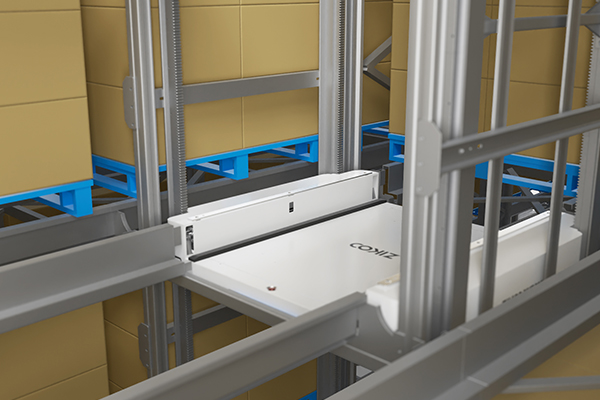
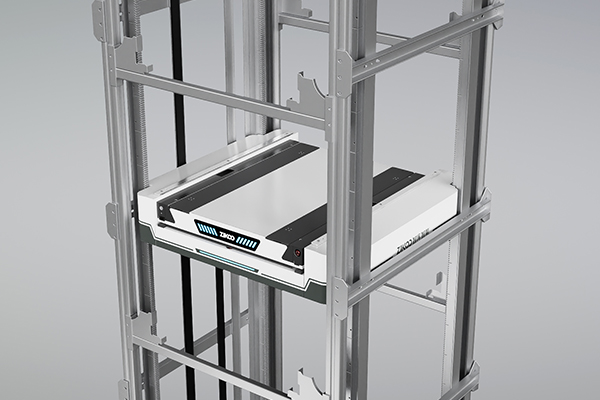
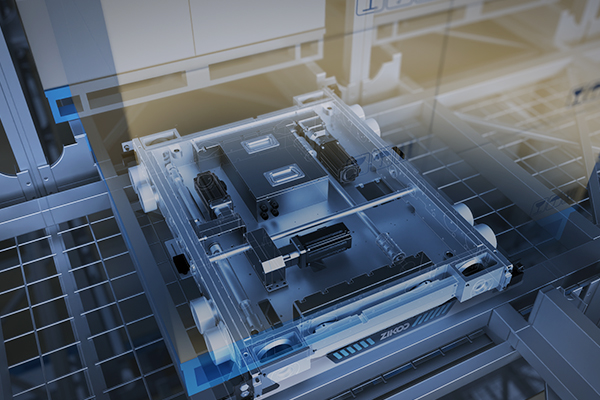
The R-bot Four-way Shuttle handles Dense storage applications, moving pallets horizontally across rack levels. Pair it with the H-bot Vertical Bidirectional Shuttle, and you create a Six-way shuttle system that establishes true three-dimensional material flow. Products move not just along aisles but up and down through the rack structure, dramatically increasing both storage density and throughput rates.
| Product | Key Feature | Load Capacity | Application Scenario |
|---|---|---|---|
| U-bot Omnidirectional | Narrow aisle operation (min. 2100mm) | 1000 kg | E-commerce, Pharma, Manufacturing |
| R-bot Four-way Shuttle | Flexible four-way movement, dense storage | Up to 1500 kg | E-commerce, Cold Chain, Manufacturing |
| H-bot Vertical Shuttle | Vertical transportation hub, ±1mm accuracy | 1800 kg | High-rack warehouses, urban centers |
| U-bot + AMR System | Hybrid “To B” palletization & “To C” picking | N/A | Multi-SKU e-commerce, manufacturing |
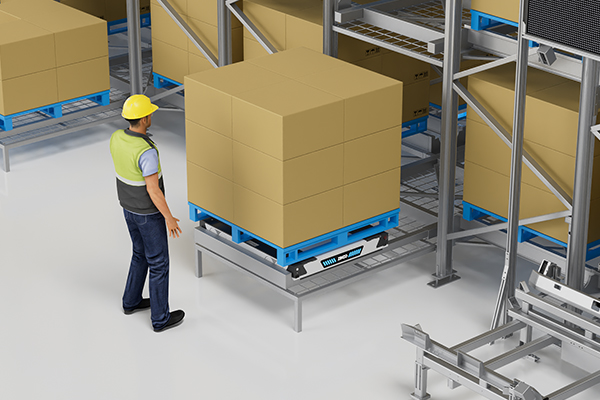
The U-bot Omnidirectional Stacking Robot brings particular value in space-constrained facilities. Its U-shaped body design allows operation in aisles as narrow as 2100mm while still handling 1000 kg loads up to 8 meters high. For operations mixing wholesale palletization with individual piece picking, the U-bot + AMR Narrow Aisle Picking System achieves picking rates exceeding 300 pieces per hour alongside pallet handling at 80+ pallets per hour. Storage density improvements of 30% or more become achievable when the WMS and robotics work as a coordinated system.
Getting Implementation Right
WMS implementation projects fail more often from organizational issues than technical ones. Data migration from legacy systems requires meticulous mapping and validation—garbage in, garbage out applies with particular force here. Employee resistance can undermine even technically excellent deployments if people don’t understand why processes are changing or how to use new tools effectively.
Successful implementations start with honest needs assessment. What problems are you actually solving? Where are the current bottlenecks? A WMS that’s oversized for your operation creates unnecessary complexity, while one that’s undersized limits future growth. Scalability matters because warehouse operations rarely stay static—seasonal peaks, new product lines, and business growth all stress system capacity.
Selecting the Right System for Your Operation
The WMS selection process should start with your specific operational requirements rather than feature lists. What’s your order profile? How many SKUs do you manage? What integration points exist with your current technology stack? A system that excels for high-volume e-commerce fulfillment might be poorly suited for manufacturing distribution with different picking patterns and inventory characteristics.
Vendor evaluation goes beyond software capabilities. Implementation methodology, ongoing support quality, and the vendor’s track record with operations similar to yours all influence long-term success. Customization flexibility matters because no two warehouses operate identically, and a rigid system that can’t adapt to your workflows creates friction that never fully resolves.
To understand how Zikoo’s Six-way shuttle system can lead the digital transformation of warehousing, read 《Multi-Scenario Smart Adaptation: Zikoo’s Six-Way Shuttle Powers the Digital Transformation of Warehousing》.
Where Warehouse Management Technology Heads Next
The trajectory points toward increasingly autonomous warehouse operations. AI and machine learning capabilities are moving from experimental to practical, enabling WMS platforms to optimize dynamically rather than following static rules. Predictive inventory management uses demand signals to position stock before orders arrive, reducing both carrying costs and stockout risk.
Machine learning algorithms continuously refine operational decisions based on actual performance data. Picking paths that worked well last month might not be optimal as product mix shifts—adaptive systems recognize these patterns and adjust. Equipment maintenance becomes predictive rather than reactive when sensors feed performance data into models that identify degradation before failures occur.
Emerging Capabilities Worth Watching
Cloud-based WMS deployment continues gaining ground, offering scalability advantages and reducing infrastructure management burden. IoT sensor proliferation provides richer data streams—temperature monitoring for cold chain compliance, vibration sensing for equipment health, location tracking for assets and personnel. This granular visibility enables control precision that wasn’t previously feasible.
Data security requirements intensify as WMS platforms handle increasingly sensitive operational and customer information. Robust access controls, encryption, and audit capabilities become table stakes rather than premium features. The warehouses that adapt most successfully to these technological shifts will build supply chain resilience that translates directly into competitive advantage.
Transform Your Warehouse Operations
Zikoo Smart Technology Co., Ltd. brings together PTP Smart Warehouse Software with pallet-to-person robotics including U-bot, R-bot, and H-bot systems. The combination delivers measurable improvements in efficiency, accuracy, and scalability. Contact us for a personalized consultation or to schedule a demonstration of our warehouse management system capabilities. Email: info@zikoo-int.com | Phone: (+86)-19941778955
Frequently Asked Questions About Warehouse Management Systems
How does WMS improve warehouse operations?
A warehouse management system improves operations by optimizing where products get stored, how picks get routed, and how labor gets allocated. Real-time inventory visibility prevents stockouts and overstock situations. Process enforcement through required scanning reduces errors. The cumulative effect shows up as faster order fulfillment, higher accuracy rates, and lower per-order costs.
What are the key features of a modern WMS?
Current warehouse management systems include real-time inventory tracking, order management with intelligent batching, labor management with task assignment and performance monitoring, slotting optimization, cross-docking support, yard management, and comprehensive reporting. Advanced platforms like Zikoo’s PTP Smart Warehouse Software add robotics integration that extends automation capabilities significantly beyond what software alone can achieve.
Why is WMS crucial for supply chain resilience?
Warehouse management systems provide the visibility and agility needed to handle disruptions without operational collapse. Accurate inventory data enables confident decision-making during supply constraints. Optimized processes maintain throughput even when staffing fluctuates. The ability to quickly adjust fulfillment priorities helps businesses respond to demand shifts that would overwhelm less systematic operations.


