


When you compare an automated storage and retrieval system manufacturer with a trading company, the difference is not whether both can return a quotation. It is who controls engineering, integration, testing and after-sales accountability. A manufacturer owns the technical baseline; a trader coordinates suppliers. That distinction should change how you audit every scope item, certificate and reference.
Manufacturer vs Trader: The Real Dividing Line
A genuine AS/RS manufacturer performs structural design, control development, software integration, production or assembly, factory testing and service planning. A trading company primarily buys components, arranges logistics and manages supplier communication. Both channels may be able to deliver a pallet shuttle system, but only one can change a beam pitch, rewrite a WCS rule, issue an updated drawing set and remain accountable for the result.
That matters in customization. Pallet automation is rarely a catalog sale. Rack depth, pallet type, building tolerances, throughput profile and WMS handshake all affect final performance. When a design revision appears, the trader must go back to an external factory; the manufacturer can release the change internally. This is the difference between a controlled change and a handoff.
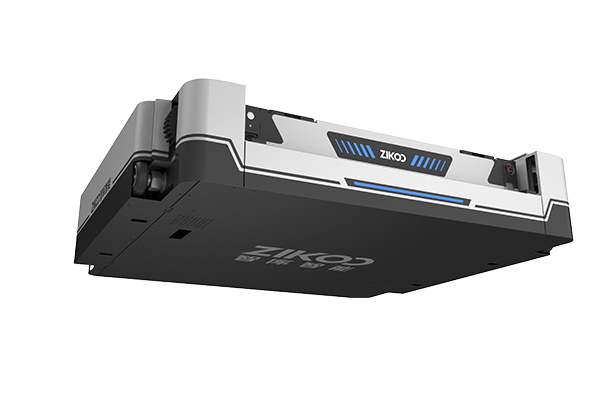
Dense-storage configuration choices continue after supplier selection. <Six-Way Shuttle Powers Dense Storage: Breaking Space Limitations> covers lane depth, rack layout and how space targets are reached.
Where Trading Companies Create Project Risk
The risk is usually not dishonesty; it is fragmented control. A trading company’s quotation may omit interface items such as fire protection cutouts, floor load reinforcement, safety fencing, licensed software and commissioning because those items sit outside its contract with the producing factory. The buyer may discover them later as variation orders.
Compliance evidence also becomes harder to verify. Storage and retrieval machines sold into regulated markets may need to show EN 528 safety verification [1]. Autonomous pallet-handling equipment should be evaluated under ISO 3691-4 safety requirements [2]. A manufacturer can trace tests to the specific model; a trader may only offer a generic certificate that does not match the quoted configuration.
Software is the next hidden boundary. Warehouse automation depends on WMS/WCS orchestration. A trading company may supply a shuttle with an unfamiliar control layer, leaving the site team to integrate against an unsupported API. A manufacturer with its own PTP Smart Warehouse Software platform can close the loop between pallet moves, missions and data.
What a Manufacturer Can Prove
Manufacturer evidence is more detailed and more testable. Request the assembly BOM, model-specific drawings, routine test reports, software version log, spare-parts list and maintenance manual. If the supplier cannot show who designed the shuttle’s drive path and control board, you are likely not talking to the design owner.
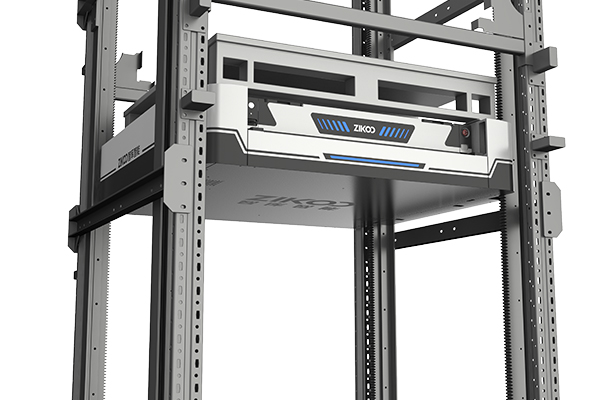
Product lineage should also be specific. For example, a four-way shuttle may be a 125 mm-thin vehicle with multiple pallet standards, not a vague “we can supply” line item. A four-way shuttle system built on a fixed mechanical platform can be evaluated for rack interface, louver clearance, battery autonomy and lift travel in the same way you would audit any engineered asset.
Manufacturing quality systems matter when the certificate scope is valid. ISO 9001:2015 is useful only if its scope covers design, production, installation and service [3]. Ask for that scope page, not just the logo. For performance claims such as pallet moves per hour, ask whether the figure is based on FEM 9.851 test conditions and a defined storage profile [4].
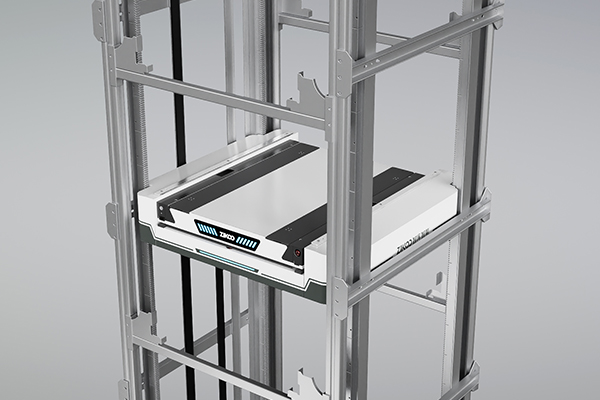
Compliance and repeatability matter beyond the first installation. <Standardization Empowers Global Delivery: Zikoo Robotics Six-Way Shuttle Expands Overseas> covers how standardized modules reduce delivery risk across regions.
Seven-Point Channel Audit
Before you compare two quotations, run the same evidence check against both channels.
| Audit point | Manufacturer signal | Trading company warning sign |
|---|---|---|
| Legal entity | Factory address, production license, export records | Office-only address, no production site |
| Drawings | Model-specific GA drawings and revision history | Generic brochure drawings |
| Compliance | Test reports traceable to the quoted model | Certificate without model number or test date |
| Software | Own WES/WCS/RCS version and release notes | Third-party control with limited access |
| References | Named site, contact, scope and go-live date | Anonymous or edited project list |
| Spare parts | Stock list with lead times per region | “We will source when needed” |
| After-sales | Remote access, SLA, escalation path | No local service partner or SLA review |
The reference check should be evidence-based. Ask for a site contact, not a marketing photo. A real reference includes the installed rack configuration, number of shuttles, SKU profile, temperature range and go-live date. If those details are unavailable, the project may not exist in the form presented.
Commercial, After-Sales and Decision Framework
A lower price is not the same as a lower total cost. Harden the commercial comparison by listing scope boundaries, interface ownership, software license duration, acceptance criteria and warranty start. The manufacturer can often absorb the variation costs that a trader must pass through, because the manufacturer controls the engineering changes.
Use this inquiry checkpoint before you award:
Inquiry checklist: Send your current layout, pallet type, SKU count, target throughput, storage temperature and integration interface to info@zikoo-int.com. A manufacturer-side audit can identify the scope items that may otherwise appear later as variation orders.
After-sales capability should be evaluated as an engineering function. Confirm that the supplier maintains spare-part configurations for the quoted model, can support remote diagnostics, and can upgrade software without replacing the entire control layer. For cold chain or high-throughput applications, ask for the battery and component derating logic, because the after-sales risk multiplies when the environment is outside standard conditions.
Start with the system requirement, not the supplier type. Define storage capacity, pallet inbound and outbound rates, number of SKUs, facility height, floor flatness, temperature and WMS ERP handshake. Then compare the two channels against the same scope. A trader can be a reasonable route for simple, standard equipment where the buyer already has a strong integration team. The manufacturer route becomes more valuable when the project involves dense storage, cold chain, custom rack interfaces, or multi-level pallet movement.
Purchase channel is only one part of total cost. <Smart Warehousing Starts Here: Cost-Effective Four-Way Shuttle Systems> covers the cost structure and design levers that determine long-term value.
Start With a Verifiable Engineering Partner
Before you sign, request the audit pack: model-specific drawings, compliance certificates, reference contact details, software release documentation, after-sales SLA and spare-parts lead times. Compare the two channels side by side. Then ask each supplier to explain how it will handle a late revision, an interface change and first-year maintenance.
Zikoo Smart Technology Co., Ltd supports warehouse automation projects with pallet-to-person robotics, four-way shuttle systems, omnidirectional stacker robots and PTP smart warehouse software. To run a scope and channel audit for your facility, send your layout, pallet data and throughput targets to info@zikoo-int.com or call (+86)-19941778955.
Frequently Asked Questions
How can I verify real automation project references?
Request a named site contact, installed scope, go-live date, pallet type, SKU count and temperature range. Ask what changed after installation and whether the site is available for a visit or a structured call. A manufacturer should be able to identify the engineers who designed and commissioned the system.
Do trading companies provide after-sales service comparable to a manufacturer?
Some do, but the depth depends on whether they own spare-parts stock, remote diagnostic tools and software access. Ask for the SLA, regional service partner and escalation path before comparing the price.
Should I compare multiple suppliers for automation projects?
Yes. Compare at least two manufacturers and one trading company only if the scope is simple. For integrated pallet automation, compare suppliers on the same scope-of-work document so that price differences reflect real engineering differences.
How do I evaluate automation system quotations?
Normalize the quotation by scope boundaries, interface ownership, software license duration, acceptance tests, warranty start and spares. If a quotation is much lower, identify which items are excluded rather than assuming a discount.
Is an AS/RS manufacturer always the better choice?
Not always. A trading company can be acceptable for simple, standard equipment when your internal team manages integration. For customized, dense storage or software-dependent systems, a manufacturer is usually the stronger route because it owns design changes and service continuity.
What documents should I request before signing?
Request model-specific drawings, test reports, compliance certificates with the correct scope, software release notes, spare-parts list, after-sales SLA and a named reference contact. Avoid accepting generic brochures as proof.
What is the procurement process for warehouse automation projects?
A structured process includes requirement definition, site data validation, supplier shortlisting, scope-of-work comparison, reference audit, detailed quotation review, factory acceptance planning, on-site acceptance and after-sales sign-off. The channel audit is part of supplier shortlisting.
How can I avoid risks when purchasing warehouse automation systems?
Keep the scope in writing, verify design ownership, validate references, test the software interface, and require an after-sales escalation path. Do not treat a low price as risk transfer; treat documented scope and user evidence as risk reduction.
References
[1] EN 528:2008, Rail dependent storage and retrieval equipment — Safety requirements.
[2] ISO 3691-4:2020, Industrial trucks — Safety requirements and verification — Part 4: Driverless industrial trucks and their systems.
[3] ISO 9001:2015, Quality management systems — Requirements.
[4] FEM 9.851:2003, Performance data of storage and retrieval machines — Cycle times.
If you’re interested, check out these related articles:
Reshaping Warehouse Value: Six-Way Shuttle Leads the Digital Transformation
PTP Intelligent Warehouse Software Empowers Enterprises for Smart Upgrades
Smart Cold Chain Era: Six-Way Shuttle System Redefines Storage Efficiency with Maximum Density
Six-Way Shuttle Drives Warehouse Upgrades: Building an Intelligent Automatic 3D Warehouse


