


Modern warehouse operations face increasing pressure to optimize space, reduce labor costs, and accelerate order fulfillment. Automated Storage and Retrieval Systems (AS/RS) offer a powerful solution to these challenges, transforming how goods are stored and moved within a facility. Evaluating whether an AS/RS is suitable for your specific needs requires a clear understanding of its capabilities and how it aligns with your operational goals.
What Makes AS/RS Work and Why Warehouses Adopt It
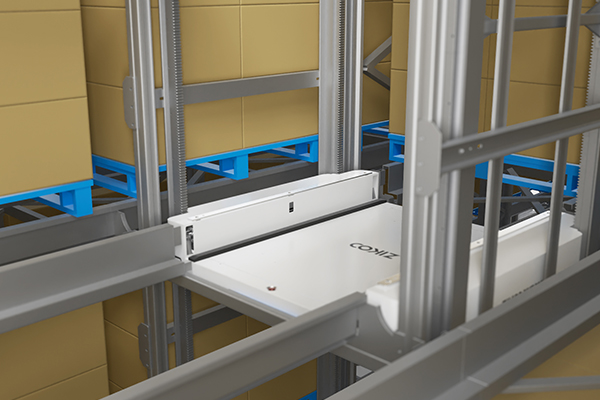
An Automated Storage and Retrieval System (AS/RS) is a computer-controlled combination of equipment that automatically places and retrieves loads from defined storage locations. These systems typically consist of storage racks, robotic cranes or shuttles, and a control system that manages inventory and directs operations. The primary goal of automated warehousing is to maximize storage density, improve throughput, and reduce reliance on manual labor.
The strategic advantages of implementing an AS/RS are substantial. Storage density can increase dramatically, sometimes by 50% or more, as AS/RS units utilize vertical space far more effectively than traditional methods. Automated systems run 24/7, handling repetitive tasks with consistent speed and precision. This directly contributes to higher throughput, meaning more goods move in and out of the warehouse per hour. Inventory accuracy improves significantly because the system tracks every item’s location and movement with minimal human error. The goods-to-person picking method, common in AS/RS setups, brings items directly to operators, reducing travel time and further enhancing productivity.
| Benefit | Description |
|---|---|
| Storage Density | Maximizes vertical and horizontal space utilization. |
| Operational Efficiency | Automates repetitive tasks, reducing manual effort and errors. |
| Throughput | Increases speed of storage and retrieval operations. |
| Inventory Accuracy | Provides precise tracking of all items within the system. |
| Safety | Minimizes human interaction with heavy machinery and high racks. |
| Labor Costs | Reduces dependence on manual labor, addressing availability issues. |
How to Assess Whether AS/RS Fits Your Warehouse
Determining if an AS/RS is the right fit for your warehouse involves a thorough assessment of several critical factors. Start by analyzing the current warehouse footprint and how effectively space is being utilized. If your facility is nearing capacity or expansion is not feasible, an AS/RS can dramatically improve storage density. Another major consideration is labor costs and availability. With rising wages and persistent staffing shortages in many regions, automating material handling can provide a sustainable solution.
Examine your current order fulfillment processes next. Slow picking times, frequent errors, or bottlenecks during peak seasons all point toward AS/RS as a potential solution. These systems are designed to accelerate fulfillment, providing faster and more accurate order delivery. Scalability matters as well. Consider your projected growth over the next five to ten years. A modular AS/RS can often be expanded to meet future demands without requiring a complete overhaul.
Automation readiness within your organization is another aspect worth evaluating. This includes your IT infrastructure, the willingness of your team to adapt to new technologies, and the availability of skilled personnel for system integration and maintenance. A project for a large electronics distributor illustrates this point well. Their manual operations struggled to achieve consistent inventory accuracy above 99.5%. After assessing their high volume of small parts and the need for rapid order fulfillment, a shuttle-based AS/RS was recommended. Within six months of implementation, they consistently achieved 99.9% inventory accuracy and reduced their picking time by 40%, directly addressing their core operational challenges. Potential implementation challenges, such as disruption during installation and the need for comprehensive training, should also factor into the decision.
Where AS/RS Solves Common Warehouse Pain Points
AS/RS technology directly addresses many common pain points in warehouse management, leading to significant operational improvements. The constant challenge of rising labor costs and the difficulty in finding and retaining skilled warehouse personnel can be mitigated by automating repetitive tasks. Automated material handling systems reduce the need for manual intervention, allowing human workers to focus on more complex, value-added activities. This shift enhances overall productivity and job satisfaction.
Inefficient use of existing warehouse space is another frequent issue. Traditional warehousing often leaves significant vertical space unused. AS/RS solutions, particularly high-rise systems, maximize storage capacity by utilizing every available cubic foot. This can defer or eliminate the need for expensive warehouse expansion.
Slow order fulfillment processes and persistent inventory inaccuracies can severely impact customer satisfaction and profitability. AS/RS systems provide precise, real-time inventory tracking and rapid item retrieval, drastically speeding up order processing and virtually eliminating picking errors. This precision is particularly beneficial for e-commerce fulfillment and manufacturing logistics, where speed and accuracy are paramount.
AS/RS solutions also contribute to supply chain resilience. By reducing reliance on manual processes and providing better control over inventory, businesses can respond more flexibly to market fluctuations and unexpected disruptions. If your warehouse faces seasonal demand swings or supply chain volatility, it is worth discussing how AS/RS buffer capacity and throughput flexibility could reduce exposure before committing to a specific system configuration. Zikoo’s PTP Smart Warehouse Software (WMS/WES/WCS/RCS) provides the intelligent control backbone for advanced AS/RS operations, ensuring seamless integration and data-driven decision-making. This comprehensive software suite orchestrates the movement of goods, manages inventory, and optimizes workflows across the entire automated warehousing environment.
Which AS/RS Type Matches Your Storage Requirements
Selecting the appropriate AS/RS type depends heavily on your specific storage and retrieval requirements. Pallet storage systems are designed for handling large, heavy loads, often found in manufacturing or distribution centers. These systems typically use stacker cranes or pallet shuttles to move full pallets. For case storage, systems like mini-load AS/RS or shuttle systems are more suitable, handling individual cases or totes with high speed and precision.
Consider the nature of your goods. Cold storage AS/RS, for example, is specifically engineered to operate efficiently in low-temperature environments, a requirement for industries like food and pharmaceuticals. Picking systems within an AS/RS can range from fully automated goods-to-person workstations to systems that assist human pickers. The goal is always to minimize travel time and maximize picking accuracy.
Investing in the right AS/RS also involves future-proofing warehouses against evolving demands. Modular and scalable designs allow for easier upgrades and expansions. Maintenance requirements are another factor; understanding the service needs and expected lifespan of components helps in long-term planning.
Zikoo offers a diverse range of robotic solutions tailored to various AS/RS applications:
| Product Name | Key Feature | Application Scenario |
|---|---|---|
| R-bot Four-way Shuttle | Omnidirectional movement, dense pallet storage | E-commerce, cold chain, manufacturing high-density |
| H-bot Vertical Bidirectional Shuttle | Vertical transportation hub, high-rack storage | High-rise warehouses, urban logistics, renovations |
| U-bot Omnidirectional Stacking Robot | Narrow aisle, 0-8m lift height, pallet-to-person | E-commerce narrow aisles, pharmaceutical constant temp |
| U-bot + AMR Picking System | Hybrid “To B palletization” and “To C picking” | Multi-SKU e-commerce, manufacturing, apparel sorting |
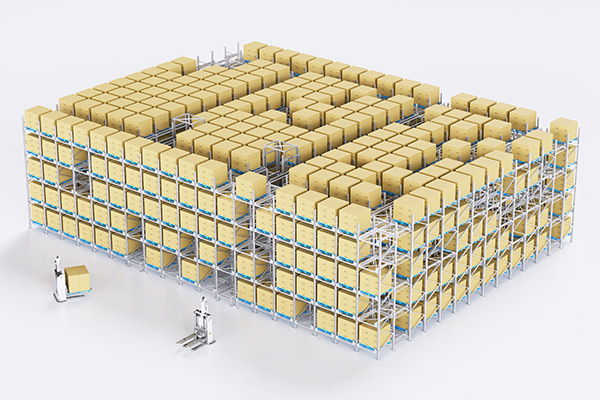
Zikoo’s diverse robot lineup, including U-bot Omnidirectional Stacker Robots, R-bot Four-Way Shuttle, and H-bot High-Speed Elevators, offers specialized AS/RS solutions tailored to various storage and retrieval demands. These robots can operate independently or in concert to create highly efficient, three-dimensional warehousing networks.
How to Calculate ROI on an AS/RS Investment
Evaluating the financial viability of an AS/RS investment requires a clear framework for calculating return on investment. The initial automation investment can be substantial, but the long-term savings and efficiency gains often justify the expenditure.
Key areas for cost savings include:
- Labor Costs: Reduced headcount for repetitive tasks, lower training costs, and decreased worker’s compensation claims due to improved safety.
- Space Utilization: Maximizing vertical space can eliminate the need for new construction or expansion, saving significant real estate costs.
- Inventory Management: Improved accuracy reduces losses from misplaced or damaged goods, and better tracking optimizes inventory levels, lowering carrying costs.
- Energy Consumption: Optimized routes and automated movements can be more energy-efficient than manual operations over time.
Efficiency gains are equally important. Increased throughput means faster order fulfillment, which translates to higher customer satisfaction and potentially increased sales. Reduced errors minimize returns and rework, directly impacting profitability.
To calculate the ROI, compare the total cost of ownership of the AS/RS over its lifespan against the quantifiable savings and revenue increases it generates. This analysis should consider factors like system depreciation, maintenance, and potential tax incentives. Zikoo Smart Technology works closely with clients to develop detailed financial projections that demonstrate the clear benefits of automated storage solutions, focusing on measurable efficiency gains and long-term cost reductions.
Frequently Asked Questions
What factors determine if AS/RS is right for my warehouse?
Several factors influence AS/RS suitability, including current space utilization, labor costs, required throughput, inventory accuracy goals, and the nature of your products. Businesses facing high labor costs, limited space, or demands for rapid, accurate fulfillment are strong candidates for AS/RS.
What are the different types of AS/RS systems available?
AS/RS systems vary widely, from crane-based systems for pallets to shuttle-based systems for cases and totes. Other types include vertical lift modules, carousels, and robotic mobile systems. The best choice depends on factors like item size, weight, storage density needs, and desired retrieval speed.
How much does an AS/RS system cost and what is the ROI?
AS/RS system costs vary significantly based on complexity, size, and level of automation, ranging from hundreds of thousands to millions of dollars. ROI is calculated by comparing these costs against savings from reduced labor, optimized space, improved inventory accuracy, and increased throughput, typically yielding a return within a few years.
How long does AS/RS implementation typically take?
AS/RS implementation timelines vary significantly based on system complexity and warehouse size, ranging from several months to over a year. Thorough planning and system integration are key for a smooth transition and optimal operational efficiency.
Can AS/RS systems integrate with existing warehouse management software?
Yes, most modern AS/RS solutions are designed for seamless integration with existing WMS/WES systems. This ensures data consistency and optimized control over inventory accuracy and material flow throughout your automated warehousing environment.
What maintenance is required for AS/RS systems?
Regular preventative maintenance is essential for AS/RS systems to ensure longevity and consistent performance. This includes routine inspections, lubrication, and software updates, minimizing downtime and maximizing throughput.
Is AS/RS suitable for small warehouses or only large-scale operations?
While often associated with large facilities, modular and scalable AS/RS solutions are increasingly viable for smaller warehouses. The key is assessing whether the benefits in storage density, labor savings, and order fulfillment outweigh the initial automation investment for your specific scale. To discuss whether your operation fits the profile for AS/RS, contact us at info@zikoo-int.com or (+86)-19941778955.
If you’re interested, check out these related articles:
Standardization Empowers Global Delivery: Zikoo Robotics Six-Way Shuttle Expands Overseas
Looking for Reliable Four-Way Shuttle Manufacturers? Choose Zikoo Robotics
Six-Way Shuttle Drives Warehouse Upgrades: Building an Intelligent Automatic 3D Warehouse
Stacker Crane vs Four-Way Shuttle: Which Fits Your ASRS Warehouse Best
Partnering for Automated Storage Solutions
Struggling with inefficient warehouse operations or rising labor costs does not have to limit your growth. Zikoo Smart Technology helps businesses achieve efficiency and scalability through intelligent automation solutions. To discuss specific requirements, contact us at info@zikoo-int.com or (+86)-19941778955.


