E-commerce order volumes keep climbing, and fulfillment centers feel the squeeze. More SKUs, faster delivery promises, tighter margins. Traditional warehousing methods—manual forklifts running fixed aisles, static racking that wastes vertical space—struggle to keep pace. Bottlenecks form at putaway. Retrieval slows during peak hours. Labor costs rise while throughput stalls. Pallet sistema de transbordador de cuatro víass offer a way out of this bind, delivering the storage density and retrieval speed that online retail demands without requiring a larger footprint or proportionally larger headcount.
What Makes a Pallet Four-Way Shuttle Different from Conventional AS/RS
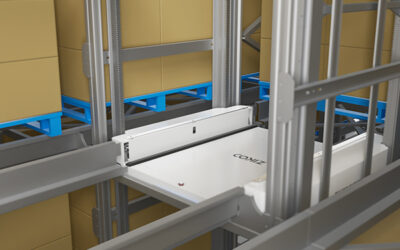
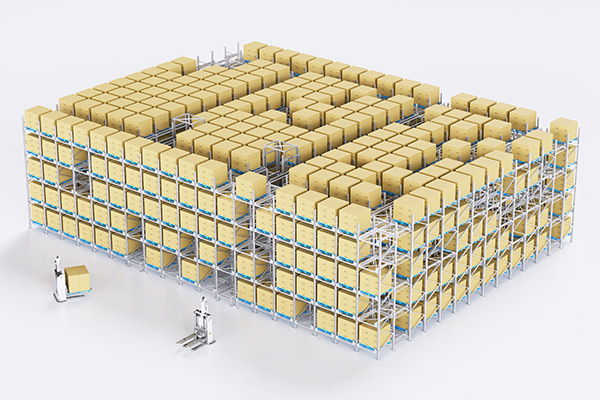
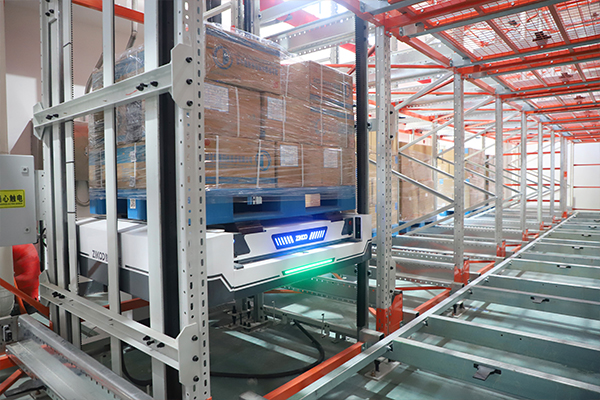
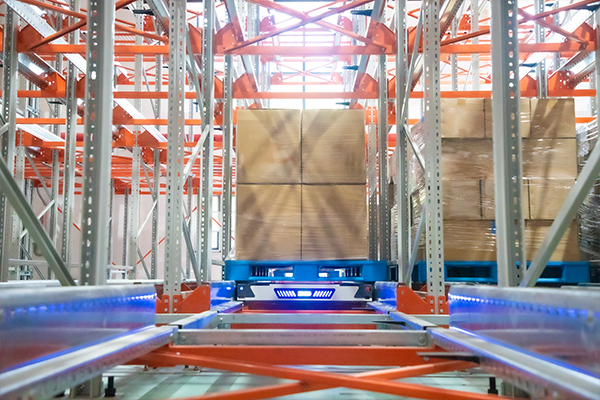
Palé sistema de transbordadores de cuatro víass belong to the almacenamiento automatizado and retrieval family, but they operate on a fundamentally different principle than crane-based AS/RS. A crane runs on a single axis—up and down the aisle, in and out of the rack. A four-way shuttle moves pallets in all four horizontal directions within the racking structure. No rotation needed. No turntable delays. The shuttle navigates aisles and bays independently, depositing or retrieving pallets while vertical lifts or conveyors handle level changes.
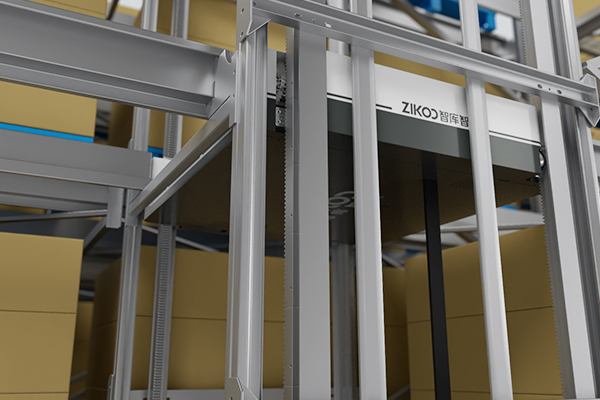
This omnidirectional capability changes what’s possible with storage layout. Racks can be deeper. Aisles can be narrower or eliminated entirely in buffer zones. Every cubic meter of warehouse space becomes usable storage rather than access corridor. The system architecture typically includes the shuttles themselves, specialized racking designed for their dimensions, and the vertical transport elements that connect storage levels to picking stations or outbound conveyors.
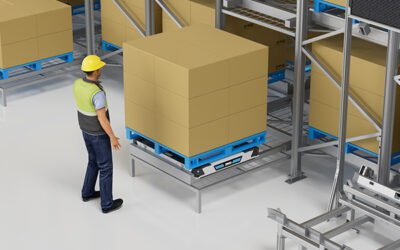
The operational model shifts from person-to-goods to goods-to-person. Operators stay at ergonomic workstations. Pallets arrive. Picks happen. Pallets return to storage or move to shipping. Walking time drops to near zero. Search time disappears. The warehouse transforms from a static storage environment into a dynamic material flow system where inventory moves to meet demand rather than waiting for someone to fetch it.
Why E-commerce Fulfillment Centers Gain the Most from Four-Way Shuttle Technology
The operational profile of e-commerce fulfillment—high SKU counts, variable order sizes, unpredictable demand spikes, pressure to ship same-day or next-day—aligns precisely with what four-way shuttles do well. The advantages cluster around three areas: space, speed, and labor.
Extracting Maximum Storage from Minimum Footprint
Urban fulfillment centers pay premium rates per square meter. Every pallet position that fits within the existing walls represents avoided real estate cost. Four-way shuttles eliminate the fixed aisles that crane-based systems require between every rack row. Storage configurations can go deeper—ten, fifteen, even twenty pallets deep in some layouts—because the shuttle can reach any position without dedicated aisle access. Vertical expansion becomes practical too, since shuttles operating on multiple levels work in parallel rather than sharing a single crane.
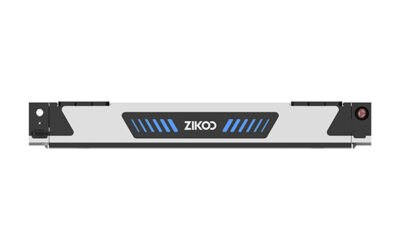
The density gains are substantial. A facility that stored 5,000 pallets with conventional racking might hold 12,000 or more with a four-way shuttle system in the same footprint. During peak seasons—Black Friday, holiday shipping, promotional events—that extra capacity means the difference between meeting demand and turning away orders. The R-bot Four-Way Shuttle from Zikoo, for instance, uses a slim body profile specifically engineered to maximize storage density while maintaining the throughput rates that e-commerce operations require.
Accelerating Throughput Without Proportional Labor Increases
Multiple shuttles operate simultaneously across different levels and zones. While one shuttle retrieves a pallet from deep storage on level four, another deposits incoming inventory on level two, and a third delivers a pick pallet to the outbound station. This parallel operation multiplies throughput capacity without multiplying labor headcount.
The goods-to-person workflow changes what operators do with their time. Instead of walking aisles, scanning locations, and driving forklifts, they stand at pick stations where pallets arrive automatically. Pick rates increase because the limiting factor becomes hand speed rather than travel time. A fulfillment center I worked with redesigned their storage strategy around an sistema de transbordador automatizado and saw a 40% reduction in labor hours dedicated to putaway and retrieval. Storage density increased 30% within the same building envelope. The labor savings alone justified the investment within three years; the density gains extended the facility’s useful life by another decade.
Physical strain drops when operators no longer walk miles per shift or climb in and out of forklift cabs. Injury rates fall. Turnover decreases. Training time for new hires shortens because the system handles the complex navigation and inventory location decisions that previously required experienced warehouse workers.
How Four-Way Shuttles Compare to Other Automated Storage Options
The choice between automation technologies depends on operational requirements, budget constraints, and facility characteristics. Four-way shuttles occupy a specific position in the automation landscape.
| Característica | Pallet Four-Way Shuttle | Traditional AS/RS (Crane-based) | Manual Pallet Racking |
|---|---|---|---|
| Densidad de almacenamiento | Muy alta | Alto | De baja a media |
| Rendimiento | Muy alta | Alto | Bajo |
| Flexibilidad | High (scalable, modular) | Medium (fixed structure) | High (initial setup) |
| Eficiencia Laboral | Muy alta | Alto | Bajo |
| Utilización del espacio | Excelente | Good | Poor |
| Costo inicial | Medium to High | Alto | Bajo |
Crane-based AS/RS delivers high density and throughput but locks the facility into a fixed configuration. Adding capacity means major construction. Four-way shuttles scale by adding more units to the existing racking structure—a modular expansion that can happen in phases as demand grows. Manual racking costs less upfront but consumes more floor space per pallet and requires proportionally more labor as volume increases.
What Integration Challenges to Expect When Deploying Four-Way Shuttles
The hardware—shuttles, racking, lifts—represents only part of the implementation. Software integration, facility preparation, and operational protocols determine whether the system delivers its potential performance or creates new bottlenecks.
Getting WMS, WES, and WCS to Work Together
A four-way shuttle system requires three software layers operating in coordination. The Warehouse Management System handles inventory records, order management, and overall warehouse processes. The Warehouse Execution System optimizes task sequencing and material flow. The Warehouse Control System directly commands the automated equipment—telling each shuttle where to go, which pallet to retrieve, and when to charge.
cURL Too many subrequests by single Worker invocation. To configure this limit, refer to https://developers.cloudflare.com/workers/wrangler/configuration/#limits
El Software de almacén inteligente PTP cURL Too many subrequests by single Worker invocation. To configure this limit, refer to https://developers.cloudflare.com/workers/wrangler/configuration/#limits
cURL Too many subrequests by single Worker invocation. To configure this limit, refer to https://developers.cloudflare.com/workers/wrangler/configuration/#limits
cURL Too many subrequests by single Worker invocation. To configure this limit, refer to https://developers.cloudflare.com/workers/wrangler/configuration/#limits
cURL Too many subrequests by single Worker invocation. To configure this limit, refer to https://developers.cloudflare.com/workers/wrangler/configuration/#limits
cURL Too many subrequests by single Worker invocation. To configure this limit, refer to https://developers.cloudflare.com/workers/wrangler/configuration/#limits
cURL Too many subrequests by single Worker invocation. To configure this limit, refer to https://developers.cloudflare.com/workers/wrangler/configuration/#limits
cURL Too many subrequests by single Worker invocation. To configure this limit, refer to https://developers.cloudflare.com/workers/wrangler/configuration/#limits
cURL Too many subrequests by single Worker invocation. To configure this limit, refer to https://developers.cloudflare.com/workers/wrangler/configuration/#limits
cURL Too many subrequests by single Worker invocation. To configure this limit, refer to https://developers.cloudflare.com/workers/wrangler/configuration/#limits
cURL Too many subrequests by single Worker invocation. To configure this limit, refer to https://developers.cloudflare.com/workers/wrangler/configuration/#limits
cURL Too many subrequests by single Worker invocation. To configure this limit, refer to https://developers.cloudflare.com/workers/wrangler/configuration/#limits
cURL Too many subrequests by single Worker invocation. To configure this limit, refer to https://developers.cloudflare.com/workers/wrangler/configuration/#limits
cURL Too many subrequests by single Worker invocation. To configure this limit, refer to https://developers.cloudflare.com/workers/wrangler/configuration/#limits
cURL Too many subrequests by single Worker invocation. To configure this limit, refer to https://developers.cloudflare.com/workers/wrangler/configuration/#limits
cURL Too many subrequests by single Worker invocation. To configure this limit, refer to https://developers.cloudflare.com/workers/wrangler/configuration/#limits
cURL Too many subrequests by single Worker invocation. To configure this limit, refer to https://developers.cloudflare.com/workers/wrangler/configuration/#limits
| La seguridad en el almacén mejora porque los humanos pasan menos tiempo operando equipos pesados en proximidad a los bienes almacenados. | cURL Too many subrequests by single Worker invocation. To configure this limit, refer to https://developers.cloudflare.com/workers/wrangler/configuration/#limits | cURL Too many subrequests by single Worker invocation. To configure this limit, refer to https://developers.cloudflare.com/workers/wrangler/configuration/#limits |
|---|---|---|
| Costos laborales | cURL Too many subrequests by single Worker invocation. To configure this limit, refer to https://developers.cloudflare.com/workers/wrangler/configuration/#limits | cURL Too many subrequests by single Worker invocation. To configure this limit, refer to https://developers.cloudflare.com/workers/wrangler/configuration/#limits |
| Utilización del espacio | cURL Too many subrequests by single Worker invocation. To configure this limit, refer to https://developers.cloudflare.com/workers/wrangler/configuration/#limits | cURL Too many subrequests by single Worker invocation. To configure this limit, refer to https://developers.cloudflare.com/workers/wrangler/configuration/#limits |
| Rendimiento | cURL Too many subrequests by single Worker invocation. To configure this limit, refer to https://developers.cloudflare.com/workers/wrangler/configuration/#limits | cURL Too many subrequests by single Worker invocation. To configure this limit, refer to https://developers.cloudflare.com/workers/wrangler/configuration/#limits |
| Precisión en el pedido | cURL Too many subrequests by single Worker invocation. To configure this limit, refer to https://developers.cloudflare.com/workers/wrangler/configuration/#limits | cURL Too many subrequests by single Worker invocation. To configure this limit, refer to https://developers.cloudflare.com/workers/wrangler/configuration/#limits |
| Consumo de energía | cURL Too many subrequests by single Worker invocation. To configure this limit, refer to https://developers.cloudflare.com/workers/wrangler/configuration/#limits | cURL Too many subrequests by single Worker invocation. To configure this limit, refer to https://developers.cloudflare.com/workers/wrangler/configuration/#limits |
| Escalabilidad | cURL Too many subrequests by single Worker invocation. To configure this limit, refer to https://developers.cloudflare.com/workers/wrangler/configuration/#limits | cURL Too many subrequests by single Worker invocation. To configure this limit, refer to https://developers.cloudflare.com/workers/wrangler/configuration/#limits |
cURL Too many subrequests by single Worker invocation. To configure this limit, refer to https://developers.cloudflare.com/workers/wrangler/configuration/#limits
cURL Too many subrequests by single Worker invocation. To configure this limit, refer to https://developers.cloudflare.com/workers/wrangler/configuration/#limits
cURL Too many subrequests by single Worker invocation. To configure this limit, refer to https://developers.cloudflare.com/workers/wrangler/configuration/#limits
cURL Too many subrequests by single Worker invocation. To configure this limit, refer to https://developers.cloudflare.com/workers/wrangler/configuration/#limits
cURL Too many subrequests by single Worker invocation. To configure this limit, refer to https://developers.cloudflare.com/workers/wrangler/configuration/#limits
cURL Too many subrequests by single Worker invocation. To configure this limit, refer to https://developers.cloudflare.com/workers/wrangler/configuration/#limits
cURL Too many subrequests by single Worker invocation. To configure this limit, refer to https://developers.cloudflare.com/workers/wrangler/configuration/#limits
Preguntas frecuentes
cURL Too many subrequests by single Worker invocation. To configure this limit, refer to https://developers.cloudflare.com/workers/wrangler/configuration/#limits
cURL Too many subrequests by single Worker invocation. To configure this limit, refer to https://developers.cloudflare.com/workers/wrangler/configuration/#limits
cURL Too many subrequests by single Worker invocation. To configure this limit, refer to https://developers.cloudflare.com/workers/wrangler/configuration/#limits
cURL Too many subrequests by single Worker invocation. To configure this limit, refer to https://developers.cloudflare.com/workers/wrangler/configuration/#limits
cURL Too many subrequests by single Worker invocation. To configure this limit, refer to https://developers.cloudflare.com/workers/wrangler/configuration/#limits
cURL Too many subrequests by single Worker invocation. To configure this limit, refer to https://developers.cloudflare.com/workers/wrangler/configuration/#limits
cURL Too many subrequests by single Worker invocation. To configure this limit, refer to https://developers.cloudflare.com/workers/wrangler/configuration/#limits
Return on investment typically materializes within two to five years, driven primarily by labor cost reductions, increased throughput, and space utilization gains. Operations with high labor costs, expensive real estate, or severe space constraints see faster returns. The specific timeline depends on your current operational costs, the system configuration selected, and how fully you utilize the new capacity.
If your fulfillment operation faces pressure to increase throughput, maximize storage density, or reduce labor costs, a detailed assessment can determine whether four-way shuttle technology fits your specific requirements. Contact us at [email protected] or (+86)-19941778955 to discuss your situation.
Si está interesado, eche un vistazo a estos artículos relacionados:
Era de la Cadena de Frío Inteligente: El Sistema de Transporte de Seis Vías Redefine la Eficiencia de Almacenamiento con Máxima Densidad
Hardware impulsado por software: el desplazamiento en seis vías maximiza la eficiencia del almacén
El transporte de seis vías desbloquea la era del almacenamiento inteligente 3D real
Transbordador de Seis Vías: La Solución Definitiva para Almacenes para Reducir Costos y Mejorar la Eficiencia
Plataforma de Almacenamiento Inteligente PTP: Construyendo un Ecosistema Logístico Flexible e Inteligente