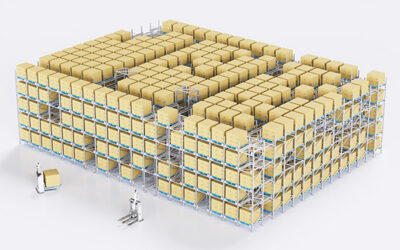
sistema de transporte de cuatro víass have gained traction in dense pallet storage, but evaluating their suitability for high-throughput operations requires looking beyond the marketing claims of pallet moves per hour. Throughput is not a single figure — it depends on order profile, shuttle fleet size, vertical lift configuration, and the coordination logic of warehouse control software. Drawing on project experience and system-level engineering principles, this article provides a practical framework for determining whether a sistema de transbordador de cuatro vías system can meet your operational throughput targets and what design choices make the difference between average and exceptional performance.
Throughput Fundamentals in Four-Way Shuttle Operations
Measuring throughput in a four-way shuttle system involves more than counting pallet movements per hour. A complete cycle consists of horizontal travel along aisles, transfer time, vertical lifting to the target level, and load handoff at a picking station. Each segment has its own time constant. In high-throughput applications, we have seen that system design must balance these cycle times to avoid a single slow element becoming the bottleneck.
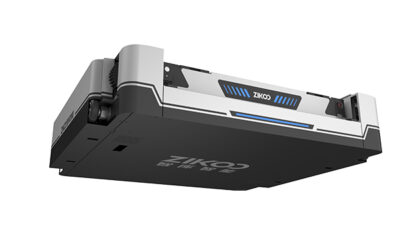
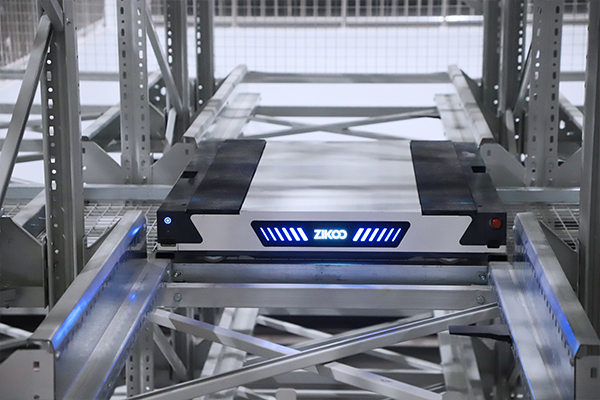
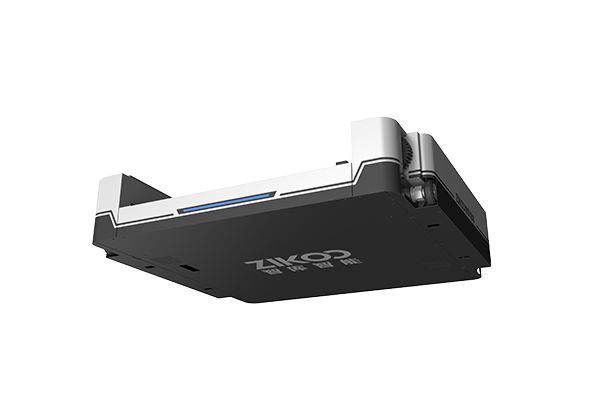
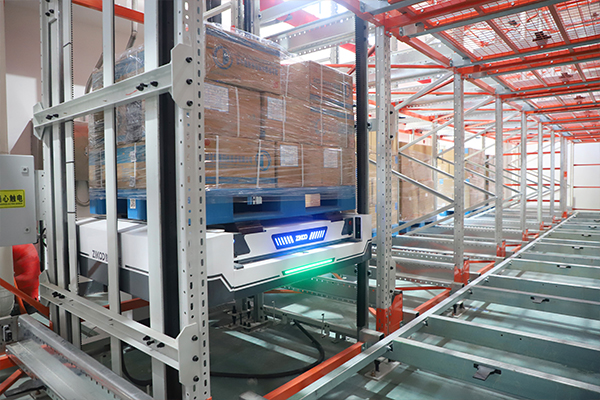
Shuttle speed is often the headline specification. The R-bot four-way shuttle, for example, can travel at 1.6 m/s empty and 1.2 m/s loaded. Over a 100-meter aisle, that means roughly 60 to 80 seconds for a one-way trip. But real throughput calculations must account for acceleration, deceleration, and the fact that multiple shuttles may share the same lane, requiring coordination to prevent collisions. A lane that is 40 positions deep can accommodate only one shuttle at a time unless the system supports overtaking logic, which most current designs do not. This depth directly impacts the retrieval rate for a given SKU.
What matters most is not peak mechanical speed but the sustained throughput when running mixed orders. That requires software to interleave storage and retrieval tasks, group similar orders into waves, and minimize empty travel. In almacenamiento denso setups, we typically see 20 to 30 pallet moves per shuttle per hour, but that figure can climb to 40 or more with optimized task scheduling and sufficient buffer positions at the lift interface.
Key Factors Affecting Four-Way Shuttle Throughput
Several interrelated factors determine the throughput ceiling of a four-way shuttle installation.
Shuttle Speed and Acceleration
The travel speed and acceleration profile set the baseline for horizontal cycle time. The R-bot reaches full speed within a few meters, so in shorter aisles, the constant-speed portion is minimal. For high-throughput operations, we prefer shuttle models with higher acceleration rates because the system spends more time in transition than in steady-state travel. Loaded speeds matter equally; the R-bot’s 1.2 m/s loaded speed is typical, but the heavier Heavy-Duty Large Pallet Type runs at 1.35 m/s empty and 1.0 m/s loaded, which must be factored into throughput models if you are handling oversized pallets.
Vertical Lift Capacity and Bottlenecks
The vertical lift is often the real-throughput chokepoint. An H-bot lift operates at 1 m/s empty and 0.5 m/s loaded, with a positioning accuracy of ±1 mm. A single lift serving four levels and 30 pallet positions per level might handle 25 to 35 pallets per hour. When the required throughput exceeds that, we add a second lift per aisle. I recall a cold chain project where the customer insisted on one lift per aisle due to space constraints, and we had to demonstrate with simulation that a second lift was necessary to meet the target of 50 pallets per hour at -25°C. The extra lift cost was justified because missing the throughput requirement would have disrupted the entire cold chain.
Software Coordination and Order Sequencing
No amount of hardware can compensate for poor task assignment. The warehouse control system (WCS) must schedule shuttle movements, lift operations, and conveyor handoffs in real time, while avoiding deadlocks in multi-shuttle lanes. Our Software de almacén inteligente PTP uses dynamic path planning and workload balancing to keep shuttles moving with minimal idle time. In a multi-aisle configuration, the software can reassign shuttles from a low-activity aisle to a busy one, provided the mechanical design allows cross-aisle transfers.
Comparing Four-Way Shuttles to Other High-Throughput Systems
Selecting the right automation technology requires a direct comparison against the alternatives. While four-way shuttles offer dense storage and good throughput for pallet handling, other systems may perform better in specific scenarios.
Stacker Crane vs. Four-Way Shuttle
| System | Pallet Moves per Hour (typical per aisle) | Storage Depth | Ancho de pasillo | Capital Cost per Pallet Position |
|---|---|---|---|---|
| Stacker Crane | 25-35 | Single-deep | 1.5-2.5 m | Low-Medium |
| Transportador en cuatro direcciones | 30-60+ | Multi-deep (up to 50+) | 2.1-2.4 m | Medio-Alto |
Stacker cranes provide reliable single-aisle throughput but cannot match the storage density of a four-way shuttle system that stores pallets up to 50 positions deep. The trade-off is that four-way shuttles require more complex software and incur higher upfront costs. I have seen installations where combining a few stacker cranes for fast-moving SKUs with shuttles for slow movers achieved the best overall cost-throughput profile.
AGV/AMR and Conveyor Integration
Automated guided vehicles (AGVs) or autonomous mobile robots (AMRs) can transport pallets over long distances, but their individual pallet throughput is limited to roughly 10-15 pallets per hour per vehicle. Conveyor systems can sustain extremely high rates — over 200 pallets per hour — but they consume floor space and are inflexible. Four-way shuttles fill the middle ground: higher throughput per aisle than AGVs, far denser storage than conveyors, and the ability to interface with conveyors at picking stations. In e-commerce fulfillment centers, we often design a layout where shuttles handle pallet storage and conveyor lines carry picked pallets to sortation, using AMRs for intermediate transport between the shuttle output and the conveyor.
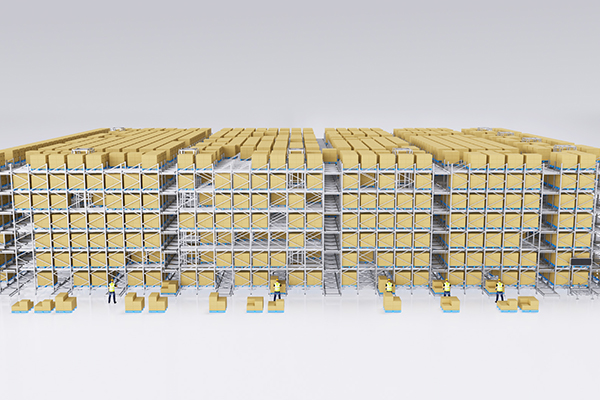
If your facility processes mixed orders where both fast and slow pallet retrieval are needed, system integration becomes critical. At this point, evaluating your specific SKU profile with a throughput simulation is advisable; our team can run that analysis using your data. Reach out at [email protected].
Designing a Four-Way Shuttle System for High Throughput
Moving from concept to design involves several engineering decisions that directly affect throughput.
Shuttle Fleet Sizing
cURL Too many subrequests by single Worker invocation. To configure this limit, refer to https://developers.cloudflare.com/workers/wrangler/configuration/#limits
cURL Too many subrequests by single Worker invocation. To configure this limit, refer to https://developers.cloudflare.com/workers/wrangler/configuration/#limits
cURL Too many subrequests by single Worker invocation. To configure this limit, refer to https://developers.cloudflare.com/workers/wrangler/configuration/#limits sistema de transporte en seis vías cURL Too many subrequests by single Worker invocation. To configure this limit, refer to https://developers.cloudflare.com/workers/wrangler/configuration/#limits
cURL Too many subrequests by single Worker invocation. To configure this limit, refer to https://developers.cloudflare.com/workers/wrangler/configuration/#limits
cURL Too many subrequests by single Worker invocation. To configure this limit, refer to https://developers.cloudflare.com/workers/wrangler/configuration/#limits cURL Too many subrequests by single Worker invocation. To configure this limit, refer to https://developers.cloudflare.com/workers/wrangler/configuration/#limitscURL Too many subrequests by single Worker invocation. To configure this limit, refer to https://developers.cloudflare.com/workers/wrangler/configuration/#limits
cURL Too many subrequests by single Worker invocation. To configure this limit, refer to https://developers.cloudflare.com/workers/wrangler/configuration/#limits
cURL Too many subrequests by single Worker invocation. To configure this limit, refer to https://developers.cloudflare.com/workers/wrangler/configuration/#limits
cURL Too many subrequests by single Worker invocation. To configure this limit, refer to https://developers.cloudflare.com/workers/wrangler/configuration/#limits
cURL Too many subrequests by single Worker invocation. To configure this limit, refer to https://developers.cloudflare.com/workers/wrangler/configuration/#limits
cURL Too many subrequests by single Worker invocation. To configure this limit, refer to https://developers.cloudflare.com/workers/wrangler/configuration/#limits
cURL Too many subrequests by single Worker invocation. To configure this limit, refer to https://developers.cloudflare.com/workers/wrangler/configuration/#limits
cURL Too many subrequests by single Worker invocation. To configure this limit, refer to https://developers.cloudflare.com/workers/wrangler/configuration/#limits
cURL Too many subrequests by single Worker invocation. To configure this limit, refer to https://developers.cloudflare.com/workers/wrangler/configuration/#limits
cURL Too many subrequests by single Worker invocation. To configure this limit, refer to https://developers.cloudflare.com/workers/wrangler/configuration/#limits
cURL Too many subrequests by single Worker invocation. To configure this limit, refer to https://developers.cloudflare.com/workers/wrangler/configuration/#limits
cURL Too many subrequests by single Worker invocation. To configure this limit, refer to https://developers.cloudflare.com/workers/wrangler/configuration/#limits
cURL Too many subrequests by single Worker invocation. To configure this limit, refer to https://developers.cloudflare.com/workers/wrangler/configuration/#limits
cURL Too many subrequests by single Worker invocation. To configure this limit, refer to https://developers.cloudflare.com/workers/wrangler/configuration/#limits
cURL Too many subrequests by single Worker invocation. To configure this limit, refer to https://developers.cloudflare.com/workers/wrangler/configuration/#limits
cURL Too many subrequests by single Worker invocation. To configure this limit, refer to https://developers.cloudflare.com/workers/wrangler/configuration/#limits
Si está interesado, eche un vistazo a estos artículos relacionados:
Plataforma de Almacenamiento Inteligente PTP: Construyendo un Ecosistema Logístico Flexible e Inteligente
Transbordador de Seis Vías: Empoderando a las Industrias para Adoptar el Almacenamiento Inteligente
Six-Way Shuttle permite a los proveedores 3PL construir centros logísticos inteligentes de próxima generación
Era de la Cadena de Frío Inteligente: El Sistema de Transporte de Seis Vías Redefine la Eficiencia de Almacenamiento con Máxima Densidad
Transbordador de Seis Vías Impulsa Mejoras en el Almacén: Construyendo un Almacén Automático 3D Inteligente