A smart warehouse upgrade is not a single product purchase. It is a system-level change that connects storage hardware, mobile robots, control software, and operational processes. Many projects stall because the buyer starts with a specific technology before confirming which warehouse constraint actually limits performance. A sistema de transbordador de cuatro vías system, an almacenamiento automatizado and retrieval system, or a new software platform can deliver strong results, but the right design depends on whether the site is constrained by space, throughput, labor availability, order accuracy, or temperature compliance.
Where to Start: Define the Warehouse Constraint First
The most useful planning step is to separate the warehouse problem into four common constraints.
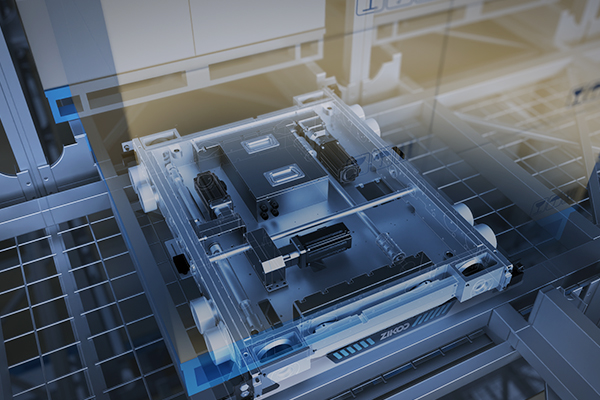
A space-constrained warehouse needs higher storage density. In these projects, an AS/RS with deep pallet lanes, a four-way shuttle system, or a narrow-aisle cURL Too many subrequests by single Worker invocation. To configure this limit, refer to https://developers.cloudflare.com/workers/wrangler/configuration/#limits may recover capacity that conventional racking cannot. A throughput-constrained warehouse needs faster pallet movement, shorter cycle times, or better coordination between inbound, storage, and outbound flows. A labor-constrained warehouse needs to reduce non-value-added travel time and improve picking reliability. A compliance-constrained warehouse, such as a pharmaceutical, food, or cold storage operation, needs accurate inventory tracking, temperature control, and repeatable handling.
Labor pressure remains one of the most common triggers for automation. Industry surveys consistently rank hiring, retention, and labor cost as primary challenges for warehouse operators [1]. Smart technology should therefore be evaluated not as a replacement for people, but as a way to redeploy labor into higher-value tasks such as exception handling, quality control, and customer-facing fulfillment work.
Core Smart Warehouse Technologies: Separating the Options
High-Density AS/RS and Sistema de transporte en cuatro direccioness
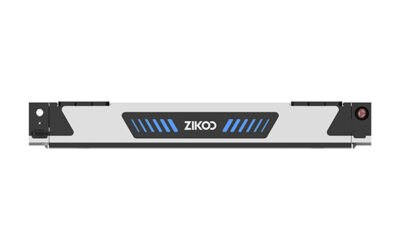
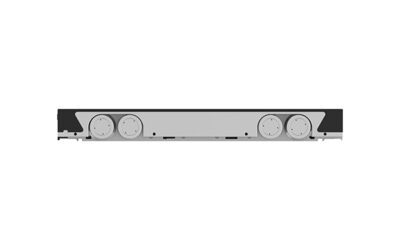
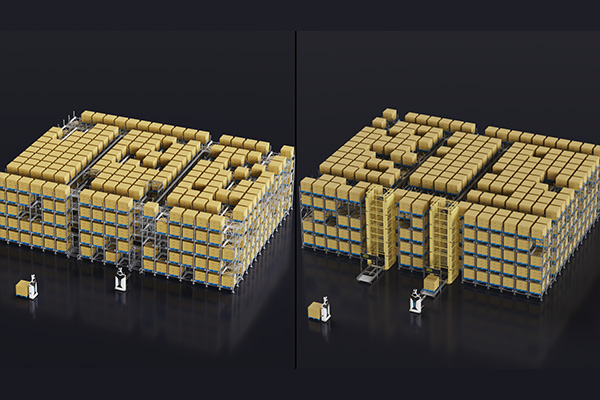
For pallet-level storage, a four-way shuttle system is a practical upgrade path because it increases pallet density while preserving flexible access to each load. The R-bot Four-Way Shuttle, for example, uses a body height of 125 mm and can handle rated loads from 1,200 kg to 2,000 kg depending on the model. It moves in four directions inside the rack lanes and can operate collaboratively with other shuttles. When paired with an H-bot vertical bidirectional shuttle, the system adds vertical transfer and forms a sistema de transporte en seis vías network across multiple storage levels.
This kind of equipment is especially useful in brownfield sites where the building footprint is fixed. A high-rise sistema de almacenamiento automatizado can store more pallets in the same ground area, but the equipment choice should be based on pallet size, SKU depth, building height, and the required inbound and outbound rate. When comparing shuttle systems with stacker crane AS/RS designs, buyers should ask suppliers to explain cycle-time assumptions clearly. Using a consistent engineering calculation method, such as the cycle-time framework described in FEM 9.851, is far more reliable than comparing headline speeds alone [2].
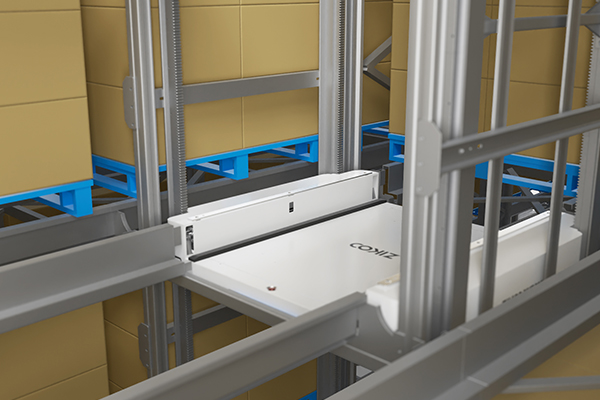
A six-way shuttle architecture extends four-way pallet movement with vertical transfer, creating a three-dimensional storage network within the rack structure. <Transbordador de Seis Vías Impulsa Mejoras en el Almacén: Construyendo un Almacén Automático 3D Inteligente> covers how sistema de shuttle de seis víass support an intelligent almacén 3D automático build.
The Software Stack: WMS, WES, WCS, and RCS
Automation hardware is only part of the upgrade. A smart warehouse requires a software layer that can manage orders, inventory, equipment tasks, and robot dispatch as one coordinated system. In many projects, the warehouse management system handles order and inventory logic, the warehouse execution system sequences work, the warehouse control system manages equipment interfaces, and the robot control system coordinates mobile assets.
This software stack needs to be synchronized with the physical storage design from the beginning. A well-designed software layer can make a standard shuttle system operate far more efficiently, while poor system integration can reduce even high-quality hardware to isolated equipment. The key requirement is that the software can accept production orders, allocate storage locations, dispatch shuttles or robots, and report status without manual handoffs.
The software layer ultimately determines whether robots, racks, and people operate as a coordinated system or as disconnected equipment. <El Software de Almacén Inteligente PTP Empodera a las Empresas para Mejoras Inteligentes> covers how WMS/WES/WCS/RCS functions drive enterprise smart warehouse upgrades.
Where Smart Technology Delivers the Fastest Payback
Smart warehouse upgrades tend to deliver the strongest return in operations where the current facility is losing space, labor, or inventory control.
In almacenamiento denso applications, four-way shuttle systems reduce the number of aisles needed because shuttles enter the rack lanes directly. This improves floor utilization and can support higher pallet capacity without expanding the building. In cold storage, automation reduces the amount of time workers spend in low-temperature environments. For example, a cold chain shuttle solution can use a -25°C low-temperature lithium battery and deliver 6–8 hours of continuous operation, making automated pallet movement practical in frozen and chilled warehouses.
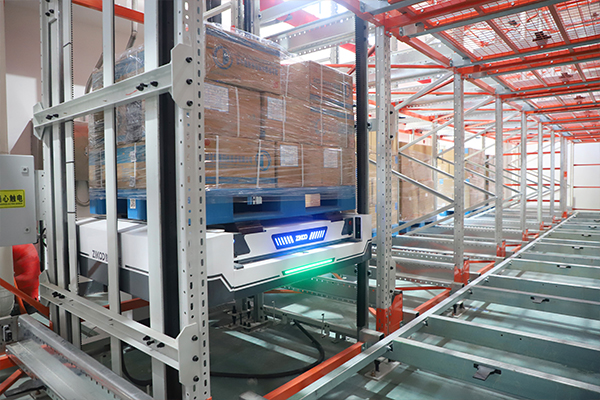
In manufacturing warehouses, smart storage connects raw material supply with production and finished goods staging. U-bot omnidirectional stacker robots, for instance, can operate in aisles as narrow as 2,100 mm and serve multiple pallet positions near production lines. This supports a more continuous material flow and reduces the space required for buffer stock.
How to Plan a Smart Warehouse Upgrade Without Stopping Operations
A phased upgrade is usually safer than a sudden warehouse-wide cutover. The first step is to define the current pallet profile, peak inbound and outbound rates, SKU count, storage duration, and order structure. The second step is to model the proposed system in the building layout so that equipment clearances, aisle widths, fire access, and picking stations are verified before installation.
Safety requirements should be part of the design, not an afterthought. Rail-dependent storage and retrieval equipment is covered by safety standards such as EN 528 [3]. Mobile robots and driverless industrial trucks used in warehouse applications should be evaluated against relevant safety requirements such as ISO 3691-4 [4]. A serious supplier should be able to explain how the system meets these standards and how emergency stop, access control, and maintenance procedures will work.
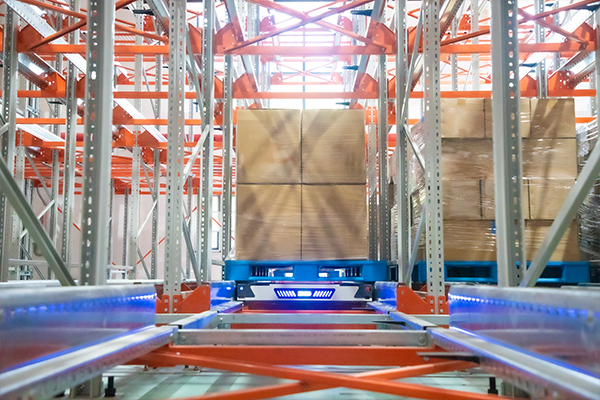
One practical way to protect daily operations is to automate one storage zone or one product group first. This allows the warehouse team to learn the system, adjust workflows, and validate performance before expanding the scope. In many projects, the best implementation sequence is to start with inbound or reserve storage, then connect picking and outbound functions after the first zone is stable.
What to Prepare Before Requesting a Smart Warehouse Concept
If you are preparing a layout for an AS/RS or four-way shuttle upgrade, the following five data points will produce a much faster and more realistic system concept: aisle width and clear height, pallet size and maximum load, active SKU count, target pallets per hour inbound and outbound, and the number of storage positions required.
Send these details together with the building drawing and any temperature, humidity, or fire protection constraints to the engineering contact in the closing section. A focused inquiry with these inputs is more effective than a broad request for pricing because it allows the engineering team to check whether the proposed system will fit the physical building and the operational profile.
How to Evaluate Smart Warehouse Suppliers and References
The supplier evaluation process should go beyond product brochures. Ask how many similar systems the supplier has delivered, how long those systems have been in operation, and whether the supplier can arrange a reference visit or provide a detailed case study. A reliable supplier should be able to explain the system architecture, software interfaces, spare parts strategy, and after-sales response model.
It is also useful to compare the total lifecycle view: equipment cost, installation, software configuration, training, maintenance, and energy consumption. A lower initial quote may not be cheaper if it requires more manual support, longer shutdowns, or expensive replacement parts. The most useful supplier conversations focus on system availability, throughput under realistic order profiles, and the cost of future expansion.
cURL Too many subrequests by single Worker invocation. To configure this limit, refer to https://developers.cloudflare.com/workers/wrangler/configuration/#limitsEl inicio del almacenamiento inteligente aquí: Sistemas de lanzaderas de cuatro vías rentablescURL Too many subrequests by single Worker invocation. To configure this limit, refer to https://developers.cloudflare.com/workers/wrangler/configuration/#limits
cURL Too many subrequests by single Worker invocation. To configure this limit, refer to https://developers.cloudflare.com/workers/wrangler/configuration/#limits
cURL Too many subrequests by single Worker invocation. To configure this limit, refer to https://developers.cloudflare.com/workers/wrangler/configuration/#limits
cURL Too many subrequests by single Worker invocation. To configure this limit, refer to https://developers.cloudflare.com/workers/wrangler/configuration/#limits
cURL Too many subrequests by single Worker invocation. To configure this limit, refer to https://developers.cloudflare.com/workers/wrangler/configuration/#limits
cURL Too many subrequests by single Worker invocation. To configure this limit, refer to https://developers.cloudflare.com/workers/wrangler/configuration/#limits
cURL Too many subrequests by single Worker invocation. To configure this limit, refer to https://developers.cloudflare.com/workers/wrangler/configuration/#limits cURL Too many subrequests by single Worker invocation. To configure this limit, refer to https://developers.cloudflare.com/workers/wrangler/configuration/#limits cURL Too many subrequests by single Worker invocation. To configure this limit, refer to https://developers.cloudflare.com/workers/wrangler/configuration/#limits
cURL Too many subrequests by single Worker invocation. To configure this limit, refer to https://developers.cloudflare.com/workers/wrangler/configuration/#limits [email protected] cURL Too many subrequests by single Worker invocation. To configure this limit, refer to https://developers.cloudflare.com/workers/wrangler/configuration/#limits (+86)-19941778955cURL Too many subrequests by single Worker invocation. To configure this limit, refer to https://developers.cloudflare.com/workers/wrangler/configuration/#limits
Preguntas frecuentes
cURL Too many subrequests by single Worker invocation. To configure this limit, refer to https://developers.cloudflare.com/workers/wrangler/configuration/#limits
cURL Too many subrequests by single Worker invocation. To configure this limit, refer to https://developers.cloudflare.com/workers/wrangler/configuration/#limits
cURL Too many subrequests by single Worker invocation. To configure this limit, refer to https://developers.cloudflare.com/workers/wrangler/configuration/#limits
cURL Too many subrequests by single Worker invocation. To configure this limit, refer to https://developers.cloudflare.com/workers/wrangler/configuration/#limits
cURL Too many subrequests by single Worker invocation. To configure this limit, refer to https://developers.cloudflare.com/workers/wrangler/configuration/#limits
cURL Too many subrequests by single Worker invocation. To configure this limit, refer to https://developers.cloudflare.com/workers/wrangler/configuration/#limits
cURL Too many subrequests by single Worker invocation. To configure this limit, refer to https://developers.cloudflare.com/workers/wrangler/configuration/#limits
cURL Too many subrequests by single Worker invocation. To configure this limit, refer to https://developers.cloudflare.com/workers/wrangler/configuration/#limits
cURL Too many subrequests by single Worker invocation. To configure this limit, refer to https://developers.cloudflare.com/workers/wrangler/configuration/#limits
cURL Too many subrequests by single Worker invocation. To configure this limit, refer to https://developers.cloudflare.com/workers/wrangler/configuration/#limits
Referencias
cURL Too many subrequests by single Worker invocation. To configure this limit, refer to https://developers.cloudflare.com/workers/wrangler/configuration/#limits cURL Too many subrequests by single Worker invocation. To configure this limit, refer to https://developers.cloudflare.com/workers/wrangler/configuration/#limitscURL Too many subrequests by single Worker invocation. To configure this limit, refer to https://developers.cloudflare.com/workers/wrangler/configuration/#limits
cURL Too many subrequests by single Worker invocation. To configure this limit, refer to https://developers.cloudflare.com/workers/wrangler/configuration/#limits cURL Too many subrequests by single Worker invocation. To configure this limit, refer to https://developers.cloudflare.com/workers/wrangler/configuration/#limitscURL Too many subrequests by single Worker invocation. To configure this limit, refer to https://developers.cloudflare.com/workers/wrangler/configuration/#limits
[3] EN 528:2008, cURL Too many subrequests by single Worker invocation. To configure this limit, refer to https://developers.cloudflare.com/workers/wrangler/configuration/#limits, European Committee for Standardization.
cURL Too many subrequests by single Worker invocation. To configure this limit, refer to https://developers.cloudflare.com/workers/wrangler/configuration/#limits cURL Too many subrequests by single Worker invocation. To configure this limit, refer to https://developers.cloudflare.com/workers/wrangler/configuration/#limits, International Organization for Standardization.
Si está interesado, eche un vistazo a estos artículos relacionados:
El transporte de seis vías impulsa el almacenamiento denso, rompiendo las limitaciones espaciales
Transbordador de Seis Vías Impulsa Mejoras en el Almacén: Construyendo un Almacén Automático 3D Inteligente
Six-Way Shuttle permite a los proveedores 3PL construir centros logísticos inteligentes de próxima generación