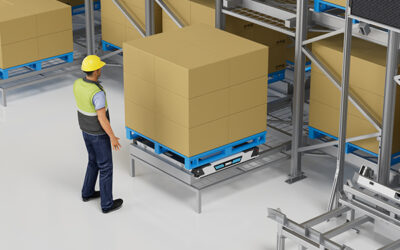
A 50% throughput gain in an ASRS upgrade rarely comes from buying faster robots. In the pallet warehouse examined in this case study, the storage field was already dense; the peak hour was capped by a captive-aisle retrieval cycle, a single vertical transfer point, and a scheduling layer that could not keep the pick faces fed. The upgrade raised throughput by half by attacking those three limits together. What follows is the architecture that changed, the measurement basis behind the number, and the checks that decide whether a similar gain is available in your building.
What a 50% throughput gain actually counts
Throughput is a rate, and every rate needs a counting point. Without one, a percentage can mean almost anything: more putaways completed, more retrieval commands issued, more pick confirmations recorded, or a faster dock-to-stock time measured on a quiet shift. Two projects can both report 50% and be describing different warehouses.
| Metric a supplier may quote | What it really counts | Where it drifts upward |
|---|---|---|
| Pallets stored per day | Putaway completions at the storage face | Empty-position runs counted as completions |
| Pallets retrieved per hour | Retrieval commands issued by the control layer | Commands queued but never delivered to the dock |
| Lines picked per shift | Pick confirmations at the station | Short picks and re-picks counted twice |
| Dock-to-stock time | Elapsed time on a sampled pallet | A sample drawn from an uncongested window |
| System uptime | Available time against scheduled time | Planned maintenance excluded from the denominator |
In this case study the number is defined at the bottleneck: completed pallet deliveries per hour at the outbound presentation point, counted across the busiest continuous 60 minutes of a normal operating week, on the same handling definition before and after the upgrade. Putaway and retrieval are counted separately, because a system can improve one while leaving the other flat.
Call the method the bottleneck-hour test. Take the busiest continuous hour in an ordinary week, not the best hour of the month, count delivered pallets rather than dispatched missions, and record idle minutes at the stations that were waiting for work. A gain that shows up only in the daily average usually comes from spreading the same work over a longer window.
Where an existing ASRS loses throughput
Retrieval cycle time has three terms: travel to the position, transfer of the pallet, and waiting. In a congested automated warehouse, waiting is usually the largest of the three, and it is the one that never appears on a crane datasheet.
A captive-aisle crane owns its aisle. When that crane is down for maintenance, or busy serving a slow-moving level, the aisle is unavailable regardless of how much demand sits behind it. A single vertical transfer point works the same way: however fast the horizontal vehicles are, every level change passes through one shared resource. Add a replenishment rule that reacts to minimum stock instead of forecast demand, and pick faces will starve at the busiest hour while the storage field sits at 85% utilization.
| Symptom | Mechanism behind it | Primera comprobación |
|---|---|---|
| Vehicles busy, dock idle | Retrieval queue not sequenced to trailer cut-off times | Queue age grouped by destination |
| Lift saturation at mid-shift | Every level change funnels through one or two transfer points | Lift transactions per hour against shuttle transactions |
| Pick faces starve near 10:00 | Replenishment triggered by minimum level, not by forecast | Station idle minutes with reason codes |
| Throughput falls after battery exchange | Charging scheduled independently of the order profile | Charge events per shift against the demand curve |
| The same SKU sits in two aisles | Slotting driven by inbound date rather than velocity | Slotting rule audit across a moving window |
| Night shift hits target, day shift does not | Station count and manning differ between shifts | Normalize pallets per station per hour |
The pattern is consistent: the storage field is rarely the constraint. The constraint is the shared resource plus the decision rule that feeds it.
Replacing captive aisles with a sistema de transporte en seis vías network
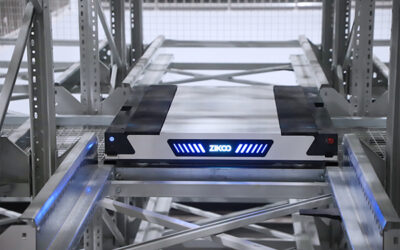
The upgrade examined here moved retrieval from captive-aisle cranes to a shuttle network in which horizontal and vertical movement are separate but coordinated resources.
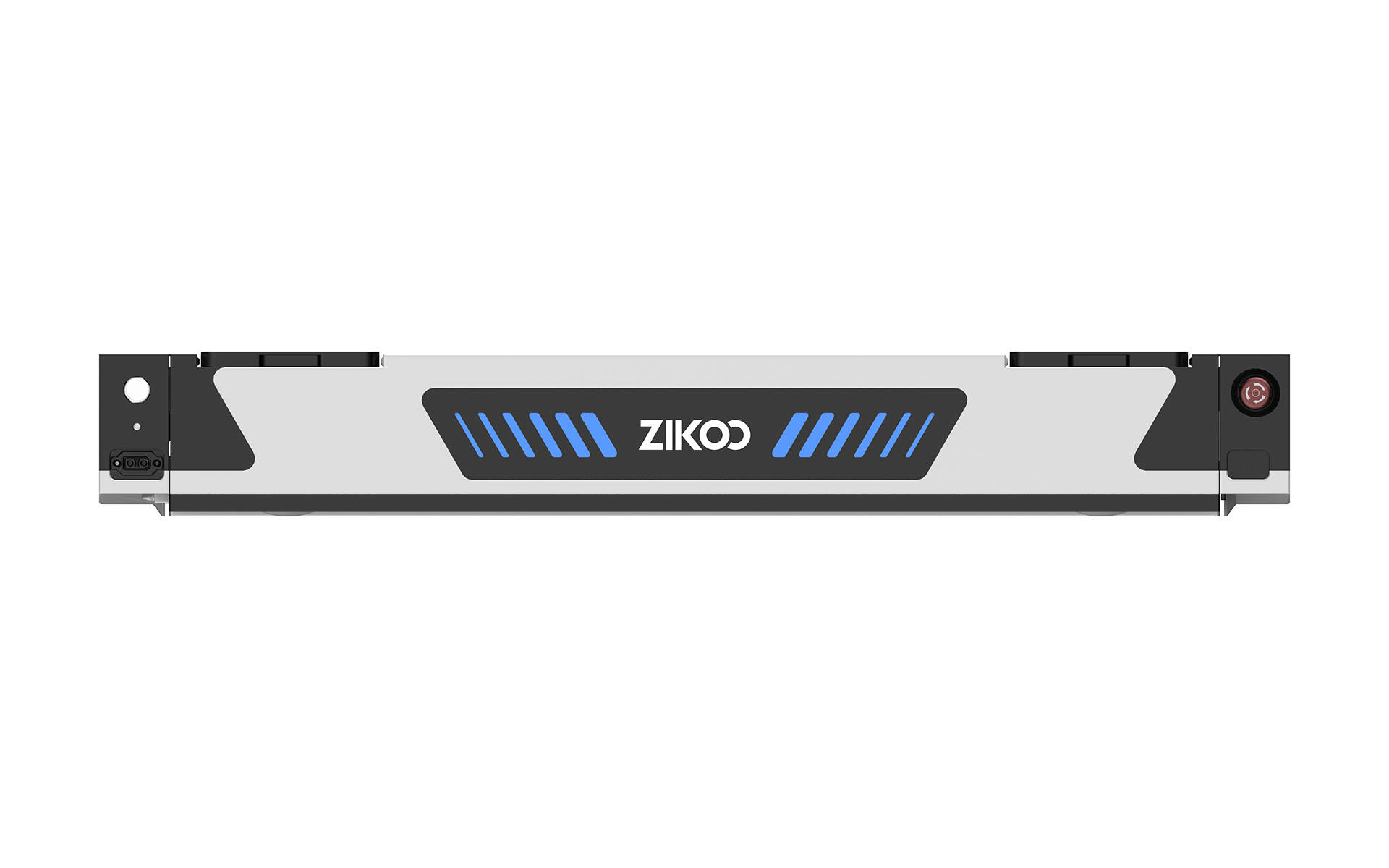
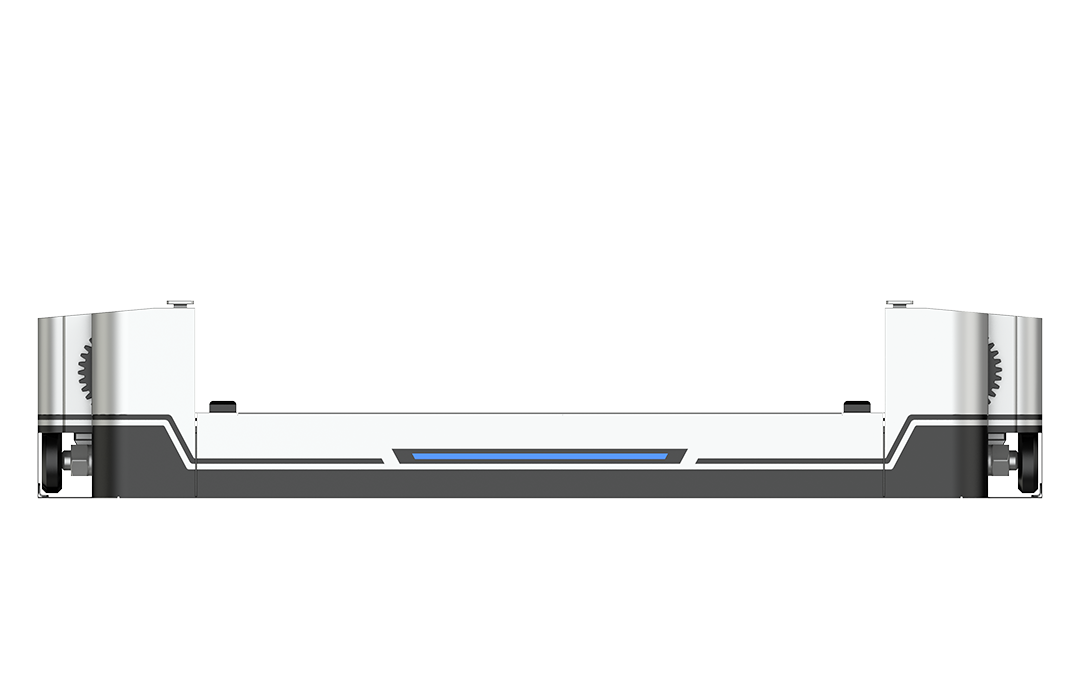
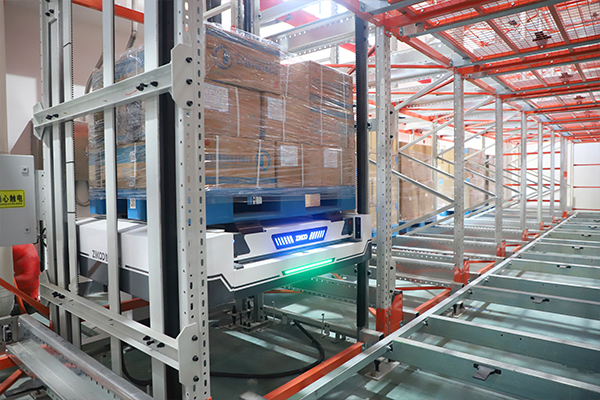
The horizontal layer uses a four-way shuttle: a 125 mm body that runs in both axes of the rack, with rated loads from 1.2 t to 2.0 t depending on the model and pallet footprint. Standard and heavy-duty types travel at 1.6 m/s empty and 1.2 m/s loaded, and the platform operates down to minus 15 °C as standard, with a dedicated low-temperature configuration for colder rooms.
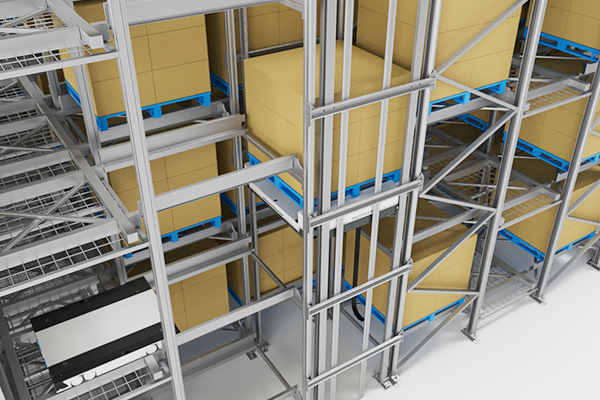
The vertical layer uses a bidirectional lift that occupies a single storage position instead of a dedicated shaft bay, holding positioning accuracy of plus or minus 1 mm at the transfer face. It runs at 1 m/s empty and 0.5 m/s loaded, and works across minus 25 °C to 45 °C. Combined with the sistema de transbordador de cuatro víass, it forms a six-way network: vehicles move in four horizontal directions, and the lift adds the two vertical directions in a three-dimensional channel rather than a single aisle.
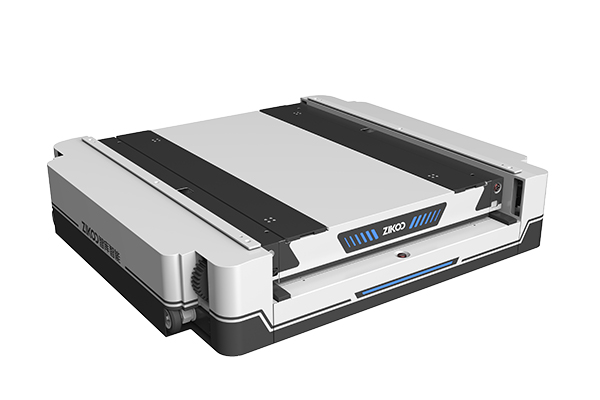
Why this changes the wait term: retrieval is no longer tied to one vehicle that owns an aisle. Multiple shuttles can serve the same level, and vertical transfer is distributed across several lift positions rather than concentrated at one. Fleet sizing then becomes an explicit calculation instead of a guess, because the number of shuttles per level and the number of lifts are chosen against the same peak-hour demand figure.
The lift remains a shared resource, and that sets an honest ceiling. A site that doubles its shuttle count without matching vertical capacity will move the queue rather than remove it. In this project the lift count and the shuttle count were sized from the same bottleneck-hour profile, which is why the two layers improved together.
Density and throughput are usually presented as a trade-off. <Transbordador de Seis Vías: La Solución de Doble Motor para Alta Densidad y Alto Rendimiento> covers how a combined horizontal and vertical shuttle layout pursues both at once.
Software decides how much of the hardware gain you keep
Hardware sets the capacity of the system. The control layer decides how much of that capacity a given hour actually uses. A shuttle network coordinated by a first-in-first-out dispatcher will thrash: vehicles queue behind missions that have already missed their window while the pick face two levels away waits.
The four layers do different jobs. The warehouse management layer holds orders, inventory and cut-off logic. The execution layer batches and sequences work against the shift profile. The control layer assigns missions to vehicles and resolves contention at intersections and transfer points. The robot layer handles navigation, positioning and charging behaviour on the vehicle itself.
Three decisions in that stack produced most of the software-side gain in this upgrade. Mission batching grouped retrieval requests by destination and deadline instead of by arrival order, so a shuttle leaving a level carried a coherent set of pallets. Slotting assigned fast movers to positions close to the transfer points, which cut travel without changing a single vehicle specification. Charging was scheduled into demand troughs rather than triggered by a fixed battery threshold, which removed the mid-shift vehicle losses that had been invisible in the monthly report.

None of this is exotic. The difficulty is that these rules interact: a slotting change alters travel time, which alters the charge window, which alters availability at the peak. That is why the upgrade tested the software configuration against the bottleneck hour before the rack conversion was finished, not after.
The control layer is where a mixed fleet stops behaving like a mixed fleet. <Hardware impulsado por software: el desplazamiento en seis vías maximiza la eficiencia del almacén> covers how scheduling logic and vehicle capability are matched in a shuttle-based installation.
Cutting over inside a live warehouse
An ASRS upgrade in an operating building is a sequencing problem. The storage field has to be rebuilt while outbound continues, and the interfaces between the old control layer and the new one have to survive the overlap.
The conversion ran in five stages. First, a baseline freeze: two weeks of bottleneck-hour measurement, with the counting point and the idle-reason codes agreed before any steel moved. Second, zone conversion: rack sections closed and rebuilt one block at a time, with the affected inventory relocated to positions the old system could still reach. Third, a parallel run in which both control layers operated under one supervisory view, so a mission could be traced end to end across the boundary. Fourth, dual-cycle validation, where putaway and retrieval were exercised on the same shift to prove the transfer points under combined load. Fifth, a ramp to the peak profile over consecutive weeks rather than a single acceptance day.
Two physical constraints caught attention early. Floor tolerance governs whether the shuttle rails stay within the alignment the vehicles need at speed, and it is far cheaper to survey before the rack order than to shim afterwards. Fire protection and clear height govern the level count that can be added, and both are settled with the authority having jurisdiction rather than with the supplier.
The riskiest week is never the first one. It is the week the old system is switched off and the buffer that hid scheduling errors disappears.
Most upgrade failures are continuity failures rather than equipment failures. <Transbordador de Seis Vías Impulsa Mejoras en el Almacén: Construyendo un Almacén Automático 3D Inteligente> covers how an existing building is converted into a three-dimensional automated store in stages.
How to test a 50% claim before you sign
A reference figure is worth exactly what its conditions allow you to conclude. The table below separates what this case record can support from what it cannot.
| Registro | Condition it was measured under | What it can support | What you must not infer |
|---|---|---|---|
| 50% throughput uplift | Same SKU profile, same shift pattern, bottleneck-hour basis, one handling definition before and after | That removing the identified bottleneck produced the gain in this building | That a different site with a different bottleneck repeats it |
| Shuttle speed 1.6 m/s empty, 1.2 m/s loaded | Manufacturer declaration, straight run, laden and unladen | Vehicle capability for travel-time calculation | That system throughput scales in proportion to vehicle speed |
| Positioning accuracy plus or minus 1 mm at the lift | Manufacturer declaration at the transfer face | Transfer alignment tolerance for rack and pallet design | That the same tolerance holds at the dock or at a pick station |
| Six-way travel network | Four-way shuttle combined with a bidirectional lift | Available directions of movement in the layout | That any mixed fleet delivers the same coordination |
| Continuous operation of about 8 hours | Declared runtime at a stated battery configuration | Shift coverage and charge-window planning input | That charging strategy has no effect on peak capacity |
A measurement protocol you can write into the contract
- Fix the counting point and the handling definition in writing, including whether a pallet counts on arrival at the station or on departure from the rack.
- Select the bottleneck hour from three consecutive normal operating days, not from a commissioning week.
- Hold the demand profile constant: same order mix, same cut-off times, same station manning.
- Count completed deliveries, never dispatched missions.
- Log station idle minutes with reason codes so a shortfall can be attributed to vehicles, lift, software or staffing.
- Agree in advance what constitutes a failed test, and how a retest is scheduled.
An acceptance checklist that separates required from optional work is the practical version of the same discipline. Required items: the baseline measurement, the counting definition, the idle-reason logging, the lift-to-shuttle capacity match, and the dual-cycle test. Optional items: a wider slotting study, a second charge-window experiment, and a training refresh for shift leads. Skipping a required item does not reduce scope; it removes the ability to attribute the result.
What transfers to your site and what does not
The conditions that make a 50% gain plausible are measurable before you commit capital. Clear height determines the level count the lift can serve. Pallet quality and footprint determine whether a 125 mm vehicle can enter the rack cleanly at speed, with common formats running from 1200 by 800 mm through 1100 by 1100 mm to 1016 by 1219 mm. Floor flatness determines whether the rails hold alignment. Temperature sets the battery and coating specification, and a room below minus 15 °C needs the low-temperature configuration rather than the standard platform.
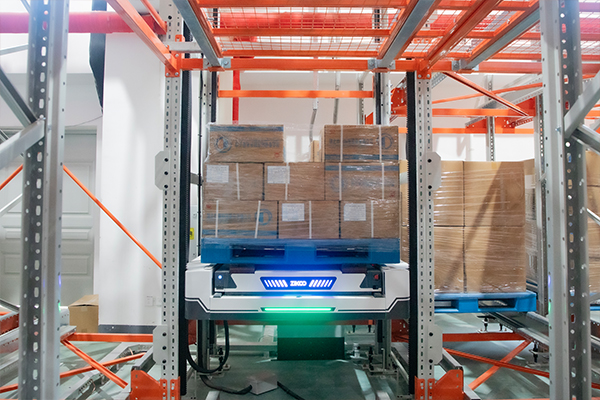
Order profile matters as much as steel. A site whose outbound is dominated by a handful of fast movers gains most from slotting near transfer points. A site with a long tail of slow movers gains more from density than from speed, and the bottleneck-hour test will show that difference quickly.
Some cases do not fit the pattern. Strict first-in-first-out rotation on a deep-lane single-access layout conflicts with the retrieval flexibility the network provides. Very low turnover operations rarely generate the queue that justifies the vehicle count. Non-palletized goods need a different handling layer entirely. And a building where the real constraint is receiving dock doors will not be fixed by faster retrieval, however many shuttles are installed.
Treat the 50% as a project outcome tied to a defined bottleneck, not as a specification you can order. The transferable part is the method: measure the bottleneck hour, size both movement layers against the same figure, configure the control layer before commissioning, and accept the system against the protocol rather than against a headline.
Start from your measured bottleneck
The most useful first step is not a product discussion. Send the current bottleneck-hour profile with the counting point stated, the throughput split between putaway and retrieval, the pallet footprint and average load, the clear height available, the operating temperature range, and the order profile by velocity band. With those, the vertical and horizontal capacity can be sized against the same demand figure instead of being estimated from a brochure.
Email [email protected] or call (+86)-19941778955 to review the profile with our system design team. Zikoo Smart Technology supplies four-way shuttles, bidirectional lifts, cURL Too many subrequests by single Worker invocation. To configure this limit, refer to https://developers.cloudflare.com/workers/wrangler/configuration/#limitss and the PTP warehouse software stack, and publishes declared equipment parameters rather than site-specific throughput promises. A like-for-like percentage depends on your own baseline, and that is the number worth establishing first.
Preguntas frecuentes
Can any ASRS reach a 50% throughput increase?
No. The gain depends on what limits the peak hour before the upgrade. A site constrained by a captive-aisle crane and a single transfer point has room to improve; a site already constrained by dock doors, staffing or order cut-offs will not gain much from faster retrieval. Measure the bottleneck hour first, then decide whether the constraint is inside the storage system at all.
Is a six-way shuttle upgrade cheaper than a new ASRS?
They are different scopes, so compare total installed cost rather than equipment price. A retrofit reuses the building, the rack field and often the dock, but it carries conversion risk, temporary relocation and interface work between old and new control layers. A new build carries civil works and a longer programme. The comparison only becomes meaningful once both options are sized against the same bottleneck-hour demand.
How long does an ASRS upgrade take in a live warehouse?
It depends on how much of the storage field is rebuilt and how many interfaces change. The controlling factors are usually rack conversion in occupied zones, floor and alignment survey results, fire protection approval for any added level, and the length of the parallel run. Sequencing zone by zone keeps outbound running, but it extends the calendar compared with a shutdown conversion.
Does a four-way shuttle network work in cold storage?
Yes, within stated limits. Standard shuttle platforms operate to minus 15 °C, and colder rooms need a dedicated low-temperature battery, a heated or protected charging interface, and coated electronics for humidity at defrost cycles. The lift platform covers minus 25 °C to 45 °C. Battery runtime and charge-window planning change in cold rooms, so the peak-hour calculation has to use the cold-room figures rather than ambient ones.
What is the most common cause of a failed throughput claim?
A mismatch between the counting point and the constraint. Teams often measure pallets moved by vehicles while the real limit sits at a pick station, a trailer cut-off or a lift. The second most common cause is comparing an upgraded peak hour against a pre-upgrade average. Both errors are avoidable with a written definition, a fixed demand profile, and idle-reason logging agreed before commissioning.
Si está interesado, eche un vistazo a estos artículos relacionados:
Remodelando el valor del almacén: La lanzadera de seis direcciones lidera la transformación digital
¿Buscas fabricantes confiables de transbordadores de cuatro vías? Elige Zikoo Robotics