Automated pallet handling in industrial facilities works as a chain of four functions: horizontal transport, storage, transfer at the interfaces and software orchestration. Projects that stall or underperform usually fail at the second or third link rather than at the vehicle’s headline speed. A plant can install fast shuttles and still run a slow warehouse if one lift serves every level, if the dock has no staging lane, or if the pallet population cannot pass a lane entry cleanly. The sections below explain what each link does, how to match equipment to an existing building, and which checks belong in the specification before a purchase order is raised.
What Automated Pallet Handling Covers
Automated pallet handling means any movement or storage of a palletized load carried out by equipment instead of a person on a forklift. Industrial installations combine four functions, and each one has a different failure profile.
Horizontal transport moves loads between floor-level points. Automated guided vehicles, autonomous mobile robots, rail-mounted transfer cars and conveyor runs all serve this function.
Storage holds the load between movements. The main families are semi-automatic pallet shuttle racking, where a radio-controlled shuttle runs inside a lane; sistema de transbordadores de cuatro víass, where vehicles travel in two axes inside the racking; stacker cranes in a conventional almacenamiento automatizado and retrieval system; and narrow-aisle stacker robots that lift loads to rack height inside an aisle.
Transfer is the physical handoff from one unit to another, from a vehicle to a conveyor, from a conveyor to a lift, from a lift to a rack level, or from a production line to a staging lane. Transfer points carry the tightest positional tolerances in the whole facility.
Orchestration decides what moves and when. A warehouse management system holds order and inventory logic, a warehouse execution or control system sequences the equipment, and a robot control system dispatches vehicles and resolves traffic conflicts. The boundaries between those layers decide how quickly the facility reacts to a changed order or a blocked lane.
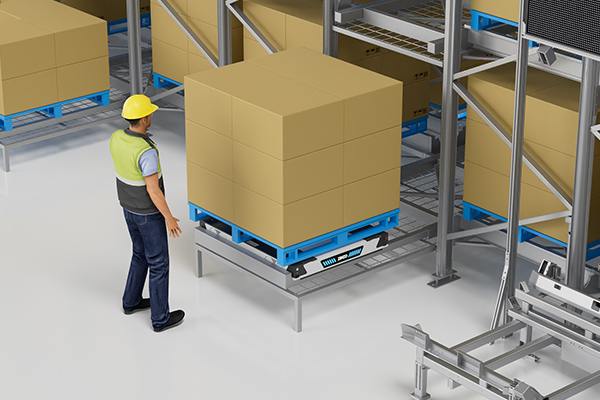
A whole-facility view makes the balance between storage volume and transfer equipment visible before an equipment list is fixed. Most disappointing business cases confuse storage with handling. Doubling storage density does not raise outbound flow if every pallet still passes through one undersized transfer point, and the same error appears in reverse when a facility buys handling capacity that its racking cannot feed.
Matching Handling Equipment to Facility Constraints
Five constraints decide the equipment family: available aisle width, clear height under the roof and sprinkler, pallet footprint and condition, the shape of the throughput profile, and whether the building already exists. Aisle and height come first because they are the most expensive to change. A low building and a tall one do not support the same rack profile, and a rack profile that stops short of the roof leaves vertical transfer equipment with little to do.
| Handling option | Space demand | Encaja cuando | Main limit |
|---|---|---|---|
| Semi-automatic pallet shuttle racking | long lanes, one shuttle per lane group | density matters and a forklift can still work the face | the face operation stays manual, so labour shifts rather than disappears |
| transporte de cuatro vías system | a rack grid built to vehicle tolerances | deep, almacenamiento denso with frequent moves | racking and pallet quality become part of the machine specification |
| Stacker crane AS/RS | one aisle per crane, full rack height | tall buildings with steady throughput per aisle | one crane per aisle leaves little redundancy |
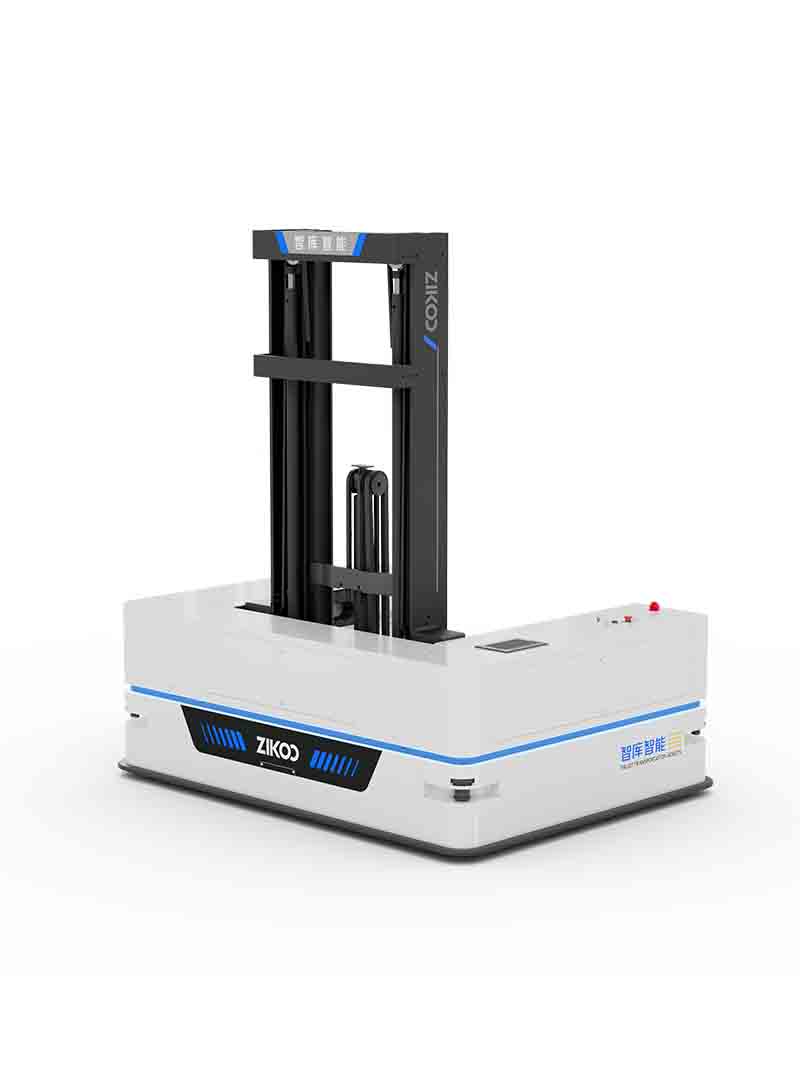
| Robot apilador para pasillos estrechos | a shared aisle with no rack access for people | existing buildings with modest aisle width and mid-height racking | floor flatness and mast height decide which levels are reachable |
| Conveyor and transfer car network | floor area for buffer lanes and junctions | connecting fixed points and decoupling stations | carries no storage capacity on its own |
| AGV or AMR fleet | open floor and a charging area | routes change or people share the floor | traffic rules and battery logistics decide uptime |
The second filter is the pallet itself, because every dense system trades clearance for density. The tighter the lane, the less tolerance the design has for a swollen or damaged pallet. The third filter is throughput shape. Steady production flow and seasonal retail peaks produce very different fleet sizes from the same annual pallet count.
Dense racking pays only when lane depth, transfer capacity and retrieval pattern are designed as one system. <El transporte de seis vías impulsa el almacenamiento denso, rompiendo las limitaciones espaciales> covers how dense storage layouts run into building space limits.
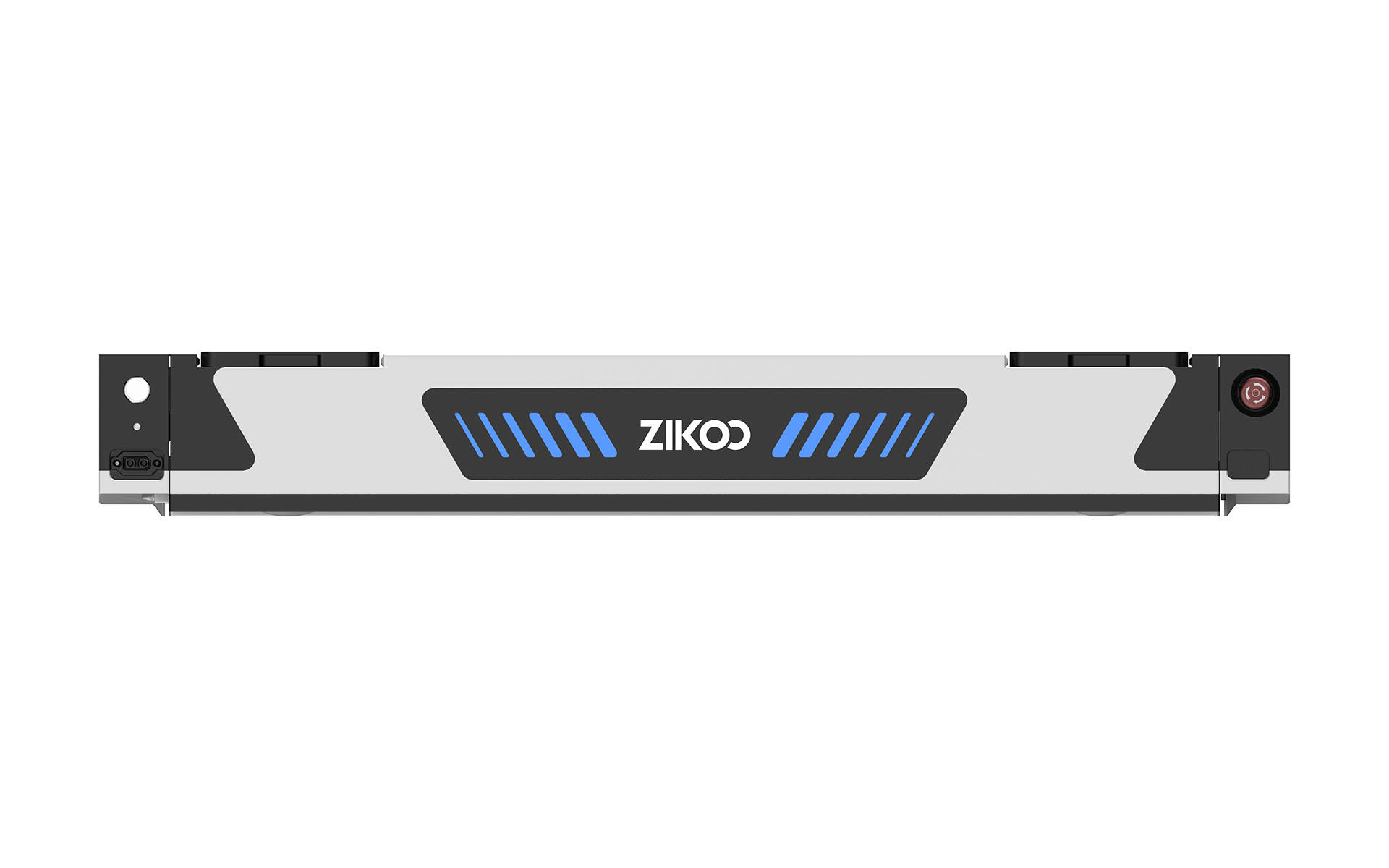
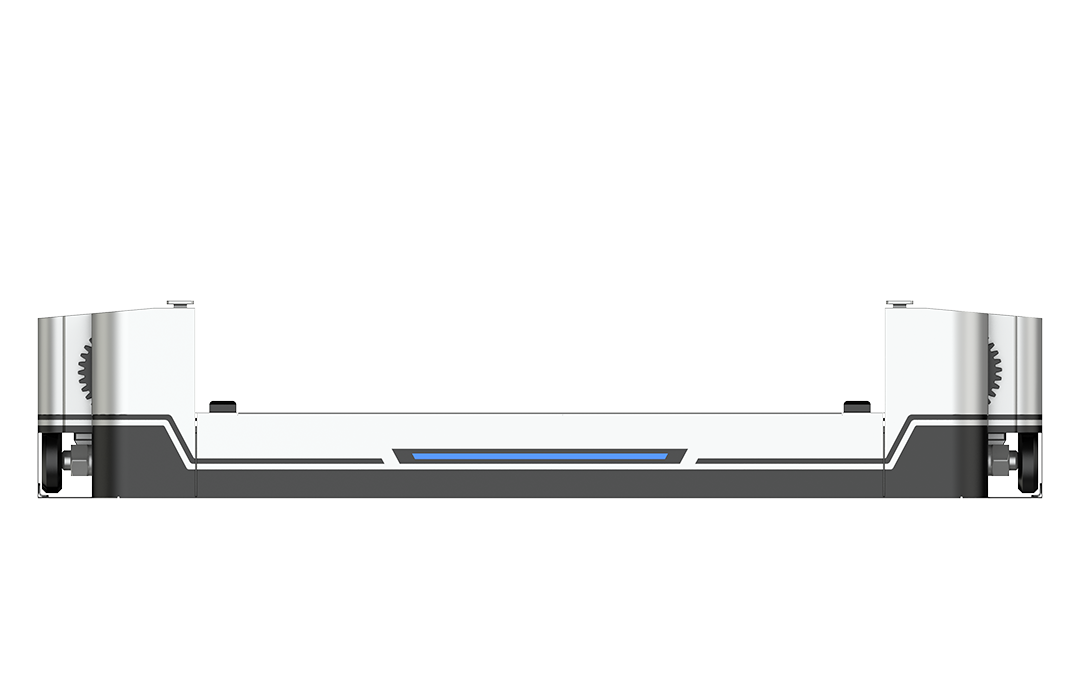
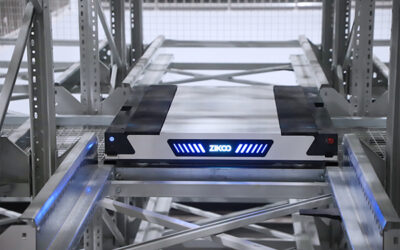
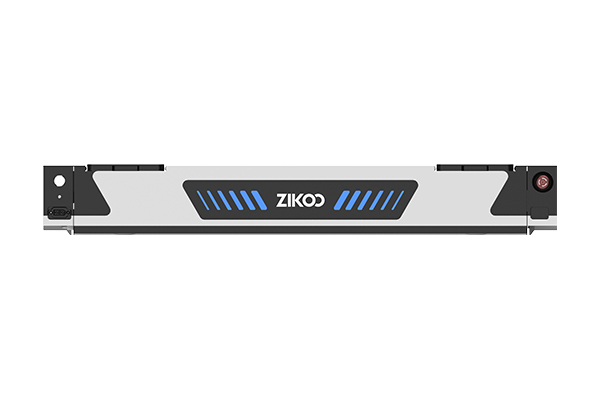
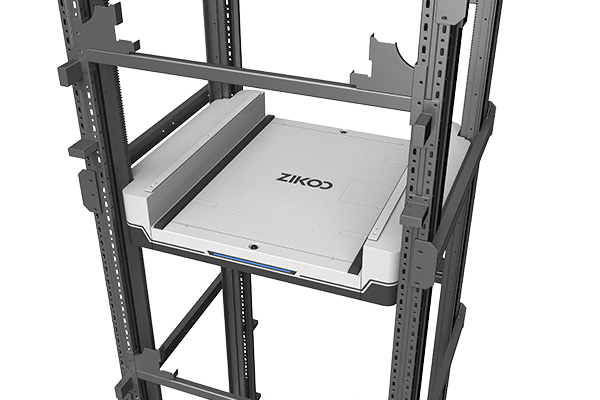
Published model data shows how far the equipment side has moved. Zikoo’s R-bot four-way shuttle is 125 mm thick on its standard models, rated from 1.2 to 2.0 tonnes depending on model, with a loaded speed of 1.2 m/s on four of the five models and a working temperature down to -15 °C. The H-bot vertical shuttle is rated at 1800 kg, positions to ±1 mm and occupies a single storage location, which lets a vertical transfer point sit inside the rack rather than beside it. Those figures matter for layout reasons: a thin shuttle body reduces the height lost at each rack level, and a lift that consumes one pallet position instead of an aisle keeps the storage ratio close to the drawing. None of it compensates for a pallet that will not enter a lane cleanly.
Why Pallet Condition Decides the Project
Every automated pallet system grips, lifts or rolls a pallet at some point, which makes the pallet part of the machine specification rather than a consumable. The properties that matter are dimensional consistency, deck and bottom board condition, fastener protrusion, moisture content and load stability.
Clearance is where condition turns into cost. Dense racking and shuttle lanes are designed around a nominal pallet with a small working margin, so a pallet that has swollen with moisture or lost a bottom board can enter a lane and fail to leave it. The recovery operation is manual by definition, and it usually stops the lane while it happens. Loads that overhang the pallet footprint create the same class of problem at a different point, because overhang collides with uprights and with the vehicle body.
Mixed populations are the normal case in industrial plants. Pallets arrive from suppliers, from a pooling service and from internal production, and each source carries its own wear pattern. Freezer storage adds a second variable, because moisture in wood moves with temperature and humidity, so a pallet measured on a warm dock is not necessarily the pallet that enters a cold store.
Flat pallet test methods exist under ISO 8611 [1], and a supplier declaration against that standard is a useful starting document. It is not a statement about the pallets standing in your yard, and treating it as one is a common way to inherit a handling problem with a paper trail.
Audit before design. Measure a sample across every source, record length, width, height and diagonal, count failed boards and protruding fasteners, and log the rejection rate per source. Then define the acceptance criteria your inbound operation will apply, decide who repairs or replaces rejects, and add a detection step at the receiving station so a bad pallet is caught before a vehicle finds it inside a lane.
The Transfer Interfaces That Set Real Throughput
A facility reaches the throughput of its slowest interface, not its fastest vehicle. Interfaces are easy to underspecify because each one looks like a small piece of the layout: a lift, a transfer car, a stretch wrapper, a dock lane. The physical path from inbound to outbound usually runs through several of them, and each handoff adds a place where a load can wait.
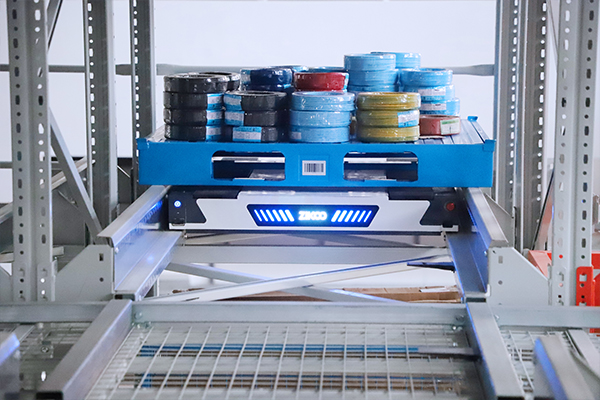
Vertical transfer is the most common bottleneck. One lift or vertical shuttle serving three rack levels is a shared resource, and every vehicle in the system queues for it. Capacity planning that assigns each vehicle its own cycle but ignores the shared lift produces a number the building cannot deliver.
Dock handoff introduces its own variables. Trailer bed height changes as a trailer is loaded, loads shift in transit, and a pallet that arrives leaning will not present itself squarely to a conveyor. A staging lane between the dock and the automated zone absorbs that variation, and the length of the lane is a design decision rather than leftover space.
Conveyor buffering decouples upstream from downstream. Without buffer positions, a stop at a wrapper propagates into the racking within a minute. With buffer, the same stop disappears into accumulated queue and never reaches the storage area.
Empty pallet and dunnage flow is the interface most often left off the drawing. Returns consume storage positions and vehicle trips, and they compete with outbound loads for the same transfer capacity. A design that treats returns as free space will lose positions in the first month of operation.
Controls, Safety, and Failure Behaviour
Which layer owns which decision
Allocation and sequencing are different decisions, and the boundary between the warehouse management system, the execution layer and the robot control layer has to be written down. When two layers both believe they own allocation, the same pallet gets assigned twice and one vehicle makes a wasted trip. When no layer owns exception handling, a blocked lane waits for a person to notice it.
Traffic management belongs to the specification, not to the software vendor’s defaults. Zone definitions, one-way loops, intersection priority and deadlock avoidance rules should be described in the contract and tested, because they determine how the fleet behaves on a busy morning rather than on a quiet one.
What has to happen when communication drops
Failure behaviour needs a written answer for each credible event: loss of network, loss of localisation, a blocked lane, a full conveyor, an order cancelled mid-move. The system should state whether a vehicle finishes its current move and parks, stops in place, or returns to a defined safe point, and who is authorised to switch the equipment to manual control.
Safety requirements are partly codified. ISO 3691-4:2020 sets safety requirements and verification for driverless industrial trucks and their systems, including detection and speed behaviour in defined zones [2]. ANSI/ITSDF B56.5-2019 is the comparable United States standard for driverless automatic guided industrial vehicles [3], and ISO 13849-1:2023 supplies the design framework for safety-related control functions and their performance levels [4].
A vehicle that meets a standard is not thereby a validated site. Muting at transfer points, aisle sharing with pedestrians, and zone boundaries drawn around a specific layout all need site-specific risk assessment and validation testing. The certificate covers the truck; the integration is the operator’s responsibility, and that boundary belongs in the acceptance plan.
The software layer decides how much of the installed hardware capacity is actually reachable. <Software-Driven Hardware: Su avance revolucionario Maximizes Warehouse Efficiency> covers how orchestration choices affect the throughput a shuttle system delivers.
Sizing, Phasing, and Retrofit Reality
Capacity arithmetic is simple, which is why assumptions hide inside it so easily. Moves per vehicle per hour equal 3600 divided by the mean cycle time in seconds, multiplied by availability. A mean cycle of 72 seconds gives 50 moves per vehicle per hour at full availability; at 85 percent availability the same vehicle delivers about 42. Both figures are arithmetic on inputs the buyer has to check, not performance claims about any product.
The mean cycle must include travel to the pick position, travel back, lift, transfer and waiting at the interface. A quotation built on a best-case single cycle and an empty aisle will not survive a peak week. Queue delay belongs in the model as a separate line, because it grows with the number of vehicles sharing a lift, a transfer car or an aisle.
Buildings differ enough that the same equipment set produces a different layout in each one. <Adaptación inteligente multi-escenario: El sistema de transporte en shuttle de seis vías de Zikoo impulsa la transformación digital del almacenamiento> covers how shuttle layouts are adapted across different facility scenarios.
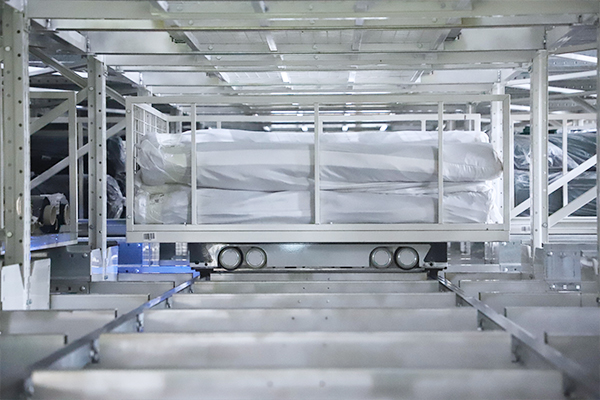
Existing buildings impose constraints that a new-build design never sees. Floor flatness becomes a design input as lift height rises, and a slab that serves a manual operation can fall outside the tolerance a tall automated rack needs. Column spacing decides the rack bay module. Sprinkler and detection layout limits rack height and requires coordination with the fire protection designer. Access doors decide how equipment enters the building, and the largest single component may be the binding constraint on the schedule. Power availability at the point of use decides the charging strategy.
A phased rollout breaks the project into zones, each with its own cutover. The practical sequence keeps a manual zone operating next to an automated zone for a defined period, moves one product family or one customer first, and uses that experience to adjust slotting and pallet acceptance rules before the second zone goes live. Training belongs to the cutover rather than to the end of the project, because operators meet the exception cases in the first week.
What to Verify Before You Commit
A reference list proves that equipment was delivered somewhere. It does not prove that your layout, your pallet population and your peak week will produce the throughput in the proposal. Verification is a list of specific requests, each attached to a specific failure it prevents.
| Verificar | Qué solicitar | Failure it prevents |
|---|---|---|
| Pallet audit | measured length, width, height and diagonal from every source, plus damage rate | lanes that accept a pallet and cannot release it |
| Cycle time model | loaded and empty travel, lift time, transfer time, queue delay and availability stated separately | a capacity promise built on best-case single cycles |
| Interface capacity | the rated capacity of each lift, transfer car and conveyor section against the peak hour | one shared lift capping a system sized on vehicle counts |
| Safety validation | site risk assessment, zone definitions, detection tests at transfer points, performance level of each safety function | a vehicle certificate treated as approval of the integrated layout |
| Controls acceptance | scripted tests for peak load, blocked lane, network loss and order change | a system that stops cleanly in a demonstration and deadlocks in production |
| Support and spares | response commitment, spare parts list, remote diagnostics, local technician coverage | an unplanned stop that lasts weeks for one scanner |
Keep the acceptance criteria measurable and specific to your pallet mix and exception rules. A test written as a general throughput promise invites dispute at handover. A test written against a defined pallet population, a defined peak profile and a defined exception list can be measured, repeated and signed.
Plan the Pallet Handling Scope With Zikoo
Four inputs decide most of the answer before a layout can be priced: a dimensioned drawing of the building including columns and clear height, the pallet specification together with the measured audit from your own yard, the inbound and outbound pallet profile in pallets per hour including the peak week, and the temperature zone the equipment will work in. Send those to Zikoo at [email protected] or call (+86)-19941778955. The team can review which handling functions belong in the automated zone, which should stay manual, and where transfer capacity needs to be sized first. If the pallet audit has not been done yet, start there, because a layout built on an assumed pallet is a layout that gets rebuilt.
Preguntas frecuentes
Is automated pallet handling the same as an ASRS?
No. An automated storage and retrieval system is a storage function, usually stacker cranes or shuttles working inside racking. Automated pallet handling also covers horizontal transport between buildings, transfers between vehicles and conveyors, and the software layer that sequences the work. Many facilities automate transport and transfer first and add automated storage later, because the interfaces are where the manual cost and the damage risk sit.
How much floor space does an automated pallet handling system need?
It depends on which function you are measuring. Storage equipment consumes rack footprint, and the aisle demand varies by family, from a shared-aisle stacker robot to a crane aisle that no person enters. Transport equipment consumes floor area for routes, staging and charging. Measure the three separately on the drawing, because a layout that saves storage space and loses it again to buffer lanes has not gained density.
Can automated pallet handling be retrofitted into an existing plant?
Yes, with conditions that have to be checked early. Floor flatness under the rack, column spacing, clear height against the sprinkler, door access for the largest component and available power all constrain the design. A phased rollout with zone-by-zone cutover usually fits an operating plant better than a single shutdown, and it gives the pallet acceptance rules time to settle before the full system depends on them.
Which pallets work in automated handling?
Pallets with consistent dimensions, sound deck and bottom boards, no protruding fasteners and a stable load. Wood, plastic and pooled pallets can all work, but each source brings its own wear pattern, and mixed populations need a defined acceptance rule at receiving. Test methods under ISO 8611 describe how flat pallets are characterised; they do not certify the pallets in your own yard [1].
Referencias
[1] ISO 8611-1:2021, “Pallets for materials handling — Flat pallets — Part 1: Test methods,” ISO, 2021.
[2] ISO 3691-4:2020, “Industrial trucks — Safety requirements and verification — Part 4: Driverless industrial trucks and their systems,” ISO, 2020.
[3] ANSI/ITSDF B56.5-2019, “Safety Standard for Driverless, Automatic Guided Industrial Vehicles and Automated Functions of Manned Industrial Vehicles,” ITSDF, 2019.
[4] ISO 13849-1:2023, “Safety of machinery — Safety-related parts of control systems — Part 1: General principles for design,” ISO, 2023.
Si está interesado, eche un vistazo a estos artículos relacionados:
Revolucionando la Logística de Cadena de Frío: La Lanzadera de Seis Vías Zikoo Robotics Potencia Almacenamiento de Alta Densidad y Alta Eficiencia
Transbordador de Seis Vías: La Herramienta de Almacenamiento Inteligente para la Reducción de Costes y la Eficiencia 2
El inicio del almacenamiento inteligente aquí: Sistemas de lanzaderas de cuatro vías rentables
¿Buscas fabricantes confiables de transbordadores de cuatro vías? Elige Zikoo Robotics
Sistema de transbordadores de seis vías lidera el cambio de máquinas a robots en la automatización de almacenamiento denso