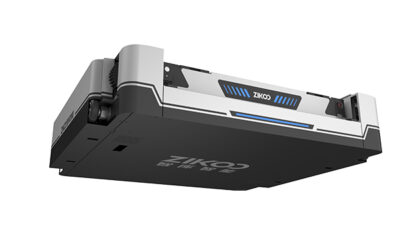
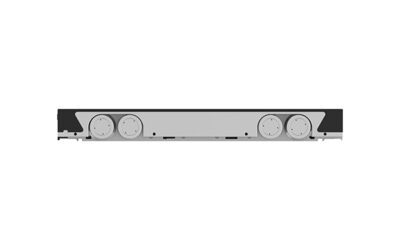
A sistema de transbordadores de cuatro vías that stops dead because someone tripped over a network cable is not engineered, it is assembled. transporte de cuatro vías offline operation hinges not on whether the network fails, because it will, but on whether the local control architecture can maintain deterministic task execution without a line to the central server. In over a decade of commissioning pallet-to-person robotics across cold chain, new energy, and manufacturing facilities, I have seen too many warehouse operators assume the worst about network dependency, and too few suppliers explain exactly what their system does when the link drops. This article explains what actually happens inside a properly designed shuttle system during a network outage, where the fallback logic lives, and what separates a genuinely resilient architecture from one that only looks automated when everything is working.
What Actually Happens When the Network Goes Down
The immediate behavior of a four-way shuttle during a network failure is not a guessing game. It is a direct consequence of whether the system relies on a centralized scheduling model or delegates execution authority to a local controller embedded on each shuttle or at the rack level. In a centralized architecture without edge fallback, the central WCS pushes each movement command over the network in real time. When that connection breaks, the shuttle loses its next instruction. It either freezes in place with its current task incomplete, or executes a hard stop, leaving pallets mid-transfer and the system state uncertain. The recovery in this case is painful: a manual reboot, a slow re-inventory of stranded pallet positions, and a hole in your throughput numbers for the shift.
In a decentralized or edge-capable system, the shuttle carries a local controller that holds a preloaded task queue, a model of its immediate environment, and a deterministic failover routine. The central WCS or RCS distributes a batch of tasks and the shuttle executes them autonomously. If the network heartbeat is lost, it does not immediately halt. It completes the task in progress, moves to a safe state, and continues executing locally queued tasks if the failover window allows. This is the fundamental design line between a system that treats network as optional for short bursts and one that treats it as a lifeline.
Do Shuttles Stop Mid-Task When the Network Drops?
In a system built with edge processing, the answer is no. The task is already local. The R-bot four-way shuttle, for example, receives movement coordinates, lift commands, and speed profiles for a sequence of pallet movements from the RCS. These are cached in its onboard controller before execution begins. A lost network packet does not interrupt the current motion profile. The shuttle completes the move, confirms pallet engagement, and then reports status. If the network is still down after the current task, it transitions to a holding position and waits, retaining task progress in non-volatile memory so nothing is lost. In contrast, a system where the central server steers every deceleration curve and lift actuation will abort immediately, simply because the controller has no autonomy to decide what comes next.
How Edge Computing and Local Controllers Sustain Operation
The ability to ride through a network outage is not distributed firmware patches. It is a deliberate system architecture choice that starts at the hardware level and flows through the software stack. Each shuttle must have enough onboard compute to run its own state machine, maintain a model of the rack layout around it, and make safe local decisions without phoning home. This is edge computing applied to intralogistics, and it is the single most under-discussed differentiator when comparing four-way shuttle suppliers.
A local controller in this context is not merely a fallback. It is the primary execution engine, with the central RCS playing the role of higher-level traffic director. During normal operation, the RCS assigns tasks, monitors fleet health, and recalculates routes globally. But the shuttle itself controls motor drivers, sensors, and safety interlocks. When the central connection is interrupted, the local controller continues to execute the queued task set using the last valid route plan. It applies collision avoidance rules based on sensor data and peer-to-peer communication over the same physical rack rail network. If the shuttle fleet can still talk to each other via onboard wireless mesh or IR, they can coordinate local moves without the central RCS for a limited period.
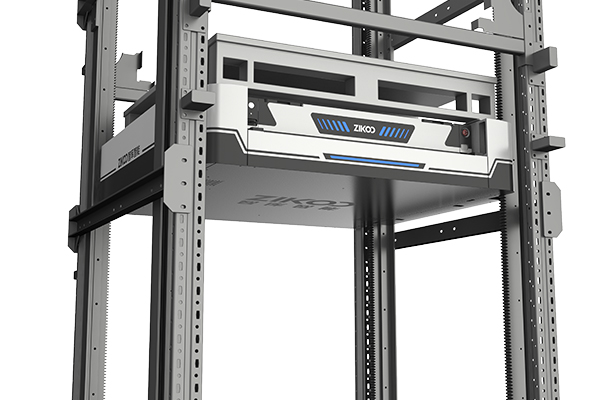
This is not theory. In projects we have delivered involving multi-shuttle fleets in deep lane storage, the R-bot’s embedded controller maintains sufficient autonomy to handle local zone operations for the duration of a typical network recovery, which is usually under five minutes. The central RCS, once reconnected, reconciles the local state changes through a delta sync protocol, and operations resume without lost data or manual intervention. The warehouse floor does not even notice the gap unless the outage extends beyond the local buffer depth.
Can a Shuttle System Run Completely Offline for a Shift?
Not without qualification. Offline operation in the absolute sense, meaning no network connection at all for an entire shift, is not a realistic design target for a multi-shuttle pallet system. The reason is not fear of failure; it is queuing horizon. A local controller can hold a finite number of task instructions. Once that local queue is exhausted, the shuttle has nothing more to do even if it is technically healthy. The central system replenishes the queue and recalculates optimal routes based on new inbound and outbound orders, which change minute to minute in a live warehouse. So complete offline operation for hours is not a genuine requirement. The practical requirement is ride-through capability for the length of a typical network disruption. That means seconds to minutes, not days. Systems designed with this in mind treat the network as a wide-area umbilical for task replenishment and fleet-level rescheduling, not as a per-motion control wire.
The Architecture That Prevents a Single Network Failure From Stopping Operations
Warehouse networks are not single links. They are a stack of access points, switches, and cabling. In a well-engineered deployment, multiple layers of redundancy prevent a single failure from isolating any shuttle. The first layer is network path redundancy. Industrial-grade Wi-Fi deployments use overlapping access points with fast roaming so that a single AP failure causes at most a packet timeout, not a session loss. A wired backbone with ring topology provides alternative physical paths if a switch or cable fails. This is standard industrial networking, but in warehouse automation it must be paired with deterministic failover logic that is aware of shuttle task states.
The second layer is the shuttle fleet’s own mesh capability. In the R-bot fleet architecture, shuttles communicate with each other over the rail system using short-range RF or IR to resolve right-of-way and track occupancy. This peer-to-peer layer operates independently of the Wi-Fi network. If the central Wi-Fi goes down, the peer mesh remains active, allowing shuttles to navigate the rail grid safely and complete tasks that do not require a new route assignment. The mesh does not replace the RCS; it extends the safe operating window.
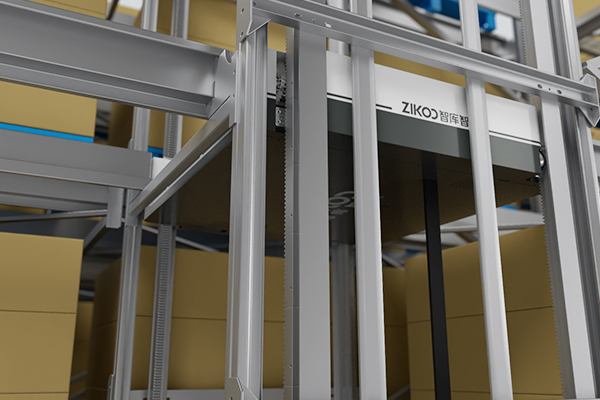
The third layer, often overlooked, is software-side state preservation. The Software de almacén inteligente PTP platform’s WCS and RCS modules are designed with a clear separation of concerns: the RCS manages global task allocation and the shuttle’s onboard software handles execution. When a shuttle loses heartbeat with the RCS, the last known state is not discarded. It is held open for a configurable timeout. If the shuttle reconnects within that window, the task resumes from the exact breakpoint. If the timeout expires, the RCS marks the task as uncertain and either reallocates it or guides the shuttle through a state reconciliation protocol before allowing it to continue. In either case, the system does not forget what was happening.
Is a Standard Warehouse Wi-Fi Setup Sufficient?
Sufficiency depends entirely on the latency and roaming requirements of the shuttle control protocol. A typical office Wi-Fi deployment cannot meet them. Shuttle systems using dynamic task allocation over Wi-Fi need sub-50ms handoff between access points and per-packet latency below 10ms under load. That means industrial access points with controller-based fast roaming, not standalone APs with WPA2-PSK and reactive channel scanning. We require a validated site survey that maps RSSI, co-channel interference, and roaming thresholds for every shuttle lane before commissioning. In practice, this adds cost to the network infrastructure but eliminates the situation where a shuttle loses connection because it moved 20 meters and the handoff lagged. The network becomes a predictable asset rather than a source of intermittent errors.
What to Check in a Supplier’s Network Resilience Design
Evaluating cURL Too many subrequests by single Worker invocation. To configure this limit, refer to https://developers.cloudflare.com/workers/wrangler/configuration/#limits on network resilience does not require a degree in communications engineering. It requires asking the right architectural questions and recognizing when a supplier is evasive. The checklist below draws from the failure modes I have encountered in the field, not from a datasheet comparison.
| What to Ask | What to Look For |
|---|---|
| Where does task execution live? | Answers like “on the local shuttle controller” indicate edge design. Answers like “the server sends every step” indicate centralized dependency. |
| What happens during a network timeout? | A defined sequence: complete current task, stop in safe state, report on reconnect. Not “it will stop when the connection is lost.” |
| Is the indoor communication protocol tested under full load? | The supplier should reference industrial Wi-Fi standards (802.11r/k/v) and provide a site survey methodology, not just a model number. |
| How is state recovered after an outage longer than the timeout? | There should be a delta reconciliation protocol, not a full system restart and manual inventory check. |
| Can the peer mesh function without the central Wi-Fi? | Yes, even if limited, means the shuttle fleet does not become deaf without the APs. |
A supplier who answers these questions with concrete technical detail, not reassurances about “reliability,” is worth shortlisting. The architecture differences are not academic. They become visible the first time a forklift knocks an access point off its bracket. I have walked through warehouses where that single event halted all shuttle movement for 45 minutes because the system had no local fallback, and every pallet move required a fresh command through the broken link. That is not an automation problem. That is a system design choice made years earlier, before the first shuttle was bolted down.
Common Questions About Four-Way Shuttle Network Reliability
Can a four-way shuttle system operate entirely without a network?
You cannot run a multi-shuttle pallet system for extended periods with zero network. The task horizon on a local controller is limited to a preset number of movements, and new order entries, inventory updates, and route optimization all need the central RCS. However, a properly designed system can operate for minutes without any central link, completing all in-flight tasks and maintaining safety. The objective is ride-through capability, not perpetual offline mode.
cURL Too many subrequests by single Worker invocation. To configure this limit, refer to https://developers.cloudflare.com/workers/wrangler/configuration/#limits
cURL Too many subrequests by single Worker invocation. To configure this limit, refer to https://developers.cloudflare.com/workers/wrangler/configuration/#limits
cURL Too many subrequests by single Worker invocation. To configure this limit, refer to https://developers.cloudflare.com/workers/wrangler/configuration/#limits
cURL Too many subrequests by single Worker invocation. To configure this limit, refer to https://developers.cloudflare.com/workers/wrangler/configuration/#limits
cURL Too many subrequests by single Worker invocation. To configure this limit, refer to https://developers.cloudflare.com/workers/wrangler/configuration/#limits
Si está interesado, eche un vistazo a estos artículos relacionados:
Transbordador de Seis Vías: Pionero en el Futuro del Almacenamiento Inteligente
Transbordador de Seis Vías Impulsa Mejoras en el Almacén: Construyendo un Almacén Automático 3D Inteligente
Transbordador de Seis Vías: La solución de doble motor para alta capacidad de transporte
Remodelando el valor del almacén: La lanzadera de seis direcciones lidera la transformación digital