Facility managers often assume that almacenamiento automatizado and retrieval demands a new building. In practice, a sistema de transbordadores de cuatro vías upgrade allows an existing warehouse to gain almacenamiento denso capacity and throughput improvements without the cost and lead time of greenfield construction. The key is a disciplined site assessment and a design approach that respects the building’s real structural and operational limits. Over the past decade of deploying pallet-to-person robotics across cold chain, manufacturing, and e-commerce facilities, I have seen retrofits that doubled storage density while keeping daily operations running—and I have seen projects that stalled because a single floor flatness spec was ignored. The feasibility of upgrading your existing warehouse with a sistema de transbordador de cuatro vías system ultimately rests on a few quantifiable criteria, which this article walks through step by step.
Assessing Your Existing Warehouse for a Four-Way Shuttle System
Three structural characteristics determine whether a building is a good retrofit candidate: clear height, floor quality, and column grid.
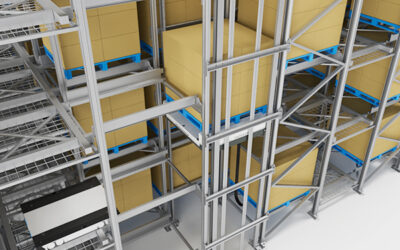
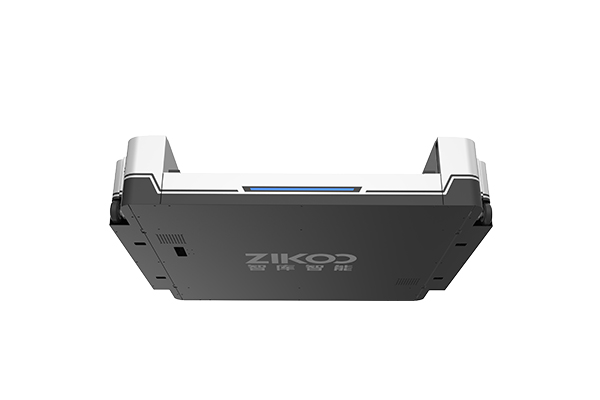
Clear height is the first filter. A four-way shuttle system can operate in buildings with a clear height as low as 4.5 meters if racking is configured around the lift mechanisms. The R-bot shuttle body—125 mm thick and capable of handling 1.2- to 1.5-ton loads—enables dense racking profiles that reclaim vertical space even in older facilities with lower ceilings. In several of our projects, we have added two to three additional storage levels by switching from conventional wide-aisle racking to a high-density shuttle layout, all while staying within the existing roof envelope.
Floor flatness tolerance is the second, and often under-investigated, constraint. Four-way shuttles rely on consistent floor contact to maintain positioning accuracy. The standard we commonly specify for shuttle-grade retrofits is a floor levelness of no more than 3 mm per running meter in the travel lanes. Existing concrete slabs that have settled over time may require localized grinding or a thin epoxy overlay to bring the surface within tolerance. This is not a showstopper—it is a predictable cost item that should appear in the project budget from day one.
Column grid layout is the third filter. While modern four-way shuttle racks can be engineered to fit around existing columns, a regular column spacing of 10 to 12 meters in the shuttle travel direction keeps the number of column-notching modifications low and preserves system throughput. Irregular grids or closely spaced columns (less than 8 meters apart) increase the amount of custom rack engineering and can reduce the economic advantage of a retrofit.
| Criterion | Minimum Acceptable Standard | Impact on Retrofit Feasibility |
|---|---|---|
| Clear height | 4.5 m under steel | Determines number of racking levels |
| Floor flatness | ≤3 mm per meter | Affects shuttle positioning accuracy |
| Column grid regularity | 10–12 m spacing preferred | Affects racking customisation cost |
If your building meets these three thresholds, the odds are high that a four-way shuttle retrofit is technically viable.
Key Site Modifications Required for a Four-Way Shuttle Retrofit
Even a compatible building needs targeted modifications. I recommend focusing on four areas that, in our experience, cause the majority of retrofit delays: floor preparation, power infrastructure, fire safety compliance, and docking reconfiguration.
Floor grinding or resurfacing is usually the first physical work on site. The R-bot’s 125 mm body height makes it sensitive to floor undulations; therefore, shuttle travel lanes and the lift landing zones must meet that flatness standard before equipment installation begins. In one cold storage retrofit, we combined a 2 mm self-leveling epoxy with underfloor heating cable replacement in a single two-week shutdown window to avoid returning to the aisle twice.
Electrical power is the next item. A four-way shuttle system draws relatively low continuous power—the R-bot’s lithium battery supports eight hours of operation on a single charge—but the charging infrastructure and the vertical lift motor circuits need separate, UPS-backed feeder lines. Older warehouses often have power distribution clustered near the dock doors, so running new busbars to the racking area is a typical scope item.
Fire protection upgrades consistently trigger the most discussion with local authorities. High-density storage increases fire load; as a result, most jurisdictions will require a review of the existing sprinkler density and possibly the addition of in-rack sprinklers or early smoke detection. We plan for an independent fire engineering report early in the retrofit schedule because the outcome directly influences racking layout and permits.
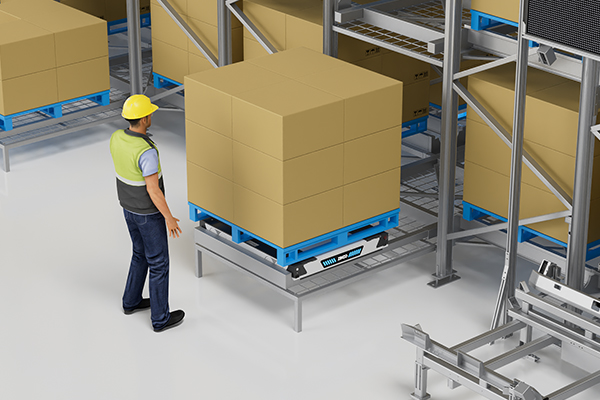
Finally, inbound and outbound docking areas often need reconfiguration to match the system’s throughput. A retrofit that triples the number of pallet positions will also change the rhythm of truck arrivals. The U-bot omnidirectional stacking robot, which operates in aisles as narrow as 2.1 meters, can help absorb that new volume in the staging area without requiring additional square footage.
Designing the Four-Way Shuttle Layout Within Existing Constraints
Once the building’s as-built conditions are documented, the system design phase centers on two trade-offs: storage density versus retrieval speed, and single-deep versus double-deep storage.
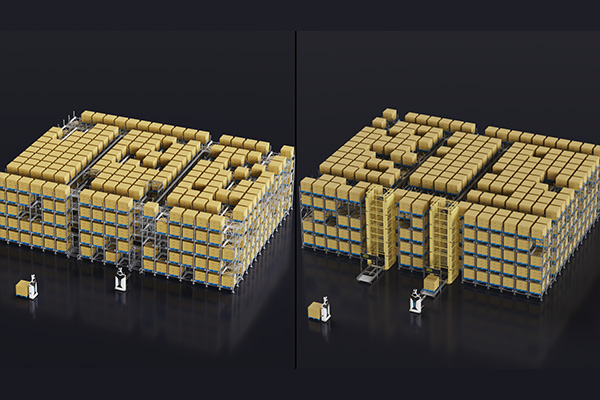
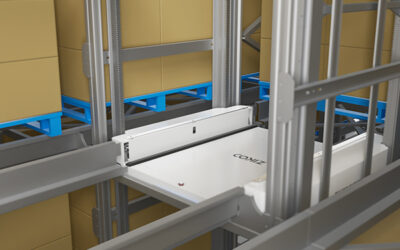
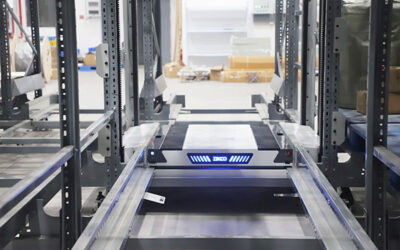
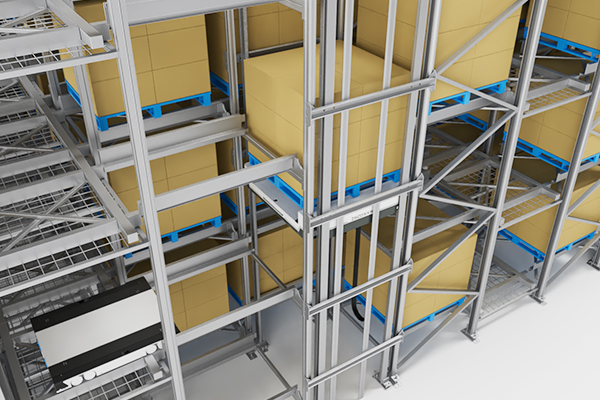
The R-bot four-way shuttle operates within racking lanes, moving horizontally and laterally to access any pallet position on a level. Pairing it with the H-bot vertical bidirectional shuttle—which occupies only a single storage location per column—creates a sistema de transporte en seis vías network that moves pallets in all six spatial directions without the fixed footprint of a stacker crane. In an existing building, this is a decisive advantage because the H-bot’s compact form factor (1,300 mm × 1,464 mm footprint for the standard model) can fit into column bays that cannot accommodate crane rails.
The decision between single-deep and double-deep storage largely comes down to SKU profile and turnover velocity. Single-deep racks give immediate access to every pallet, which suits high-SKU, medium-throughput operations. Double-deep storage increases density by roughly 30% but requires a pallet shuffle sequence that adds six to eight seconds per retrieval. I have found that for warehouses where at least 40% of SKUs maintain pallet quantities of four or more, double-deep storage in the bulk zone and single-deep storage in the fast-moving zone gives the best compromise.
Depth of shuttle lanes is another constraint imposed by the building length. The R-bot’s standard lane can run up to 40 meters without requiring a cross-aisle transfer, but longer warehouses can be split into logical zones with dedicated lifts per zone. This zoning scheme also creates a natural segmentation for phased implementation.
Integrating Four-Way Shuttles with Your Current Warehouse Management Software
“Will our existing WMS work with the shuttle system?” This is the question I hear from almost every operations director during the first site visit. The short answer is yes, provided the WMS has an application programming interface (API) capable of accepting real-time task dispatching.
A four-way shuttle system relies on a warehouse control system (WCS) and a robot control system (RCS) that sit between the WMS and the hardware. The Software de almacén inteligente PTP cURL Too many subrequests by single Worker invocation. To configure this limit, refer to https://developers.cloudflare.com/workers/wrangler/configuration/#limits
cURL Too many subrequests by single Worker invocation. To configure this limit, refer to https://developers.cloudflare.com/workers/wrangler/configuration/#limits
cURL Too many subrequests by single Worker invocation. To configure this limit, refer to https://developers.cloudflare.com/workers/wrangler/configuration/#limits
| cURL Too many subrequests by single Worker invocation. To configure this limit, refer to https://developers.cloudflare.com/workers/wrangler/configuration/#limits | cURL Too many subrequests by single Worker invocation. To configure this limit, refer to https://developers.cloudflare.com/workers/wrangler/configuration/#limits | cURL Too many subrequests by single Worker invocation. To configure this limit, refer to https://developers.cloudflare.com/workers/wrangler/configuration/#limits |
|---|---|---|
| cURL Too many subrequests by single Worker invocation. To configure this limit, refer to https://developers.cloudflare.com/workers/wrangler/configuration/#limits | cURL Too many subrequests by single Worker invocation. To configure this limit, refer to https://developers.cloudflare.com/workers/wrangler/configuration/#limits | cURL Too many subrequests by single Worker invocation. To configure this limit, refer to https://developers.cloudflare.com/workers/wrangler/configuration/#limits |
| cURL Too many subrequests by single Worker invocation. To configure this limit, refer to https://developers.cloudflare.com/workers/wrangler/configuration/#limits | cURL Too many subrequests by single Worker invocation. To configure this limit, refer to https://developers.cloudflare.com/workers/wrangler/configuration/#limits | cURL Too many subrequests by single Worker invocation. To configure this limit, refer to https://developers.cloudflare.com/workers/wrangler/configuration/#limits |
| cURL Too many subrequests by single Worker invocation. To configure this limit, refer to https://developers.cloudflare.com/workers/wrangler/configuration/#limits | cURL Too many subrequests by single Worker invocation. To configure this limit, refer to https://developers.cloudflare.com/workers/wrangler/configuration/#limits | cURL Too many subrequests by single Worker invocation. To configure this limit, refer to https://developers.cloudflare.com/workers/wrangler/configuration/#limits |
cURL Too many subrequests by single Worker invocation. To configure this limit, refer to https://developers.cloudflare.com/workers/wrangler/configuration/#limits
cURL Too many subrequests by single Worker invocation. To configure this limit, refer to https://developers.cloudflare.com/workers/wrangler/configuration/#limits
cURL Too many subrequests by single Worker invocation. To configure this limit, refer to https://developers.cloudflare.com/workers/wrangler/configuration/#limits
cURL Too many subrequests by single Worker invocation. To configure this limit, refer to https://developers.cloudflare.com/workers/wrangler/configuration/#limits
cURL Too many subrequests by single Worker invocation. To configure this limit, refer to https://developers.cloudflare.com/workers/wrangler/configuration/#limits
cURL Too many subrequests by single Worker invocation. To configure this limit, refer to https://developers.cloudflare.com/workers/wrangler/configuration/#limits
cURL Too many subrequests by single Worker invocation. To configure this limit, refer to https://developers.cloudflare.com/workers/wrangler/configuration/#limits
cURL Too many subrequests by single Worker invocation. To configure this limit, refer to https://developers.cloudflare.com/workers/wrangler/configuration/#limits
cURL Too many subrequests by single Worker invocation. To configure this limit, refer to https://developers.cloudflare.com/workers/wrangler/configuration/#limits
cURL Too many subrequests by single Worker invocation. To configure this limit, refer to https://developers.cloudflare.com/workers/wrangler/configuration/#limits
cURL Too many subrequests by single Worker invocation. To configure this limit, refer to https://developers.cloudflare.com/workers/wrangler/configuration/#limits
cURL Too many subrequests by single Worker invocation. To configure this limit, refer to https://developers.cloudflare.com/workers/wrangler/configuration/#limits
cURL Too many subrequests by single Worker invocation. To configure this limit, refer to https://developers.cloudflare.com/workers/wrangler/configuration/#limits
cURL Too many subrequests by single Worker invocation. To configure this limit, refer to https://developers.cloudflare.com/workers/wrangler/configuration/#limits
cURL Too many subrequests by single Worker invocation. To configure this limit, refer to https://developers.cloudflare.com/workers/wrangler/configuration/#limits
cURL Too many subrequests by single Worker invocation. To configure this limit, refer to https://developers.cloudflare.com/workers/wrangler/configuration/#limits
cURL Too many subrequests by single Worker invocation. To configure this limit, refer to https://developers.cloudflare.com/workers/wrangler/configuration/#limits
cURL Too many subrequests by single Worker invocation. To configure this limit, refer to https://developers.cloudflare.com/workers/wrangler/configuration/#limits
cURL Too many subrequests by single Worker invocation. To configure this limit, refer to https://developers.cloudflare.com/workers/wrangler/configuration/#limits
cURL Too many subrequests by single Worker invocation. To configure this limit, refer to https://developers.cloudflare.com/workers/wrangler/configuration/#limits
cURL Too many subrequests by single Worker invocation. To configure this limit, refer to https://developers.cloudflare.com/workers/wrangler/configuration/#limits
Si está interesado, eche un vistazo a estos artículos relacionados:
Transbordador de Seis Vías: La Herramienta Inteligente de Almacenamiento para la Reducción de Costos y Eficiencia
Transbordador de Seis Vías Impulsa Mejoras en el Almacén: Construyendo un Almacén Automático 3D Inteligente
La estandarización impulsa la entrega global: Zikoo Robotics Six-Way Shuttle amplía su presencia en el extranjero