


Implementing automated storage and retrieval systems like four-way shuttle systems represents a significant investment for any warehouse operation. Businesses rightly seek assurances that their automation projects will meet expectations. Understanding the project delivery guarantees offered by four-way shuttle manufacturers is crucial for mitigating risks and ensuring a successful deployment. This article details the contractual obligations and service level agreements that safeguard these complex automation initiatives.
What Do Project Delivery Guarantees Actually Cover in Four-Way Shuttle Projects?
Project delivery guarantees in warehouse automation refer to contractual commitments made by manufacturers regarding the successful implementation and performance of automated systems. These guarantees matter because four-way shuttle systems involve substantial capital expenditure and operational changes that can disrupt existing workflows if not managed properly.
Manufacturers typically provide service level agreements and detailed contractual obligations to ensure the project meets predefined benchmarks. These agreements cover various aspects, from installation timelines to system performance metrics, ensuring accountability and protecting the client’s investment. The specifics vary considerably between vendors, which makes careful contract review essential before signing.
Effective risk management in automation begins with clearly defined and legally binding guarantees from the chosen vendor. Vague promises about “best efforts” or “reasonable timelines” offer little protection when a project runs into trouble.
Which Performance Metrics Should Four-Way Shuttle Contracts Guarantee?
Four-way shuttle manufacturers offer various guarantees to instill confidence and ensure project success. These assurances typically encompass implementation timelines, system performance metrics, and integration capabilities with existing warehouse systems.
Performance guarantees often specify system uptime, ensuring the automated system operates reliably for a predetermined percentage of the time. Throughput rates, measured in pallets or cases per hour, are also commonly guaranteed, directly impacting a warehouse’s operational capacity. Furthermore, manufacturers provide guarantees for software integration, ensuring that the four-way shuttle systems communicate effectively with existing warehouse management systems, warehouse execution systems, warehouse control systems, and robot control systems.
| Guarantee Type | Description | Key Metric |
|---|---|---|
| Timeline | Project completion within specified dates | Days/Weeks to Go-Live |
| Performance | Achieved operational efficiency and speed | Throughput (units/hr) |
| Uptime | System availability percentage | % Uptime |
| Integration | Compatibility with existing software | Successful data exchange |
| Safety | Adherence to industry safety standards | Compliance reports |
The challenge lies in defining these metrics precisely enough that both parties agree on how they will be measured. A throughput guarantee of 200 pallets per hour means little if the contract does not specify the product mix, travel distances, and operating conditions under which that rate applies.
How Are Four-Way Shuttle Project Milestones Structured?
Four-way shuttle manufacturers typically structure projects around distinct milestones, each with associated guarantees. These phases include initial system design, hardware installation, and the final commissioning process.
Guarantees tied to design ensure the system meets specified capacity and flow requirements. Installation guarantees confirm the physical setup adheres to engineering standards and safety protocols. During commissioning, manufacturers guarantee the system achieves agreed-upon performance metrics, such as specific throughput rates and accuracy, before final handover.
These project milestones and their guarantees serve as important vendor selection criteria, providing a clear roadmap and accountability throughout the implementation. Payment schedules are often tied to milestone completion, which gives both parties incentive to stay on track.
What Role Does the Manufacturer Play in Four-Way Shuttle System Integration?
A manufacturer’s role extends beyond delivering physical equipment; it encompasses ensuring successful integration of the four-way shuttle system within the client’s existing warehouse infrastructure. This involves meticulous planning to synchronize the new system with current operations.
Manufacturers provide expertise in connecting pallet-to-person technology with other automated equipment and manual processes. They offer post-installation support, including training for operational staff and technical assistance. Many manufacturers also maintain support networks to address issues promptly, ensuring minimal disruption and sustained performance.
The integration phase is where many automation projects encounter unexpected complications. Legacy systems may not communicate as expected, floor conditions may require modifications, or existing processes may need adjustment to accommodate the new equipment. A manufacturer’s willingness to work through these issues rather than point to contract limitations often determines project success.
Manufacturers ensure successful integration through a structured approach that begins with in-depth pre-implementation planning. This phase involves detailed site surveys, data analysis, and simulation modeling to design a system that fits the warehouse’s specific layout and operational needs. Customization options are often available to tailor the shuttle system, such as adjusting rack configurations or robot specifications, to existing infrastructure.
Dedicated project management teams oversee the entire process, coordinating between various stakeholders. Training and commissioning services are provided to client personnel, ensuring they can operate and maintain the system effectively. Data security in WMS integration is also a key consideration, with manufacturers implementing secure protocols for data exchange.
What Recourse Exists When Four-Way Shuttle Projects Face Delays or Performance Shortfalls?
Despite thorough planning, project delays or performance issues can arise in automation projects. Manufacturers address these potential problems through specific contractual clauses designed to provide recourse.
These clauses often include provisions for liquidated damages, which are predetermined financial penalties for unmet delivery timelines. Performance bonds may also be required, offering a financial guarantee that the manufacturer will fulfill its obligations. For performance issues, contracts typically outline specific remedies, such as system adjustments, additional support, or further compensation if agreed-upon throughput rates or system uptime are not consistently met.
These mechanisms are crucial for managing risk in automation and protecting the client’s return on investment by minimizing operational disruption. The key is ensuring these provisions are specific enough to be enforceable. A clause requiring “reasonable efforts to remedy performance deficiencies” provides far less protection than one specifying exact remediation timelines and escalation procedures.
If your project involves complex integration requirements or tight go-live deadlines, it is worth discussing specific penalty and remedy provisions with potential vendors before finalizing contracts.
What Should You Evaluate Beyond the Written Guarantees?
Selecting a four-way shuttle manufacturer involves more than just evaluating project delivery guarantees; it requires assessing the manufacturer’s overall reliability and long-term commitment.
Businesses should consider vendor selection criteria such as the manufacturer’s track record, presence in relevant markets, and technical expertise. A proven history of successful implementations across various industries demonstrates capability. The ability to provide robust post-sales support, including maintenance and spare parts, is critical for warehouse efficiency over the system’s operational life. Scalability of shuttle systems and options for future system upgrades also indicate a manufacturer’s forward-thinking approach.
References from existing customers in similar applications provide insight that contract language cannot capture. Ask potential vendors for contacts at installations comparable to your planned project, and ask those references specifically about how the manufacturer handled problems when they arose.
How Does Zikoo Structure Its Four-Way Shuttle Project Guarantees?
Zikoo Smart Technology Co., Ltd. provides integrated solutions that address project delivery and performance reliability through a combination of hardware and software designed to work together from the start.
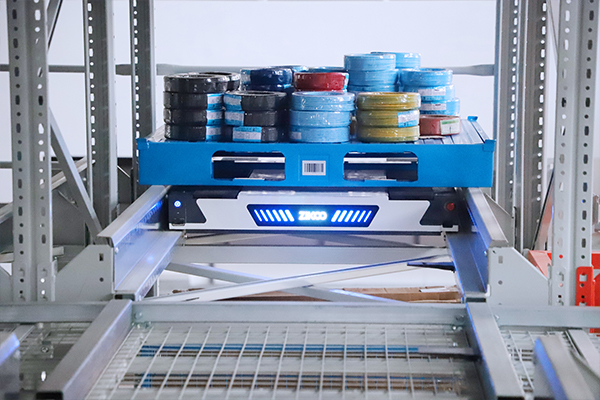
The R-bot Four-Way Shuttle is designed for dense storage, offering flexible four-way movement and multi-shuttle collaborative operation. When combined with H-bot High-Speed Elevators, the system achieves six-way functionality, significantly enhancing throughput. The U-bot Omnidirectional Stacker Robots extend capabilities to narrow aisle storage scenarios, ensuring high-density storage and efficient picking.
All these hardware components are orchestrated by PTP Smart Warehouse Software (WMS/WES/WCS/RCS), providing a solution that reduces integration risk by keeping hardware and software development under one roof. This approach simplifies accountability when performance questions arise, since there is no opportunity for hardware and software vendors to point fingers at each other.
Frequently Asked Questions About Four-Way Shuttle Project Guarantees
What recourse do companies have if a four-way shuttle project faces significant delays or performance issues?
Companies typically have recourse through contractual agreements, which often include clauses for liquidated damages, performance bonds, or specific remedies for unmet delivery timelines or system performance. These provisions are designed to protect the client’s investment and ensure accountability from the manufacturer. The effectiveness of these provisions depends entirely on how specifically they are written, so review contract language carefully before signing.
How do manufacturers ensure the long-term reliability and support for four-way shuttle systems?
Manufacturers ensure long-term reliability through comprehensive warranty periods, readily available spare parts, and maintenance programs. Many also offer ongoing technical support, remote diagnostics, and software updates to maintain optimal system performance. The practical question is whether the manufacturer maintains adequate spare parts inventory and technical staff to respond quickly when equipment fails, since downtime costs often exceed the repair costs themselves.
Are project delivery guarantees standard across all four-way shuttle manufacturers?
While most reputable four-way shuttle manufacturers offer some form of project delivery guarantee, the specifics vary significantly. It is crucial for businesses to meticulously review contractual terms, service level agreements, and performance metrics to understand the full scope of assurances provided before committing to a vendor. To discuss how Zikoo structures its project guarantees for your specific application, contact us at info@zikoo-int.com or (+86)-19941778955.
If you’re interested, you may want to read the following articles:
Six-Way Shuttle Powers Dense Storage: Breaking Space Limitations
Smart Storage Revolution: Comprehensive Overview of Four-Way Shuttle Systems for Automatic 3D Warehouses
Standardization Empowers Global Delivery: Zikoo Robotics Six-Way Shuttle Expands Overseas
Six-Way Shuttle: Empowering Industries to Embrace Smart Warehousing
Six-Way Shuttle: The Dual-Engine Solution for High-D


