


Four-way shuttle systems for peak demand periods perform reliably only when the fleet is sized from actual peak-hour pallet movements, not from average daily throughput. Peak demand exposes three constraints that average-based planning hides: charging windows, software task allocation, and vertical transfer capacity. In projects I have reviewed across e-commerce and 3PL warehouses, the fixed rack structure often had enough storage depth, but peak-hour output still slowed because too few shuttles were available during the two or three hours when orders concentrated. This article explains what to check before committing to a peak-demand shuttle design.
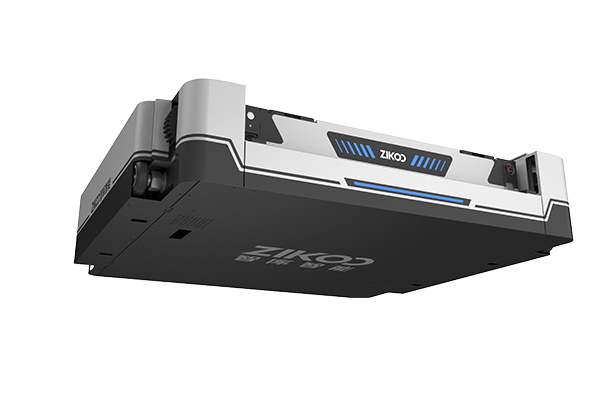
Peak Demand Requirements for Four-Way Shuttle Systems
Peak demand periods are usually a two-to-four-hour window when inbound, outbound, and replenishment movements overlap. A four-way shuttle system handles that overlap differently from a storage system that relies on a single aisle crane: shuttles can move across lanes independently and can be dispatched in groups. Suitability for peak demand therefore depends less on the robot’s top travel speed than on how many shuttles and vertical lifts can be moving at the same time.
Top travel speed shows up on a specification sheet, but cycle time shows up on the warehouse floor. A loaded R-bot travels at 1.2 m/s in standard models, yet a peak-hour movement cycle includes lift transfer, pallet pickup, lane change, and drop-off. When all those elements queue behind one vertical transfer point, extra shuttle speed does not turn into extra throughput. The first check is to map when inbound and outbound movements actually overlap during the day, not to assume a constant flow across eight hours.
Four-Way Shuttle Fleet Sizing for Peak-Hour Throughput
Shuttle count is the number buyers most often ask about after seeing a layout. The correct starting point is not the total pallet positions. It is the peak moves per hour divided by the realistic cycle rate of one shuttle under the actual rack profile. If peak outbound is 80 pallets per hour and one shuttle completes 12 useful moves per hour, the fleet needs at least seven shuttles for that function alone, and that example still assumes no charge interruptions and no lift congestion.
Different pallet types do not change speed much, but heavy-load models do. The R-bot standard and Japanese types reach 1.2 m/s loaded; the heavy-duty large pallet model moves at 1.0 m/s and weighs 400 kg. A heavier shuttle also takes longer in lane change and positioning, so the same peak-hour calculation needs a lower shuttle throughput assumption.
| R-bot Model | Rated Load | Loaded Travel Speed | Peak-Hour Sizing Note |
|---|---|---|---|
| Standard R1200B | 1200 kg | 1.2 m/s | Baseline for 1200 x 800-1000 mm pallets |
| American R1200A | 1200 kg | 1.2 m/s | Fits 1016 x 1219 mm pallets |
| Japanese R1500J | 1500 kg | 1.2 m/s | Heavier load with standard loaded speed |
| Heavy-duty Large Pallet R2000B | 2000 kg | 1.0 m/s | Lower loaded speed reduces peak-hour move rate |
Shuttle count alone does not determine throughput; lane-level movement and rack geometry do. <Six-Way Shuttle Powers Dense Storage: Breaking Space Limitations> covers how dense rack layouts change travel paths and throughput assumptions before extra shuttles are added.
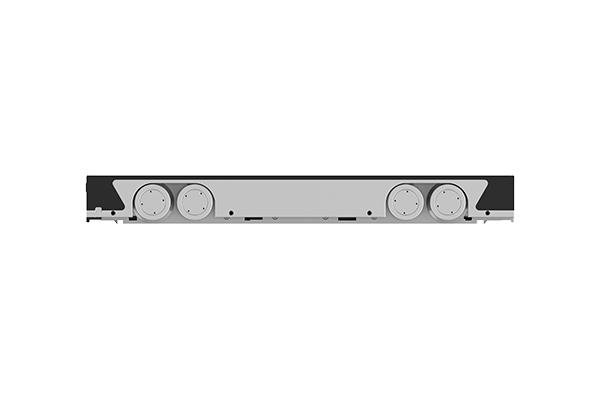
Battery Charging During Peak Demand Periods
Battery runtime sets a hard boundary on peak-day planning. R-bot shuttles run for about eight hours on a full charge with the 51.2V/40Ah lithium battery, except the heavy-duty large pallet model, which is specified for seven hours. If peak demand sits inside a single eight-hour shift, charging can be scheduled at night. If inbound and outbound peaks span ten or twelve hours, the fleet requirement changes. You need either battery swapping, opportunity charging during breaks, or more shuttles so some can leave the floor without dropping throughput.
Cold chain operations at -25°C use the low-temperature battery, where the expected continuous run window is six to eight hours. That shorter window matters because cold store staff should not have to recover from a peak-day dead floor. Charging locations and the low-temperature charging port design are part of the peak-demand calculation, not an afterthought.
If your peak window exceeds six hours or inbound and outbound peaks overlap, it is worth confirming the charging design before you finalize shuttle count. Send your peak-hour pallet movement data to info@zikoo-int.com.
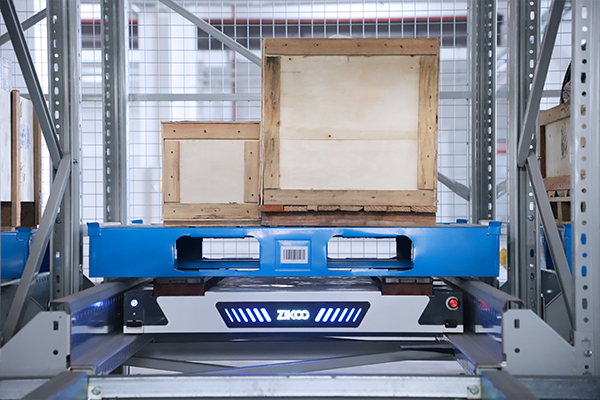
WMS and WCS Scheduling for Four-Way Shuttle Peak Operations
Peak demand is a software problem as much as a hardware problem. WCS decides which shuttle takes which task, and RCS manages the robot-level routes. When order drops arrive in waves, the system cannot simply use the nearest shuttle every time. It has to balance charging state, lift queues, and lane congestion across the entire fleet. In our peak-demand designs, we examine the task sequence before adding hardware because poor task allocation produces exactly the same slowdown as a missing shuttle.
Zikoo’s PTP Smart Warehouse Software covers WMS, WES, WCS, and RCS, so the handoff from wave planning to robot execution stays inside one data model. That matters when peak orders trigger simultaneous replenishment and outbound tasks. The WCS can hold a replenishment task until the lift clears, then release it as soon as the outbound pallet passes. If the scheduling layer is weak, every shuttle in the fleet waits behind the same vertical transfer bottleneck.
Software-driven coordination usually delivers more peak performance than adding another shuttle. <Software-Driven Hardware: [Six-Way Shuttle](https://www.zikooint.com/solution/r-bot-h-bot-six-way-shuttle-dense-storage-system) Maximizes Warehouse Efficiency> covers how WCS task sequencing and route planning increase throughput without changing hardware top speed.
The H-bot vertical shuttle adds one more scheduling constraint. Its loaded travel speed is 0.5 m/s, and it serves as the vertical hub for the R-bot fleet. If the WCS dispatches too many outbound requests to the same lift at the same moment, peak-hour throughput flattens. The fastest four-way shuttle cannot fix a queue at the vertical transfer.
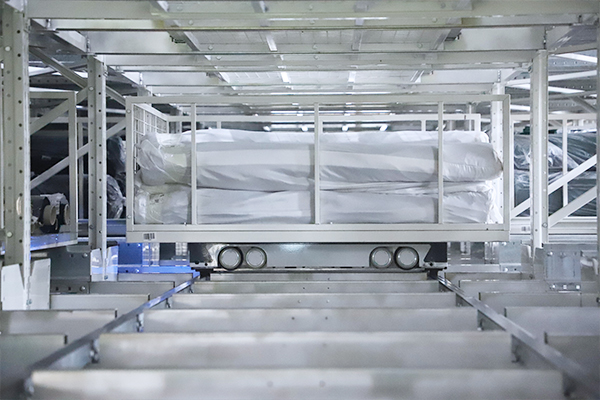
Planning a Four-Way Shuttle System for Peak-Demand Performance
Peak-demand planning for a four-way shuttle system comes down to three numbers: peak inbound moves per hour, peak outbound moves per hour, and the overlap window. Because shuttle count, battery runtime, and vertical lifts interact, a design that works at average throughput can still miss a two-hour surge. The next step is to have these three numbers reviewed against your rack profile and pallet type. Send your peak-hour movement data and rack layout to info@zikoo-int.com, or call (+86)-19941778955, and we will confirm the fleet size and charging plan before you finalize the system specification.
Common Questions About Four-Way Shuttle Peak Performance
How many shuttles do I need for peak periods?
Initial sizing should start from peak moves per hour, not total pallet positions or average daily volume. Divide the peak move rate by the realistic shuttle cycle rate under your rack profile, then add margin for charging and maintenance. A fleet that looks large enough on paper can still fall short if vertical lift capacity or charge timing is ignored. The number also changes when inbound and outbound peaks overlap.
Does a four-way shuttle system slow down during peak demand?
A four-way shuttle system does not automatically slow down during peak demand; the slowdown usually comes from vertical lift congestion, charging gaps, or poor task allocation. The shuttle keeps moving, but throughput drops when several tasks queue at the same transfer point. In peak-hour simulations, the frequent conclusion is that more shuttles would not shorten the lift queue. The fix is to balance outbound, replenishment, and charging priorities rather than add extra robots.
Can four-way shuttle systems handle seasonal peaks without adding permanent capacity?
It depends on how much extra peak capacity you need and how long the seasonal window lasts. Short seasonal spikes can be handled by extending charging windows, releasing extra shuttles from maintenance, and increasing task density. Sustained seasonal growth may require additional shuttles or vertical lifts. The key is to test the seasonal profile against the existing fleet before buying permanent capacity that sits idle for months.
What happens to peak-hour performance when a shuttle is down for charging or maintenance?
In peak-demand projects I have reviewed, the limiting factor is usually not a single shuttle failure. It is the availability of a replacement shuttle during a charging or maintenance window. When the fleet has no spare shuttle, one robot out of service shifts its work to the remaining units and the peak-rate margin disappears. That is why peak sizing should include a redundancy allowance, not just the bare minimum count. Share your peak-hour sequence with info@zikoo-int.com and we will confirm the redundancy margin your operation needs.
If you’re interested, check out these related articles:
Six-Way Shuttle Powers Dense Storage: Breaking Space Limitations
Stacker Crane vs Four-Way Shuttle: Which Fits Your ASRS Warehouse Best
Software-Driven Hardware: Six-Way Shuttle Maximizes Warehouse Efficiency
Standardization Empowers Global Delivery: Zikoo Robotics Six-Way Shuttle Expands Overseas
Revolutionizing Cold Chain Logistics: Zikoo Robotics Six-Way Shuttle Powers High-Density, High-Efficiency Warehousing


