


The modern warehouse faces increasing pressure to optimize space and accelerate order fulfillment. Four-way shuttle systems offer a sophisticated solution to these challenges, providing high-density storage and dynamic material flow. These automated storage and retrieval systems (AS/RS) are transforming operations by allowing pallets to move freely in all directions within a racking structure. This flexibility significantly enhances efficiency and adaptability for diverse inventory management needs.
How Four-Way Shuttle Systems Actually Work
Four-way shuttle systems represent a significant advancement in automated storage and retrieval systems (AS/RS) technology. Unlike traditional shuttle systems that operate on a single axis, a four-way shuttle can move longitudinally and laterally within a racking structure. This omnidirectional capability allows for greater flexibility in pallet placement and retrieval, enabling true goods-to-person fulfillment.
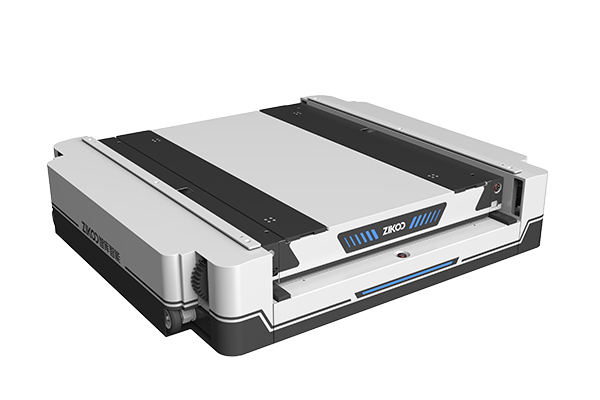
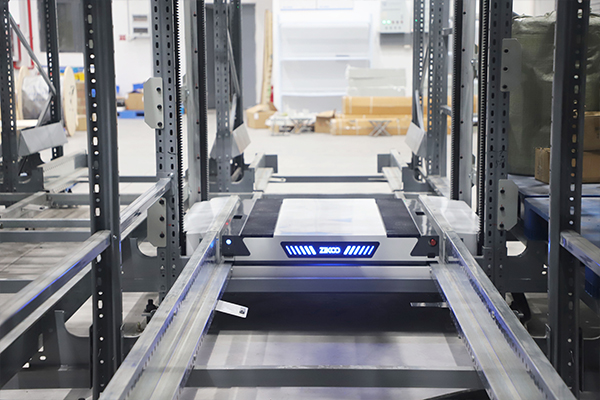
The system comprises intelligent robots, such as the R-bot Four-way Shuttle, which navigate independently, transporting pallets between storage locations and I/O points. This design maximizes storage density by eliminating the need for wide aisles and allows for deep lane storage, making it particularly effective in environments where floor space is at a premium. The intelligence behind these robotic warehouse systems also supports multi-shuttle collaborative operation, coordinating multiple units for enhanced throughput.
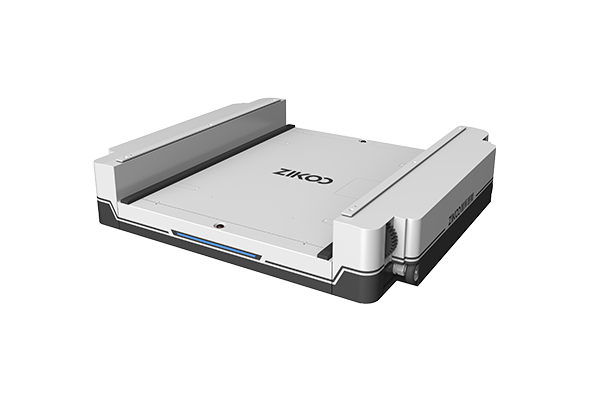
The R-bot Four-way Shuttle is a core handling solution for dense storage, optimized for pallet-to-person scenarios. Its slim body, only 125 mm thick, allows it to operate within tight rack configurations.
| R-bot Four-way Shuttle Models | Rated Load | Body Dimensions (L×W×H) | Pallet Sizes Supported |
|---|---|---|---|
| Standard Type (R1200B) | 1200 kg | 1000 × 972 × 125 mm | 1200 × 800–1000 mm |
| American Type (R1200A) | 1200 kg | 1192 × 840 × 125 mm | 1016 × 1219 mm |
| Japanese Type (R1500J) | 1500 kg | 1192 × 900 × 125 mm | 1100 × 1100 mm |
| Heavy-duty Type (R1500B) | 1500 kg | 1192 × 972 × 125 mm | 1200 mm |
| Heavy-duty Large Pallet (R2000B) | 2000 kg | 1250 × 1300 × 150 mm | 1400 mm |
These shuttles can operate in temperatures as low as -15℃, with specialized versions for -25℃ cold chain environments, offering continuous operation for 6–8 hours on a single charge. This adaptability makes them suitable for a wide range of industries and storage conditions.
Where Four-Way Shuttle Systems Deliver the Most Value
Specific industry sectors and operational demands inherently benefit more from the unique capabilities of four-way shuttle systems. These systems are particularly well-suited for environments requiring high-density storage and rapid access to a diverse range of stock keeping units (SKUs).
E-commerce fulfillment centers see substantial gains. With high order volumes, diverse product ranges, and the need for quick turnaround, e-commerce operations benefit from the speed and flexibility of four-way shuttles. They facilitate efficient goods-to-person fulfillment, reducing picking times considerably.
Cold storage warehouses represent another strong fit. The ability to operate in extreme temperatures, such as the -25℃ supported by specialized R-bot models, makes these systems ideal for frozen food storage or pharmaceutical constant temperature warehouses. Automation reduces human exposure to harsh conditions and maintains consistent temperature control throughout the storage cycle.
Food and beverage distribution operations often deal with high volumes of fast-moving consumer goods and require precise inventory rotation (FIFO/LIFO). Four-way shuttles ensure efficient stock management and rapid order assembly, which directly impacts delivery schedules and product freshness.
Pharmaceutical logistics demands strict regulations regarding product traceability, temperature control, and expiry dates, making automated systems highly valuable. Four-way shuttles provide the necessary precision and controlled environment handling that this sector requires.
Manufacturing buffer storage applications benefit as well. For managing raw materials, work-in-progress, and finished goods, these systems create an efficient buffer between production stages, ensuring a continuous supply chain and optimizing production flow.
The versatility of four-way shuttle systems means they can handle various types of goods stored with shuttle systems, from standard pallets to specialized containers, adapting to different product characteristics and storage requirements.
How Four-Way Shuttles Improve Space Utilization and Throughput
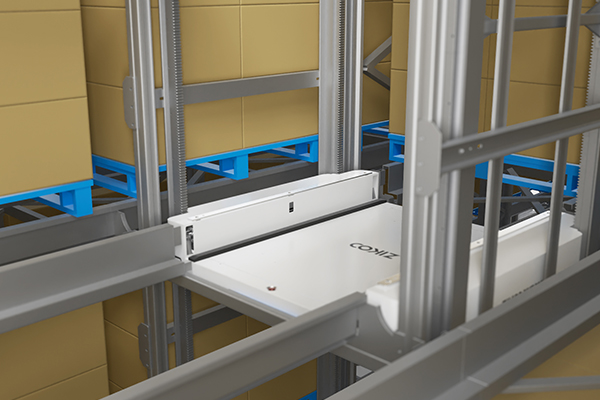
The ability to maximize vertical and horizontal space while dramatically increasing goods movement speed is critical for modern logistics. Four-way shuttle systems directly address these needs by providing high-density storage. They permit pallets to be stored several deep and high, making optimal use of a warehouse’s cubic capacity. This contrasts sharply with conventional pallet racking, which often requires more aisles and leaves significant overhead space unused. The result is a substantial improvement in space utilization optimization, sometimes increasing storage capacity by over 30% compared to traditional methods.
Beyond space, these systems significantly enhance throughput improvement. The independent movement of each shuttle means multiple operations can occur simultaneously, reducing bottlenecks and accelerating material flow. I recall a project for a pharmaceutical distributor where we implemented a four-way shuttle system. Their previous manual operations struggled with peak demand, leading to order fulfillment delays. After deploying R-bot Four-way Shuttles, their outbound picking efficiency increased by 40% during peak hours, directly impacting their customer satisfaction and delivery times. This measurable outcome demonstrated the system’s ability to handle fluctuating demand with greater agility. The system’s intelligence also supports inventory management efficiency by providing real-time tracking of every pallet, minimizing errors and improving stock rotation.
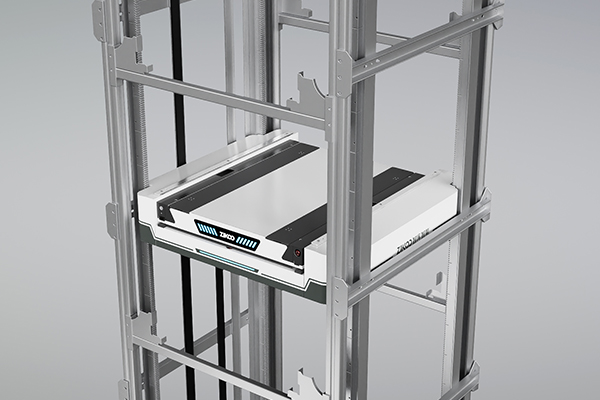
U-bot Omnidirectional Stacker Robots and R-bot Four-way Shuttles excel in high-density storage and rapid throughput. When combined with H-bot Vertical Bidirectional Shuttles, they create a six-way shuttle system, forming a three-dimensional transportation network that further boosts efficiency and density.
What to Plan for When Integrating Four-Way Shuttles
Successful implementation of four-way shuttle systems requires careful planning, considering existing infrastructure, system integration, and future scalability. Warehouse design considerations must account for the shuttle’s operational footprint, power requirements, and the interface with other material handling equipment. This involves designing the racking structure to accommodate the shuttle’s dimensions and ensuring adequate space for maintenance access.
System integration challenges are a primary focus. The shuttles must communicate seamlessly with a warehouse management system (WMS), warehouse execution system (WES), and warehouse control system (WCS). These software platforms orchestrate the movement of goods, manage inventory, and optimize task assignments for the automated equipment. PTP Smart Warehouse Software (WMS/WES/WCS/RCS) provides the intelligence layer necessary for coordinating R-bot Four-way Shuttles with other automated guided vehicles (AGVs) or robotic arms. This unified platform ensures that every pallet movement is optimized, from inbound receiving to outbound shipping.
Scalability in warehousing is another key advantage. Four-way shuttle systems can be expanded by adding more shuttles or extending racking lanes, allowing businesses to adapt to growth without a complete system overhaul. This modularity protects initial investments and provides long-term operational flexibility.
If your facility handles high SKU counts or faces seasonal throughput spikes, it is worth discussing shuttle density and lane depth before committing to a final layout.
How to Evaluate ROI and Total Cost of Ownership
Evaluating the total cost of ownership, potential for efficiency gains, and long-term operational benefits is crucial for justifying automation investment in four-way shuttle systems. When considering why choose a four-way shuttle over other AS/RS, factors like required throughput, storage density needs, and the specific characteristics of the goods being handled are paramount. A thorough return on investment (ROI) automation analysis should include not only equipment costs but also reductions in labor, energy consumption, and product damage.
Maintenance requirements for automated systems are also a consideration. While requiring specialized skills, routine preventive maintenance minimizes downtime and ensures continuous operation. Safety protocols in automated warehouses are rigorously designed to protect personnel and equipment, incorporating features such as laser scanners, emergency stops, and collision avoidance systems. These measures ensure a secure working environment alongside robotic operations.
The benefits of four-way shuttle systems extend beyond immediate cost savings, encompassing improved order accuracy, faster delivery times, and enhanced customer satisfaction. Expertise in pallet-to-person robotics helps businesses achieve significant ROI through optimized operations, often seeing payback periods that justify the initial capital expenditure through sustained operational improvements.
Frequently Asked Questions
What are the key advantages of using a four-way shuttle system in a warehouse?
Four-way shuttle systems offer several key advantages, including superior space utilization due to high-density storage, significantly improved throughput from simultaneous operations, and enhanced operational flexibility. They also support precise inventory management and can be scaled incrementally as business needs grow, providing a future-proof solution for dynamic warehouse environments.
How does a four-way shuttle system differ from traditional AS/RS?
A four-way shuttle system differs from traditional AS/RS primarily in its movement capability; it can travel in all four horizontal directions, unlike single-direction shuttles or stacker cranes. This omnidirectional movement provides greater flexibility in storage and retrieval, improves space utilization, and allows for more dynamic goods-to-person operations compared to fixed-aisle systems.
What factors should be considered when implementing a four-way shuttle system?
When implementing a four-way shuttle system, consider factors such as the specific storage density requirements, desired throughput rates, and the characteristics of your inventory, including pallet sizes and environmental conditions. Additionally, assess existing warehouse infrastructure, integration with current IT systems, and the potential for future scalability to ensure a successful deployment.
Is a four-way shuttle system suitable for warehouses with low ceilings?
Yes, four-way shuttle systems are highly adaptable and can be designed to maximize vertical space even in warehouses with lower ceiling heights, making them ideal for high-density storage.
How long does it typically take to implement a four-way shuttle system?
Implementation timelines vary significantly based on warehouse size and complexity, but typically range from several months to over a year, involving design, installation, and system integration challenges.
Can four-way shuttle systems handle different pallet sizes?
Many modern four-way shuttle systems are designed with flexibility to accommodate various pallet sizes and types, often through adjustable mechanisms or specialized carriers, enhancing their versatility for diverse inventory management.
What are the primary safety features of these automated systems?
Automated shuttle systems incorporate advanced safety protocols, including laser scanners, emergency stop buttons, and collision avoidance sensors, to ensure secure operation and protect personnel within the robotic warehouse systems. To discuss specific requirements for your facility, contact Zikoo Smart Technology at info@zikoo-int.com or (+86)-19941778955.
If you’re interested, check out these related articles:
Six-Way Shuttle Drives Warehouse Upgrades: Building an Intelligent Automatic 3D Warehouse
Standardization Empowers Global Delivery: Zikoo Robotics Six-Way Shuttle Expands Overseas


