


A four-way shuttle system can cut direct warehouse labor costs by 50 to 80%, but the largest financial impact often lies in eliminating overtime premiums, reducing rework, and enabling consistent 24/7 operation without staffing headaches. Over the past decade, I’ve designed and commissioned multiple pallet-to-person shuttle systems across industries, and the labor savings numbers always come down to how the system is designed—not just the robot spec sheet. In this article, I’ll break down where labor savings actually come from, how to quantify them, and what system factors make the biggest difference.
Four-Way Shuttle Systems Reduce Direct Labor Across Core Warehouse Functions
Most labor cost reduction from a four-way shuttle is immediate and visible in material handling tasks. The table below compares typical labor hours per 100 pallet moves for a manual operation versus an automated system similar to ones I’ve commissioned.
| Warehouse Function | Manual Labor (hrs/100 pallets) | Automated Labor (hrs/100 pallets) | Reduction |
|---|---|---|---|
| Receiving | 3.0 | 1.0 | 67% |
| Putaway | 5.0 | 0.5 | 90% |
| Order Picking | 8.0 | 1.5 | 81% |
| Replenishment | 4.0 | 0.5 | 87% |
| Cycle Counting | 2.0 | 0.2 | 90% |
Receiving still requires human checks for quality and documentation, but once pallets enter the system, shuttle-based putaway nearly erases forklift hours. Picking, always the most labor-intensive step, sees the biggest absolute reduction because shuttles retrieve pallets on demand while operators stay at designated stations. Replenishment and cycle counting become almost invisible—the system tracks inventory by location continuously, so there’s no need for dedicated labor to walk racks.
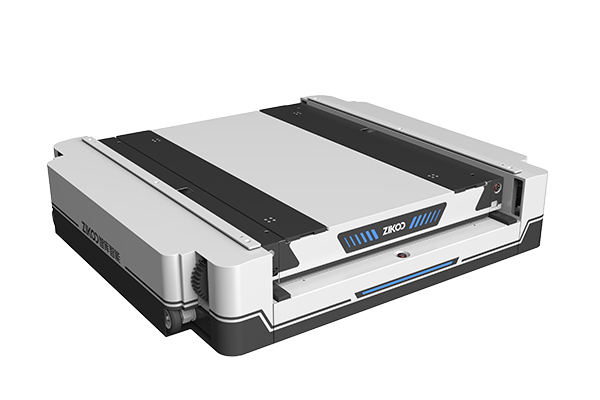
The ROI of a Four-Way Shuttle Goes Beyond Simple Labor Replacement
When managers first calculate shuttle ROI, they often replace a forklift driver’s salary with a robot amortization cost and call it done. In practice, the real savings surface in three places that spreadsheets overlook.
First, overtime premiums disappear. A manual warehouse running a second shift pays time-and-a-half or double, and during peaks, the premium applies to whole crews. A shuttle fleet simply runs additional hours at standard electricity and maintenance cost. I’ve seen a distribution center eliminate night-shift premiums entirely, trimming total labor cost by another 15% even after accounting for the extra battery cycles.
Second, error correction labor shrinks. Mis-picks, misplaced pallets, and damaged goods generate rework that rarely shows up in budget templates. Once a shuttle system takes over, location accuracy approaches 99.9%, and the reduction in re-picks and returns frees up several staff equivalents each month. In one cold storage facility, we logged a 30% drop in indirect labor hours tied to quality holds and restaging.
Third, supervisor-to-operator ratios improve. Because the WMS assigns tasks and the RCS optimizes shuttle routes, a single floor manager can oversee 50% more throughput without adding coordinators. This layer of indirect labor savings is material over a five-year horizon.
For operations with irregular shift patterns or perishable goods, the labor impact is highly dependent on system uptime and battery performance. If your warehouse operates in cold storage, it’s worth discussing how low-temperature battery life affects round-the-clock labor requirements—contact us at info@zikoo-int.com for a detailed assessment.
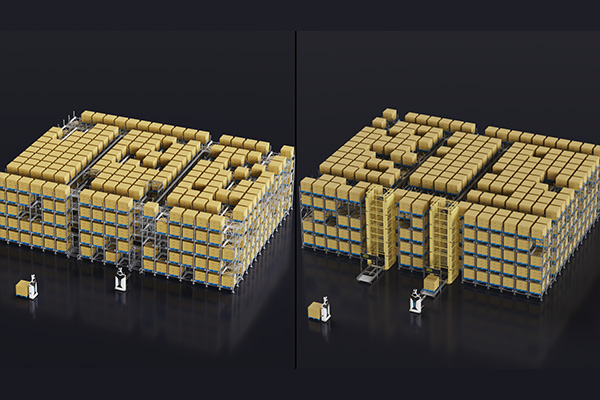
System Design Factors That Shape Your Four-Way Shuttle Labor Savings
The labor savings percentage is not fixed; it’s a function of how the system is architected. During the design phase, three decisions carry outsized weight.
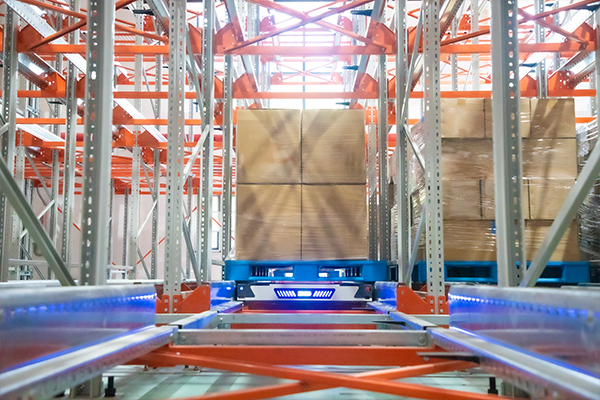
First, shuttle fleet size and throughput. The R-bot series, for instance, moves at up to 1.6 m/s empty and 1.2 m/s loaded, with rated loads from 1200 kg to 2000 kg. Adding more shuttles increases concurrent moves but hits a point where aisle congestion and lift queueing erode marginal gains. The table below lists available models, each affecting how many pallets per hour a single shuttle can service.
| Model | Rated Load | Body Dimensions (L×W×H mm) | Pallet Size (mm) | Speed (empty/loaded) | Battery Runtime |
|---|---|---|---|---|---|
| R1200B Standard | 1200 kg | 1000×972×125 | 1200×800–1000 | 1.6/1.2 m/s | 8 h |
| R1200A American | 1200 kg | 1192×840×125 | 1016×1219 | 1.6/1.2 m/s | 8 h |
| R1500J Japanese | 1500 kg | 1192×900×125 | 1100×1100 | 1.6/1.2 m/s | 8 h |
| R1500B Heavy-duty | 1500 kg | 1192×972×125 | 1200 | 1.6/1.2 m/s | 8 h |
| R2000B Heavy-duty LP | 2000 kg | 1250×1300×150 | 1400 | 1.35/1.0 m/s | 7 h |
A heavier shuttle with lower speed might reduce hourly moves per shift, so labor per pallet rises unless you factor in the shift structure. We typically model fleet size against peak demand to guarantee throughput without triggering overtime.
Second, vertical integration with the H-bot elevator. A four-way shuttle alone handles horizontal moves on a single level. Adding the H-bot links multiple floors, consolidating the workforce that previously operated on separate levels. This vertical coupling cuts elevator operator and staging labor entirely, and the ±1 mm positioning accuracy means pallets land exactly where the system expects, eliminating manual corrections.
Third, aisle configuration and pallet density. The U-bot omnidirectional stacker robot, with a minimum aisle width of just 2100 mm, enables high-density storage in narrow aisles, reducing travel distance per pallet. Shorter travel directly translates to lower energy cost and fewer shuttles needed for a given throughput, which in turn reduces maintenance-related labor.
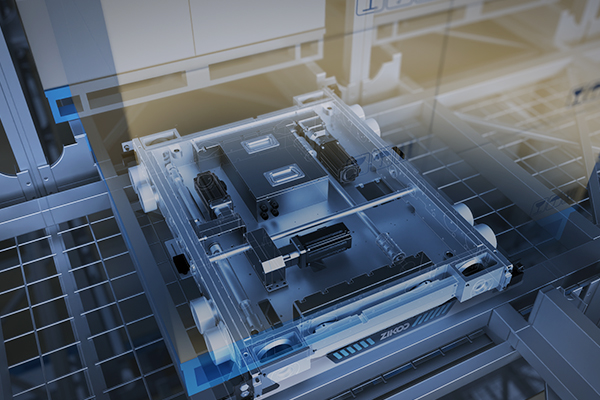
Software Integration Delivers Indirect Labor Savings in Automated Warehouses
One of the less obvious but powerful labor levers is the software layer. The PTP Smart Warehouse Software suite—comprising WMS, WES, WCS, and RCS—acts as the brain of the system, orchestrating every move.
A capable WMS eliminates manual inventory tracking. Without it, cycle counting requires walking kilometers of rack daily. The software maintains real-time location records, so the task disappears. WCS handles order sequencing, grouping picks to minimize shuttle trips, which reduces the number of shuttles needed per shift and therefore the maintenance workload. RCS optimizes shuttle path planning, keeping fleet utilization high without human dispatchers.
Paperless operation is another labor drainer. Instead of printing pick lists and verifying quantities by hand, operators use RF terminals that confirm tasks automatically. Mistakes drop sharply; I’ve measured pick accuracy above 99.5% in systems where the software validates every movement. The follow-on cost of returns processing, a labor sink in manual warehouses, almost vanishes.
In one high-SKU distribution center, the software allowed us to reduce the inventory control team from three full-time staff to one person managing exceptions. That kind of saving doesn’t show up in a simple labor replacement model, but it’s real and repeatable.
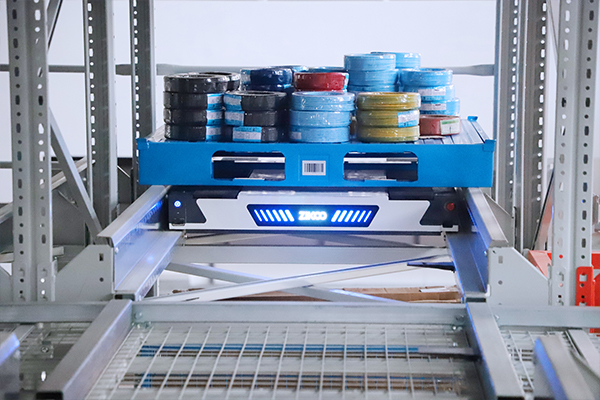
Planning a Realistic Labor Savings Target for Your Facility
Labor savings for a four-way shuttle system are never “out-of-the-box” numbers. To get a target you can take to the board, start with your own operational data, not industry averages.
Map your current labor cost by function: how many hours go into receiving, putaway, picking, replenishment, and counting? Break out shift premiums and temporary labor. Then model the automated workflow using the shuttle system’s throughput specs against that data. Many projects I’ve been involved in discovered that the real savings were in the second shift the facility could skip, rather than just the forklift operators it could reassign.
One more variable: operational discipline. A shuttle system works relentlessly, but if the receiving team delivers pallets late or the staging area isn’t cleared, the system idles and labor savings slip. The design must include clear process boundaries.
We routinely help clients build these models. If you want a labor savings simulation based on your actual floor data, reach out.
If you’re ready to model labor savings for your specific layout, our engineering team can work with your facility data to quantify potential cuts. Send your floorplan and current labor hours to info@zikoo-int.com or call (+86)-19941778955 for a no-obligation analysis.
Frequently Asked Questions About Four-Way Shuttle Labor Savings
How many operators are needed for a four-way shuttle system?
A typical system requires one to two operators per shift for a ~10,000 pallet location warehouse, compared to five to eight forklift drivers in a manual equivalent. The operators handle inbound staging, order consolidation, and exception management. The shuttle fleet does the physical moves inside the racking, so the headcount drops sharply. Exact staffing depends on your throughput peaks and whether you run multiple shifts; during our designs, we map operator activity to each process step rather than applying a rule of thumb.
Can a four-way shuttle eliminate manual labor entirely?
No, and claims that it can are misleading. While shuttles take over all pallet movements within the high-density racking, you still need people for receiving inspection, loading dock operations, and value-added services like repacking. What changes is the nature of the work: physical fatigue drops, productivity rises, and the workforce becomes smaller but more focused on exceptions. In a recent deployment for a pharmaceutical distributor, we reduced direct handling headcount by 75%, but the quality inspection team stayed because regulatory checks remain human-driven.
What is the typical payback period for a four-way shuttle system?
It depends on labor rates and shift patterns. In markets with high wages and multi-shift operations, payback often falls within two to three years. In single-shift, low-wage regions, it may extend to four to five years. The real accelerant is shift elimination. I’ve seen a project where cutting just the night shift—overtime premiums included—brought the ROI forward by a full year, making the automation cost-neutral against manual operations in under 24 months.
How does the system handle peak season labor demands?
Manual warehouses hire temporary crews and run overtime during peaks, creating training overhead and quality risks. A four-way shuttle system absorbs peaks by running additional hours or, in some configurations, adding a temporary shuttle unit without increasing permanent staff. This flexibility often reduces seasonal labor cost by 30 to 40%, because you’re not paying recruitment fees, higher temporary wages, or overtime. If your peak season stretches your staffing capacity, share your demand profile at info@zikoo-int.com, and we’ll model the savings specific to your operation.
If you’re interested, check out these related articles:
Six-Way Shuttle: Empowering Industries to Embrace Smart Warehousing
Standardization Empowers Global Delivery: Zikoo Robotics Six-Way Shuttle Expands Overseas
Smart Cold Chain Era: Six-Way Shuttle System Redefines Storage Efficiency with Maximum Density
Six-Way Shuttle Powers Dense Storage: Breaking Space Limitations


