


When I talk to warehouse managers about adopting 4방향 셔틀 시스템s, the first question is almost always about safety: can these robots really operate reliably in 고밀도 스토리지 without damaging goods or endangering workers? 사방 셔틀 system safety isn’t a single feature you can check off a list. It’s built into the mechanical design, the sensor architecture, and, most importantly, the software that orchestrates every movement. After a decade of designing and deploying these systems across industries from cold chain to automotive manufacturing, I’ve found that a well-engineered shuttle system with layered safety mechanisms not only reduces accidents but does so more consistently than manual forklift environments.
How Four-Way Shuttles Are Engineered for Safety
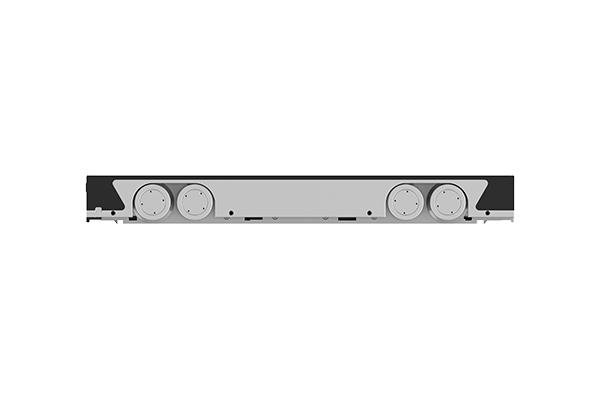
The safety of a four-way shuttle system starts at the hardware level. A shuttle isn’t just a motorized platform, it’s a precision machine where every structural decision has a safety consequence.
Mechanical Design and Load Stability
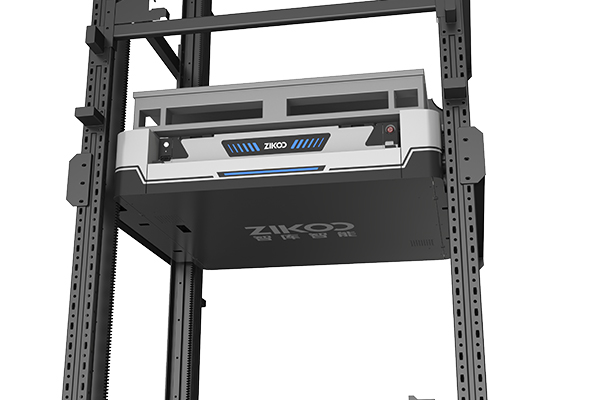
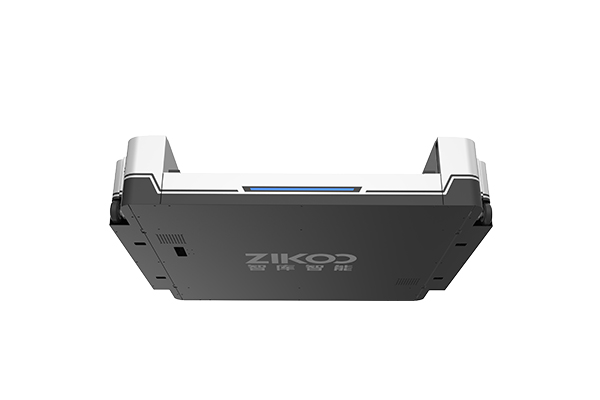
The first line of defense is the chassis. Modern four-way shuttles, including the R-bot series we engineer at Zikoo, use a body thickness of only 125 millimeters, but that slim profile doesn’t come at the expense of load stability. With rated capacities ranging from 1,200 to 2,000 kilograms depending on the model, the center of gravity is deliberately kept low within the frame so that palletized loads are supported uniformly, even when the shuttle accelerates or decelerates at 1.2 meters per second. A wider wheelbase across the pallet width prevents any corner of the load from lifting. In practice, pallet collapse is almost never caused by the shuttle itself; it’s caused by poorly wrapped loads or damaged pallets that wouldn’t survive manual handling either.
The table below compares the key models we deploy globally and how their physical specifications contribute to stable load transport.
| 모델 | 정격 하중 (kg) | Body Width (mm) | 파렛트 크기 (mm) | Max Loaded Speed (m/s) |
|---|---|---|---|---|
| R1200B | 1200 | 972 | 1200×800-1000 | 1.2 |
| R1500J | 1500 | 900 | 1100×1100 | 1.2 |
| R2000B | 2000 | 1300 | 1400 | 1.0 |
Sensor and Collision Avoidance Systems
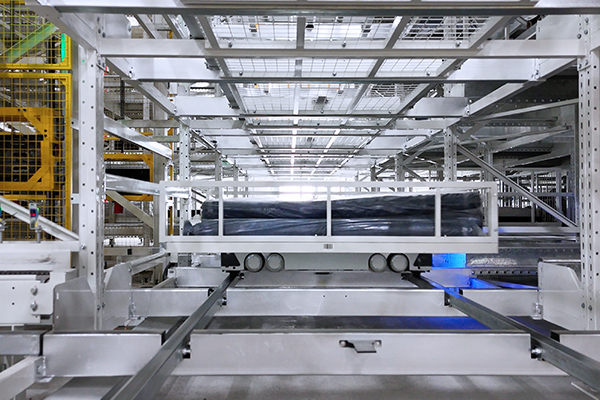
Obstacle detection isn’t an add-on module, it’s embedded in the shuttle’s motion controller. On each side, laser distance sensors scan the travel path ahead and to the sides at millisecond intervals. If an unexpected object appears, the shuttle decelerates and stops well before contact. The system also uses odometry and rack-position markers to know exactly which storage cell it’s entering, eliminating the risk of trying to place a pallet into an already occupied location. And because a shuttle only moves within its assigned lane during normal operation, the areas where it can physically intersect with a human worker are limited to the pick-and-drop stations at the ends of aisles, where additional safety light curtains or interlocked access gates can be fitted.
Addressing Common Safety Concerns with 자동 저장소
Most concerns I hear from first-time buyers center on two scenarios: what happens when people are nearby, and what happens when something goes wrong.
Can Shuttles Operate Safely Near Human Workers?
Yes, but the safety comes from separation of zones, not from assuming the robot will always see the person. In a properly designed four-way shuttle installation, the shuttle travels inside enclosed racking aisles, behind physical barriers. Workers only interact with the system at designated pick-up and deposit stations, where the shuttle presents the pallet for manual order picking or forklift retrieval. At those stations, safety light curtains and presence sensors ensure the shuttle doesn’t move while a person is inside the zone. This layered approach means that even if one sensor fails, a secondary independent system can still prevent motion.
What Happens During a Power Failure or System Malfunction?
Four-way shuttles use lithium iron phosphate batteries with built-in battery management systems that monitor voltage, temperature, and current continuously. If a cell exceeds safe limits, the battery management system triggers a controlled shutdown before any thermal event can occur. In a full power loss, electromagnetic brakes engage automatically so the shuttle stays in place on the rails; it doesn’t roll. Once power is restored, the shuttle checks its position via reference markers before resuming any commanded moves, so there’s no chance of it acting on stale location data. In the rare case of a drive motor failure, the system software can dispatch a service cart along the same rail to retrieve the immobilized shuttle without anyone entering the aisle.
If your warehouse involves mixed human-shuttle interaction points, it is worth confirming the specific safety interlocks and light curtain configurations before committing to a layout. For complex environments with high pedestrian traffic, we can review your facility plan and recommend the appropriate zoning and sensor package.
Real-World Safety Performance of Four-Way Shuttle Systems
Over the years, I’ve been involved in projects that put shuttle safety to the test in demanding environments. Cold storage is one of the hardest. At minus 25 degrees Celsius, standard batteries lose capacity and moisture condenses on circuit boards. Our cold-chain custom solution uses batteries rated specifically for low temperature and applies a special conformal coating on all PCBA surfaces. The coating prevents short circuits caused by condensation, a failure mode that would otherwise create unpredictable behaviors. In a pharmaceutical warehouse project we delivered in Southeast Asia, the high-humidity environment posed a similar risk. The same PCBA protection kept all shuttle electronics inside sealed enclosures compliant with IP54 and above, even when the warehouse humidity exceeded 85 percent for extended periods.
In manufacturing settings, the concern shifts to metal contamination. For a new energy battery production site, we removed all copper, zinc, nickel, and lead materials from the shuttle design, used stainless steel frames with blackening treatment, and switched to all-rubber buffer wheels. The intention wasn’t just cleanliness, it was safety of the product being stored. When a shuttle operates in a facility where a stray metal particle could destroy a batch, material selection becomes part of the safety equation.
Certifications and Safety Standards That Matter
International safety standards for automated storage are catching up with the technology, but several certifications provide a reliable baseline. CE marking confirms the shuttle meets European health and safety requirements, including the Machinery Directive and relevant electromagnetic compatibility limits. If your facility requires electrical safety certification, look for compliance with IEC 60204-1 for machinery electrical equipment. For battery safety, UN 38.3 certification ensures the lithium batteries have passed altitude simulation, thermal, vibration, and short-circuit tests. In practical terms, ask any supplier for their test reports for shock, vibration, and temperature cycling. A manufacturer that cannot produce these hasn’t done the engineering rigor the application demands.
Implementing a Four-Way Shuttle System Safely in Your Warehouse
Safety doesn’t stop with the shuttle hardware. The way the system is integrated into your building matters just as much.
Site Assessment and Integration with Existing Infrastructure
Before installation, the warehouse floor flatness and levelness must be measured. The racking must be within ±2 mm tolerance across the rail length where the shuttle travels, because even a slight warp can create uneven wheel loading and accelerate wear. In greenfield projects, the slab specification includes these tolerances from day one. In brownfield retrofits, we often need to install steel leveling channels on top of the existing slab to create a true running surface. Rack anchoring and back-to-back bracing are also verified against the seismic zone requirements of the region. If these structural steps are skipped, no amount of on-board sensor logic can compensate for a building that shifts under load.
The software layer provides an additional safety net. A properly configured warehouse control system doesn’t just dispatch tasks, it monitors every shuttle’s heartbeat, battery state, and position in real time. If the network connection drops, the shuttle executes an immediate stop and waits for a reconnection before accepting new commands. The PTP 스마트 웨어하우스 소프트웨어 we deploy at Zikoo, for example, runs redundant servers so that a single server failure doesn’t interrupt safety monitoring across the fleet.
What to Look for in a Safe Four-Way Shuttle Supplier
When you compare suppliers, go beyond the glossy cut sheet. Ask for the specific safety architecture documentation. A credible manufacturer will openly share their functional safety concept: which category of stop circuit is implemented, how many independent channels the safety PLC uses, and what type of speed monitoring is active during bridge travel. If a supplier hedges on these questions or claims “it’s all standard,” that’s a red flag.
Also ask for project references in a similar operating environment to yours. A system that works safely in a clean electronics warehouse may behave differently in a foundry’s dusty atmosphere. The supplier should be able to provide specific examples and, ideally, let you visit a live site to see the safety systems in operation. Finally, evaluate their after-sales capability. Do they offer remote diagnostics and 24/7 support? Can they replace a failed shuttle without a full system shutdown? These operational safety questions are as important as the technical specs.
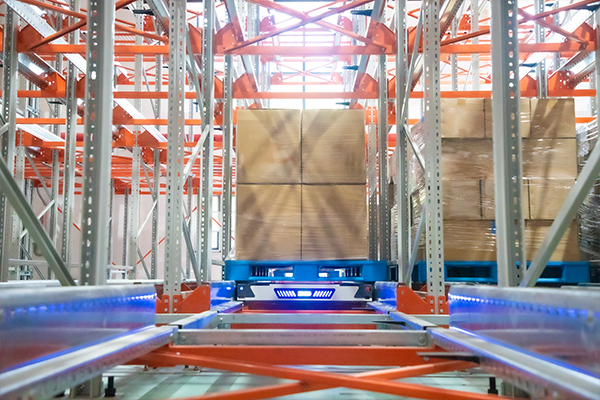
A well-engineered four-way shuttle system reduces the kinds of accidents that still happen daily in manual warehouses: forklift tip-overs, dropped pallets, struck-by incidents, and strain injuries from repetitive lifting. When the hardware, software, and building integration are all aligned, the safety record speaks for itself. If you’re currently evaluating shuttle technologies and need a clear picture of how safety should be specified for your facility, send your floor plan and storage requirements to info@zikoo-int.com or call (+86)-19941778955. We’ll run through the specific safety configurations that match your operation.
Common Questions About Four-Way Shuttle Safety
How can I verify a supplier’s safety claims without being an engineer?
Request the full test documentation, not just the spec sheet. A competent supplier will have ISO 17025-accredited lab reports for shock, vibration, temperature, and electrical safety. Ask to see the CE Declaration of Conformity and the list of standards it references. If the supplier hesitates to share these documents, consider that a gap in transparency. A third-party audit of their factory quality system, such as ISO 9001, also indicates that their production processes are repeatable, not one-off prototypes.
Aren’t four-way shuttles too complex to be safe in smaller operations?
cURL Too many subrequests by single Worker invocation. To configure this limit, refer to https://developers.cloudflare.com/workers/wrangler/configuration/#limits
In cold storage projects we’ve supported, clients worry about ice buildup on rails. How is that handled?
cURL Too many subrequests by single Worker invocation. To configure this limit, refer to https://developers.cloudflare.com/workers/wrangler/configuration/#limits
cURL Too many subrequests by single Worker invocation. To configure this limit, refer to https://developers.cloudflare.com/workers/wrangler/configuration/#limits
cURL Too many subrequests by single Worker invocation. To configure this limit, refer to https://developers.cloudflare.com/workers/wrangler/configuration/#limits 6방향 셔틀 cURL Too many subrequests by single Worker invocation. To configure this limit, refer to https://developers.cloudflare.com/workers/wrangler/configuration/#limits
cURL Too many subrequests by single Worker invocation. To configure this limit, refer to https://developers.cloudflare.com/workers/wrangler/configuration/#limits
info@zikoo-int.com
(+86)-19941778955
관심이 있다면, 관련 기사들을 확인하세요:
육방 셔틀: 비용 절감과 효율성을 위한 스마트 물류 도구 2
PTP 지능형 창고 플랫폼: 유연하고 스마트한 물류 생태계 구축
표준화는 글로벌 배송 역량을 강화합니다: 지쿠 로보틱스 육방 셔틀이 해외로 확장됩니다
6방향 셔틀: 스마트 창고 관리의 미래를 개척하다
소프트웨어 기반 하드웨어: 육방 셔틀이 창고 효율성을 극대화하다


