Warehouse automation disruption is the primary concern for any operations manager considering a 팔레트 셔틀 시스템 upgrade. I have seen firsthand that a poorly planned cutover can halt order fulfillment for days, but with the right phased strategy, your warehouse can continue operating while racks are retrofitted and robots are commissioned. The key is understanding how each implementation stage affects daily workflows, and building a plan that maintains throughput throughout the transition. Rather than treating automation as an all-or-nothing switch, the engineering approach is to keep the business running while systematically converting aisles to robotic storage.
What Really Happens to Operations During an Automation Project
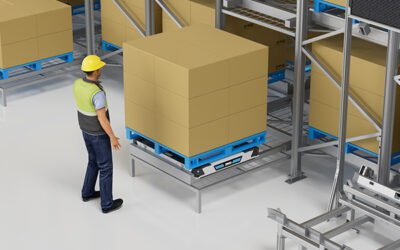
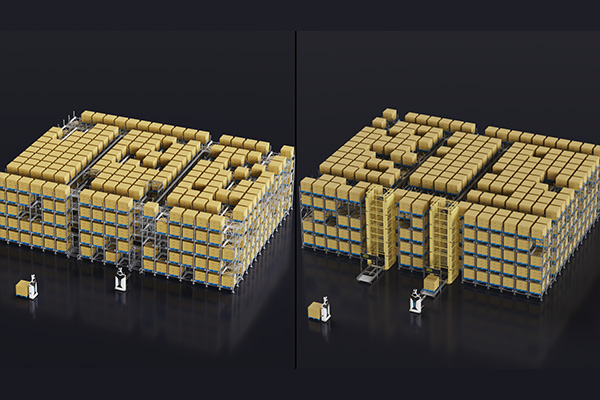
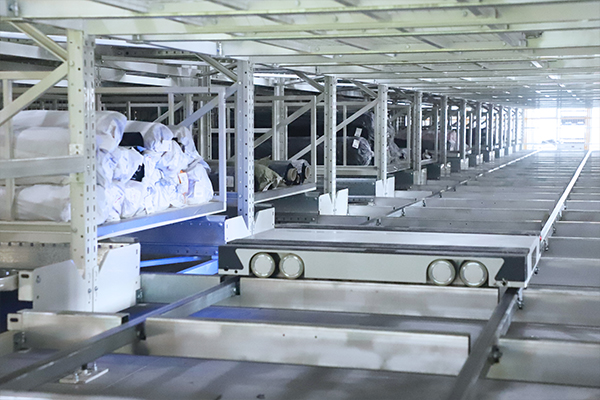
Most warehouse automation disruptions stem from a misunderstanding of how the installation sequence interacts with existing processes. When an R-bot 4방향 셔틀 시스템 or similar pallet-to-person solution is introduced, the facility does not simply stop. Instead, a small section of racking is cordoned off for preparatory work while the remaining aisles continue handling orders as usual. The level of interference depends on whether the warehouse is greenfield or an active facility being retrofitted. In a brownfield site, the initial phase involves freeing up a target zone, temporarily relocating inventory to nearby manual areas, and installing the shuttle rails and charging infrastructure within that confined space. My team follows a strict protocol: no more than 15% of total capacity is ever offline at one time. This means that for a 50-aisle warehouse, we may take three aisles out of service, reroute pickers to adjacent aisles, and complete the robotic integration within two to three weeks per zone. The disruption is contained, and the pace is set by how quickly the new system can be networked into the warehouse control software.
A Phased Implementation Strategy That Preserves Daily Throughput
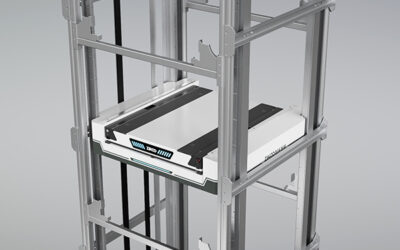
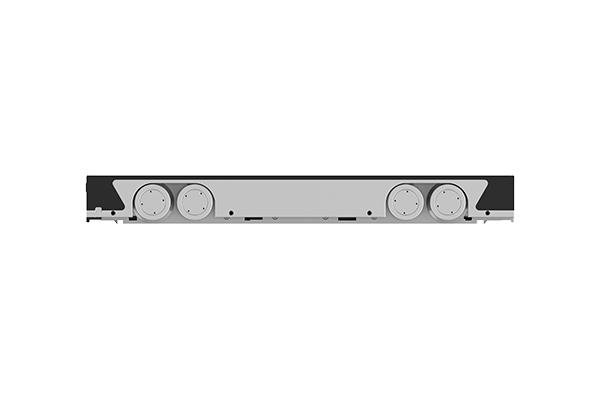
A phased rollout is not a marketing promise; it is an engineering discipline built around the concept of parallel operation. First, we define a pilot zone, usually a corner of the warehouse with moderate SKU velocity, and install the H-bot vertical bidirectional shuttle along with the R-bot fleet in that section alone. During this pilot, the manual operations continue in the rest of the facility. The shuttles are tested in isolation, and inventory data is synchronized between the existing WMS and the new WCS layer through a one-way sync, meaning that any stock movement in the automated zone is tracked without affecting the active manual picking engine. Once the pilot passes a 72-hour stability test, we move to live operation in that zone while duplicating the process in the next block. This step-by-step expansion is key to warehouse automation disruption control because it allows the operations team to learn the system’s rhythm without risking the entire day’s order volume. In a recent project involving a pharmaceutical distribution center, we kept 92% of the warehouse fully active during a six-month retrofit by rotating three parallel teams: one on manual operations, one on shuttle installation, and one on system validation.
Technical Requirements for a Seamless Transition
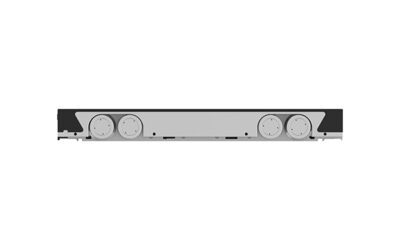
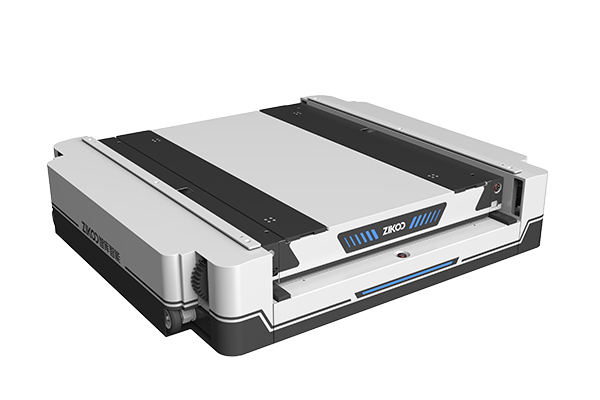
Achieving a low-disruption implementation requires more than a careful schedule. The technical backbone includes pre-commissioning the PTP 스마트 웨어하우스 소프트웨어 (WMS/WES/WCS/RCS) stack in a sandbox environment before any hardware is installed on-site. This lets us map all location addresses, define travel paths, and test the dispatching logic against the customer’s actual order data. In parallel, we lay out the communication network, ensuring that shuttle-to-WCS latency stays below 10 ms. A critical technical detail often overlooked is the compatibility of existing rack structures. For example, the R-bot with its 125 mm body height requires precise rail tolerances, so we measure every bay in the pilot zone and shim as necessary before placing the first robot. The U-bot omnidirectional stacking robot, with its 2100 mm minimum aisle width, is particularly suited for narrow-aisle retrofits because it can operate without widening existing aisles, reducing the scope of civil work. On the software side, a dual-operating mode that allows the WMS to consider both manual and 솔루션을 제공하는 전문성을 입증했습니다. 콜드 체인에서 전자 상거래, 제조, 그리고 신에너지에 이르기까지, ZIKOO는 기업들이 창고 병목 현상을 극복하고, 비용을 절감하며, 진정한 디지털 전환을 달성할 수 있도록 지원합니다. locations simultaneously prevents order splitting failures. We also run emergency fallback procedures daily during the first month, so that if a shuttle fails, the system automatically reroutes the pick instruction to a manual zone with a message to the operator.
| Implementation Phase | Typical Duration | Operational Impact |
|---|---|---|
| Zone preparation & temporary rack reconfiguration | 1–2 weeks | 5–10% capacity temporarily offline |
| Hardware installation & network setup | 2–3 weeks | Aisle-level shutdown, rerouting manual picks |
| Software integration & dry-run testing | 1–2 weeks | Full manual operation maintained |
| Live pilot & gradual ramp-up | 4–6 weeks | Parallel operation; ~15% of orders handled automatically |
Common Pitfalls That Amplify Disruption
Even with a phased plan, warehouse automation disruption can balloon if three common mistakes are made. The first is underestimating the effort of inventory migration. Moving thousands of pallets to free up a zone is not a weekend task; it requires a detailed load map and often a temporary floor-staging area that competes with receiving docks. Without pre-allocation of these spaces, the migration bottlenecks the entire operation. The second mistake is treating the go-live date as a hard deadline without buffer. In practice, no shuttle fleet runs perfectly on day one. I recommend scheduling a two-week parallel window during which the automated zone is a “bonus capacity” rather than a sole dependency. The third is inadequate operator training. When a warehouse associate has never interacted with a robotic shuttle, the first week in a live environment leads to slowdowns and safety stops. In the installations I have overseen, we assign a dedicated system steward who shadows every shift for the first month, reducing incident-driven pauses by over 60% compared to projects where training is limited to classroom sessions.
If your facility has tight temperature control requirements or unusual pallet dimensions, it is worth confirming the shuttle model specifications against your operational constraints early in the planning phase. The R-bot American Type, for instance, handles 1016 × 1219 mm pallets and operates at -15°C, while the heavy-duty variant carries up to 2 tons. Matching the robot to the load profile before site work begins avoids last-minute re-engineering that could extend a shutdown window. Reach out at [email protected] with your warehouse dimensions and pallet type for a compatibility assessment.
Turning an Automation Project Into a Competitive Advantage
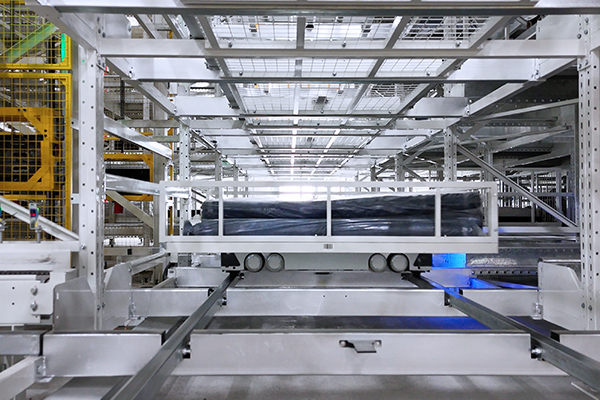
Warehouse automation disruption, managed correctly, becomes less of a risk and more of a planned operational shift. The confidence that comes from maintaining 85–95% throughput during a retrofit often reassures stakeholders and accelerates the internal approval process for future phases. From my experience, the customers who gain the most are those who treat the implementation not as a one-time event but as a modular expansion that can be replicated across other sites with a now-proven model. Once the first zone is live, the experience of managing parallel manual and automated workflows gives the warehouse team a new skillset that improves their ability to handle seasonal peaks. The long-term storage density increase, usually 40–60% in pallet-to-person configurations using R-bot and H-bot combinations, directly reduces rental costs and labor dependency. That kind of return makes the short-term coordination effort worth the investment.
Success hinges on selecting a partner whose engineering team can provide not just hardware, but a cutover methodology backed by previous brownfield deployments. At the project kick-off, we typically map out a 90-day timeline that overlaps hardware staging with site preparation, so that the on-site work is compressed into focused blocks. To discuss a rollout plan tailored to your operating hours and inventory profile, contact Zikoo Smart Technology at (+86)-19941778955 or email [email protected].
What Operations Leaders Often Ask About Automation Rollouts
The installation timeline always gets extended, so what can we do to stay on schedule?
Stay on schedule by padding the critical path with two-week buffers and deciding early on a cutover trigger rather than a fixed calendar date. Instead of saying “go live March 1st,” we define the go-live condition as “the pilot zone matches manual picking accuracy for 72 consecutive hours.” That way, if the shuttles need an extra week to stabilize, there is no panic, only a reallocation of the buffer. In multiple projects across power and cold chain industries, we have found that pre-testing the WCS dispatching algorithms with historical order data before installation eliminates 70% of the launch-day software issues that cause schedule slips.
Is it true that automation disrupts inventory accuracy more than manual operations?
It is the opposite when the integration is done correctly. With manual operations, putaway and picking errors accumulate due to human variation, often running 1–3% per year. A shuttle system with a direct WMS-WCS link removes those errors because every move is tracked by the robot’s own odometry and barcode verification at the pick station. During the transition, we maintain a temporary audit log for the automated zone, which actually improves overall accuracy because any discrepancy is flagged immediately rather than discovered at cycle count time. The main disruption risk to accuracy comes from starting the pilot without a clean inventory baseline. I always recommend a full cycle count in the pilot zone one week before hardware installation.
We have a multi-shift operation. Can we schedule installation to avoid peak seasons?
In most cases, yes. The phased approach lets us schedule high-impact work like rack modifications and rail welding during weekend or evening shifts, while lower-impact activities such as software configuration, network cabling, and shuttle charging station setup can run during daytime without interfering with picking. For a customer in the fresh produce sector, we shifted 70% of the hardware installation to the 10 p.m.–6 a.m. window, which allowed their regular order fulfillment to continue during the day. The key is early workforce scheduling: you need trained installation crews for those hours, and you may need temporary lighting and safety protocols adapted to the off-peak shift. Share your peak season calendar and we will map the critical installation milestones around it.
Is the equipment prone to early failures that would cause unexpected downtime?
Early-life failures in shuttle systems are almost always predictable if the pre-commissioning test protocol covers torque checks on drive wheels, battery cell balancing, and communication stability. In our standard approach, each R-bot runs a 200-hour accelerated cycle test in the factory before shipment, which surfaces 95% of latent motor or battery issues. On-site, we monitor shuttle health through the PTP software’s predictive maintenance dashboard, which tracks motor current draw and wheel wear trends. Failures that do occur in the first month typically trigger a hot-swap replacement from a buffer robot positioned on the maintenance aisle, restoring full rack operation within 20 minutes. A small buffer fleet is far cheaper than a full manual contingency and keeps disruption to a minimum. If your facility has especially long runtime requirements, confirm the continuous operation battery specs: our standard lithium packs deliver 8 hours on a single charge, with the heavy-duty variant providing 7 hours, so charging patterns must be factored into the system design from the start.
관심이 있다면, 관련 기사들을 확인하세요:
육방 셔틀: 비용 절감과 효율성을 위한 스마트 물류 도구
PTP 지능형 창고 소프트웨어는 기업의 스마트 업그레이드를 지원합니다
육방 셔틀: 비용 절감과 효율성을 위한 스마트 물류 도구 2