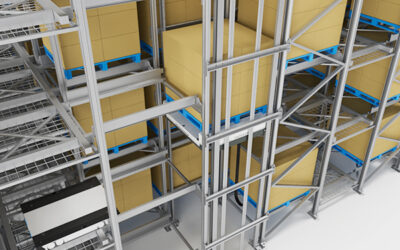
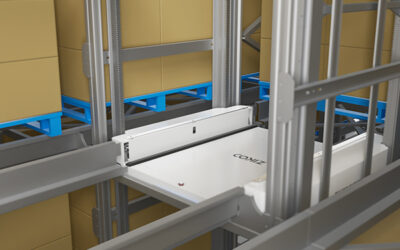
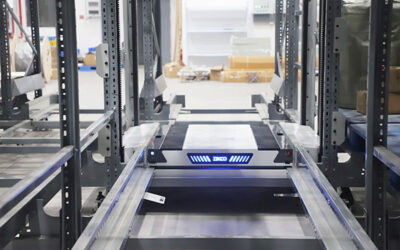
AS/RS maintenance costs vary dramatically based on the system architecture, operating environment, and service strategy. A 팔레트 셔틀 시스템 running 24/7 in a -25°C cold store will naturally demand a different maintenance budget than a stacker crane serving an ambient dry warehouse. As an engineer who has supported shuttle deployments across cold chain, manufacturing, and 3PL sites, I have seen procurement teams underestimate maintenance because they treat it as a generic line item rather than a technology-specific expense. Shuttle-based automated storage, when properly maintained with integrated software diagnostics, delivers a lower total maintenance cost per pallet moved than traditional stacker crane AS/RS—but only if the right service framework is built in from day one.
What Determines the Cost of Maintaining an AS/RS?
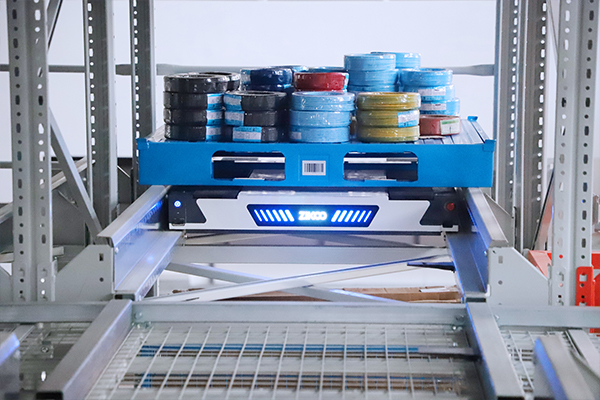
The biggest cost drivers are rarely obvious during procurement. For shuttle systems, the components that wear fastest are also the ones that keep the system running: lithium batteries, drive wheels, and positioning sensors. In a standard ambient warehouse, a R-bot Four-way Shuttle’s battery pack (51.2V/40Ah lithium) can deliver 8 hours of continuous operation and typically needs replacement every 5 to 7 years under moderate throughput. Push that same shuttle into a cold chain facility operating at -25°C, and the replacement cycle shortens to 3 to 4 years because low-temperature charging stresses the cell chemistry. The cold chain custom battery solution we deploy in such sites includes a specialized low-temperature charging port and a protective PCBA coating, but even then, the harsh environment accelerates aging.
Beyond batteries, shuttle maintenance costs are shaped by two other factors: throughput intensity and software integration. A shuttle moving 200 pallets per day versus 800 pallets per day will have noticeably different wear rates on drive motors and caster wheels. Stacker crane AS/RS introduces its own cost profile, heavy on rail alignment, telescopic fork servicing, and hoist cable inspection.
| Cost Driver | Shuttle-Based AS/RS | cURL Too many subrequests by single Worker invocation. To configure this limit, refer to https://developers.cloudflare.com/workers/wrangler/configuration/#limits |
|---|---|---|
| Battery replacement | 5–7 years ambient; 3–4 years cold store; cost per unit $800–$1,500 depending on capacity | Not applicable (powered via busbar); hoist motor brushes every 2–3 years |
| Mechanical wear items | Drive wheels, guide rollers, lift module belts; replace every 2–3 years in normal use | Rail alignment jacks, telescopic fork pads, hoist cables; inspect quarterly |
| Software and controls | Annual license and update fees for fleet management (e.g., WCS/RCS modules) | PLC and drive firmware updates; typically included in annual service contract |
| Annual inspection cost | 2–4 scheduled visits depending on shuttle count; includes calibration of positioning sensors | 4–6 visits due to higher number of mechanical checkpoints |
| Emergency response | Remote reset capability reduces on-site callouts; average response 4–8 hours for contract holders | Often 8–24 hours; mechanical failure requires physical presence |
How Do Shuttle and Stacker Crane Maintenance Costs Differ?
The maintenance expense tracks the system’s failure mode profile. Shuttle systems concentrate complexity in dozens of small, identical robots. When a single shuttle faults, the warehouse control software immediately diverts tasks to other shuttles, so throughput barely dips. That modularity means you replace a shuttle battery or a drive wheel without shutting down the aisle. Stacker crane systems centralize complexity in one large machine per aisle; a crane failure can block that entire aisle until a technician arrives.
I have seen a pharmaceutical cold chain site where the client initially budgeted stacker crane maintenance at roughly 3% of capital expenditure annually, only to find that the real number after three years of operation was closer to 5.5% because the humidity control unit inside the crane’s electrical cabinet needed far more attention than the supplier’s generic estimate suggested. The same client later expanded with a shuttle-based 고밀도 스토리지 zone and reported maintenance running consistently at 2.8% of capex, partly because the shuttles could be pulled to a maintenance bay without stopping the rest of the system. That difference, roughly 2.7 percentage points, becomes substantial when you scale, especially when the shuttle bay also reduced average outbound cycle time by over 30%.
If your project involves cold storage or multi-shift high-throughput operations, the specific battery maintenance intervals and spare part lead times for your shuttle model will determine whether your annual maintenance budget can stay within that 3% range. A lifecycle estimate built from your load profile avoids the trap of generic industry benchmarks.
What Should a Service Contract Cover in a Shuttle AS/RS?
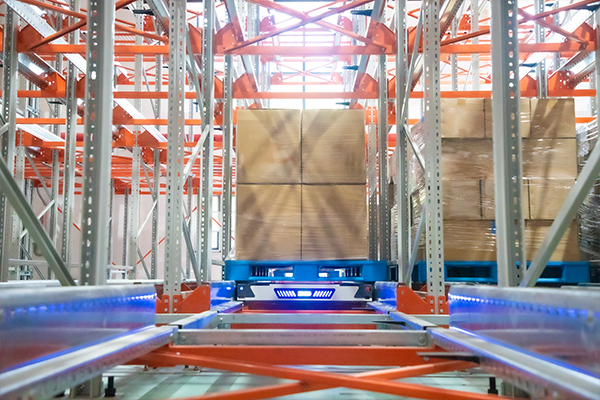
A service contract for a pallet shuttle system needs to go beyond standard preventive maintenance checklists. The minimum package should include remote platform access. With a software stack that integrates WMS, WES, WCS, and RCS, you can monitor every shuttle’s battery state-of-charge, motor current draw, and wheel temperature in real time. We use this data to move from time-based maintenance to condition-based scheduling, which reduces on-site visits by 20 to 30 percent across the contracts I have reviewed.
Spare parts stocking is another contractual landmine. For a fleet of 20 R-bot shuttles, you will want a guaranteed consignment stock of at least four drive wheel sets and two battery packs held locally. If the supplier only promises parts shipment within 72 hours, any multi-day outage could cost more in lost throughput than the price of holding the inventory. The contract should also define software update cadence, at least two scheduled updates per year, and clarify whether post-warranty battery replacements are included at a fixed price or subject to spot market fluctuations.
Can Software-Driven Maintenance Reduce AS/RS Operating Expenses?
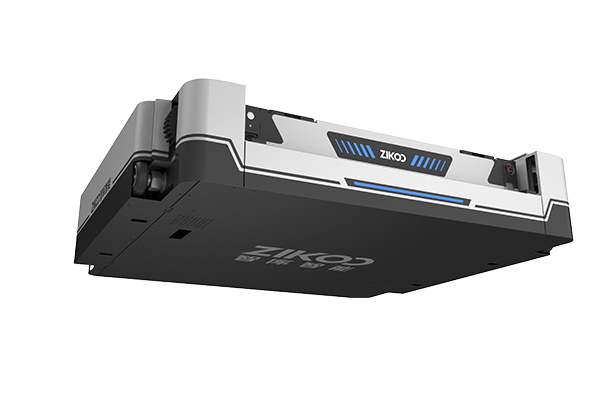
Yes, and the mechanism is straightforward. A shuttle generates roughly 50 to 80 real-time telemetry data points per second. When the fleet management software analyzes that stream over months, it can spot a wheel motor drawing 15% higher current under load than its peers, a sign of increased friction that predicts bearing failure three to four weeks in advance. Instead of an unplanned stop during a peak outbound window, the shuttle gets flagged for a scheduled maintenance window on a Saturday afternoon.
In one high-density manufacturing warehouse we supported, the facility reduced unscheduled downtime by 22% in the first year of deploying predictive algorithms. The key was correlating shuttle vibration signatures with conveyor handoff locations, the exact spot where wheel wear accelerated. Once identified, we added a simple roller inspection every 500 hours at that handoff, and the annual maintenance cost per shuttle dropped by $1,200. These savings are not theoretical; they only materialize when the contract includes access to the software’s full analytics module and the supplier provides a dedicated data review every quarter.
How to Budget for AS/RS Maintenance Over the System’s Lifecycle
A workable budget for a shuttle-based pallet AS/RS breaks into four buckets. Battery replacement reserves should fund replacement of the entire fleet’s batteries over the expected lifecycle, so if 30 shuttles with a 5-year battery life operate across a 15-year system life, plan for two full replacements, with the first major replacement at year 6. Mechanical consumables including wheels, guide rollers, and belts can be covered by setting aside 0.8% of the hardware capital cost annually when the system runs three shifts. Annual software licensing and support fees will typically be 12 to 18% of the initial software license price, depending on whether the supplier bundles major version upgrades. Finally, on-site labor for a 50-shuttle system with a good remote diagnostics platform usually works out to one dedicated technician per shift and a half-time maintenance planner.
For a realistic total, a system with a $1.5 million hardware budget in ambient conditions can expect annual maintenance costs in the 3 to 4% range. Cold storage pushes that to 5 to 7%, mainly due to battery replacement frequency and higher enclosure maintenance. The most accurate budget estimate always comes from a supplier willing to build a lifecycle model using your actual throughput and temperature profile, not a generic industry slide. Send your site conditions and projected pallet movements to [email protected], and we will model the expected maintenance cost curve before you commit any capital.
Common Questions About AS/RS Maintenance and Budgeting
Is AS/RS maintenance more expensive than maintaining a manual warehouse?
It is not a like-for-like comparison because manual warehouses carry heavy hidden costs that AS/RS eliminates: forklift maintenance, safety stock to absorb pick errors, and the labor cost of rework. When you measure cost per pallet handled, a shuttle AS/RS typically operates 20 to 30% cheaper than a manual facility of equivalent throughput. The maintenance line becomes a predictable set of scheduled activities instead of sporadic forklift breakdowns that disrupt shipping windows.
cURL Too many subrequests by single Worker invocation. To configure this limit, refer to https://developers.cloudflare.com/workers/wrangler/configuration/#limits
cURL Too many subrequests by single Worker invocation. To configure this limit, refer to https://developers.cloudflare.com/workers/wrangler/configuration/#limits
cURL Too many subrequests by single Worker invocation. To configure this limit, refer to https://developers.cloudflare.com/workers/wrangler/configuration/#limits
cURL Too many subrequests by single Worker invocation. To configure this limit, refer to https://developers.cloudflare.com/workers/wrangler/configuration/#limits
cURL Too many subrequests by single Worker invocation. To configure this limit, refer to https://developers.cloudflare.com/workers/wrangler/configuration/#limits
cURL Too many subrequests by single Worker invocation. To configure this limit, refer to https://developers.cloudflare.com/workers/wrangler/configuration/#limits
cURL Too many subrequests by single Worker invocation. To configure this limit, refer to https://developers.cloudflare.com/workers/wrangler/configuration/#limits
cURL Too many subrequests by single Worker invocation. To configure this limit, refer to https://developers.cloudflare.com/workers/wrangler/configuration/#limits
관심이 있다면, 관련 기사들을 확인하세요:
육방 셔틀이 창고 업그레이드를 주도하며 지능형 자동 3D 창고를 구축하다
창고 가치 재구성: 육방 셔틀이 디지털 전환을 선도하다
육방 셔틀, 산업이 스마트 물류를 수용하도록 지원