


Robotic picking systems rarely lose throughput because a motor or controller fails first. In most operations I review, the slowdown starts earlier: pick stations waiting on pallet moves, dispatchers overriding the batch logic, and batteries charging on a schedule that ignores shift peaks. The difference between a smooth operation and a brittle one is not higher-end hardware; it is a set of daily operating rules. These are the operating practices I have come to treat as fixed in pallet-to-person projects, because they cost nothing extra and they prevent the small disruptions that compound into missed wave times.
Set Robotic Picking Systems Pick Point and Speed Parameters Before Each Shift
Before the first wave starts, I check the same things at every station: pallet stop position, lift synchronisation at the drop line, and the gap between the shuttle discharge face and the fixed conveyor. A small shift in stop position may not look like much, but it changes how square the pallet lands on the roller bed. When the stop point is off, the robot still completes the move, but the next cycle starts with a correction. Across a full shift, those corrections reduce the stable throughput that the layout was designed to deliver.
Speed should not be a single setting. Running every robot at its empty travel speed is tempting, but the same acceleration profile does not suit every pallet. A loaded machine part pallet behaves differently from a pallet of soft cartons. On the R-bot fleet we use for four-way shuttle work, loaded speed is set at 1.2 m/s for the standard and 1,500 kg models, while the 2,000 kg version runs at 1.0 m/s loaded. That lower speed is not a penalty; it is the condition that keeps pallet load from shifting during cross-aisle travel.
| Model | Rated Load | Loaded Speed | Empty Speed |
|---|---|---|---|
| R1200B | 1,200 kg | 1.2 m/s | 1.6 m/s |
| R1500B | 1,500 kg | 1.2 m/s | 1.6 m/s |
| R2000B | 2,000 kg | 1.0 m/s | 1.35 m/s |
If the warehouse handles irregular cartons or mixed-pallet profiles, I set the dispatch logic to use the lower speed profile for those SKUs even when the robot can physically run faster. This reduces recovery stops and keeps the pick face fed without racing the picker.
When Should a Robotic Picking System Run at Maximum Speed?
Maximum speed is useful only when three conditions are present: the pallet has a uniform top surface, the route is a straight lane with no simultaneous aisle crossing, and the pick station buffer has at least two pallet positions. On most mixed-SKU pallet-to-person lines, the cost of running at maximum speed is not a crash; it is the pause while the robot corrects a small skew before docking.
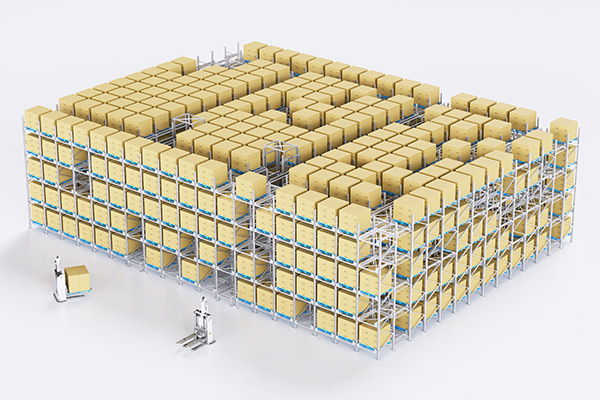
Use WCS Dispatch Logic to Prevent Recovery Storms
The most common operational failure I see in robotic picking systems is not a robot stopping; it is the software sending every robot to recover from the same blocked point at the same time. When one shuttle cannot dock at a pick station because the previous pallet is still being scanned, the correct response is to hold the next task and let the queue drain. The wrong response is to reroute five shuttles at once, which then creates congestion in the adjacent aisle.
Software behaviour is often the real bottleneck in a robot-heavy picking line. <PTP [Intelligent Warehousing](https://www.zikooint.com/asrs-automated-storage-and-retrieval-system-solutions) Platform: Building a Flexible and Smart Logistics Ecosystem> covers how task priority and exception handling should be configured together, so a single scan delay does not become a fleet-wide recovery event.
In our projects, we treat WCS rules as an operating setting, not a commissioning setting. The dispatch priority changes between inbound and outbound periods; if it does not, the robots work against the shift plan. On manual override days, we log every override and review it at the end of the shift. Overrides that keep repeating are configuration problems, not operator errors.
How Should Dispatch Priority Change Between Inbound and Outbound?
During inbound waves, put replenishment above picking only when the pick buffer is below two positions. During outbound waves, picking tasks should hold the lane while replenishment fills from the back side. Switching these priorities at a fixed time each shift prevents the worst congestion pattern, where the same shuttle tries to serve both sides and ends up blocking the cross-aisle.
Build a Battery and Charging Rotation Around Shift Peaks
Batteries should not be left to whichever robot happens to be available. When every shuttle charges on its own logic, a cluster can hit low charge at the exact moment order picking peaks. We set charging windows from the shift plan. The R-bot uses a lithium battery, either 51.2 V/40 Ah or 51.2 V/30 Ah depending on configuration, and runs up to eight hours on a full charge. The heavy-duty 2,000 kg version runs about seven hours. That is enough for a normal shift, but only if the software reserves the right number of charged robots before the second half rush.
Charging discipline has a direct cost effect in dense storage operations. <Smart Warehousing Starts Here: Cost-Effective [Four-Way Shuttle System](https://www.zikooint.com/6-way-pallet-shuttle)s> covers how operational planning, including battery rotation, keeps total cost per pallet move under control rather than leaving it to idle energy waste.
Charge before the peak, not after. If the warehouse starts outbound at 15:00, the charged fleet should be ready by 14:30. That means charging windows are governed by the shift calendar, not by a fixed state of charge number alone. We also track battery temperature where the site is below -15°C; the R-bot operates down to that temperature, but charging behaviour needs more attention in cold rooms.
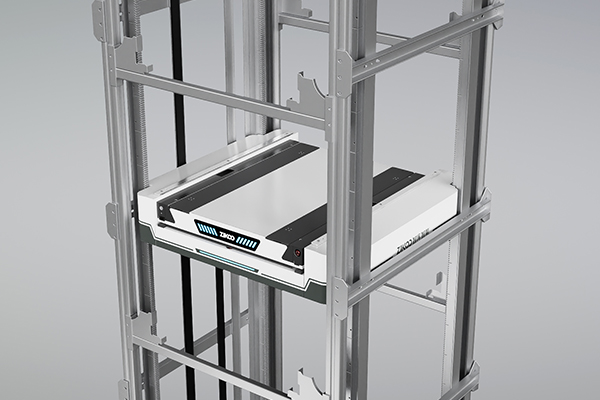
Feed the Picking System a Single Data Source
Robotic picking systems can only act on the data they receive. When the WMS says a carton is 600 mm high and the actual carton is 740 mm, the robot may still complete the move, but the pick station operator loses time re-handling it. These small mismatches accumulate until the system looks unreliable when the problem is a data pipeline.
We run a weekly audit of the most active SKUs, not the full catalog. That keeps master data workable without turning the warehouse into a data-entry department. For warehouses running multiple systems, the cleanest fix is to make WCS the execution source and WMS the planning source. The R-bot and H-bot robots follow a task from WCS, while the PTP software stack carries the order release rules. If the two layers disagree, the system will still move pallets, but it will move the wrong pallet sooner or later.
If your program has conflicting dimension data across WMS and WCS, or if you are changing a large share of your SKU base this quarter, it is worth confirming the data mapping before finalizing the automation scope. Reach out at info@zikoo-int.com with your current SKU mix and target pick rate.
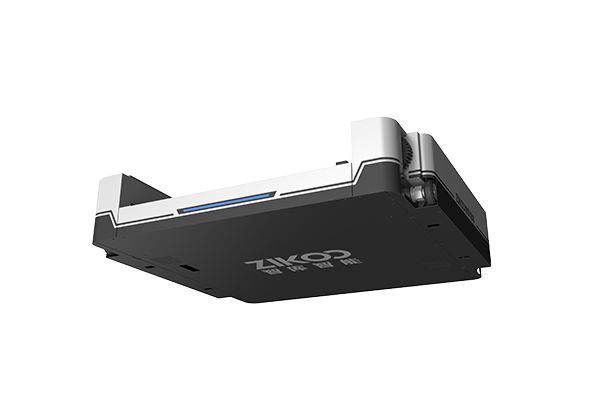
Get an Operational Review for Stable Robotic Picking Systems Throughput
Many teams wait until a bad shift to ask for outside review. By then, the problem has already been priced into missed orders. The smoother path is to have someone walk the last two hours of a shift, watch the recovery behaviour, and check the settings that control charging and dispatch. We do this with warehouse teams running R-bot four-way shuttles, H-bot vertical lifts, and U-bot omnidirectional stackers.
Send your pallet size mix, hourly throughput target, and the current exception log to info@zikoo-int.com or call (+86)-19941778955. We can confirm whether the operating rules, not the robots, are what is limiting your consistent flow.
Ask These Questions About Robotic Picking Systems Operation
How often should robotic picking system pick points be checked?
Pick points should be checked at least once per shift, and more often if pallet size or supplier packaging changes. The check takes under ten minutes and covers stop position, sensor alignment, and roller wear. Most drift happens gradually, so a daily check catches it before a pallet jams. If the warehouse runs more than two SKU families, I add a second check after the first full wave. The goal is not to find a problem every day; it is to catch the shift before it becomes a blocked lane.
Can a robotic picking system be operated without a dedicated maintenance team?
Many teams assume a robotics system needs an in-house specialist on every shift. That is not what we see in practice. Routine operation can be managed by trained warehouse staff if the integrator sets clear alarm thresholds and charging rules. What matters more is that the site has one person responsible for dispatch settings and exception handling during each shift. Planned maintenance can follow battery cycles and scheduled downtime. The real risk is not missing a specialist; it is having nobody who can say no when someone pushes the wrong dispatch override.
Does changing WMS software affect picking robot performance?
It depends on which layer actually controls the robot task. If WCS remains the execution layer, WMS changes usually affect order release timing more than robot motion. If the WMS sends direct move commands or duplicate dimensions, performance can drop quickly. Before changing WMS, confirm which system owns the robot task queue. When the WCS stays in control, the picking system can continue running while the WMS is updated or migrated. When the WMS tries to control more than planning, even small changes can ripple into the aisle.
What should a warehouse manager request in a robotic picking system health check?
Before asking for a health check, narrow the request to operating settings rather than general performance. A useful health check should produce the current dispatch rules, battery rotation schedule, sensor calibration history, and the top five exception types from the previous four weeks. Those items usually explain more than the robot logs alone. If the supplier cannot show which settings were changed last month, treat that as a red flag. Share your exception log and shift plan with us at info@zikoo-int.com, and we can run through the same review before the next peak.
If you’re interested, check out these related articles:
Six-Way Shuttle: The Smart Warehousing Tool for Cost Reduction and Efficiency 2
Smart Cold Chain Era: Six-Way Shuttle System Redefines Storage Efficiency with Maximum Density
Six-Way Shuttle System Leads the Shift from Machines to Robots in Dense Storage Automation
Standardization Empowers Global Delivery: Zikoo Robotics Six-Way Shuttle Expands Overseas


