


Robotics for last mile preparation in ecommerce warehouses succeeds or fails on the sequence in which orders are released to outbound docks, not on the pick rate a robot can hit in isolation. I have walked into facilities where the picking area was fast and the trailers still departed late because cartonization, route grouping, and dock assignment were not synchronized. The winning design treats last mile preparation as a system level material flow problem. That means the automated storage and retrieval system, picking robots, sorting logic, and WMS order release rules must be designed together.
Last Mile Bottlenecks Form Before the Robot Arrives
Most ecommerce warehouses already have enough pick speed during steady operations. The breakdown appears when waves are released in customer order sequence instead of courier route sequence. A robot can retrieve a carton in seconds, but if that carton waits twenty minutes at packing because four routes are competing for the same dock door, the robot made no difference.
In one project, a six-way shuttle system maintained high pallet throughput while the outbound dock starved because the WMS was not releasing orders by cut time. The fix was not more robots. It was re-sequencing the wave logic and assigning buffer lanes by carrier. This is why I ask about dock cut times before I ask about robot speed.
| Outbound symptom | Common root cause | Last mile fix |
|---|---|---|
| Late trailers despite high pick rates | Waves released by customer order | Release by dock cut and carrier route |
| Sorting line congestion | One path for all parcel sizes | Buffer by route before sortation |
| Pack stations idle after peaks | Peaky wave dump | Pace release with WCS |
| Return cartons blocking outbound | Returns entering the same flow | Isolate returns by disposition |
Robotics Resequences Last Mile Preparation Flow
Robotics changes last mile preparation when it decouples storage, picking, and dock release. In a pallet-to-person layout, an R-bot Four-Way Shuttle moves pallets in four directions at 1.2 meters per second loaded, and an H-bot vertical shuttle carries pallets between levels with plus or minus 1 millimeter positioning. The six-way combination lets the warehouse present the right pallet just before the pick worker or robot needs it, so the dock sees a paced sequence instead of a random arrival pattern.
At the split case layer, a U-bot plus AMR narrow aisle system can pick more than 300 pieces an hour and move more than 80 pallets an hour inbound and outbound, handling up to 10,000 SKUs. The important part for last mile is not those top speeds. It is the ability to hold a mixed order portfolio and release it by route without building manual staging walls.
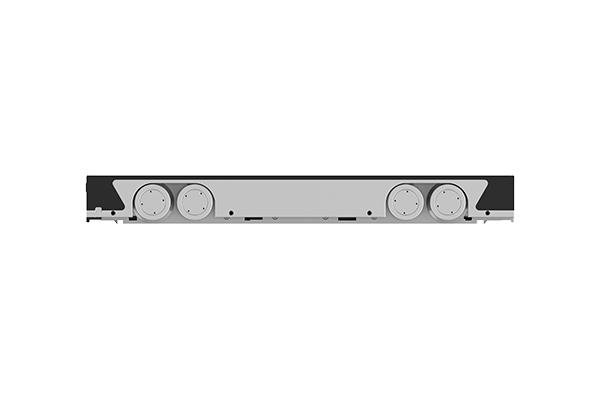
Dense storage robots earn their place in last mile preparation only when the rack and shuttle layer can hand off quickly enough. <Six-Way Shuttle: The Dual-Engine Solution for High-Density and High-Throughput> explains how matching horizontal speed with vertical transfer prevents storage from feeding the dock in bursts.
Robot Types Must Match Ecommerce Wave Profiles
Single cutoff operations behave differently from same-day fulfillment with multiple carrier handoffs. A warehouse that must deliver by 6 a.m., 11 a.m., and 5 p.m. cannot treat storage density as the only selection criterion. The pallet shuttle, narrow aisle robot, and split case picking system each influence how quickly an order can be re-sequenced after the last item is added.
| Automation layer | Typical robot | Ecommerce use | Key parameter |
|---|---|---|---|
| Dense storage | R-bot Four-Way Shuttle | Pallet buffering before pick | 125 mm body, 1.5 ton load |
| Vertical transfer | H-bot Shuttle | Multi-level replenishment | Plus or minus 1 mm accuracy |
| Narrow aisle | U-bot Stacker | High-bay pallet access | 2140 mm aisle |
| Split case picking | U-bot plus AMR | Mixed SKU order assembly | 300 picks per hour |
| Software orchestration | PTP WMS/WES/WCS/RCS | Wave release and dock pacing | Up to 10,000 SKUs |
If your operation runs heavy midday waves and evening cutoffs across multiple carriers, it is worth confirming buffer sizing and WMS wave parameters before you finalize robot counts. Send your outbound profile to info@zikoo-int.com and we can check where your last mile preparation will degrade first under peak.
The System Layer Holds Last Mile Robots Together
Robots without release logic create a faster path into the same congestion. WMS groups orders and assigns priorities, WES balances work across picking robots and manual stations, WCS executes equipment commands, and RCS manages robot traffic and charging. For last mile preparation, the most important function is not robot dispatch. It is making sure the WMS wave release knows the cutoff time before it releases a single order.
WMS release rules for courier cutoffs
An ecommerce WMS should release orders backward from the dock appointment. You group orders to the same carrier, rank them by departure, and let the WMS inject only what the sortation and packing buffers can absorb. If the picking robots are capable but the release curve is jagged, the dock still sees surges.
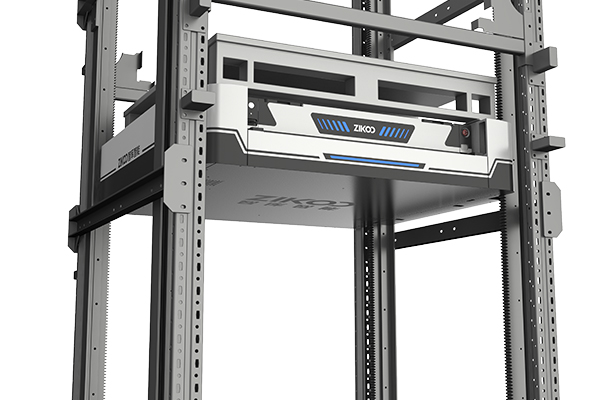
Last mile preparation also depends on whether the WMS can switch workflows when a flash-sale profile changes by carrier. <Multi-Scenario Smart Adaptation: Zikoo’s [Six-Way Shuttle](https://www.zikooint.com/solution/r-bot-h-bot-six-way-shuttle-dense-storage-system) Powers the Digital Transformation of Warehousing> covers how the same shuttle layer adapts across storage, picking, and dispatch modes without manual reconfiguration.
An Ecommerce Last Mile Robotics Upgrade Starts With Dock Data
Start with the outbound profile, not the equipment list. Count orders per hour by carrier, SKU velocity, carton dimension mix, and dock cut times. A building that ships 10,000 parcel orders a day through four carrier doors needs different buffering from a grocery ecommerce facility that dispatches 30 vans in waves.
If the facility already uses mezzanine or dense racking, check whether the vertical transfer speed and lane depth can sustain the destination sequence. I have seen proposals where the storage system was dense but the robot could not feed a lane fast enough for a 5 p.m. same-day cutoff, so the project still needed manual fallback conveyors.
Space constraints often collide with last mile sequencing when the warehouse tries to add dense storage without changing the flow path. <Six-Way Shuttle Powers Dense Storage: Breaking Space Limitations> shows how high-density pallet handling can be arranged so replenishment does not block the outbound lane carriers depend on.
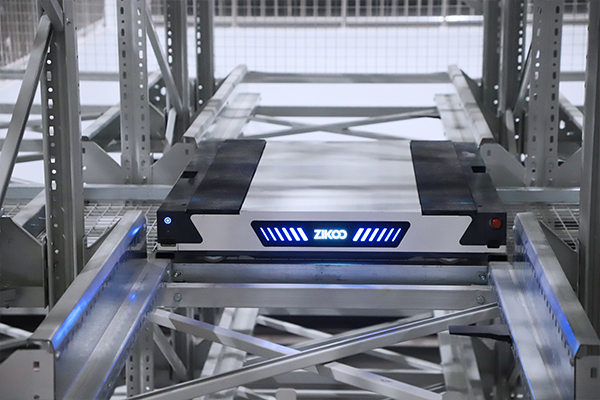
Last mile preparation fails when storage, picking, and dock release are treated as separate purchasing decisions. Zikoo designs the robot layer and software layer as one system so wave timing, buffer sizing, and courier handoff are engineered together. If you are preparing an ecommerce warehouse for peak season, send your daily order profile and dock cut times to info@zikoo-int.com or call (+86)-19941778955. We will confirm which automation concept fits your throughput and handoff sequence before you commit to equipment.
Buyers Ask These Questions About Last Mile Warehouse Robotics
What robotics are actually used in last mile preparation?
A last mile preparation system usually combines dense storage shuttles, picking robots or stations, and route-aware sortation logic. The exact mix depends on parcel size and order profile. In a typical setup, four-way shuttles handle pallet buffering, an AMR or U-bot handles split case retrieval, and the WMS sequences released orders by carrier. A robot only solves part of the flow if the carrier handoff is not included in the design.
Do we need to replace our WMS to automate last mile prep?
Many operators assume they must replace the WMS. That is not always true. An interface can often connect an existing WMS to a WES or RCS, as long as the WMS can expose order attributes like carrier code and cut time. If the current WMS cannot release orders by dock sequence, automation will only accelerate a broken flow.
Will the system slow down if we add more SKUs?
It depends on storage slotting. If new SKUs are slotted close to the pick face and the WMS updates velocity classes, throughput stays stable. If slow movers are mixed with fast movers across the same aisles, robots spend more time traveling and the dock cadence becomes harder to hold.
Where should a warehouse start with last mile robotics?
In the facilities I have reviewed, the best starting point is not a robot purchase but a four week wave and dock analysis. The diagnosis reveals whether the gap is in storage, picking, software release, or dock staging. Jumping straight to equipment usually fixes one segment and leaves the last mile handoff as the remaining bottleneck.
What should we ask a robot supplier before signing off?
The better question is not which robot is fastest but which automation concept holds the cutoff sequence under peak. Ask the supplier to walk through what happens when two carrier routes reach the docks at the same time, and how the WCS keeps buffer lanes from blocking each other. Then verify the answer against their delivered projects. Send your daily order profile, SKU count, and dock cut times to info@zikoo-int.com or call (+86)-19941778955. We will confirm whether the automation concept matches your last mile handoff before you commit.
If you’re interested, check out these related articles:
Standardization Empowers Global Delivery: Zikoo Robotics Six-Way Shuttle Expands Overseas
Six-Way Shuttle System Leads the Shift from Machines to Robots in Dense Storage Automation
PTP Intelligent Warehouse Software Empowers Enterprises for Smart Upgrades
Six-Way Shuttle: The Dual-Engine Solution for High-D


