


Selecting a smart warehouse automation company is closer to commissioning a small industrial facility than buying a standard machine. A convincing brochure and a stack of project photos show what the supplier wants you to see. The audit process shows what happens after the system is handed over, integrated, maintained, and measured under real operating conditions. That distinction matters because the cost of a missed integration risk, a weak safety case, or an unverified reference is rarely visible at the proposal stage.
References and audits are complementary, not interchangeable. A reference shows how a similar system performed in a live operation, but only an audit can confirm whether the supplier’s engineering, safety, manufacturing, and software practices are repeatable. Documented quality and environmental management systems such as ISO 9001 and ISO 14001 provide a baseline for judging repeatability [1][4]. They should not be treated as a guarantee, but as the paper trail you can inspect before committing budget.
Why a Reference List Is Not the Same as a Reference
A reference list tells you which projects the supplier wants to highlight. It does not tell you which projects were difficult, which systems required repeated intervention, or which integration interfaces caused delays. In warehouse automation, the decisive questions are often hidden in the gaps between hardware, warehouse control software, and the host IT layer.
When you receive a list, classify each entry by how close it is to your operation. Ask for pallet dimensions, rack height, temperature range, SKU profile, inbound and outbound patterns, and the software environment. A project with the same product family but a completely different operational profile proves far less than a smaller project that matches your material flow.
Also separate “installed” from “operational.” A delivered shuttle system is not the same as a system that has completed seasonal peaks, software version upgrades, and at least one full maintenance cycle. Reference value increases when the supplier can point to a live operation that has already experienced the failure modes you want to understand before you buy.
The Three Layers of a Credible Automation Reference
A strong reference should be examined at three levels: operational, engineering, and commercial.
Operational reference. This covers what the system actually does in daily operation: receiving, pallet handling, storage, retrieval, picking, replenishment, and dispatch. It should include the number of shifts, peak demand behavior, and how the system responds when volume changes.
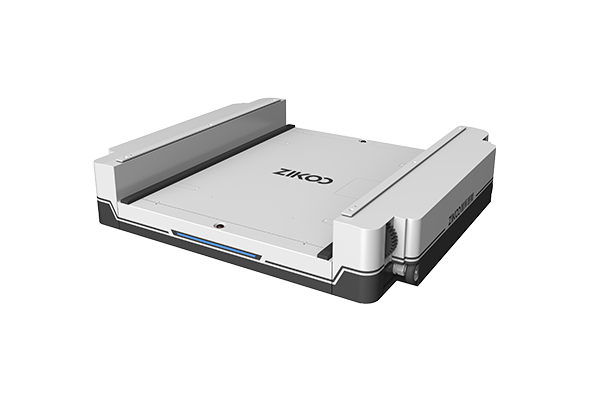
Engineering reference. This covers mechanical structure, drive and control hardware, safety circuits, positioning accuracy, battery performance, and maintenance access. It is the layer where a supplier either demonstrates system-level thinking or exposes a machine-centric outlook. For dense storage equipment, this means confirming that vehicle dimensions, rated load, and pallet compatibility match the project drawings rather than the sales presentation.
Commercial reference. This covers delivery schedule, change-order discipline, commissioning duration, training quality, spare-parts availability, and after-sales response. A technically successful system can still fail commercially if the supplier cannot support it across its service life.
When these three layers are not documented separately, reference discussions become vague. The buyer should be able to map every claim to one of the three layers and request evidence at the appropriate level.
How to Read a Project Reference Line by Line
A useful reference interview is structured, not social. Instead of asking “Are you happy with the supplier?”, ask questions that produce verifiable answers:
- What was your original go-live date, and when did the system actually enter stable operation?
- Which interfaces caused the most commissioning work: WMS, WCS, ERP, or material-handling equipment?
- How often do software updates occur, and what is the normal rollback path when an update fails?
- Which spare parts have failed or been replaced since go-live?
- How much planned and unplanned downtime has occurred in the last twelve months?
- If you could redesign one part of the project, what would it be?
The strongest questions focus on change, not performance. A supplier that has managed a controlled change process through multiple software versions and at least one operational peak is more credible than a supplier that presents a single static success story.
Reference checks should also include the system integration layer. Many end users can describe machine movement clearly but have limited visibility into the control logic that determines whether the system performs as a coordinated whole.
A reference is only useful if you can map the warehouse type, pallet size, and throughput logic to your own operation. <PTP Intelligent Warehouse Software Empowers Enterprises for Smart Upgrades> covers how software upgrades change what the hardware can deliver across different operational profiles.
It is also worth asking whether the supplier has repeated the delivery model across more than one region or industry. A single flagship project may depend on an exceptional project team. Repeated delivery under different conditions is the stronger signal.
A strong reference is less about a single successful warehouse and more about how the supplier repeats the delivery model across regions and industries. <Standardization Empowers Global Delivery: Zikoo Robotics Six-Way Shuttle Expands Overseas> covers standardization as a delivery-risk control.
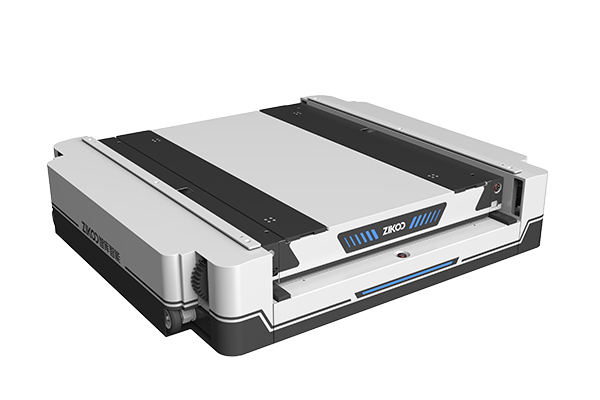
Finally, connect the reference to the current product version. If the supplier has changed controllers, software architecture, battery systems, or vehicle models since the reference project, confirm how much of the prior project still applies.
Document Audit: Certifications, Safety, and Software Evidence
A formal audit should verify that the supplier can produce documents that match the claims in the proposal. The document set can be grouped into quality, safety, mechanical, electrical, and software categories.
| Audit area | What to request | What it confirms | Common red flag |
|---|---|---|---|
| Quality system | Current ISO 9001 certificate and audit report | Repeatable production and delivery processes | Certificate expired or scope excludes automation equipment |
| Environmental system | ISO 14001 evidence where relevant | Controlled environmental and lifecycle practices | No evidence of supplier-level process control |
| Machine safety | EN 528 compliance documentation for rail-dependent storage and retrieval equipment | Safety design and risk assessment were addressed | Safety evidence is replaced by generic “CE certified” wording |
| CE marking | Declaration of Conformity and technical file for the configured system | The system meets applicable EU requirements where required [6] | No technical file or declaration available before delivery |
| Software | Release notes, version history, interface specifications, and testing records | Software is controlled and auditable | No test evidence for WMS/WCS handoff scenarios |
| Maintenance | Spare-parts list, replacement intervals, and maintenance access drawings | Long-term support is planned | Maintenance data missing even though system is sold as turnkey |
For equipment used in Europe, EN 528 provides a specific safety framework for rail-dependent storage and retrieval machines [2]. Machinery Directive 2006/42/EC obligations apply when the automation system is placed on the market as a complete or partly completed machine [3]. Buyers should understand whether they are purchasing a set of components, a partly completed machine, or a complete turnkey system, because the legal responsibility shifts accordingly.
Software evidence is now as important as mechanical evidence. Automation systems increasingly rely on integrated WMS, WES, WCS, and RCS logic to manage vehicle missions, congestion, and exception handling. A digital twin or simulation framework can support design validation, but the buyer should confirm whether the model reflects the real warehouse layout and actual control rules [5].
Not sure whether the documents you have received are complete? Send the list you already hold to info@zikoo-int.com. Include the supplier name, the machine model, the intended warehouse region, and the certifications claimed; you will get a short missing-evidence map and the questions to ask before the next meeting.
Red Flags That Show Up During Reference Calls
Some reference problems do not appear in documents. They appear in how the supplier and the reference contact answer questions.
- No operational contact. If the supplier only offers a sales contact for the reference visit, the reference value is low.
- Generic praise without metrics. Statements such as “the system works well” are not evidence. Request throughput, error rates, downtime, and software-change history.
- Old or short references. A reference from a project that only ran for a few months after commissioning may not reflect long-term behavior.
- No failure narrative. A supplier that cannot describe any problem, corrective action, or design revision may be hiding risk rather than proving reliability.
- Unwillingness to discuss scope changes. Warehouse automation projects change. The red flag is not the change itself; it is the inability to show how scope changes were costed, documented, and controlled.
- Mismatch between brochure and drawing. If the proposal shows high-density storage but the technical drawing reveals a conventional layout with limited automation, ask for a revised system description.
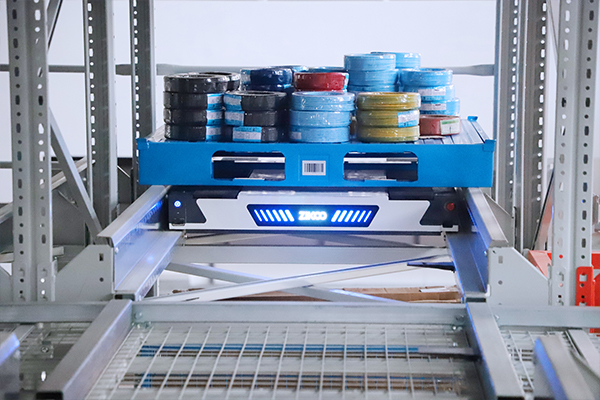
One effective test is to ask the supplier to explain the control flow for a single outbound pallet from storage location to dispatch. A credible automation partner can describe the sequence, software handoffs, error states, and recovery path without preparing a new presentation. The inability to explain that flow is a warning sign even when the reference site is visually impressive.
Next Step: Turn the Checklist into a Shortlist
The purpose of reading references and conducting audits is not to eliminate risk entirely. It is to convert an emotional buying decision into a documented engineering and commercial comparison. Use the reference notes, certification documents, software evidence, and red-flag list to build a short scoring model that covers delivery capability, system integration, safety compliance, and after-sales readiness.
If you are evaluating a four-way shuttle, ASRS, or pallet-to-person automation project and want to pressure-test a supplier reference list, contact Zikoo Smart Technology at info@zikoo-int.com or (+86)-19941778955. Share your pallet profile, building height, throughput target, temperature range, and required certifications; an engineer will respond with the audit document list and the same reference questions we would apply when reviewing a project on your side.
Frequently Asked Questions
How do you verify a warehouse automation supplier’s project references?
Request a contact who worked on site or in operations, not only a sales contact. Ask for go-live dates, software handoffs, downtime records, spare-parts replacements, and the issues that required corrective action during commissioning. Compare those answers with your own operational profile instead of accepting a generic positive description.
Which certificates should a smart warehouse automation company provide?
At minimum, review the current ISO 9001 certificate, relevant safety compliance documents such as EN 528 for rail-dependent storage and retrieval equipment, CE Declaration of Conformity where applicable, and environmental documentation such as ISO 14001 if it is part of the supplier’s claim. For software-heavy systems, request version history, test records, and interface specifications.
What is the difference between a factory audit and a document audit?
A document audit checks that certificates, drawings, test reports, and risk assessments exist and are current. A factory audit checks whether the documented processes are actually in use. A factory visit can also reveal manufacturing controls, quality gates, cable routing, welding practices, and test stations that are difficult to verify from paper documents alone.
Should I visit the reference site or the factory first?
If you can only make one visit, choose the reference site for operational risk and the factory for delivery risk. The ideal sequence is a document review first, followed by the factory to confirm repeatability, and then the reference site to confirm live performance. If budget allows, conduct both with a written checklist rather than a general tour.
How can I confirm that software integration claims are real?
Ask for a software demonstration that follows a single pallet through receipt, storage, retrieval, picking, and dispatch. Request release notes, interface specifications, test cases for WMS/WCS handoffs, and evidence of how updates are rolled back. A supplier should be able to explain the control flow and recovery path without improvisation.
References
[1] International Organization for Standardization. ISO 9001:2015 Quality management systems — Requirements.
[2] European Committee for Standardization. EN 528:2008 Rail dependent storage and retrieval equipment — Safety requirements.
[3] European Parliament and Council. Directive 2006/42/EC on machinery.
[4] International Organization for Standardization. ISO 14001:2015 Environmental management systems — Requirements.
[5] International Organization for Standardization. ISO 23247:2021 Automation systems and integration — Digital twin framework for manufacturing.
[6] European Commission. CE marking for machinery sector.
If you’re interested, check out these related articles:
Stacker Crane vs Four-Way Shuttle: Which Fits Your ASRS Warehouse Best
Revolutionizing Cold Chain Logistics: Zikoo Robotics Six-Way Shuttle Powers High-Density, High-Efficiency Warehousing


