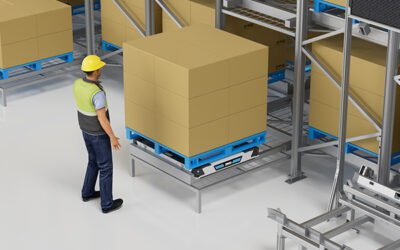
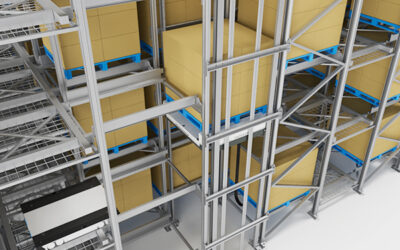
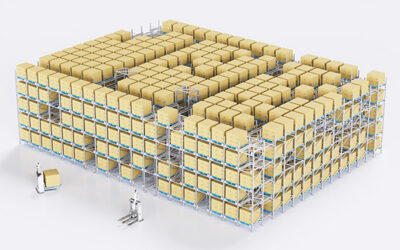
Most warehouse automation buyers ask the same question after their first briefing: Is the installation of a sistema de transbordadores de cuatro vías complex? The short answer is that it is not complex in the way a bespoke AS/RS rebuilt from scratch might be, but it demands rigorous pre‑installation planning, careful site preparation, and tight integration between the shuttle, elevator, and warehouse control software. After supporting deployments across power, cold chain, new energy, and pharmaceutical facilities, I have found that the real complexity sits not inside the shuttle itself, but in the intersection of the building, the IT infrastructure, and the system integration layer.
What Makes a Four‑Way Shuttle Installation Different from Rack and Forklift Setups
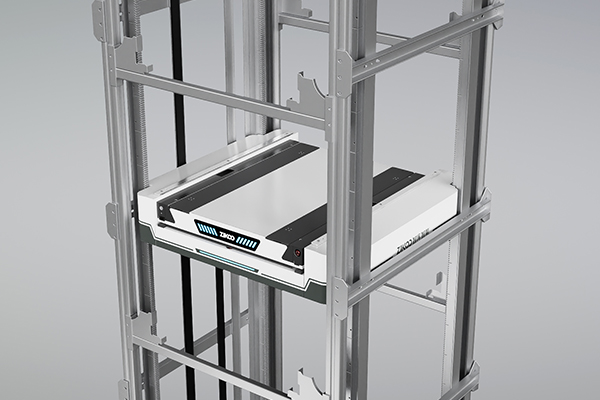
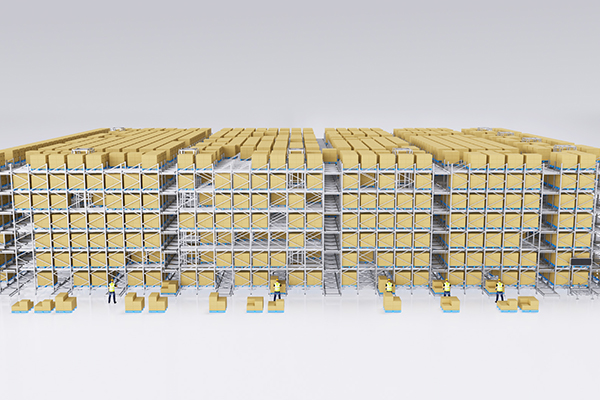
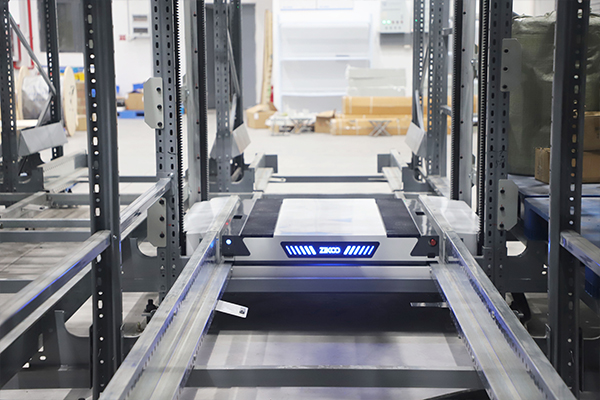
Traditional selective racking requires only a flat floor and skilled forklift operators. A four‑way shuttle system introduces autonomous vehicles, vertical lifts, a steel runway structure, and a software layer that manages real‑time task allocation. The R‑bot four‑way shuttle itself arrives pre‑assembled and tested from the factory, so the onsite work is more about system commissioning than mechanical assembly.
Because the shuttle runs on precision‑machined guide rails mounted onto a high‑density rack structure, the installation is closer to laying a track for an automated train than erecting static shelves. Rail straightness, height tolerance, and seamless joints between rack bays directly affect shuttle travel speed and positioning accuracy. In projects we have managed, roughly 60% of the total onsite timeline goes into the steel structure and rail alignment, while the shuttle and lift commissioning takes the remaining 40%. This is why an experienced integration team makes a measurable difference in total duration.
Site Conditions That Determine How Smoothly the Project Progresses
Before any equipment arrives, five site readiness factors often decide whether the installation stays on schedule.
Floor flatness and load bearing. Four‑way shuttles run on rails fixed to the rack structure, so the floor only needs to support the rack, the stored pallets, and the transfer stations. Any floor settlement over time can create rail misalignment. We typically require a concrete slab with a flatness tolerance of FF35/FL25 or better, and the column grid must match the rack layout exactly. If the existing floor falls outside these parameters, a few days of floor grinding or epoxy levelling is the most common fix.
Power and compressed air. Shuttles use onboard lithium batteries (the R‑bot standard models run 8 hours on a 51.2V/40Ah pack) and charge at docking stations located at the end of aisles. Each charging station needs a dedicated 220V circuit, and the lifts require three‑phase power. Running new power drops in an existing building can take longer than the shuttle installation itself, so we always flag this during the first site survey.
Network and IT readiness. The WMS/WES/WCS/RCS software stack requires a low‑latency wired connection to every shuttle and lift access point. If the warehouse has not yet deployed industrial‑grade WiFi 6 or wired Ethernet to the rack face positions, the cabling work must be completed before integration testing starts.
Ambient temperature. Standard R‑bot and H‑bot models operate comfortably down to −15°C, but cold storage deployments at −25°C require the low‑temperature lithium battery option and a heated charging enclosure. That adds a day of electrical work but does not alter the mechanical installation sequence.
Clear ceiling height for lift installation. The H‑bot vertical bidirectional shuttle needs to travel the full rack height. If sprinkler heads, lighting fixtures, or ventilation ducts protrude into the lift path, they must be relocated during the rack erection phase. We always produce a 3D clash‑detection model early in the design stage to avoid last‑minute surprises.
A Typical Step‑by‑Step Installation Timeline
Below is the sequence we follow on a standard 5,000‑pallet project with four aisles, one H‑bot per aisle, and eight R‑bots. Timelines scale with the number of aisles and the building height, but the logic stays the same.
| Phase | Activity | Duration |
|---|---|---|
| Week 1–2 | Rack steel erection and rail system installation | 8–10 working days |
| Week 3 | Electrical cabling, charging stations, network drops | 3–5 days |
| Week 4 | Shuttle placement and lift mechanical installation | 3–4 days |
| Week 5 | System integration and software configuration | 3–5 days |
| Week 6 | Dry‑run testing and full‑load commissioning | 3–5 days |
The shuttles themselves are placed on the rails using a small crane or mast lift and are ready to move under manual control within half a day. The real time goes into the software layer: mapping every storage location, testing the handshake between the R‑bot and the H‑bot vertical lift, and tuning the WMS to handle inbound and outbound flows simultaneously.
If your program involves a high‑bay configuration or a multi‑temperature layout, the mechanical phase extends by 20 to 30 percent. Verifying these parameters early keeps the schedule predictable. When the building dimension falls outside the standard range, a quick feasibility check against the shuttle and lift specifications prevents expensive rework later — email [email protected] with your elevation drawing.
cURL Too many subrequests by single Worker invocation. To configure this limit, refer to https://developers.cloudflare.com/workers/wrangler/configuration/#limits
cURL Too many subrequests by single Worker invocation. To configure this limit, refer to https://developers.cloudflare.com/workers/wrangler/configuration/#limits
cURL Too many subrequests by single Worker invocation. To configure this limit, refer to https://developers.cloudflare.com/workers/wrangler/configuration/#limits cURL Too many subrequests by single Worker invocation. To configure this limit, refer to https://developers.cloudflare.com/workers/wrangler/configuration/#limits
cURL Too many subrequests by single Worker invocation. To configure this limit, refer to https://developers.cloudflare.com/workers/wrangler/configuration/#limits cURL Too many subrequests by single Worker invocation. To configure this limit, refer to https://developers.cloudflare.com/workers/wrangler/configuration/#limits
cURL Too many subrequests by single Worker invocation. To configure this limit, refer to https://developers.cloudflare.com/workers/wrangler/configuration/#limits cURL Too many subrequests by single Worker invocation. To configure this limit, refer to https://developers.cloudflare.com/workers/wrangler/configuration/#limits
cURL Too many subrequests by single Worker invocation. To configure this limit, refer to https://developers.cloudflare.com/workers/wrangler/configuration/#limits cURL Too many subrequests by single Worker invocation. To configure this limit, refer to https://developers.cloudflare.com/workers/wrangler/configuration/#limits
cURL Too many subrequests by single Worker invocation. To configure this limit, refer to https://developers.cloudflare.com/workers/wrangler/configuration/#limits
cURL Too many subrequests by single Worker invocation. To configure this limit, refer to https://developers.cloudflare.com/workers/wrangler/configuration/#limits
cURL Too many subrequests by single Worker invocation. To configure this limit, refer to https://developers.cloudflare.com/workers/wrangler/configuration/#limits Software de almacén inteligente PTP cURL Too many subrequests by single Worker invocation. To configure this limit, refer to https://developers.cloudflare.com/workers/wrangler/configuration/#limits
cURL Too many subrequests by single Worker invocation. To configure this limit, refer to https://developers.cloudflare.com/workers/wrangler/configuration/#limits
cURL Too many subrequests by single Worker invocation. To configure this limit, refer to https://developers.cloudflare.com/workers/wrangler/configuration/#limits
cURL Too many subrequests by single Worker invocation. To configure this limit, refer to https://developers.cloudflare.com/workers/wrangler/configuration/#limits
cURL Too many subrequests by single Worker invocation. To configure this limit, refer to https://developers.cloudflare.com/workers/wrangler/configuration/#limits
cURL Too many subrequests by single Worker invocation. To configure this limit, refer to https://developers.cloudflare.com/workers/wrangler/configuration/#limits
cURL Too many subrequests by single Worker invocation. To configure this limit, refer to https://developers.cloudflare.com/workers/wrangler/configuration/#limits
cURL Too many subrequests by single Worker invocation. To configure this limit, refer to https://developers.cloudflare.com/workers/wrangler/configuration/#limits
cURL Too many subrequests by single Worker invocation. To configure this limit, refer to https://developers.cloudflare.com/workers/wrangler/configuration/#limits
cURL Too many subrequests by single Worker invocation. To configure this limit, refer to https://developers.cloudflare.com/workers/wrangler/configuration/#limits
cURL Too many subrequests by single Worker invocation. To configure this limit, refer to https://developers.cloudflare.com/workers/wrangler/configuration/#limits
cURL Too many subrequests by single Worker invocation. To configure this limit, refer to https://developers.cloudflare.com/workers/wrangler/configuration/#limits
cURL Too many subrequests by single Worker invocation. To configure this limit, refer to https://developers.cloudflare.com/workers/wrangler/configuration/#limits
cURL Too many subrequests by single Worker invocation. To configure this limit, refer to https://developers.cloudflare.com/workers/wrangler/configuration/#limits
cURL Too many subrequests by single Worker invocation. To configure this limit, refer to https://developers.cloudflare.com/workers/wrangler/configuration/#limits
Si está interesado, eche un vistazo a estos artículos relacionados:
Plataforma de Almacenamiento Inteligente PTP: Construyendo un Ecosistema Logístico Flexible e Inteligente
Transbordador de Seis Vías: La Herramienta Inteligente de Almacenamiento para la Reducción de Costos y Eficiencia
Era de la Cadena de Frío Inteligente: El Sistema de Transporte de Seis Vías Redefine la Eficiencia de Almacenamiento con Máxima Densidad