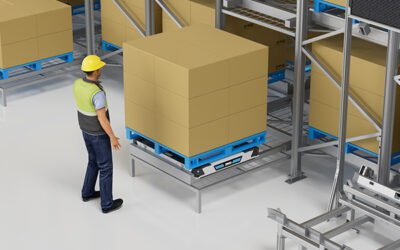
Even in warehouses where forklifts still dominate the aisles, the question surfaces with increasing urgency: is warehouse automation a smart investment, or an expensive bet on technology that might not fit? As a robotics engineer who has spent over a decade designing pallet-to-person systems, I see the same tension in almost every evaluation meeting. The potential gains in density, throughput, and labor independence are real, but they only translate into a positive return when the system is engineered to match the actual material flow, not a PowerPoint simulation. This article breaks down the cost drivers, ROI levers, and risk factors that determine whether pallet storage automation pays off. The conclusion is clear: the investment is worth it when you prioritize system scalability and integration depth over an attractive upfront sticker price.
Pallet Automation Delivers Tangible Value Beyond Labor Savings
Most discussions about warehouse automation start and end with headcount reduction, and that misses the more durable financial advantages. In the pallet-to-person systems we design, three value drivers consistently outweigh labor savings over a 5-to-7‑year lifecycle.
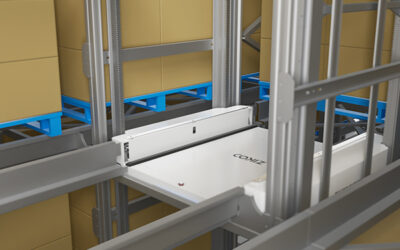
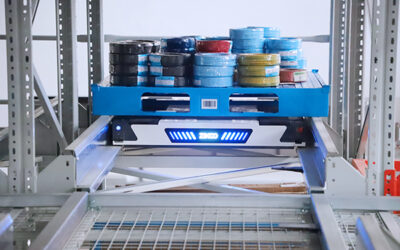
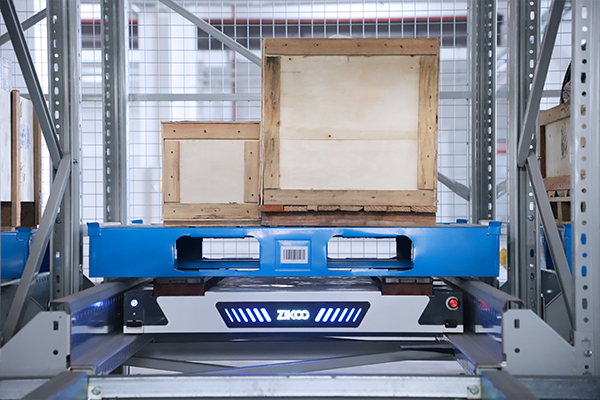
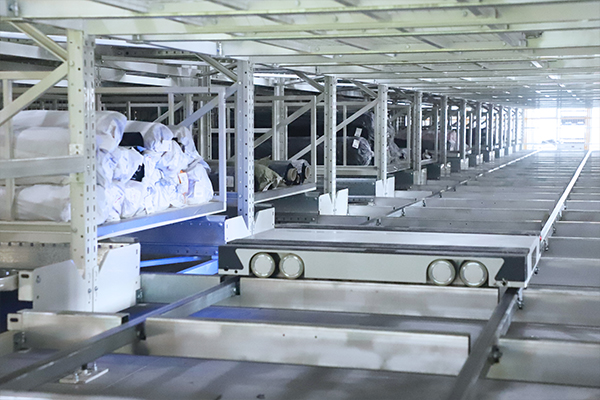
First, floor space utilization. A properly designed four‑way shuttle system, using R‑bot shuttles with a body thickness of just 125 mm running on rails 120 mm deep, can fit 40% more pallet positions into the same building footprint compared to a conventional very‑narrow‑aisle (VNA) rack layout. When land or lease costs in Tier‑1 logistics hubs exceed $15 per square meter per month, the rent avoidance alone often covers the shuttle investment.
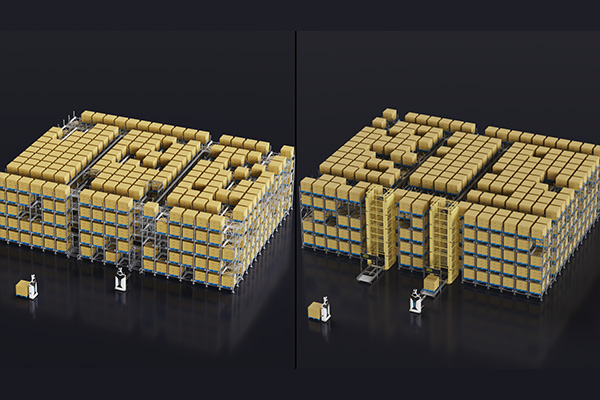
Second, throughput elasticity. With a six‑way configuration that pairs R‑bot shuttles with H‑bot vertical bidirectional elevators, the system routes pallets simultaneously across horizontal and vertical axes without creating choke points at the rack face. One new‑energy site we delivered can ramp from 80 pallets per hour to 140 during quarter‑end peaks without adding equipment—a level of surge capacity that manual fleets simply cannot replicate without significant overtime and temporary labor pools.
Third, product integrity. In pharmaceutical and cold‑chain environments, every manual fork‑lift touch adds a probability of damage. Automated shuttles operating at 1.2 m/s under load with ±1 mm positioning accuracy remove much of that variable, reducing write‑offs and the associated documentation burden.
Total Cost of Ownership Runs Deeper Than the Capital Outlay
The line item that procurement teams fixate on—the system price—usually accounts for roughly 60% of the 10‑year total cost of ownership. The less visible components determine whether the investment truly performs.
Facility readiness is the first hidden cost. Older warehouses often need slab flatness upgrades to meet the ±10 mm floor tolerance that cURL Too many subrequests by single Worker invocation. To configure this limit, refer to https://developers.cloudflare.com/workers/wrangler/configuration/#limitss like the U‑bot require before they can navigate 2,100 mm‑wide aisles safely. We have seen projects where the civil works bill exceeded the robotics hardware cost because the existing floor was poured with undulations exceeding 30 mm per 5 linear meters. An early geotechnical survey prevents this from becoming a surprise line item.
Software integration carries a similarly under‑budgeted cost. The PTPスマート倉庫ソフトウェア platform we use synchronizes WMS order waves with the WCS layer that dispatches shuttles and H‑bot elevators in real time. If the host ERP cannot send the task priorities or inventory attributes that the WCS needs to optimize battery‑swap timing and travel paths, the system defaults to first‑in‑first‑out scheduling, which can reduce overall throughput by 15–20% in high‑SKU environments. Mapping the data handshake before cutting the purchase order avoids a very expensive over‑provisioning of robotics that then underperforms.
The table below illustrates how the cost components stack up across a hypothetical 5,000‑pallet‑position 密な収納 project over a decade. The figures are drawn from actual project estimates, adjusted for generic industry conditions.
| Cost Component | Approximate Share of 10‑Year TCO | Key Lever for Reduction |
|---|---|---|
| Hardware (shuttles, elevators, rack, rails) | 55‑60% | Standard pallet size, load requirements |
| Facility modification (floor, power, fire system) | 10‑15% | Early slab survey, reuse existing infrastructure |
| Software license and integration | 8‑10% | Pre‑validated API connections, in‑house WMS capability |
| Maintenance contract (parts, labor) | 10‑12% | On‑site spares inventory, remote diagnostics |
| Energy and consumables | 3‑5% | Lithium‑iron‑phosphate battery cycle count, ambient temperature |
Warehouse Automation ROI Requires a Data‑Driven Calculation
Any spreadsheet can project a three‑year payback, but credible ROI analysis for パレットシャトルシステムs starts by mapping the actual order profile to the system’s design envelope. In our workflow, we feed 12 months of WMS data—every SKU, every pick line, every replenishment—into a dynamic simulation before proposing a layout. What that simulation reveals is that ROI is highly sensitive to two variables that generic calculators ignore.
The first is slotting volatility. When a site running a four‑way shuttle configures the rack to hold 8,000 pallets but must re‑slot 15% of the SKU mix every quarter because of product rotation or seasonality, the WCS rebalancing cycles consume shuttle‑hours. In the worst case, this can reduce effective throughput by 10‑20% that the original ROI model never accounted for. The mitigation is to reserve a buffer of throughput capacity—typically 15% above the baseline demand—from the outset and to schedule re‑slotting during low‑activity windows that the WMS automatically negotiates with the order pool.
The second is order‑profile homogeneity. Businesses with consistent case‑pick patterns generally break even within three to four years. In a cold‑chain project we supported for a frozen food distributor, the combination of single‑shift 6‑hour shuttle battery runs at −25°C and irregular pallet‑pick volumes pushed the payback to the fifth year, but the investment still cleared the client’s 18% IRR hurdle because the alternative—manual operation in freezer aisles—carried a staff turnover cost exceeding 2× the annual maintenance contract. That kind of context does not appear in a simple cost‑per‑pallet‑move formula, yet it is exactly what determines whether the board signs off.
cURL Too many subrequests by single Worker invocation. To configure this limit, refer to https://developers.cloudflare.com/workers/wrangler/configuration/#limits
cURL Too many subrequests by single Worker invocation. To configure this limit, refer to https://developers.cloudflare.com/workers/wrangler/configuration/#limits
cURL Too many subrequests by single Worker invocation. To configure this limit, refer to https://developers.cloudflare.com/workers/wrangler/configuration/#limits
cURL Too many subrequests by single Worker invocation. To configure this limit, refer to https://developers.cloudflare.com/workers/wrangler/configuration/#limits
cURL Too many subrequests by single Worker invocation. To configure this limit, refer to https://developers.cloudflare.com/workers/wrangler/configuration/#limits
cURL Too many subrequests by single Worker invocation. To configure this limit, refer to https://developers.cloudflare.com/workers/wrangler/configuration/#limits
cURL Too many subrequests by single Worker invocation. To configure this limit, refer to https://developers.cloudflare.com/workers/wrangler/configuration/#limits
cURL Too many subrequests by single Worker invocation. To configure this limit, refer to https://developers.cloudflare.com/workers/wrangler/configuration/#limits
cURL Too many subrequests by single Worker invocation. To configure this limit, refer to https://developers.cloudflare.com/workers/wrangler/configuration/#limits 自動倉庫 cURL Too many subrequests by single Worker invocation. To configure this limit, refer to https://developers.cloudflare.com/workers/wrangler/configuration/#limits
cURL Too many subrequests by single Worker invocation. To configure this limit, refer to https://developers.cloudflare.com/workers/wrangler/configuration/#limits
cURL Too many subrequests by single Worker invocation. To configure this limit, refer to https://developers.cloudflare.com/workers/wrangler/configuration/#limits cURL Too many subrequests by single Worker invocation. To configure this limit, refer to https://developers.cloudflare.com/workers/wrangler/configuration/#limits cURL Too many subrequests by single Worker invocation. To configure this limit, refer to https://developers.cloudflare.com/workers/wrangler/configuration/#limits
cURL Too many subrequests by single Worker invocation. To configure this limit, refer to https://developers.cloudflare.com/workers/wrangler/configuration/#limits
cURL Too many subrequests by single Worker invocation. To configure this limit, refer to https://developers.cloudflare.com/workers/wrangler/configuration/#limits
cURL Too many subrequests by single Worker invocation. To configure this limit, refer to https://developers.cloudflare.com/workers/wrangler/configuration/#limits
cURL Too many subrequests by single Worker invocation. To configure this limit, refer to https://developers.cloudflare.com/workers/wrangler/configuration/#limits
cURL Too many subrequests by single Worker invocation. To configure this limit, refer to https://developers.cloudflare.com/workers/wrangler/configuration/#limits
cURL Too many subrequests by single Worker invocation. To configure this limit, refer to https://developers.cloudflare.com/workers/wrangler/configuration/#limits
cURL Too many subrequests by single Worker invocation. To configure this limit, refer to https://developers.cloudflare.com/workers/wrangler/configuration/#limits
cURL Too many subrequests by single Worker invocation. To configure this limit, refer to https://developers.cloudflare.com/workers/wrangler/configuration/#limits
cURL Too many subrequests by single Worker invocation. To configure this limit, refer to https://developers.cloudflare.com/workers/wrangler/configuration/#limits
cURL Too many subrequests by single Worker invocation. To configure this limit, refer to https://developers.cloudflare.com/workers/wrangler/configuration/#limits
cURL Too many subrequests by single Worker invocation. To configure this limit, refer to https://developers.cloudflare.com/workers/wrangler/configuration/#limits
cURL Too many subrequests by single Worker invocation. To configure this limit, refer to https://developers.cloudflare.com/workers/wrangler/configuration/#limits
興味があれば、これらの関連記事もご覧ください:
六方向シャトルが密集ストレージを可能にし、空間制限を打破
倉庫価値の再構築:六方シャトルがデジタルトランスフォーメーションを牽引
スタッカークレーン対フォーウェイシャトル:あなたのASRS倉庫に最適なのはどちら?