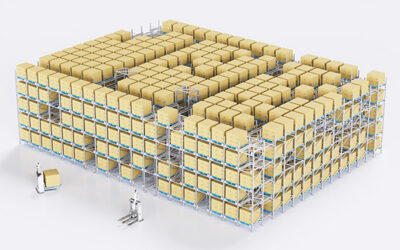
Avoiding risks in warehouse automation projects demands a rigorous focus on the technical details that determine whether a system performs reliably under real‑world conditions. In over a decade of delivering pallet shuttle and 自動倉庫・搬送システム (AS/RS) projects, I have seen too many companies evaluate suppliers solely on price and sales presentations, only to face unexpected downtime, integration failures, and cost overruns later. This article walks through the specific risks, the technical checks that matter, and the supplier evaluation steps that can protect your investment.
What Are the Real Risks in Warehouse Automation Projects?
Most project failures do not come from a single catastrophic event. They accumulate from overlooked engineering details and supplier gaps that surface only after installation. The table below outlines the risk categories we encounter most often.
| リスクカテゴリ | Common Pitfall | Mitigation Approach |
|---|---|---|
| Technology Fit | Using standard shuttles in cold storage or cleanroom environments without necessary certifications | Require battery and component specs that are explicitly rated for your operating temperature and humidity |
| Supplier Reliability | Throughput and uptime figures quoted without a reference site operating under similar conditions | Visit at least one live installation and review six months of operational logs |
| 統合 | Shuttle control software cannot interface with the existing WMS because of proprietary protocols | Demand a documented open‑API architecture and a joint integration test before contract signing |
| Implementation | Floor flatness deviations discovered after the rack structure is erected, causing shuttle derailments | Make a pre‑installation site survey a contractual milestone, with clear pass/fail tolerance values |
| Ongoing Support | No local spare parts depot, turning a two‑hour shuttle swap into a two‑week import delay | Negotiate a spare parts availability SLA with guaranteed response times and regional stock |
Every one of these risks can be surfaced and addressed during due diligence. The problem is that traditional RFQ processes rarely probe deeply enough. The next section explains what a thorough technical evaluation looks like.
How to Evaluate a 四方向シャトル Supplier’s Technical Credentials
The difference between a supplier that sells automation and one that engineers it becomes visible once you examine their internal capability. We recommend starting with three hard checks.
First, request the detailed test reports for the shuttle’s core subsystems. For example, the battery pack should have a documented cycle‑life curve at the lowest temperature your environment will reach. A lithium‑iron‑phosphate battery that delivers eight hours of runtime at 25 °C can drop to under five hours at −15 °C if the cell and battery management system are not designed for it. The supplier should provide measured data, not calculated projections.
Second, examine the software platform in person. A pallet shuttle is only as smart as the warehouse control system directing it. Ask the supplier to demonstrate real‑time task dispatching, dynamic path planning, and failure‑mode recovery in a simulation environment. If they cannot show how the system behaves when one shuttle drops offline, you are buying a black box.
Third, verify the supplier’s integration track record. Inquire about projects that matched your industry and SKU profile. Ask for a reference call with the plant manager, not just the corporate sponsor. Listen for specifics: how many shuttles are deployed, what is the actual throughput versus design, and how long did it take to reach steady state.
If your project involves cold storage or high‑SKU environments, it is worth confirming the shuttle’s thermal endurance and pallet‑size handling range before shortlisting suppliers. Share your requirements with our technical team at info@zikoo-int.com and we will help you define the correct specification envelope.
Key Technical Specifications That Determine Project Success
Buyers often focus on the headline numbers while missing the parameters that directly affect daily operations. The table below captures the specifications we require from every shuttle model we deploy.
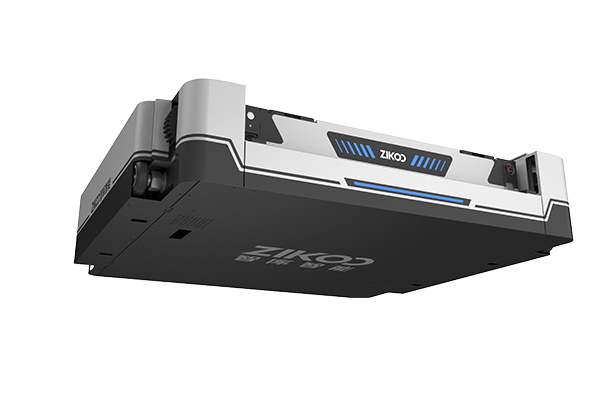
| モデル | 定格荷重(kg) | Body Thickness (mm) | 積載時速度(m/s) | Battery Endurance (h) | 動作温度(°C) |
|---|---|---|---|---|---|
| R1200B(標準) | 1200 | 125 | 1.2 | 8 | −15 to 45 |
| R1500J (Japanese pallet) | 1500 | 125 | 1.2 | 8 | −15 to 45 |
| R2000B (Heavy‑duty) | 2000 | 150 | 1.0 | 7 | −15 to 45 |
Each parameter carries an operational consequence. Body thickness directly determines how many storage levels you can fit within a given building height. A 125 mm shuttle body can often squeeze one extra rack layer compared with a 150 mm design, which over 5,000 pallet positions translates into measurable space cost.
cURL Too many subrequests by single Worker invocation. To configure this limit, refer to https://developers.cloudflare.com/workers/wrangler/configuration/#limits
cURL Too many subrequests by single Worker invocation. To configure this limit, refer to https://developers.cloudflare.com/workers/wrangler/configuration/#limits
cURL Too many subrequests by single Worker invocation. To configure this limit, refer to https://developers.cloudflare.com/workers/wrangler/configuration/#limits
cURL Too many subrequests by single Worker invocation. To configure this limit, refer to https://developers.cloudflare.com/workers/wrangler/configuration/#limits
cURL Too many subrequests by single Worker invocation. To configure this limit, refer to https://developers.cloudflare.com/workers/wrangler/configuration/#limits
cURL Too many subrequests by single Worker invocation. To configure this limit, refer to https://developers.cloudflare.com/workers/wrangler/configuration/#limits
cURL Too many subrequests by single Worker invocation. To configure this limit, refer to https://developers.cloudflare.com/workers/wrangler/configuration/#limits
cURL Too many subrequests by single Worker invocation. To configure this limit, refer to https://developers.cloudflare.com/workers/wrangler/configuration/#limits
cURL Too many subrequests by single Worker invocation. To configure this limit, refer to https://developers.cloudflare.com/workers/wrangler/configuration/#limits cURL Too many subrequests by single Worker invocation. To configure this limit, refer to https://developers.cloudflare.com/workers/wrangler/configuration/#limits cURL Too many subrequests by single Worker invocation. To configure this limit, refer to https://developers.cloudflare.com/workers/wrangler/configuration/#limits
cURL Too many subrequests by single Worker invocation. To configure this limit, refer to https://developers.cloudflare.com/workers/wrangler/configuration/#limits
cURL Too many subrequests by single Worker invocation. To configure this limit, refer to https://developers.cloudflare.com/workers/wrangler/configuration/#limits
cURL Too many subrequests by single Worker invocation. To configure this limit, refer to https://developers.cloudflare.com/workers/wrangler/configuration/#limits
cURL Too many subrequests by single Worker invocation. To configure this limit, refer to https://developers.cloudflare.com/workers/wrangler/configuration/#limits
cURL Too many subrequests by single Worker invocation. To configure this limit, refer to https://developers.cloudflare.com/workers/wrangler/configuration/#limits
cURL Too many subrequests by single Worker invocation. To configure this limit, refer to https://developers.cloudflare.com/workers/wrangler/configuration/#limits
cURL Too many subrequests by single Worker invocation. To configure this limit, refer to https://developers.cloudflare.com/workers/wrangler/configuration/#limits
cURL Too many subrequests by single Worker invocation. To configure this limit, refer to https://developers.cloudflare.com/workers/wrangler/configuration/#limits
cURL Too many subrequests by single Worker invocation. To configure this limit, refer to https://developers.cloudflare.com/workers/wrangler/configuration/#limits
cURL Too many subrequests by single Worker invocation. To configure this limit, refer to https://developers.cloudflare.com/workers/wrangler/configuration/#limits
cURL Too many subrequests by single Worker invocation. To configure this limit, refer to https://developers.cloudflare.com/workers/wrangler/configuration/#limits
cURL Too many subrequests by single Worker invocation. To configure this limit, refer to https://developers.cloudflare.com/workers/wrangler/configuration/#limits
cURL Too many subrequests by single Worker invocation. To configure this limit, refer to https://developers.cloudflare.com/workers/wrangler/configuration/#limits
cURL Too many subrequests by single Worker invocation. To configure this limit, refer to https://developers.cloudflare.com/workers/wrangler/configuration/#limits
cURL Too many subrequests by single Worker invocation. To configure this limit, refer to https://developers.cloudflare.com/workers/wrangler/configuration/#limits
興味があれば、これらの関連記事もご覧ください:
六方向シャトルが産業を支え、スマート倉庫の導入を促進
ソフトウェア駆動型ハードウェア:シックスウェイシャトルが倉庫効率を最大化
六方向シャトル:コスト削減と効率化のためのスマート倉庫ツール 2
Six-Way Shuttle:高密度ストレージ向けのデュアルエンジンソリューション