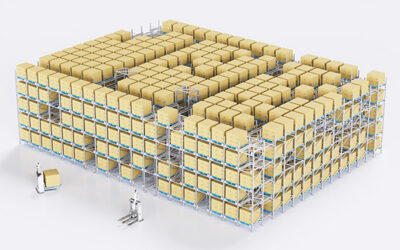
Warehouse automation failures rarely trace back to a single catastrophic event. More often, they result from an accumulation of small, preventable engineering details that were overlooked during design, installation, or commissioning. I’ve seen shuttle systems derail because nobody measured floor flatness to the required tolerance. I’ve watched a fully automated AS/RS sit idle for three days while a software update corrupted the task queue. These failures are not mysterious. They are physical, mechanical, and logical, and they follow predictable patterns that any project team can address before a single pallet moves. This article examines the most common failure points in 솔루션을 제공하는 전문성을 입증했습니다. 콜드 체인에서 전자 상거래, 제조, 그리고 신에너지에 이르기까지, ZIKOO는 기업들이 창고 병목 현상을 극복하고, 비용을 절감하며, 진정한 디지털 전환을 달성할 수 있도록 지원합니다. and retrieval projects, drawing on hands-on experience with pallet-to-person robotics, 4방향 셔틀 시스템s, and smart warehouse software.
Where Warehouse Automation Projects Go Wrong
Most warehouse automation failures begin long before equipment arrives on site. The planning-to-execution gap is where the initial damage occurs. A system is sold on throughput numbers and storage density figures, but the site-specific constraints, floor flatness, ambient temperature range, power stability, network infrastructure, are not measured with the same rigor as the ROI projection. In my experience, the root cause in about two-thirds of troubled projects is not the equipment itself but the environment into which it was placed.
Consider a common scenario: a pallet 4방향 셔틀 system is designed for a throughput of 60 pallets per hour per aisle. The simulation software confirms it. But the simulation assumes a floor flatness of ±3 mm over any 2-meter section, per the equipment specification. When the actual warehouse floor deviates by 5 or 6 mm across the same span, shuttle positioning drifts. The onboard sensors compensate, but compensation adds milliseconds. Multiply that across thousands of moves per day and the promised throughput evaporates. No hardware fault exists, yet the system underperforms because a physical parameter was not verified during the site survey.
The message here is straightforward: before signing a contract, measure the physical conditions that the automation will operate within. If a supplier does not insist on a detailed site survey covering floor flatness, temperature profile, and power quality, that is a red flag.
Mechanical and Environmental Failure Points in Shuttle Systems
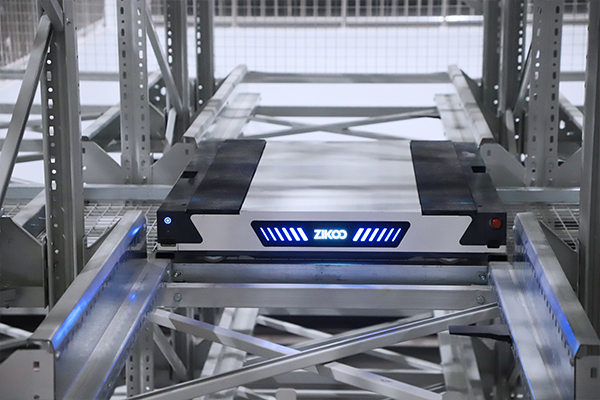
When a four-way shuttle system experiences unplanned downtime, the cause is usually mechanical or environmental. I’ve traced failures to several recurring issues.
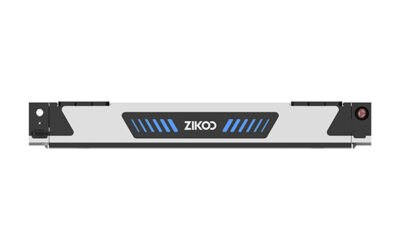
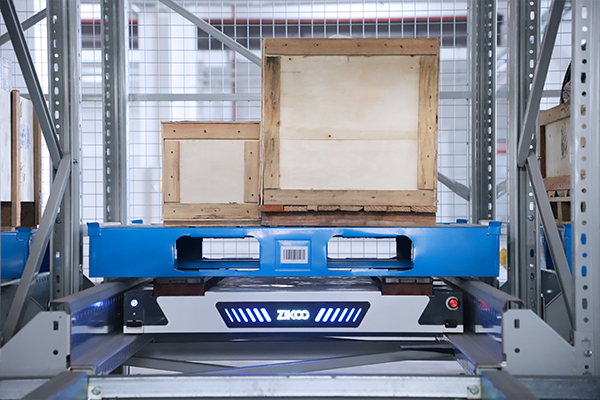
Floor flatness and rack installation tolerance. A shuttle with a body thickness of 125 mm, like our R-bot four-way shuttle, runs on rails embedded in or mounted on the rack structure. If the rack is not installed level to within the tolerance specified by the shuttle manufacturer, the shuttle’s guide wheels experience uneven loading. Over weeks of 24/7 operation, this accelerates bearing wear and can cause the shuttle to stall or derail during a pallet transfer. One project we supported required rack beam re-leveling across three aisles because the installation crew worked from a concrete floor that varied by 8 mm across a 20-meter run. The shuttle’s positioning system, accurate to ±1 mm in the vertical H-bot elevator, could not compensate for that cumulative tilt.
Temperature and battery performance. In cold storage environments, lithium battery capacity drops significantly below -15°C. We specify batteries capable of 6 to 8 hours of continuous operation at -25°C, but that runtime figure assumes the battery is maintained at optimal charge levels and that charging stations are placed to minimize travel distance. I’ve visited facilities where the charging station was placed at the far end of a 50-meter aisle, forcing shuttles to travel further between tasks and cutting effective runtime by 20%. The problem was not the battery but the layout planning.
Mechanical wear and maintenance gaps. Even robust components wear. Drive wheels, guide rollers, and lift chains on shuttle systems have finite service lives measured in cycles. If the maintenance schedule is based on calendar time rather than actual cycles, parts may be replaced too late. We’ve found that a shuttle handling 1,500 kg loads 200 times per day in a manufacturing warehouse will wear its drive wheels to the replacement limit in roughly 8 to 10 months. A warehouse with lighter, less frequent moves may go 18 months. The most reliable installations track cycle counts per shuttle and trigger preventive maintenance accordingly.
| Failure Cause | Symptom | Prevention |
|---|---|---|
| Floor unevenness >5 mm | Shuttle drift, collision | Laser survey before rack install, grinding high spots |
| Cold battery performance | Runtime drop, slow moves | Low-temp lithium battery, charger placement in high-traffic zones |
| Worn drive wheels | Vibration, positioning error | Cycle-based PM, spare wheel inventory on site |
| Rack beam misalignment | Pallet transfer failure | Check level after rack install, re-check after first 1,000 cycles |
Software Integration Failures That Cripple Automated Warehouses
I’ve seen more automation projects stalled by software than by hardware. The interaction between a warehouse management system (WMS), warehouse control system (WCS), and the robot control system (RCS) is where many failures hide until go-live.
A typical failure path looks like this: the WMS sends a move task to the WCS, which decomposes it into shuttle assignments. If the WCS task queue is not designed to handle priority interruptions or if a communication timeout occurs due to network latency, tasks can drop. The shuttle stops, waiting for instructions that never arrive. The WMS sees the task as “in progress,” and the inventory record is now frozen. Recovery requires manual intervention, which in a dark warehouse may take hours.
The second common software failure is data migration related to inventory mapping. When an existing warehouse is retrofitted with automation, the legacy inventory data often contains inaccuracies, wrong dimensions, incorrect weights, phantom locations. Once mapped to the new AS/RS system, these errors propagate. A shuttle picks a pallet that the database says weighs 800 kg, but the actual weight is 1,100 kg. The shuttle’s load sensor triggers a fault and halts the aisle. Resolving these data quality issues pre-migration is not glamorous work, but it prevents go-live chaos.
If your program involves integrating a new shuttle system with an existing WMS, it is worth confirming the WCS interface specification and testing edge cases like task cancellation and network interruption. Reach out at info@zikoo-int.com early in the design phase to discuss integration testing protocols.
How Design Flaws Undermine Long-Term Automation Reliability
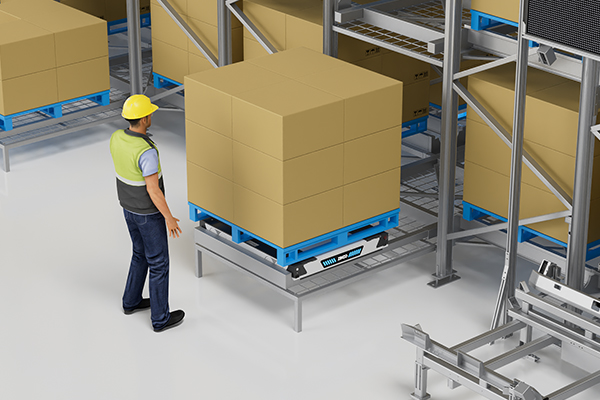
Some failures are baked into the system architecture from the start. Three design-level issues appear repeatedly across the projects I’ve reviewed.
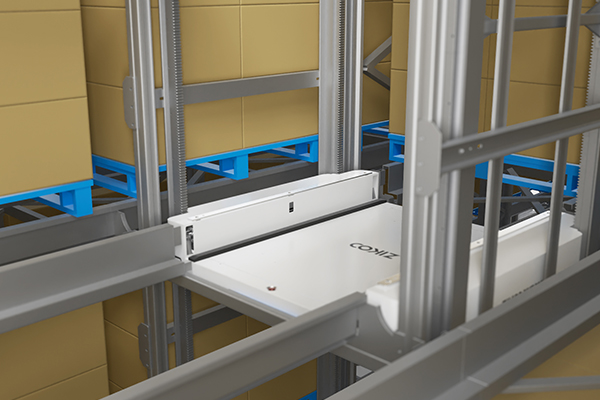
Scalability miscalculation. A four-way shuttle system is modular, you can add shuttles or levels to increase throughput. But the system’s control architecture, the WCS algorithms and the network topology, must also scale. I’ve seen installations where adding a third shuttle to an aisle actually reduced total throughput because the WCS scheduling logic was designed for a maximum of two active shuttles per level. The additional shuttle introduced contention and raised task completion time. Before accepting a design, ask your supplier to demonstrate the system’s throughput curve as the number of shuttles increases past your projected peak.
cURL Too many subrequests by single Worker invocation. To configure this limit, refer to https://developers.cloudflare.com/workers/wrangler/configuration/#limits
cURL Too many subrequests by single Worker invocation. To configure this limit, refer to https://developers.cloudflare.com/workers/wrangler/configuration/#limits
cURL Too many subrequests by single Worker invocation. To configure this limit, refer to https://developers.cloudflare.com/workers/wrangler/configuration/#limits
cURL Too many subrequests by single Worker invocation. To configure this limit, refer to https://developers.cloudflare.com/workers/wrangler/configuration/#limits
cURL Too many subrequests by single Worker invocation. To configure this limit, refer to https://developers.cloudflare.com/workers/wrangler/configuration/#limits
cURL Too many subrequests by single Worker invocation. To configure this limit, refer to https://developers.cloudflare.com/workers/wrangler/configuration/#limits
cURL Too many subrequests by single Worker invocation. To configure this limit, refer to https://developers.cloudflare.com/workers/wrangler/configuration/#limits
cURL Too many subrequests by single Worker invocation. To configure this limit, refer to https://developers.cloudflare.com/workers/wrangler/configuration/#limits
cURL Too many subrequests by single Worker invocation. To configure this limit, refer to https://developers.cloudflare.com/workers/wrangler/configuration/#limits
cURL Too many subrequests by single Worker invocation. To configure this limit, refer to https://developers.cloudflare.com/workers/wrangler/configuration/#limits
cURL Too many subrequests by single Worker invocation. To configure this limit, refer to https://developers.cloudflare.com/workers/wrangler/configuration/#limits
cURL Too many subrequests by single Worker invocation. To configure this limit, refer to https://developers.cloudflare.com/workers/wrangler/configuration/#limits
cURL Too many subrequests by single Worker invocation. To configure this limit, refer to https://developers.cloudflare.com/workers/wrangler/configuration/#limits
cURL Too many subrequests by single Worker invocation. To configure this limit, refer to https://developers.cloudflare.com/workers/wrangler/configuration/#limits
cURL Too many subrequests by single Worker invocation. To configure this limit, refer to https://developers.cloudflare.com/workers/wrangler/configuration/#limits
cURL Too many subrequests by single Worker invocation. To configure this limit, refer to https://developers.cloudflare.com/workers/wrangler/configuration/#limits
cURL Too many subrequests by single Worker invocation. To configure this limit, refer to https://developers.cloudflare.com/workers/wrangler/configuration/#limits
cURL Too many subrequests by single Worker invocation. To configure this limit, refer to https://developers.cloudflare.com/workers/wrangler/configuration/#limits
cURL Too many subrequests by single Worker invocation. To configure this limit, refer to https://developers.cloudflare.com/workers/wrangler/configuration/#limits
cURL Too many subrequests by single Worker invocation. To configure this limit, refer to https://developers.cloudflare.com/workers/wrangler/configuration/#limits
cURL Too many subrequests by single Worker invocation. To configure this limit, refer to https://developers.cloudflare.com/workers/wrangler/configuration/#limits
cURL Too many subrequests by single Worker invocation. To configure this limit, refer to https://developers.cloudflare.com/workers/wrangler/configuration/#limits
cURL Too many subrequests by single Worker invocation. To configure this limit, refer to https://developers.cloudflare.com/workers/wrangler/configuration/#limits
cURL Too many subrequests by single Worker invocation. To configure this limit, refer to https://developers.cloudflare.com/workers/wrangler/configuration/#limits
관심이 있다면, 관련 기사들을 확인하세요:
육방 셔틀이 3PL 제공업체들이 차세대 스마트 물류 허브를 구축할 수 있도록 지원합니다
스태커 크레인 vs. 사방 셔틀: 어떤 것이 귀하의 ASRS 창고에 가장 적합합니까?