When a warehouse automation project reaches the technology selection stage, the choice between a 4방향 셔틀 시스템 and a mother-child shuttle system determines the building layout, control software architecture, and long-term flexibility of the storage operation. 사방 셔틀s operate autonomously along all four axes within rack lanes, retrieving and storing pallets without a separate aisle transfer vehicle. In contrast, a mother-child system deploys a larger carrier shuttle to transport smaller satellite shuttles across aisles, which then handle pallet movement within individual lanes. I have designed and deployed both architectures across cold chain, manufacturing, and new energy projects over the past ten years, and the difference in how they perform under real operational conditions is often misunderstood at the procurement stage.
Four-Way Shuttle System Fundamentals
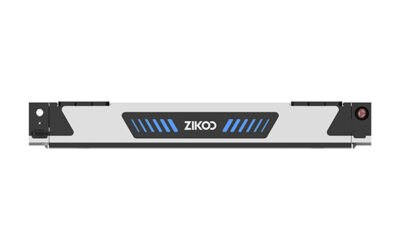
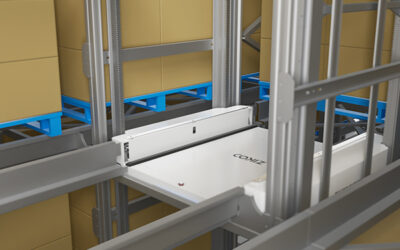
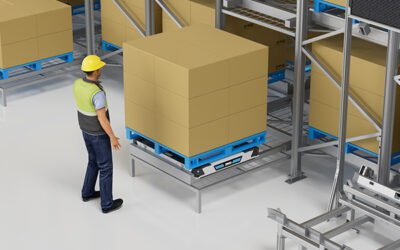
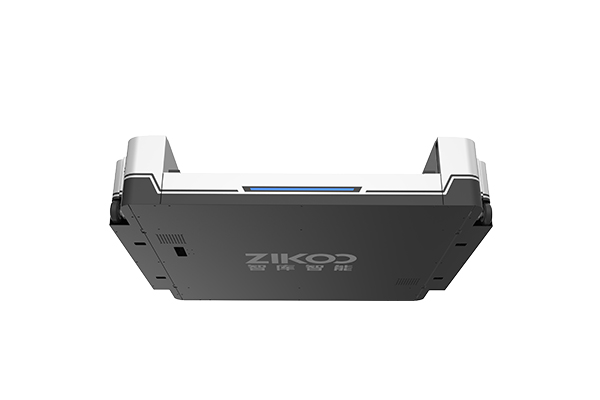
A four-way shuttle system uses self-guided robotic carriers that travel along rails built into the rack structure. These shuttles can move forward, backward, laterally, and even change direction within the lane, giving them the ability to access any pallet position directly without returning to a main aisle. The R-bot Four-way Shuttle from Zikoo Smart Technology, for example, has a body thickness of only 125 mm and supports loads up to 1,500 kg, with models available for pallet sizes ranging from 800 mm to 1,400 mm. Its lithium battery provides eight hours of continuous operation and can charge automatically through a low-temperature charging port in cold storage environments down to -25°C.
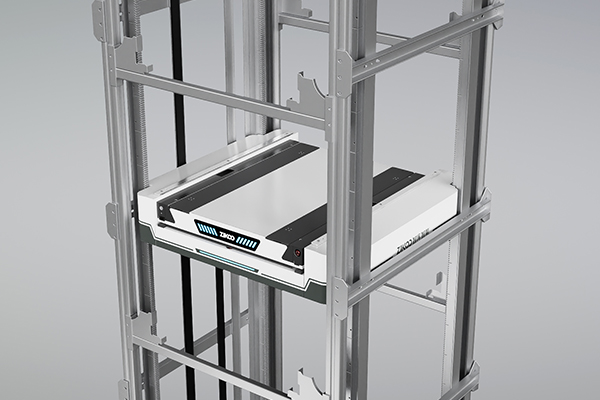
Because each four-way shuttle is independent, the system can be scaled simply by adding more shuttles. If throughput demand increases, additional units can be deployed without modifying the rack infrastructure. The shuttles communicate through a central warehouse control system (WCS) and coordinate with vertical lifts, such as Zikoo’s H-bot High-Speed Elevators, to form a three-dimensional handling network. This self-coordinated architecture supports mixed-SKU storage and dynamic slotting, making it effective for e-commerce and multi-product manufacturing environments.
Mother-Child Shuttle System Architecture
A mother-child shuttle system separates the pallet handling task into two device types. The mother shuttle operates as a rail-guided vehicle that moves along a main aisle, picking up and delivering smaller child shuttles to individual storage lanes. The child shuttle then enters the rack lane to deposit or retrieve a pallet, relying on the mother shuttle to reposition it to the next row or lane. This architecture reduces the number of intelligent shuttles required because child shuttles are relatively simple devices with limited onboard control.
This design works well in deep-lane, single-SKU bulk storage where pallets of the same product are stored multiple positions deep and selected in first-in-first-out sequence. Each lane typically holds only one type of product, and the child shuttle retrieves pallets in fixed order. However, when multiple SKUs must be stored in the same lane, the mother shuttle must reposition child shuttles more frequently, and cycle times increase. The mother shuttle becomes a single point of coordination, so its failure can disrupt access to a group of lanes.
Performance Comparison: Speed, Throughput, and Storage Density
The throughput capability of each system depends on shuttle speed, the number of active shuttles, and the coordination logic. The R-bot four-way shuttle travels at 1.6 m/s unloaded and 1.2 m/s loaded, with positioning accuracy of ±2 mm. Mother-child systems typically operate with a mother shuttle speed around 1.2 m/s and child shuttle speeds below 0.8 m/s due to the need for docking maneuvers. A four-way shuttle can complete a single-deep storage cycle in approximately 30 to 45 seconds, while a mother-child system for deep-lane access may require 60 to 90 seconds, depending on the lane depth and the child shuttle’s travel distance.
| 파라미터 | Four-Way Shuttle (Zikoo R-bot Standard) | Typical Mother-Child System |
|---|---|---|
| Shuttle speed (empty/loaded) | 1.6 m/s / 1.2 m/s | 1.2 m/s / 0.8 m/s |
| Load capacity | 1200–1500 kg | 1000–1200 kg |
| Body height | 125 mm | 200–300 mm |
| Number of active shuttles | Configurable, scalable up to dozens | Typically one mother shuttle per aisle |
| Lane access | Direct from any lane | Mother shuttle must reposition child shuttle |
| Suitable lane depth | Up to 10 pallets deep | Up to 15–20 pallets deep |
| Storage density | 80–95% utilization | 90–98% in deep-lane FIFO configurations |
Storage density is higher in mother-child systems when configured for deep-lane FIFO because the rack can be built with very deep lanes, and only the child shuttle enters the lane. Four-way shuttle systems achieve high density too, but the rack depth is limited by the shuttle’s turning radius and the need for cross-aisle movement. However, the four-way shuttle’s dynamic slotting ability allows more efficient use of available positions in mixed-SKU environments—something a fixed deep-lane mother-child layout cannot replicate.
Cost and Operational Considerations
Upfront equipment cost favors mother-child systems for simple, high-density bulk storage with uniform products. A single mother shuttle and several child shuttles cost less than an equivalent fleet of four-way shuttles. But the operational cost difference often reverses over a three-to-five-year period. Four-way shuttles require less lane restructuring if the product mix changes, and they can be serviced individually without taking down a whole aisle. In cold storage projects I have worked on, the ability of four-way shuttles to operate continuously at -25°C without performance degradation avoided the extra expense of heating buffer zones required for some mother-child shuttle electronics.
If your program involves mixed pallet sizes or temperature-controlled storage, verifying shuttle compatibility early prevents costly redesign. Share your pallet specifications at [email protected] for a quick part number check.
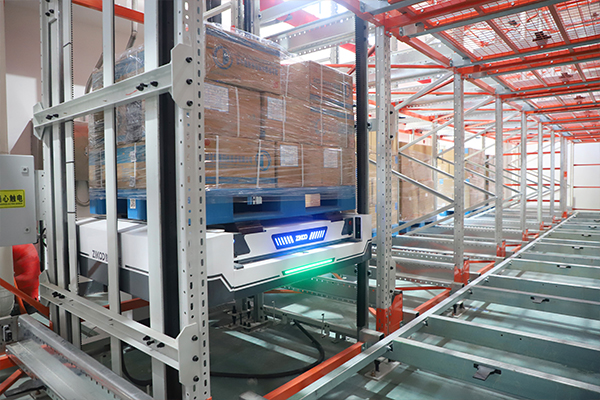
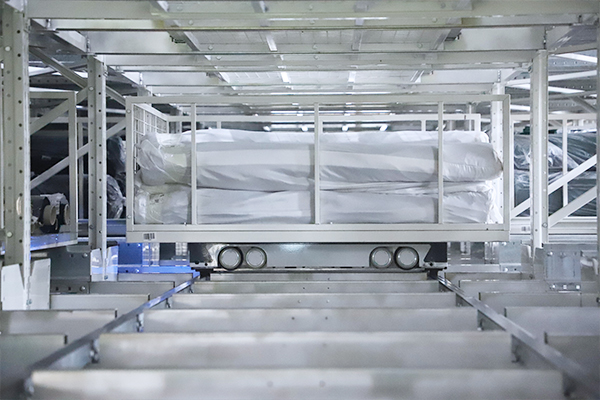
Maintenance of a four-way shuttle fleet is modular: each shuttle can be removed and repaired independently, while the remaining shuttles continue operation at slightly reduced throughput. In mother-child systems, a mother shuttle failure can halt all pallet movement in its assigned aisles until repaired. Additionally, the child shuttle mechanisms are simpler and cheaper to replace, but the cost of downtime can outweigh parts savings in high-throughput operations.
Getting Started with the Right Shuttle System
Selecting the correct shuttle architecture hinges on three factors: product variety, throughput requirements, and future adaptability. For warehouses with fewer than 200 SKUs, deep-lane storage, and FIFO inventory rotation, a mother-child system can deliver long-term stable results with lower capital expenditure. For operations handling 500 or more SKUs, requiring frequent replenishment and outbound sequencing, a four-way shuttle system with dynamic slotting and configurable shuttle count will outperform.
Before committing to a design, run simulation scenarios with your actual order history and inventory profile. I have seen several projects where a low-cost mother-child design failed to meet peak throughput after only 18 months of operation because product assortment increased beyond the original plan. If your operation expects SKU growth, seasonal peaks, or multi-temperature storage requirements, a four-way shuttle architecture gives you the headroom to adapt without restructuring the rack layout.
If your project involves mixed pallet sizes, cold chain requirements, or needs to integrate with an existing WMS through WCS interfaces, I recommend sharing your facility layout and product throughput data with an automation partner early in the design phase. At Zikoo Smart Technology, we provide simulation-based system sizing at no initial cost to help you avoid overinvestment or underperformance. Send your part numbers and daily throughput targets to [email protected] or call (+86)-19941778955 for a detailed system analysis.
cURL Too many subrequests by single Worker invocation. To configure this limit, refer to https://developers.cloudflare.com/workers/wrangler/configuration/#limits
cURL Too many subrequests by single Worker invocation. To configure this limit, refer to https://developers.cloudflare.com/workers/wrangler/configuration/#limits
cURL Too many subrequests by single Worker invocation. To configure this limit, refer to https://developers.cloudflare.com/workers/wrangler/configuration/#limits
cURL Too many subrequests by single Worker invocation. To configure this limit, refer to https://developers.cloudflare.com/workers/wrangler/configuration/#limits
cURL Too many subrequests by single Worker invocation. To configure this limit, refer to https://developers.cloudflare.com/workers/wrangler/configuration/#limits
cURL Too many subrequests by single Worker invocation. To configure this limit, refer to https://developers.cloudflare.com/workers/wrangler/configuration/#limits
cURL Too many subrequests by single Worker invocation. To configure this limit, refer to https://developers.cloudflare.com/workers/wrangler/configuration/#limits
cURL Too many subrequests by single Worker invocation. To configure this limit, refer to https://developers.cloudflare.com/workers/wrangler/configuration/#limits
cURL Too many subrequests by single Worker invocation. To configure this limit, refer to https://developers.cloudflare.com/workers/wrangler/configuration/#limits
cURL Too many subrequests by single Worker invocation. To configure this limit, refer to https://developers.cloudflare.com/workers/wrangler/configuration/#limits
cURL Too many subrequests by single Worker invocation. To configure this limit, refer to https://developers.cloudflare.com/workers/wrangler/configuration/#limits
관심이 있다면, 관련 기사들을 확인하세요:
스마트 창고 보관의 시작: 비용 효율적인 4방향 셔틀 시스템
육방 셔틀은 진정한 3D 지능형 창고 시대를 열다
6방향 셔틀: 스마트 창고 관리의 미래를 개척하다
Six-Way Shuttle System은 고밀도 스토리지 자동화에서 기계에서 로봇으로의 전환을 주도합니다.
PTP 지능형 창고 플랫폼: 유연하고 스마트한 물류 생태계 구축