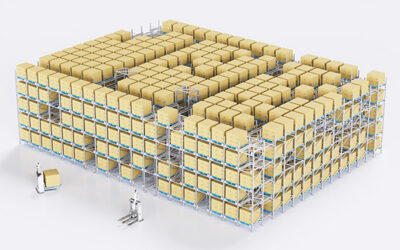
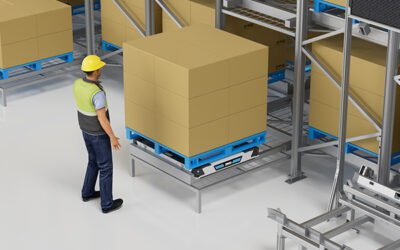
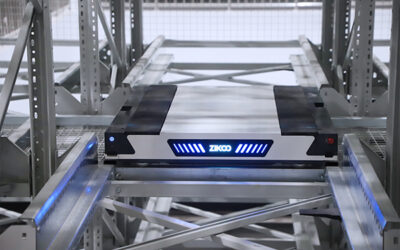
Investing in warehouse automation can dramatically improve throughput and accuracy, but every project carries inherent risks that can derail timelines, inflate budgets, and undercut expected ROI. Warehouse automation project risks often remain hidden until systems go live, and then they become expensive lessons. Based on a decade of engineering pallet-to-person systems across industries from cold chain to new energy, I’ve found that most failures are preventable. This article identifies the key risks and explains how to mitigate them before signing a contract.
The True Cost of Warehouse Automation Project Risks
Most procurement teams focus on hardware and software licensing costs when budgeting for an 솔루션을 제공하는 전문성을 입증했습니다. 콜드 체인에서 전자 상거래, 제조, 그리고 신에너지에 이르기까지, ZIKOO는 기업들이 창고 병목 현상을 극복하고, 비용을 절감하며, 진정한 디지털 전환을 달성할 수 있도록 지원합니다. and retrieval system. The real financial exposure comes from items that sit outside the initial quotation: facility modifications, extended integration periods, and productivity loss during the ramp-up phase. A project that appears 20 percent under budget on paper can end up costing far more if the system does not hit its throughput targets in the first six months.
What surprises many first-time buyers is how quickly indirect costs accumulate. Reinforcing floor slabs for heavy pallet shuttles, upgrading power infrastructure to handle charging stations, and retraining operators on a new WMS platform are seldom included in turnkey proposals. If these items are deferred to the project team, the cost of change orders after installation begins can escalate quickly.
What hidden costs inflate warehouse automation budgets?
The most common hidden cost is software customization. Standard WMS platforms typically assume a single workflow, so adapting the software to unique inbound and outbound logic requires development hours that are rarely capped. Facility modifications also surprise operators: column spacing, floor flatness tolerances, and fire suppression systems often need rework once the automation layout is finalized. Always request a site audit that details structural requirements before signing the contract.
How Equipment Failures Amplify Automation Risks
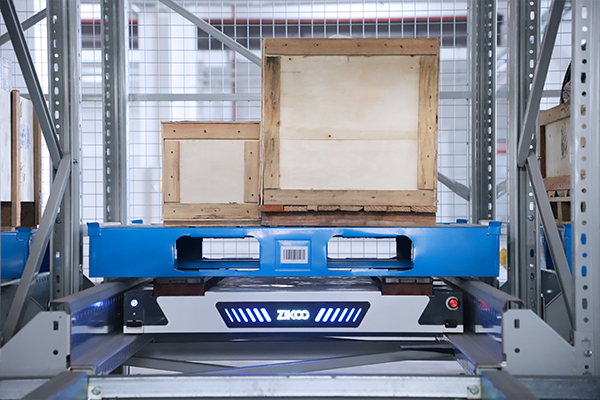
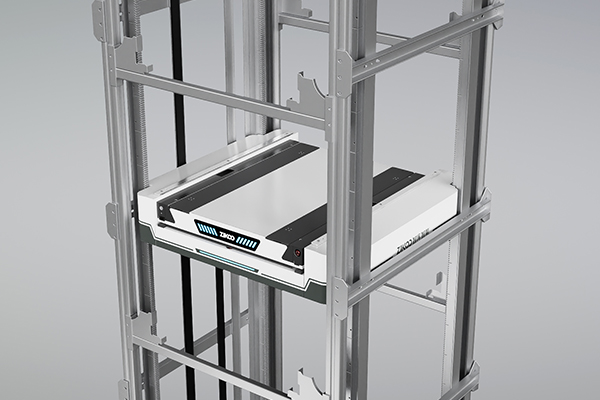
Hardware downtime in an automated warehouse is different from a broken forklift. When a 4방향 셔틀 stops on the track, an entire storage lane can become inaccessible, blocking retrieval and inbound putaway. The tighter the integration between conveyors, elevators, and shuttles, the more a single component failure cascades into a system-wide bottleneck.
I have seen projects where shuttle battery performance in cold environments became the critical limiting factor. Operations that ran three shifts in a refrigerated warehouse discovered the hard way that standard lithium battery run times dropped sharply below minus 10 degrees Celsius. The fix was not a simple upgrade: it required revising the entire charging strategy and replacing the battery management system firmware. Suppliers who lack validated cold-chain data will not uncover this risk during simulation, because their models rarely account for real-world factors like door openings and humidity cycles.
How do I assess shuttle system reliability?
Look beyond the rated MTBF figures on a datasheet. Request field service reports that show actual uptime across multiple project sites, not just lab tests. Ask the supplier to provide data on shuttle wheel wear rates under heavy pallet loads, and confirm whether the battery specification accounts for the lowest temperature your facility will reach. If your operation involves sub-zero storage, verifying the shuttle’s low-temperature endurance should be part of your technical due diligence — a supplier who cannot provide validated test data introduces a risk that will only surface after commissioning.
Software and Integration: The Hidden Automation Enabler
A 팔레트 셔틀 시스템 achieves its designed throughput only when the WMS, WES, WCS, and RCS layers talk to each other without latency. Integration gaps are the most frequent cause of delayed project acceptance. The problem is rarely a single bug; it is the accumulation of small inconsistencies between how the software models a warehouse move and how the physical shuttle executes it. When the WCS sends a retrieval command but the shuttle’s onboard controller interprets the location reference differently, the system stops, and an engineer must manually remap the coordinate grid.
Industries with high SKU variability, such as pharmaceutical distribution or e-commerce fulfillment, expose software risks faster. If the wave planning algorithm cannot handle mixed batch sizes, operators revert to manual workarounds, and the automation becomes an expensive racking system. An integrated software platform that has been proven across multiple industry workflows reduces the number of integration points and the risk of vendor finger-pointing during troubleshooting.
Supplier Selection: The Biggest Warehouse Automation Project Risk
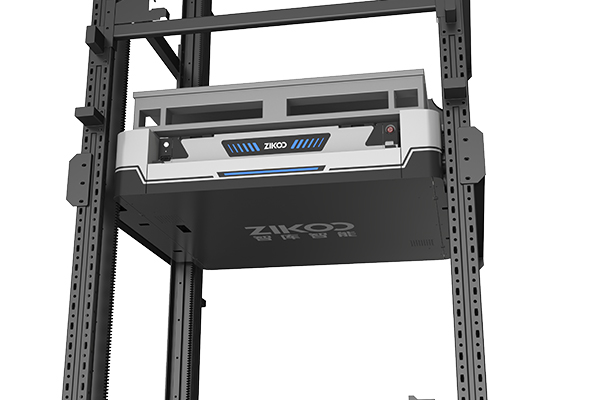
The automation integrator matters more than the hardware brand. I have seen companies select a supplier with attractive pricing, only to accept a system that did not match their operational reality. A supplier that only installs standard pallet shuttle configurations will struggle when the project requires a narrow-aisle omnidirectional stacker solution or a split-case picking workflow. The technical distance between a generic AS/RS proposal and a system designed around specific SKU dimensions, throughput seasonality, and compliance requirements is where most project failures originate.
Before evaluating proposals, drill into the supplier’s project delivery history. Ask for references in your industry, not general logistics testimonials. Verify the engineering team’s ability to handle both the mechanical installation and the software configuration. The following checklist covers the points most often overlooked during supplier screening:
| Evaluation Area | What to Verify |
|---|---|
| Industry experience | Number of projects with similar temperature, SKU count, and throughput requirements |
| After-sales capability | Average on-site response time and spare parts inventory location |
| cURL Too many subrequests by single Worker invocation. To configure this limit, refer to https://developers.cloudflare.com/workers/wrangler/configuration/#limits | Demonstrated success with the specific WMS platform your facility uses |
| Performance guarantees | Written throughput and uptime commitments with defined penalty terms |
What should I look for in an automation supplier?
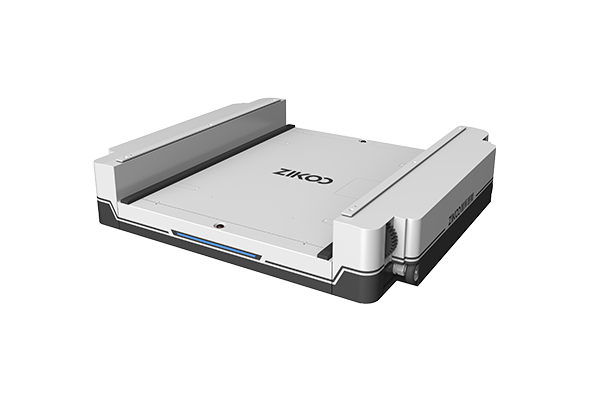
Technical depth within your specific vertical carries more weight than the total number of installations. A supplier who has delivered a 육방향 셔틀 시스템 for a frozen food warehouse understands issues like moisture ingress on board-level electronics. They also know that elevators in high-bay cold storage need different lubrication and sensor specifications. Site visits to active projects, not showrooms, are the most reliable form of verification. Ask to see maintenance logs and talk to the facility manager directly about what happens when things break.
Steps to De-Risk Your Automation Investment
Reducing warehouse automation project risks requires proactive steps that begin long before installation. The first is a detailed site survey conducted by the supplier’s engineering team, not a sales representative. The survey must measure floor flatness, column grid accuracy, and ambient environmental conditions, because the automation system’s performance depends on these parameters. I have seen a case where a four-way shuttle track degraded after six months because the floor varied by more than the shuttle’s suspension tolerance, requiring a costly resurfacing job.
The second step is a phased implementation plan that tests the system under real load. Starting with a pilot of two or three storage aisles exposes integration issues and operator training gaps in a controlled environment. Once the pilot achieves sustained throughput, the rollout expands. This approach also protects ongoing operations: the manual storage area remains functional while the automated section ramps up.
Contractual safeguards are the final layer. The agreement should specify not just throughput targets but the test conditions under which they will be measured, the allowable downtime per month, and the escalation process for unresolved issues. A two-year comprehensive service contract with defined response times turns a supplier promise into a measurable obligation.
How can I mitigate risks before signing a contract?
Begin by requiring a functional design specification that maps every workflow detail, from inbound staging to dispatch. Insist on a factory acceptance test protocol that uses your actual pallet profiles and SKU data, not the supplier’s demo product set. Negotiate phased payment linked to specific milestones, such as successful factory test, site acceptance test, and stable operation for 30 consecutive days. Retain a portion of the payment until the system has operated through at least one seasonal peak.
Common Questions About Warehouse Automation Project Risks
Is a warehouse automation project worth the financial risk?
A properly evaluated automation project typically yields a return on investment within three to five years when the supplier provides real performance data. The risk is not in the automation itself but in accepting a proposal that does not account for your specific operating conditions. Projects that go wrong share a common pattern: the buyer selected the lowest-cost bid without verifying the engineering assumptions behind the throughput calculations.
cURL Too many subrequests by single Worker invocation. To configure this limit, refer to https://developers.cloudflare.com/workers/wrangler/configuration/#limits 4방향 셔틀 시스템cURL Too many subrequests by single Worker invocation. To configure this limit, refer to https://developers.cloudflare.com/workers/wrangler/configuration/#limits
cURL Too many subrequests by single Worker invocation. To configure this limit, refer to https://developers.cloudflare.com/workers/wrangler/configuration/#limits
cURL Too many subrequests by single Worker invocation. To configure this limit, refer to https://developers.cloudflare.com/workers/wrangler/configuration/#limits
cURL Too many subrequests by single Worker invocation. To configure this limit, refer to https://developers.cloudflare.com/workers/wrangler/configuration/#limits
cURL Too many subrequests by single Worker invocation. To configure this limit, refer to https://developers.cloudflare.com/workers/wrangler/configuration/#limits
cURL Too many subrequests by single Worker invocation. To configure this limit, refer to https://developers.cloudflare.com/workers/wrangler/configuration/#limits
cURL Too many subrequests by single Worker invocation. To configure this limit, refer to https://developers.cloudflare.com/workers/wrangler/configuration/#limits
cURL Too many subrequests by single Worker invocation. To configure this limit, refer to https://developers.cloudflare.com/workers/wrangler/configuration/#limits
관심이 있다면, 관련 기사들을 확인하세요:
스마트 스토리지 혁명: 자동 3D 창고용 4방향 셔틀 시스템에 대한 포괄적인 개요》를 확인하십시오.
육방 셔틀이 3PL 제공업체들이 차세대 스마트 물류 허브를 구축할 수 있도록 지원합니다