When procurement teams evaluate automated warehouse systems, maintenance worries often stay in the background. Automated warehouse maintenance does need attention, but the idea that robotic systems are fragile or require constant specialist intervention is outdated. From my experience, the maintainability of a pallet-to-person system depends far more on the electromechanical design and the software layer than on the simple fact that it contains robots. A well-designed 4방향 셔틀 시스템 can be more predictable to maintain than a conventional forklift fleet, if you select the right platform.
What Does Automated Warehouse Maintenance Actually Involve?
Automated warehouse maintenance spans three domains: mechanical, electrical, and software. Mechanical upkeep covers physical wear points such as shuttle wheels, guide rails, lifting mechanisms, and racking alignment. Electrical maintenance focuses on sensors, motors, battery systems, and control cabinets. Software maintenance includes firmware updates, WMS/WCS parameter tuning, and cybersecurity patches. What surprises many first-time buyers is that software and sensor calibration often demand more scheduled attention than the mechanical components, which in a well-designed system are built for longevity.
A typical preventive maintenance schedule for a 팔레트 셔틀 시스템 looks like this:
| Maintenance Category | Task Example | 빈도 |
|---|---|---|
| Mechanical | Inspect shuttle wheels and guide rails for wear | 월간 |
| Electrical | Check battery voltage and charging contacts | Weekly |
| Sensor Systems | Verify positioning accuracy and sensor alignment | 분기별 |
| 소프트웨어 | Apply firmware updates and system health checks | As released |
| Safety Systems | Test emergency stop and obstacle detection | 월간 |
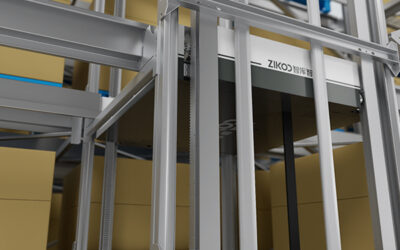
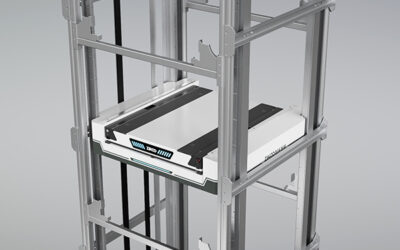
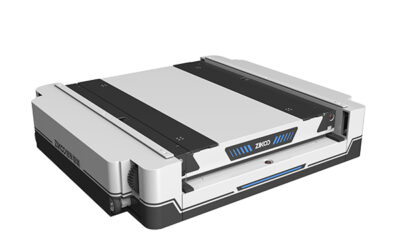
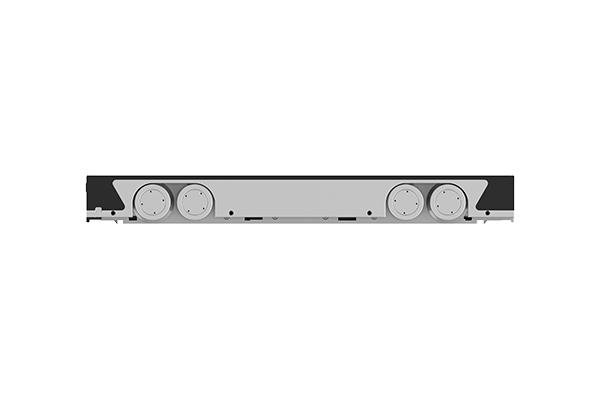
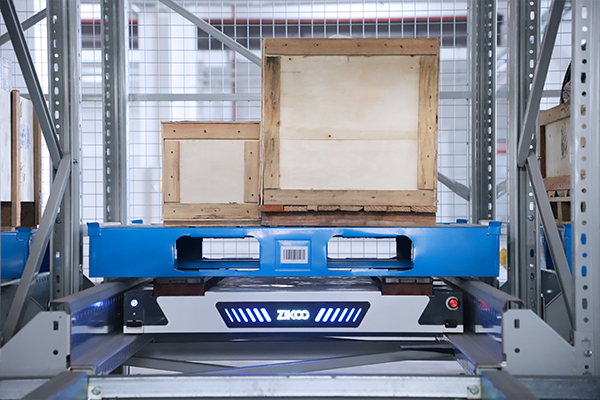
These intervals assume a standard ambient environment. For harsh environments the frequency may double. The key takeaway is that most tasks are inspections and adjustments, not part replacements, if the system is designed with durable components. For example, our R-bot 4방향 셔틀 uses a body thickness of only 125mm and moves on wear-resistant materials, which reduces uneven wear on guide rails and keeps mechanical maintenance minimal. The more critical factor is the battery system: lithium batteries need periodic capacity checks, and charging contacts must remain clean to avoid voltage drop. With the right battery management system, these checks become routine alerts rather than surprises.
How Four-Way Shuttle Design Simplifies Maintenance
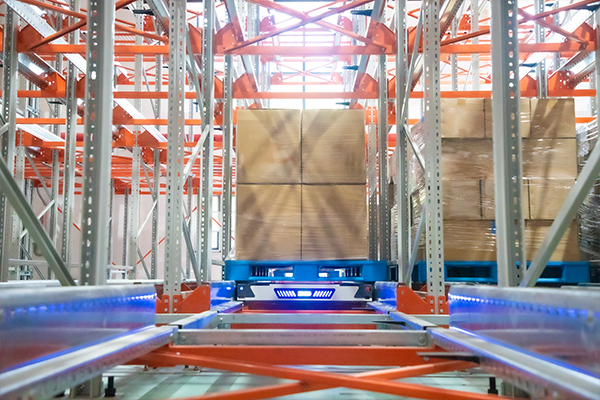
Four-way shuttle systems have inherent maintainability advantages over traditional stacker cranes. A stacker crane is a monolithic machine where a single failure in the lifting mechanism can halt an entire aisle. A four-way shuttle fleet distributes the load across multiple independent robots, so one robot’s issue does not stop operations. More importantly, the modular architecture of shuttles like our R-bot makes component-level servicing straightforward.
The R-bot, for example, has a modular battery pack that can be swapped in minutes without specialist tools. With an 8-hour continuous runtime on a full charge, most facilities can schedule battery swaps during shift changes, avoiding operational disruption. The shuttle’s positioning system, which uses high-precision encoders, requires only quarterly calibration checks under normal conditions, and the ±1 mm accuracy of the vertical shuttle (H-bot) reduces the risk of pallet misalignment that would otherwise accelerate rack wear.
Software plays an underappreciated role in maintenance reduction. The PTP 스마트 웨어하우스 소프트웨어 (WMS/WES/WCS/RCS) continuously monitors motor currents, battery health, and cycle counts, flagging anomalies before a fault occurs. In one project, the software detected a gradual increase in motor current on an R-bot weeks before a bearing would have failed, allowing us to schedule a replacement during a planned downtime window. This shift from reactive to predictive maintenance is the real advantage.
If your operation involves cold storage or high-throughput manufacturing, the environmental stress on batteries and sensors can differ significantly from standard ambient warehouses. It is worth confirming that the shuttle’s environmental ratings and battery life match your specific throughput profile before finalizing the BOM. Reach out to our team at [email protected] for a configuration review.
What Are the Real Maintenance Challenges in Harsh Environments?
Not all warehouses are climate-controlled. Cold chain, new energy, and chemical storage introduce maintenance requirements that go beyond standard conditioned warehouses. In sub-zero cold storage, for instance, lithium batteries deliver less capacity and charging must occur in a warmer environment to prevent plating. Our R-bot cold chain solution addresses this with a -25°C rated lithium battery and a low-temperature charging port design that allows the robot to charge automatically without leaving the cold zone. The special PCBA coating on the electronics protects against condensation and high humidity, which would otherwise cause corrosion on connectors and sensor failures.
In new energy applications, the constraints are different but equally demanding. Battery manufacturing or photovoltaic component warehouses often require cleanroom-level contamination control. The shuttle design must avoid materials that shed particles or react with the environment. For such projects, we use stainless steel frames with blackening treatment and all-rubber buffer wheels to eliminate metal contamination risks. These choices directly affect maintenance: non-corrosive materials mean fewer component replacements, and sealed electronics reduce the need for cleaning. However, maintenance staff still need to monitor air filtration systems and ensure that the enclosure integrity is maintained, adding a layer of facility-level upkeep that is often overlooked in the planning phase.
What Supplier Support Makes Automated Warehouse Maintenance Easier?
A maintainable system is only half the equation; the supplier’s after-sales infrastructure determines how quickly issues are resolved. When evaluating suppliers, look beyond the initial warranty. Ask about remote diagnostic capability, spare parts availability, and technical training programs for your on-site staff.
Our global project delivery model includes a remote monitoring portal that connects to the WCS, allowing our support team to view system health in real time and often resolve software-related issues without dispatching a technician. For hardware repairs, we maintain regional spare parts hubs for common items like shuttle wheels, sensors, and battery packs, which reduces mean time to repair. In our experience, the difference between a good supplier and a great one is not the promise of zero downtime but the ability to resolve incidents within hours rather than days. This is why we include comprehensive training for the client’s maintenance team as part of every system handover, covering everything from daily inspection routines to advanced fault diagnosis.
Is Automation Maintenance Worth the Long-Term Investment?
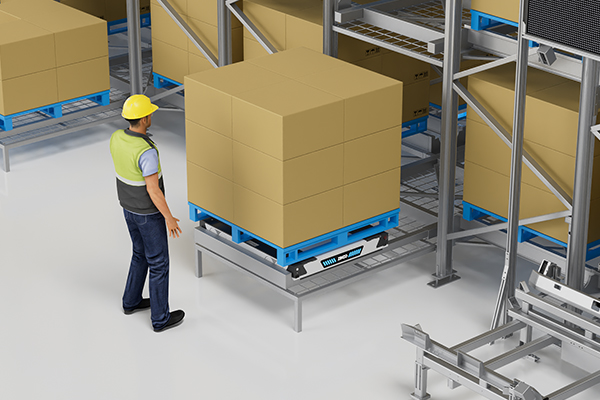
When comparing the total cost of ownership of an automated warehouse to a manual operation, maintenance is often incorrectly treated as a pure cost adder. The reality is that while automation maintenance involves predictable expenses like battery replacements and sensor recalibration, manual warehouses incur unpredictable costs from forklift accidents, product damage, and labor turnover. A four-way shuttle system, with its repetitive and controlled motion, reduces product damage and workplace injuries, which are hidden costs that offset the maintenance budget.
Over a 10-year lifecycle, a well-maintained shuttle system can deliver lower cost per pallet moved than a manual fleet, especially in high-throughput or multi-shift operations. The key is to incorporate maintenance planning from the design phase, not treat it as an afterthought. When the system architecture aligns with the operational environment and the supplier provides robust remote support, maintenance becomes a manageable operational line item rather than a source of risk.
Still concerned about the maintenance commitment for an automated warehouse? The difference between a system that drains resources and one that runs predictably often comes down to the upfront design choices and the supplier’s support model. Send your facility dimensions, throughput targets, and environmental conditions to [email protected], or call (+86)-19941778955, and we will evaluate the maintainability profile of the best-fit automation solution for your operation.
Common Questions About Automated Warehouse Maintenance
How often do automated warehouses need maintenance?
Routine inspection tasks are weekly or monthly, while major component overhauls are measured in years. The exact frequency depends on the system type, throughput intensity, and environment. A four-way shuttle fleet in a dry, ambient warehouse may need sensor calibration quarterly, while a cold storage system requires more frequent battery checks and condensation inspections. The advantage of modern platforms is that the software tracks usage cycles and prompts maintenance, so you do not rely on calendar-based schedules alone.
cURL Too many subrequests by single Worker invocation. To configure this limit, refer to https://developers.cloudflare.com/workers/wrangler/configuration/#limits
cURL Too many subrequests by single Worker invocation. To configure this limit, refer to https://developers.cloudflare.com/workers/wrangler/configuration/#limits
cURL Too many subrequests by single Worker invocation. To configure this limit, refer to https://developers.cloudflare.com/workers/wrangler/configuration/#limits
cURL Too many subrequests by single Worker invocation. To configure this limit, refer to https://developers.cloudflare.com/workers/wrangler/configuration/#limits
cURL Too many subrequests by single Worker invocation. To configure this limit, refer to https://developers.cloudflare.com/workers/wrangler/configuration/#limits
cURL Too many subrequests by single Worker invocation. To configure this limit, refer to https://developers.cloudflare.com/workers/wrangler/configuration/#limits
cURL Too many subrequests by single Worker invocation. To configure this limit, refer to https://developers.cloudflare.com/workers/wrangler/configuration/#limits
cURL Too many subrequests by single Worker invocation. To configure this limit, refer to https://developers.cloudflare.com/workers/wrangler/configuration/#limits
관심이 있다면, 관련 기사들을 확인하세요:
소프트웨어 기반 하드웨어: 육방 셔틀이 창고 효율성을 극대화하다
육방 셔틀이 밀집 저장을 가능하게 하며 공간 제한을 깨뜨리다
6방향 셔틀: 스마트 창고 관리의 미래를 개척하다
PTP 지능형 창고 플랫폼: 유연하고 스마트한 물류 생태계 구축
표준화는 글로벌 배송 역량을 강화합니다: 지쿠 로보틱스 육방 셔틀이 해외로 확장됩니다