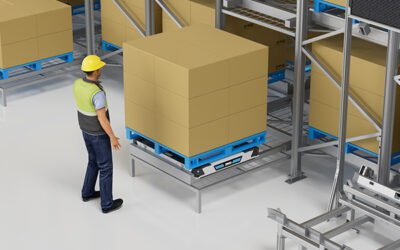
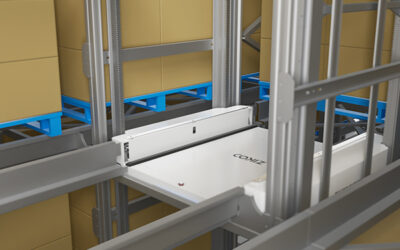
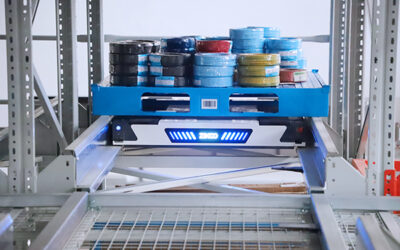
A 4방향 셔틀 시스템 gets positioned as a premium automation investment, and the upfront numbers justify that label. But the real evaluation is not about how much it costs; it is about whether the operational savings and throughput gains make the investment pay. In my ten years of deploying 팔레트 셔틀 시스템s across manufacturing, cold chain, and 3PL facilities, I have seen a properly sized 4방향 셔틀 자동 저장 및 검색 시스템 deliver a full return on investment in as little as three to five years, provided the warehouse profile matches the technology’s strengths. This article breaks down where the costs come from, how they compare to other storage methods, and when a 4방향 셔틀 system becomes the most cost‑effective path forward.
The Real Cost Drivers Behind a Four-Way Shuttle System
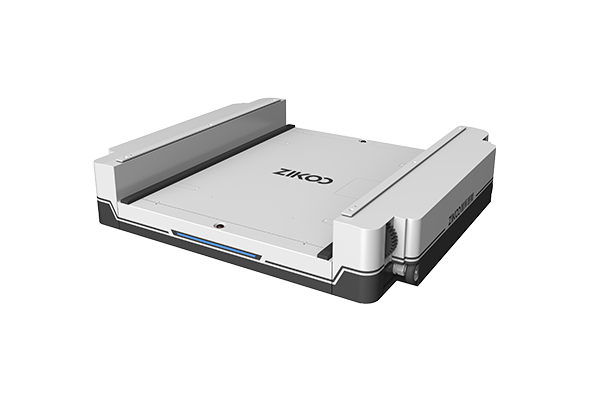
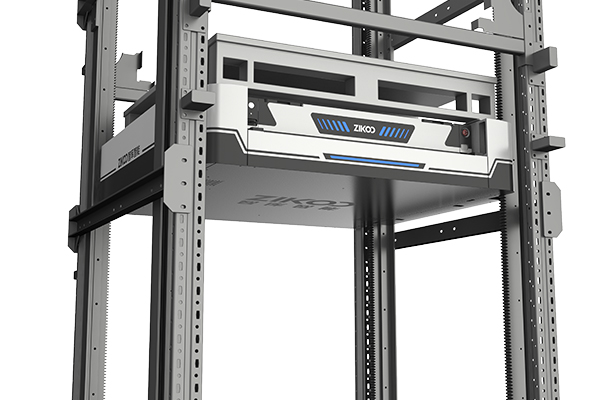
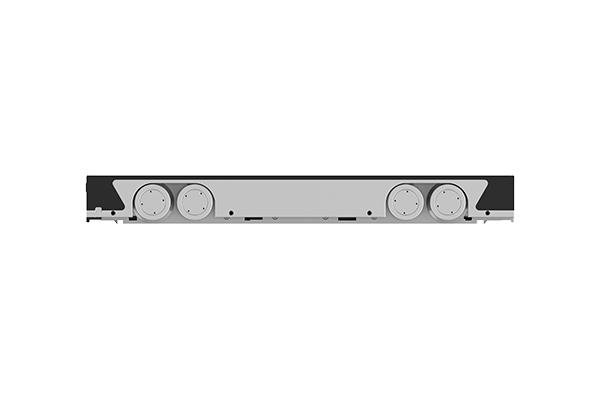
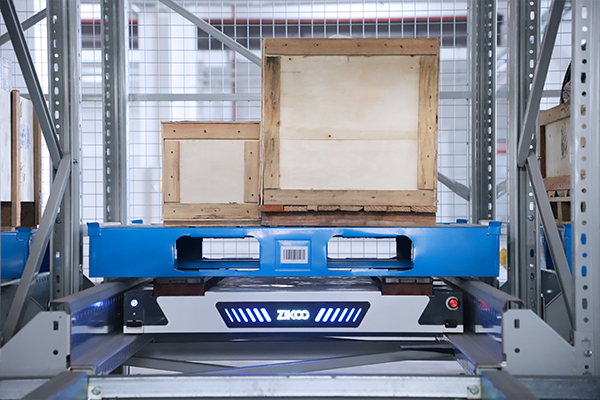
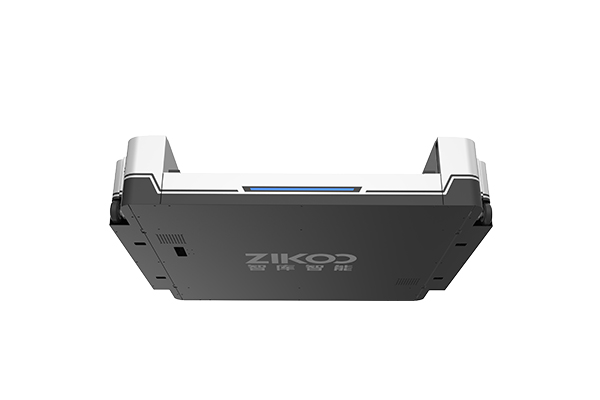
The total project cost for a 4방향 셔틀 system rarely comes down to the shuttles alone. In our R‑bot series, for instance, the shuttle bodies are thin (125 mm) and capable of handling up to 2,000 kg with lithium batteries that run 7–8 hours. That hardware is a line item, but it sits inside a much larger equation.
The largest cost driver is the steel racking structure. Four‑way shuttles operate in deep‑lane, high‑density racks that require precise engineering and solid welding. For a typical 10,000‑pallet installation, racking alone can account for 40–50% of the total capital spend. Next is the software and control layer: the warehouse control system (WCS) must manage shuttle scheduling, conflict resolution, and integration with the host WMS. If your facility needs the PTP 스마트 웨어하우스 소프트웨어 platform we use at Zikoo—covering WMS, WES, WCS, and RCS—that integration effort adds both licensing fees and customization labor. Vertical lift units (such as our H‑bot) are another piece; each H‑bot carries up to 1,800 kg and forms a six‑way shuttle network when paired with the R‑bot, but introducing elevators multiplies the cost of each storage tier.
Installation, commissioning, and safety systems follow. In practice, a greenfield four‑way shuttle system in a 30,000‑square‑meter warehouse might range from $2 million to $5 million, depending on height, throughput targets, and the number of shuttles and lifts. For existing buildings, retrofit complexity can alter the cost structure further. Understanding these drivers matters because they set the baseline for any cost‑effectiveness calculation.
Comparing Four-Way Shuttles to Stacker Cranes, Forklifts, and Manual Warehouses
Every warehouse automation comparison is useless without a shared benchmark. Here, I will use a 20,000‑pallet, 12‑meter‑high facility moving 400 pallets per day as a reference.
| Storage Method | Approx. Capital per Pallet | Labor (shifts/day) | Building Footprint Required | 유연성 |
|---|---|---|---|---|
| Manual forklift | $60–$90 | 3–4 | 높음 | Very high |
| Very‑narrow‑aisle (VNA) | $100–$140 | 2–3 | 중간 | 높음 |
| Stacker crane ASRS | $150–$220 | 0.5–1 | 낮음 | 낮음 |
| Four‑way shuttle ASRS | $180–$250 | 0.5 | Very low | 중간 |
Notice that the capital per pallet for a four‑way shuttle system is higher than for stacker cranes. The difference is that shuttles handle deep‑lane storage with far fewer aisles, so building volume shrinks dramatically. A four‑way shuttle layout can cut the required warehouse footprint by up to 50% compared to a VNA setup. In a cold storage facility, where construction costs run $3,000–$5,000 per square meter, that footprint saving alone can offset the extra equipment cost within the project’s first phase.
The labor comparison is equally stark. A 400‑pallet‑per‑day manual operation might need 10–12 forklift drivers across three shifts. A four‑way shuttle system with automated case discharge might require a single operator per shift to manage exceptions. When I review labor rates in Europe or North America—typically $40,000–$60,000 per driver per year—the shuttle system eliminates $400,000–$700,000 in annual payroll from the outset. That is the recurring advantage that makes the higher capex worth analyzing.
How Quickly Can You Recover Your Investment?
Return‑on‑investment timelines depend on three factors: labor savings, space utilization, and productivity gains from error reduction. For a mid‑size 파렛트 저장 시스템 project, I typically see simple payback in the 3–5 year range. An example from our engineering calculations: a 15,000‑pallet 고밀도 스토리지 system with 12 R‑bot shuttles, 3 H‑bot lifts, and full software suite had an all‑in cost of $3.2 million. The client replaced 16 forklift operators (annual loaded cost $720,000), reduced inventory damage by $60,000 per year, and gained 25% more usable pallet positions in the same building. The net annual savings of roughly $1.1 million meant a three‑year payback, after which the system effectively generates free capacity.
Not every project hits that speed. Low‑throughput warehouses with fewer than 100 pallets per day may stretch the payback to six or seven years. That does not mean the system fails the cost test; it means the primary value shifts from labor to space efficiency or error elimination. If your operation has variable throughput and complex SKU profiles, it is worth confirming the software integration effort before finalizing your BOM—reach out at info@zikoo‑int.com.
Hidden Expenses and Long‑Term Savings You Need to Know
Beyond the initial price tag, four‑way shuttle systems carry costs that rarely appear on a proposal’s first page. The most common ones I have dealt with are battery replacement cycles, software updates, and annual maintenance contracts. On our R‑bot shuttles, lithium batteries last roughly 2,000–3,000 cycles, and a replacement set costs around $2,000–$3,000 per shuttle. Over ten years, a fleet of 20 shuttles sees a six‑figure battery line that must be budgeted.
On the savings side, the long‑term figures are more interesting. Shuttle systems achieve internal picking error rates below 0.1%, whereas manual operations often run 1–2% error. For a facility shipping 500 order lines per day, reducing errors by 1 percentage point avoids over 1,800 mis‑picks per year. The cost of a mis‑pick—return shipping, rework, customer penalties—easily exceeds $25 per incident, yielding another $45,000+ annually. Energy consumption also favors shuttles: a single R‑bot draws about 1.2 kW during operation, and the rack structure needs no lighting or heating beyond ambient. In a cold store where blast freezers burn enormous energy, the thermal efficiency of dense, unlit racking is a quiet, permanent saving.
Is Your Operation Ready for a Four-Way Shuttle?
cURL Too many subrequests by single Worker invocation. To configure this limit, refer to https://developers.cloudflare.com/workers/wrangler/configuration/#limits
cURL Too many subrequests by single Worker invocation. To configure this limit, refer to https://developers.cloudflare.com/workers/wrangler/configuration/#limits
cURL Too many subrequests by single Worker invocation. To configure this limit, refer to https://developers.cloudflare.com/workers/wrangler/configuration/#limits
cURL Too many subrequests by single Worker invocation. To configure this limit, refer to https://developers.cloudflare.com/workers/wrangler/configuration/#limits
cURL Too many subrequests by single Worker invocation. To configure this limit, refer to https://developers.cloudflare.com/workers/wrangler/configuration/#limits
cURL Too many subrequests by single Worker invocation. To configure this limit, refer to https://developers.cloudflare.com/workers/wrangler/configuration/#limits
cURL Too many subrequests by single Worker invocation. To configure this limit, refer to https://developers.cloudflare.com/workers/wrangler/configuration/#limits
cURL Too many subrequests by single Worker invocation. To configure this limit, refer to https://developers.cloudflare.com/workers/wrangler/configuration/#limits
cURL Too many subrequests by single Worker invocation. To configure this limit, refer to https://developers.cloudflare.com/workers/wrangler/configuration/#limits
관심이 있다면, 관련 기사들을 확인하세요:
육방 셔틀이 창고 업그레이드를 주도하며 지능형 자동 3D 창고를 구축하다
멀티 시나리오 스마트 적응: 지쿠의 6방향 셔틀이 창고 디지털 전환을 주도합니다
6방향 셔틀: 스마트 창고 관리의 미래를 개척하다
표준화는 글로벌 배송 역량을 강화합니다: 지쿠 로보틱스 육방 셔틀이 해외로 확장됩니다
육방 셔틀이 3PL 제공업체들이 차세대 스마트 물류 허브를 구축할 수 있도록 지원합니다