4방향 셔틀 시스템 reliability depends on engineering design, environmental adaptation, and supplier support — requiring buyers to evaluate concrete data and test scenarios, not just marketing claims. When a warehouse operation depends on automated pallet handling, every hour of unplanned downtime translates directly into lost throughput and missed order windows. I’ve worked on system designs across power, cold chain, manufacturing, and 3PL projects, and the reliability question never comes down to a single number. It is a function of how the shuttle is built, how well it matches the operating environment, and what happens when something inevitably goes wrong. The following is an engineering perspective on what makes these systems dependable and what procurement teams should verify before committing to a supplier.
무엇이 만들어내는가 네 방향 셔틀 System Reliable
Reliability in pallet shuttle automation is not an abstract promise; it is the product of specific mechanical, electrical, and software design decisions. A four-way shuttle travels on rails within racking, changing direction across aisles and lanes, so its reliability is governed by motion control precision, structural rigidity, power system stability, and fail-safe logic. In practice, this means consistent positioning accuracy under varying load conditions, predictable battery performance across shift durations, and the ability to recover from communication interruptions without manual intervention.
The most common failure modes I see in early deployments are not catastrophic mechanical breakdowns. They are incremental: a slight drift in positioning that triggers an error stop, a battery that drops below threshold sooner than expected, or a sensor misread that halts a lane until a tech resets it. A reliable system does not eliminate these events entirely — it handles them autonomously and keeps the warehouse flowing. This is why shuttle reliability assessments should start with recovery mechanisms and fault tolerance, not only MTBF figures.
Design Factors That Determine Shuttle Reliability
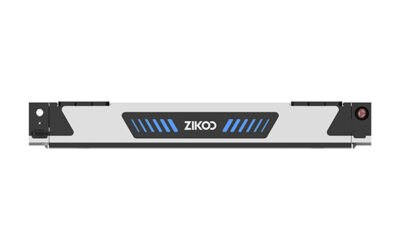
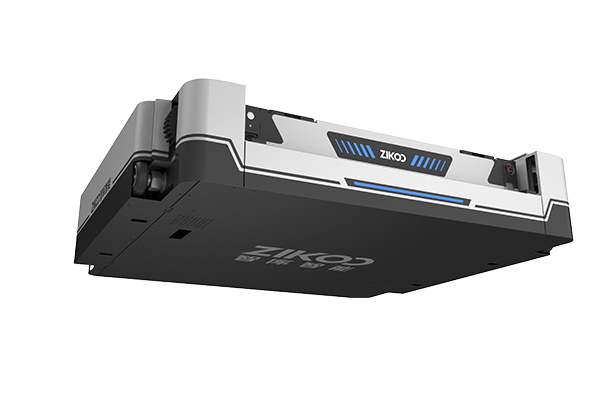
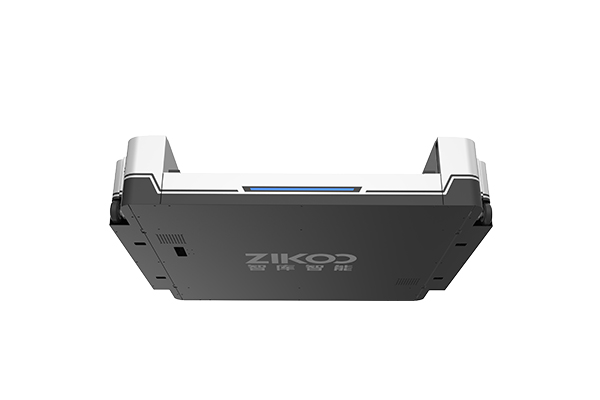
The shuttle’s physical architecture sets the foundation. A slim body design, like the 125 mm profile on Zikoo’s R-bot four-way shuttle, reduces the bending moment on the chassis and allows more compact rack integration, which in turn lowers the stress on guide rails and wheels over time. The load capacity matters, but more important is how the shuttle handles loads at speed. For example, the R-bot models carry up to 1.5 tons and travel at 1.2 m/s loaded, yet the positioning accuracy stays within ±1 mm when paired with vertical lifts. That consistency comes from closed-loop motor control and laser SLAM navigation, not brute force.
Battery selection directly impacts uptime. In ambient warehouses, lithium batteries can sustain 8 hours of continuous operation on a full charge. In cold storage environments set to -25°C, a standard lithium battery would fail quickly, so a dedicated low-temperature battery with special PCBA coating and insulated charging contacts becomes necessary. I’ve specified this exact cold chain configuration multiple times, and the difference in cycle stability between a generic battery and one designed for deep-freeze is the difference between a shuttle that runs a full shift and one that fails at hour three.
On the control side, the shuttle’s onboard controller communicates with the warehouse execution system to optimize path planning and avoid collisions. A reliable system does not rely on a single central server for every decision; local edge processing allows the shuttle to continue operating safely during brief network interruptions. The software stack — from WCS to RCS — must handle real-time task reallocation so that if one shuttle faults, others pick up its tasks without human rescheduling. This is the kind of system-level resilience that separates lab demonstrations from production warehouses.
Performance in Different Operating Environments
Reliability is not static. A four-way shuttle system that performs flawlessly in a dry, ambient warehouse may degrade rapidly in a high-humidity cold store or a dusty manufacturing floor. I’ve observed that the primary environmental stressors are temperature extremes, humidity, and airborne particulates. For cold storage, the challenges extend beyond the battery: condensation forms on sensors and optical lenses when shuttles move between freeze zones and ambient loading areas, potentially causing misreads. The Zikoo cold chain solution addresses this with sealed connectors and conformal coating on PCBs, which reduces oxidation and short-circuit risks. In real projects, this meant the difference between daily sensor cleaning and multi-day uninterrupted runs.
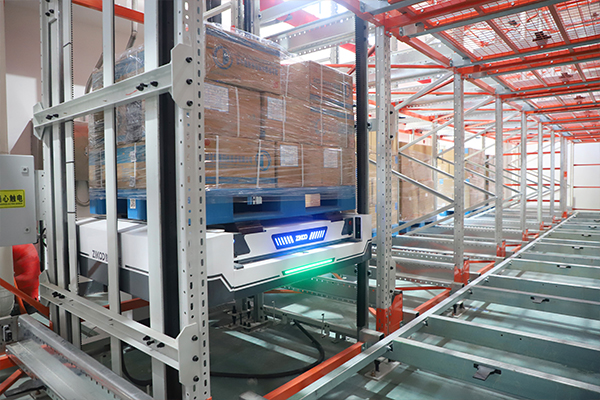
High-throughput operations introduce different reliability concerns — mainly thermal buildup in motors and wear on drive wheels. When a shuttle makes hundreds of cycles per day, the wheel material and bearing quality become critical. We’ve tested polyurethane compounds that resist deformation under sustained high-speed operation, and combined with automated lubrication schedules, they extended service intervals by roughly 30% in high-cycle facilities. For procurement teams, these are the kind of material specifications to ask about, not just the headline cycle time.
If your facility requires both ambient and cold storage zones, or handles corrosive materials, the shuttle’s material composition becomes a reliability question. For example, in new energy battery material warehouses, avoiding metal contamination is non-negotiable. Zikoo’s new energy custom solution uses stainless steel frames with blackening treatment and all-rubber buffer wheels to eliminate metal contact. This isn’t a marketing feature — it is a contamination control requirement that directly impacts production yield. When evaluating a shuttle supplier, having these domain-specific adaptations indicates a mature engineering team, not a one-size-fits-all product.
How to Evaluate a Supplier’s Reliability Claims
Manufacturers quote uptime percentages and MTBF, but those numbers are meaningless without context. I always advise buyers to ask three things: the test environment used to generate those figures, the failure definition (does a 2-second error stop count as a failure?), and the sample size. A supplier that has run 20 shuttles for 10,000 hours in a controlled lab might report 99.5% uptime; that same model in a real warehouse with 50 shuttles and variable pallet quality might drop to 98% or lower.
Request a factory acceptance test that simulates your actual load and cycle profile, not a generic demo. Insist on seeing the event log export format — this tells you how transparent the system is about its own errors. A reliable partner will have no issue sharing these logs. At Zikoo, we provide remote monitoring dashboards that show per-shuttle status, error counts, and battery health trends, so operations teams can spot degradation before it causes downtime. If a potential supplier seems reluctant to share granular performance data, that is a red flag that their reliability claims may be based on assumptions rather than evidence.
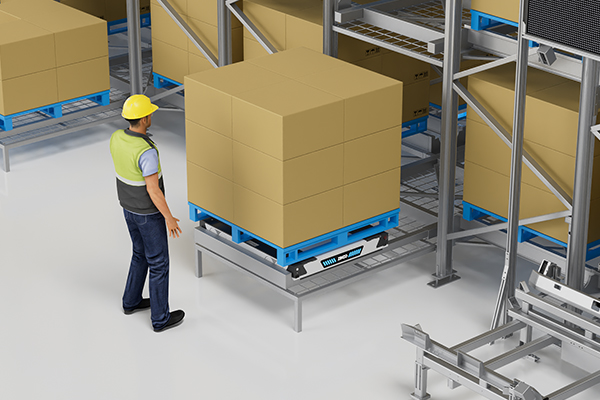
Also, look at the spare parts strategy. A shuttle with a single-sourced custom motor will have longer lead times than one using standardized, locally serviceable components. The R-bot’s modular design means that drive wheels, sensors, and batteries can be swapped in under 30 minutes by on-site technicians with minimal training. That kind of maintainability is a reliability multiplier, because no system will run forever without intervention — the question is how fast it recovers.
Building Long-Term Reliability into Your Operation
Even the best-engineered shuttle will degrade without a structured maintenance plan. Preventive maintenance should be data-driven, not calendar-based. Using the same event logs I mentioned, maintenance teams can track each shuttle’s actual usage hours, motor current draws, and communication error rates to schedule service only when needed. This reduces unnecessary teardown and catches real issues early.
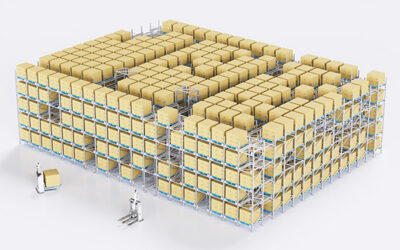
Redundancy at the fleet level is another reliability lever. Since four-way shuttles operate in a shared racking system, if one shuttle goes offline, the remaining fleet can continue handling loads at reduced throughput. The WCS should automatically redistribute tasks. In a well-designed system, the loss of one shuttle out of a fleet of ten reduces throughput by roughly 5-8%, not 10%, because the task allocation avoids stranded pallets. This graceful degradation is what makes automated warehouses resilient during maintenance windows.
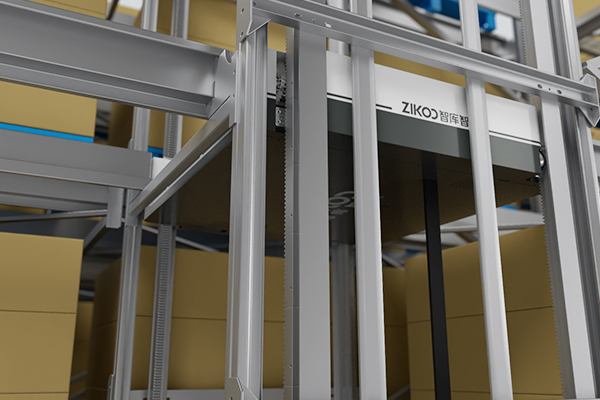
Operator training is also part of reliability. When floor staff understand basic error recovery — how to clear a jammed pallet, how to reboot a shuttle without disrupting the fleet, how to interpret warning indicators — the mean time to repair drops sharply. I’ve seen facilities cut average downtime per incident from 25 minutes to under 10 minutes simply by training operators on the most common five error codes. It’s a low-cost, high-impact investment that often gets overlooked.
Sourcing a Dependable Four-Way Shuttle System
Reliability in warehouse automation isn’t bought off a spec sheet; it is uncovered through engineering scrutiny and operational transparency. If you are evaluating four-way shuttle systems for a new or retrofit project, start with the design choices that affect uptime under your specific conditions — battery chemistry, environmental protection, recovery logic, and serviceability. Then press suppliers for test data that matches your load profile, not a generic benchmark.
Our team at Zikoo Smart Technology works through these questions daily with clients across cold chain, new energy, 3PL, and manufacturing. We test shuttles in controlled environments that replicate actual ambient and frozen conditions, and we share detailed performance logs during the evaluation phase. If you have a specific pallet profile, throughput target, or environmental constraint, send your requirements to info@zikoo-int.com or call (+86)-19941778955. A targeted reliability assessment tied to your operational data will give you a far more accurate picture than any brochure.
Common Questions About Four-Way Shuttle System Reliability
What is a realistic uptime expectation for a four-way shuttle system?
In well-designed installations, 98% to 99% uptime is achievable during steady operation. However, this figure is meaningless without accounting for scheduled maintenance and the definition of “downtime.” Systems that log every brief error correction as a failure may show lower numbers on paper, yet still complete all daily tasks. The relevant metric is whether the system meets the required throughput within the available operating window, not a single percentage. I’ve run sites where the shuttle fleet logged 200 minor error events per month but still never missed a shipping deadline because autonomous recovery was fast enough.
Do four-way shuttles perform reliably in cold storage?
They can if built specifically for it. Standard shuttles will fail in sub-zero environments due to battery chemistry and condensation. A cold-chain dedicated shuttle with low-temperature lithium batteries, sealed electronics, and appropriate materials can sustain 6 to 8 hours of continuous operation at -25°C. We’ve deployed such systems in frozen food and pharmaceutical warehouses, and the key is matching the hardware to the environment from day one. Retrofitting a standard shuttle into a freezer is a recipe for constant downtime.
How much maintenance does a four-way shuttle system require?
Preventive maintenance is typically light — most clients schedule quarterly inspections of drive components and monthly battery health checks. Corrective maintenance frequency depends on cycle intensity. In a high-throughput facility moving 20 pallets per hour per shuttle, wheel replacements might be needed annually. In lighter-duty operations, the only interventions might be firmware updates and sensor cleaning. The important factor is designing the system for maintainability, so that any needed repair takes minutes rather than hours.
How do you verify a manufacturer’s reliability test data?
Request raw test logs, not just summary reports. Look for the test duration (at least 1,000 hours of continuous run time), the number of units tested, and the environmental conditions. A credible manufacturer will also provide a site visit to a reference installation where you can talk to the operations team directly. Ask about the most common fault code they see, and how quickly parts are dispatched. If the answers are vague or the logs are sanitized, the reliability story may not hold up under real loads.
What should I do if a shuttle fails during peak operation?
The contingency plan should be designed into the system, not improvised. A well-configured WCS automatically redistributes tasks to the remaining shuttles and alerts technicians with a specific error code and location. On-site staff should be trained on the top five recovery procedures, and critical spare parts should be held on site. If your operation is highly time-sensitive, consider a service-level agreement that guarantees on-site support within four hours. Send your peak throughput requirements and acceptable downtime thresholds to our team and we’ll work out a resilience plan tailored to your fulfillment windows.
관심이 있다면, 관련 기사들을 확인하세요:
소프트웨어 기반 하드웨어: 육방 셔틀이 창고 효율성을 극대화하다
육방 셔틀: 비용 절감과 효율성을 위한 궁극의 창고 솔루션
육방 셔틀은 진정한 3D 지능형 창고 시대를 열다
스마트 창고 보관의 시작: 비용 효율적인 4방향 셔틀 시스템