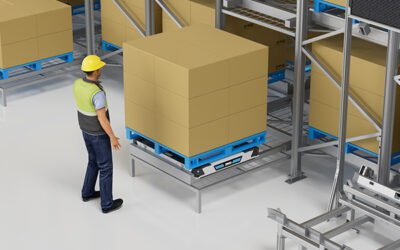
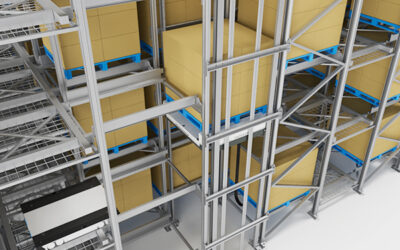
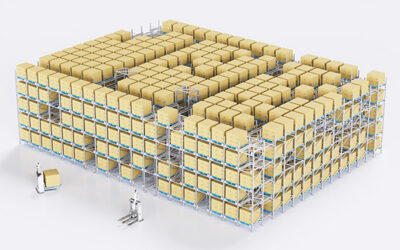
Warehouses run best when every move is precise and nothing is wasted. Automated Storage and Retrieval Systems (ASRS) automate storage and picking, reduce manual work, and make far better use of space while keeping accuracy tight. They blend software with shuttles, cranes, conveyors, and ergonomic stations to run at speed, even in cold or hazardous environments. Here, you’ll find how ASRS works, the core components and system types, the gains teams see in practice, how Zikoo’s R-bot, H-bot, and U-bot address common constraints, and what to weigh before an implementation.
Understanding Automated Storage and Retrieval Systems (ASRS)
An Automated Storage and Retrieval System (ASRS) is an integrated setup that automates how items are stored and retrieved in a warehouse. By minimizing human intervention, it lifts efficiency, accuracy, and space utilization. At its core, an ASRS uses automated equipment to place and retrieve loads from designated storage locations. The automation goes beyond movement, with intelligent software managing inventory, optimizing storage slots, and directing retrieval operations. The aim is to maximize throughput while reducing operational costs and human error.
ASRS technology helps businesses streamline their supply chain and meet rising demand. It allows continuous operation, even in environments unsuitable for human workers, such as cold storage or hazardous material facilities. The system’s ability to handle high volumes of goods with consistent speed and accuracy makes it indispensable for e-commerce, manufacturing, and pharmaceutical industries. ASRS solutions are also scalable, adapting to growth by adding more modules or robots as needed.
For example, a four-way shuttle system, like our R-bot, can move independently in four directions within a rack structure, enabling highly flexible and dense storage. When paired with a vertical two-way shuttle like the H-bot, it creates a six-way shuttle system, offering three-dimensional movement and strong efficiency. This integrated approach improves the flow of goods, minimizes bottlenecks, and accelerates order fulfillment. The software driving these systems, such as our PTP Smart Warehouse Software, orchestrates every movement to keep operations smooth and resource allocation optimal.
Exploring the Core Components and Working Principles of ASRS
The effectiveness of an ASRS rests on its integrated components and precise coordination. An ASRS generally includes storage racks, automated storage and retrieval machines (like shuttles or stacker cranes), conveyor systems, and a control layer. Each piece contributes to overall functionality and efficiency.
- Storage Racks: Specialized racking structures accommodate automated equipment and maximize storage density. Narrow aisles and high bays help utilize vertical space effectively.
- Automated Storage and Retrieval Machines (AS/RS Machines): Robots that physically move goods within the system, such as shuttle cars, stacker cranes, or robotic arms. For instance, our R-bot Four-way Shuttle features a slim body and flexible movement, ideal for dense storage.
- Conveyor Systems: Integrated conveyors transport goods to and from the ASRS, linking it with receiving, packing, and shipping.
- Control System: The brain of the ASRS, usually consisting of a Warehouse Management System (WMS), Warehouse Execution System (WES), and Warehouse Control System (WCS). Our PTP Smart Warehouse Software provides this control.
- Picking Stations: Ergonomic workstations where human operators interact with the automated system for order fulfillment, often using “goods-to-person” principles.
ASRS operations follow a coordinated sequence. When goods arrive, the WMS directs placement into an optimal storage location. The AS/RS machine transports the goods and stores them precisely. For retrieval, the WMS receives an order, identifies the correct location, and instructs the AS/RS machine to retrieve the item. The item is then moved to a picking station or directly to a shipping area. The control system manages the entire process for accuracy and speed.
For example, a Zikoo R-bot Four-way Shuttle moves pallets horizontally and vertically within its assigned aisle. When integrated with an H-bot Vertical Bidirectional Shuttle, it can also transfer pallets between levels, creating a true three-dimensional storage and retrieval network. This collaboration enables dynamic path planning and optimized movement, significantly enhancing throughput. System intelligence also allows dynamic adjustments based on inventory levels and order priorities.
Diverse Types of ASRS Systems and Their Ideal Applications
ASRS systems are not monolithic; they come in configurations suited to specific operational needs and warehouse layouts. The choice depends on item size, weight, throughput requirements, and available space.
Here are some common types of ASRS systems:
- Unit-Load ASRS: Designed for handling large loads, such as pallets. This type is common in manufacturing facilities and distribution centers for storing raw materials or finished goods. Our R-bot Four-way Shuttle, with its 1.5-ton load capacity, excels in these scenarios.
- Mini-Load ASRS: Optimized for smaller items stored in totes or cartons. These systems are prevalent in e-commerce warehouses and retail distribution for handling diverse SKUs.
- Carousel ASRS: Utilizes a series of bins or shelves that rotate horizontally or vertically to present items to an operator. They are often used for high-volume, small-item picking.
- Vertical Lift Modules (VLMs): Consist of two columns of trays with an inserter/extractor in the center. The inserter/extractor automatically retrieves and presents trays to an operator at an ergonomic height. VLMs are excellent for maximizing vertical space in facilities with limited floor area.
- Shuttle-based ASRS: Employs autonomous shuttles that travel along rails within storage aisles. These shuttles can move goods horizontally, and when combined with vertical lifts, they offer multi-directional movement. Zikoo’s R-bot and H-bot systems exemplify this advanced category.
Each type offers distinct advantages. Shuttle-based systems, for instance, provide high flexibility and scalability, making them suitable for dynamic environments like e-commerce. They can operate independently, reducing single points of failure and enabling continuous operation. They also offer excellent throughput and storage density, which are critical for modern warehouses.
Consider the following table for a comparison of key ASRS types:
| ASRS Type | Typical Load Unit | Key Advantage | Ideal Application | Zikoo Product Example |
|---|---|---|---|---|
| Unit-Load ASRS | Pallets | High capacity, heavy loads | Manufacturing, large distribution centers | R-bot Four-way Shuttle |
| Mini-Load ASRS | Totes, Cartons | High throughput, small items | E-commerce, retail distribution | N/A |
| Carousel ASRS | Bins, Shelves | High-speed picking, small items | Parts storage, order fulfillment | N/A |
| Vertical Lift Module | Trays | Space optimization (vertical) | Manufacturing, tool storage | N/A |
| Shuttle-based ASRS | Pallets, Totes, Cartons | High flexibility, scalability, dense storage | E-commerce, cold chain, manufacturing, pharmaceutical | R-bot, H-bot, U-bot |
Our R-bot Four-way Shuttle, for example, is specifically designed for dense storage in e-commerce warehouses, distribution centers, and special environments like cold chain food storage. Its ability to move independently in four directions and collaborate with other shuttles makes it highly adaptable. Similarly, the H-bot Vertical Bidirectional Shuttle acts as a vertical transportation hub, integrating with the R-bot to create a six-way shuttle system. This combined solution significantly boosts throughput and efficiency, especially in high-rack stereoscopic warehouses.
If you are interested in how Zikoo Robotics is redefining smart warehousing, check out How Zikoo Robotics Is Redefining Smart Warehousing with the Pallet Shuttle System.
Key Benefits of Implementing an ASRS for Modern Warehouses
Implementing an ASRS:: system brings a range of benefits that matter for warehouses aiming for operational excellence. These advantages span efficiency, cost savings, and improved capabilities, making ASRS a strategic investment for many businesses. We have seen meaningful changes in facilities adopting these systems.
- Maximized Space Utilization: ASRS systems use vertical space far better than conventional methods. High-density configurations reduce the overall footprint required for storage. For example, our R-bot Four-way Shuttle, with its slim design, allows exceptionally dense storage layouts.
- Increased Throughput and Efficiency: Automation accelerates storage and retrieval. Robots can work continuously, 24/7, without breaks, sharply increasing the volume handled per hour. This leads to faster order fulfillment and improved customer satisfaction.
- Reduced Labor Costs and Dependency: By automating repetitive and physically demanding tasks, ASRS reduces reliance on extensive manual labor. This helps with labor shortages and rising wage costs, allowing people to focus on more value-added work.
- Improved Accuracy and Inventory Management: ASRS systems, coupled with advanced software like PTP Smart Warehouse Software, ensure precise tracking of every item. Errors in picking and putaway drop sharply, leading to near-perfect inventory accuracy and fewer stockouts or overstocking.
- Enhanced Safety: Automated systems remove the need for human operators to navigate hazardous environments or lift heavy loads, reducing workplace accidents and injuries. This creates a safer environment for employees.
- Adaptability to Special Environments: Certain ASRS solutions are designed for extreme conditions, such as cold chain storage or environments requiring specific safety protocols. Our R-bot, for instance, has a Cold Chain Custom Solution that operates reliably at -25℃.
- Scalability and Flexibility: Many ASRS systems are modular, so capacity can expand as needed. The system grows with the business, adapting to changing demand and future growth.
These benefits together support more agile, cost-effective, and competitive warehousing. The transition to an automated storage system is a clear step toward future-proofing logistics.
Addressing Common Warehouse Challenges with Zikoo’s ASRS Solutions
Modern warehouses face numerous challenges, from escalating operational costs and labor shortages to the demand for faster fulfillment and optimal space utilization. Zikoo Smart Technology addresses these issues with advanced ASRS solutions designed to enhance efficiency and adaptability across diverse industries. We leverage our expertise in pallet-to-person robotics to deliver tangible improvements.
- Optimizing Space in Dense Storage: Many warehouses contend with limited space. Our R-bot Four-way Shuttle is engineered for dense storage scenarios. Its compact body (125 mm thickness) and flexible four-way movement allow maximum storage density, significantly increasing capacity within the existing footprint. This matters in e-commerce and manufacturing where space is at a premium.
- Boosting Throughput and Speed: Demand for rapid order fulfillment is constant. The R-bot’s high-speed operation (up to 1.6 m/s empty, 1.2 m/s loaded) enables quick putaway and retrieval. When integrated with the H-bot Vertical Bidirectional Shuttle, our six-way shuttle system creates a three-dimensional transport network, improving overall system throughput and efficiency.
- Handling Diverse Pallet Sizes and Weights: Warehouses often manage various pallet types. Our R-bot offers multiple models, including Standard, American, Japanese, and Heavy-duty types, supporting pallet sizes from 1200 × 800 mm to 1400 mm and loads up to 2000 kg. This versatility ensures compatibility with a wide range of goods.
- Operating in Extreme Environments: Some industries require specialized solutions. Our R-bot Cold Chain Custom Solution features a -25℃ low-temperature dedicated lithium battery for continuous operation in cold storage. A special PCBA coating provides safety in high-humidity environments, making it suitable for pharmaceutical and food cold chains.
- Navigating Narrow Aisles: Traditional forklifts need wide aisles, wasting valuable space. The U-bot Omnidirectional Stacking Robot is designed for narrow aisle storage, requiring a minimum aisle width of only 2100 mm. Its omnidirectional movement and minimum turning radius of 1370 mm ensure maneuverability in tight spaces, which helps with existing warehouse renovations.
- Improving Picking Efficiency for Multi-SKU Orders: E-commerce and pharmaceutical operations handle high volumes of diverse SKUs. Our U-bot + AMR Narrow Aisle Picking System offers a collaborative approach for hybrid picking. The U-bot manages high-level storage, while AMRs handle low-level picking, achieving picking efficiencies of ≥300 pieces per hour and managing up to 10,000 SKUs.
- Ensuring Safety and Compliance: For industries like new energy, avoiding specific materials is critical. Our R-bot New Energy Custom Solution avoids copper, zinc, nickel, and lead. It uses stainless steel frames and all-rubber buffer wheels to prevent metal contamination, meeting stringent industry standards.
Zikoo’s suite of robots, including the R-bot, H-bot, and U-bot, combined with our PTP Smart Warehouse Software, provides tailored solutions for these complex challenges. Businesses gain higher density, faster operations, and stronger safety.
Strategic Considerations for ASRS System Implementation
Implementing an ASRS system is a significant investment that calls for careful planning and strategy. To set up for success and maximize return on investment, evaluate several key factors before committing to a solution. These considerations align the ASRS with business objectives and operational realities.
- Assess Current and Future Needs: Analyze your current operations, including inventory volume, throughput requirements, and growth projections. Understand the types of goods stored, their dimensions, weight, and turnover rates. This assessment guides the choice of ASRS type and capacity.
- Space and Layout Optimization: Evaluate your existing space. ASRS systems excel at maximizing vertical and horizontal space, but the layout must fit the chosen technology. Factor in ceiling height, floor load capacity, and column placement. Our U-bot suits narrow aisle environments, making it viable for existing warehouse renovations.
- Integration with Existing Systems: The new ASRS must integrate with your Warehouse Management System (WMS), Enterprise Resource Planning (ERP), and other software. A robust PTP Smart Warehouse Software is key for orchestrating automated equipment and data flow.
- Budget and ROI Analysis: Perform a detailed cost-benefit analysis. Include the initial investment, installation, maintenance, and savings from reduced labor, improved efficiency, and increased storage capacity. Calculate the projected Return on Investment (ROI) to justify the capital expenditure.
- Scalability and Flexibility: Choose a system that can scale with growth. Modular ASRS designs, like those offered by Zikoo, allow future expansion without a complete overhaul. This flexibility keeps the system relevant as needs evolve.
- Vendor Selection and Support: Select a provider with a proven track record. Evaluate experience, technical support, and the ability to deliver customized solutions. A strong partnership supports long-term success and optimization.
By addressing these strategic considerations with care, businesses implement an ASRS that solves immediate challenges and lays a foundation for future growth and competitive advantage.
Ready to transform your warehouse operations?
Ready to upgrade your warehouse operations with advanced ASRS technology? Contact Zikoo Smart Technology today for a personalized consultation and discover how our U-bot, R-bot, and H-bot solutions, powered by PTP Smart Warehouse Software, can optimize your storage, retrieval, and fulfillment processes. Visit our website or call us to speak with an expert.
Email: [email protected]
Phone: (+86)-19941778955
How does an ASRS system improve warehouse efficiency?
ASRS systems significantly boost efficiency by automating storage and retrieval, reducing manual labor, increasing storage density, minimizing errors, and accelerating order fulfillment. For instance, Zikoo’s R-bot Four-way Shuttle can achieve high-density storage and rapid movement, directly impacting throughput.
What are the main types of ASRS systems available?
ASRS systems come in various forms, including Unit-Load ASRS (for pallets), Mini-Load ASRS (for cartons/totes), Carousel ASRS, Vertical Lift Modules (VLMs), and Shuttle-based ASRS. Zikoo offers advanced shuttle-based solutions like the R-bot and H-bot for dense and multi-directional storage.
Is an ASRS system suitable for small to medium-sized warehouses?
While traditionally associated with large operations, modular and scalable ASRS solutions are increasingly viable for SMEs. Systems like Zikoo’s U-bot Omnidirectional Stacking Robot are designed for narrow aisles, making high-density storage accessible even in existing warehouse footprints without extensive renovations.
What is the typical ROI for an ASRS investment?
The Return on Investment (ROI) for an ASRS varies based on factors like system complexity, operational scale, and labor cost savings. However, businesses often see ROI within 2-5 years due to reduced labor costs, optimized space utilization, improved inventory accuracy, and increased throughput. A detailed cost-benefit analysis is required for accurate projections.