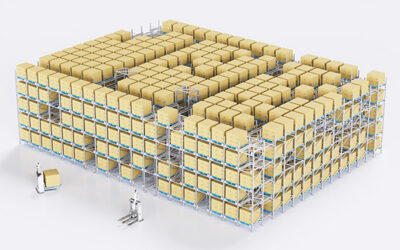
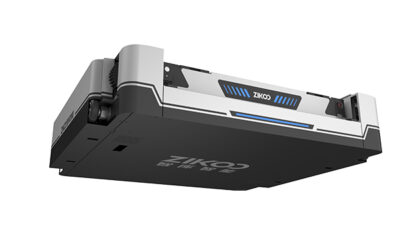
Getting inventory right has always been a moving target. Demand shifts, space runs out, and errors pile up faster than anyone wants to admit. The traditional approach, relying heavily on manual processes and reactive adjustments, struggles to keep pace with modern supply chain pressures. Smart warehouse strategies offer a different path. They combine real-time visibility, predictive tools, and automated handling to bring inventory under tighter control. Zikoo Smart Technology focuses on pallet-to-person robotics and integrated software systems designed to address these operational realities directly.
Real-Time Data and Predictive Tools Change the Equation
Smart warehouse strategies shift industrial inventory optimization from guesswork to precision. Real-time inventory tracking gives immediate visibility into stock levels, locations, and movement patterns. When you know exactly where every pallet sits and how fast it moves, decisions happen faster and with better information.
Data-driven warehousing pulls from both historical records and live feeds to spot trends and allocate storage more effectively. Predictive analytics takes this further by forecasting demand fluctuations before they create problems. The goal is preventing both overstocking, which ties up capital and space, and stockouts, which damage customer relationships.
Zikoo’s PTP Smart Warehouse Software ties these capabilities together through four integrated systems. The Warehouse Management System handles storage optimization and order fulfillment logic. The Warehouse Execution System coordinates automated equipment with human operators for task sequencing. The Warehouse Control System manages physical material flow across the floor. The Robot Control System directs the robotic fleet, keeping machines synchronized and efficient.
This integration matters because disconnected systems create gaps. When software components communicate seamlessly, inventory accuracy climbs above 99% and manual handling drops significantly. The cost savings follow directly from fewer errors and faster throughput.
| KPI | Traditional Warehouse | Smart Warehouse (Zikoo PTP) |
|---|---|---|
| Inventory Accuracy | 85-90% | 99%+ |
| Order Fulfillment Time | Hours | Minutes |
| Labor Costs | High | Significantly Reduced |
| Space Utilization | Moderate | High |
| Error Rate | 1-3% | <0.1% |
Robotics and Software Working Together
Warehouse automation depends on robotics and software operating as a unified system rather than separate tools. Pallet-to-person robotics fundamentally changes material flow by bringing goods directly to operators instead of sending workers across the facility. Autonomous mobile robots navigate independently, reducing reliance on fixed conveyor infrastructure while maintaining precision.
Material handling systems integrate conveyors, sorters, and robotic arms to automate multiple stages of warehouse operations. AI-powered inventory management optimizes routing decisions, task scheduling, and storage allocation based on actual operational data rather than static rules.
Zikoo’s robotic lineup addresses different operational needs. The U-bot Omnidirectional Stacking Robot handles pallet storage and retrieval in narrow aisles, lifting loads up to 1000 kg to heights of 8 meters. Its omnidirectional movement allows operation in aisles as narrow as 2100 mm, which means more storage capacity in the same footprint.
The R-bot Four-way Shuttle targets Dense storage scenarios with four-way movement and 1.5-ton load capacity. It works well in e-commerce, cold chain, and manufacturing environments where throughput and retrieval speed matter.
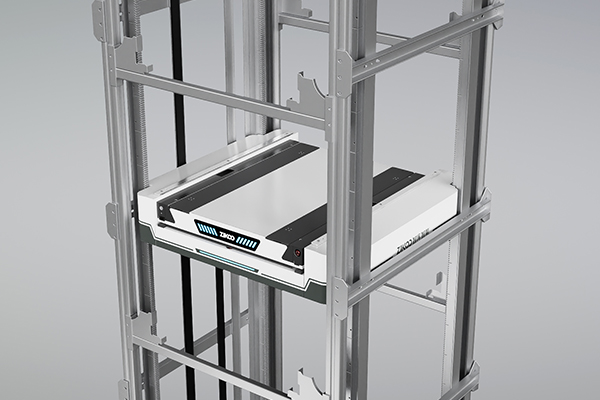
The H-bot Vertical Bidirectional Shuttle handles vertical transport, connecting with the R-bot to create a Six-way shuttle system. This combination maximizes vertical storage utilization in high-rack facilities.
| Robot Type | Primary Function | Key Feature | Application Scenario |
|---|---|---|---|
| U-bot | Stacking/Retrieval | Omnidirectional movement, narrow aisle operation | E-commerce, Pharma, Manufacturing |
| R-bot | Pallet Shuttle | Four-way movement, dense storage | E-commerce, Cold Chain, Manufacturing |
| H-bot | Vertical Transport | Bidirectional lifting, single storage location footprint | High-rack warehouses, urban logistics |
The Case for Pallet-to-Person Investment
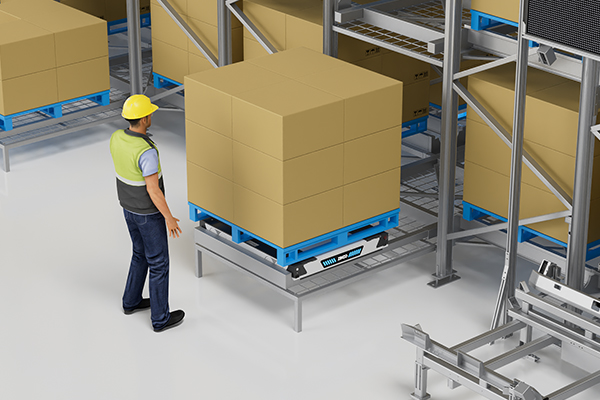
Pallet-to-person robotics delivers measurable advantages for industrial inventory optimization. The core benefit is simple: goods come to workers instead of workers traveling to goods. This eliminates extensive walking time and reduces physical strain on operators.
The U-bot handles narrow aisle operations efficiently, improving space utilization while cutting manual labor requirements. The R-bot optimizes Dense storage through higher throughput and faster retrieval. The H-bot integrates with the R-bot to form a Six-way shuttle system that maximizes vertical storage and material flow.
ROI comes through multiple channels. Labor costs drop because fewer workers handle more volume. Error rates fall because automated systems follow consistent logic. Operational speed increases because robots don’t need breaks and maintain steady performance. Scalability improves because adding capacity doesn’t require proportional workforce expansion.
Safety gains matter too. Robots handle heavy lifting and repetitive tasks, reducing workplace injuries. This shift toward lean operations minimizes waste while maximizing throughput.
The numbers support this. The U-bot combined with AMR narrow aisle picking achieves picking efficiency of at least 300 pieces per hour and inbound/outbound efficiency of at least 80 pallets per hour, with storage density improvements exceeding 30%.
If you’re interested, check 《Six-Way Shuttle Powers Dense Storage: Breaking Space Limitations》.
Making Implementation Work
Smart warehouse implementation requires careful planning and realistic expectations about challenges. The process starts with honest assessment of existing infrastructure and workflows. Where are the bottlenecks? Which processes would benefit most from automation?
Technology selection follows assessment. Zikoo’s pallet-to-person robotics and PTP Smart Warehouse Software provide the hardware and software foundation, but integration with existing systems determines success.
One persistent challenge involves connecting new robotics with legacy warehouse operations. A phased approach works better than attempting full deployment at once. Start with pilot programs in specific areas, prove the concept, then scale.
Data exchange between new and existing systems often requires custom API development. Legacy systems weren’t designed with modern integration in mind, so bridging that gap takes technical work.
Staff training transforms existing workers into skilled operators and maintenance technicians. This investment pays off through smoother operations and faster problem resolution.
Digital twin technology allows simulation of warehouse environments before physical deployment. Testing scenarios virtually identifies optimization opportunities and catches problems early.
| Challenge | Solution |
|---|---|
| Legacy System Integration | Phased implementation with robust API development |
| Staff Adaptation | Comprehensive training programs for operators and technicians |
| Data Exchange Gaps | Custom integration work between new and existing platforms |
| Deployment Risk | Digital twin simulation before physical rollout |
Quantifying Results and Looking Ahead
Measuring automated inventory system success requires tracking specific metrics. ROI calculations should include reduced operational costs, increased throughput, improved inventory accuracy, and safety improvements. Most implementations using Zikoo’s pallet-to-person robotics and PTP Smart Warehouse Software see payback within 1-3 years through efficiency gains and error reduction.
The calculation involves quantifying labor reductions, waste elimination, error rate improvements, order fulfillment speed increases, and inventory turnover gains. These numbers tell the story of whether the investment delivered.
Looking forward, warehousing continues evolving. AI applications are expanding into predictive maintenance, catching equipment issues before they cause downtime. Order fulfillment is becoming more personalized as customer expectations rise. Sustainable operations are gaining importance as environmental concerns influence business decisions.
Supply chain resilience remains a priority. Automated systems provide flexibility and robustness that help organizations navigate disruptions, whether from demand spikes, labor shortages, or supply interruptions.
Frequently Asked Questions About Smart Warehouse Strategies
How do smart warehouses improve inventory accuracy and reduce costs?
Smart warehouses combine real-time tracking, AI-driven analytics, and robotic automation to minimize human error at every step. Systems like Zikoo’s U-bot, R-bot, and H-bot handle storage and retrieval with consistent precision, eliminating the variability that comes with manual processes. The result is fewer mispicks, less spoilage from misplaced inventory, and lower labor costs per unit handled. Inventory records stay accurate because automated systems update positions continuously rather than relying on periodic counts.
What are the best practices for integrating robotics into existing warehouse operations?
Start with thorough assessment of current infrastructure and identify where automation will have the greatest impact. Plan for phased deployment rather than attempting full-scale implementation immediately. Ensure your software systems, including WMS, WES, WCS, and RCS, can communicate with existing platforms through proper API integration. Invest in comprehensive staff training so workers understand how to operate alongside and maintain the new systems. This approach reduces disruption and allows adjustments based on real operational feedback.
What is the ROI of implementing an automated inventory management system?
ROI typically includes reduced labor costs, higher throughput, improved inventory accuracy, and fewer workplace injuries. With systems like Zikoo’s pallet-to-person robotics and PTP Smart Warehouse Software, most operations see payback within 1-3 years. The specific timeline depends on current operational inefficiencies, labor costs, and throughput requirements. Beyond initial payback, automated systems provide ongoing benefits through scalability and resilience that manual operations cannot match.
Optimize Your Industrial Inventory with Zikoo Smart Technology
Ready to transform your industrial inventory management? Explore Zikoo’s advanced pallet-to-person robotics and PTP Smart Warehouse Software. Our solutions are designed to deliver tailored industrial inventory optimization, enhancing efficiency and reducing costs. Contact us today for a consultation to discuss your specific needs.
Email: [email protected]
Phone: (+86)-19941778955