Warehouse storage has become one of those areas where getting it wrong costs you more than you realize until the invoices pile up. The racking system you choose shapes everything downstream—how fast orders move, how much floor space actually works for you, and whether your operation can scale without a complete rebuild. Most facilities treat racking as a one-time purchase decision, but the smart ones see it as infrastructure that either enables or limits what comes next.
Why Racking Decisions Shape Everything Else in Your Warehouse
The pressure on warehouse operations keeps intensifying. Every square foot needs to earn its keep. Throughput expectations climb while labor budgets stay flat or shrink. This reality forces a different way of thinking about warehouse racking systems. They’re not static metal structures you install and forget. They’re active participants in how goods flow through your facility.
When you pair the right racking configuration with intelligent automation, the efficiency gains compound. Storage density improves. Inventory becomes easier to reach when you need it. The entire supply chain moves faster because the warehouse stops being a bottleneck. These outcomes don’t happen by accident. They require deliberate planning that treats racking as a strategic asset rather than a commodity purchase.
Different Racking Types Solve Different Problems
Not every warehouse racking system fits every operation. Each design makes specific trade-offs between accessibility, density, and the types of products you’re storing. Understanding these trade-offs prevents expensive mistakes.
Selective Racking remains the workhorse of most warehouses because it gives you direct access to every single pallet. If you’re managing hundreds or thousands of SKUs with constant picking activity, this accessibility matters more than squeezing in extra storage positions.
Drive-In and Drive-Through Racking flips that equation. Forklifts enter the rack structure itself, which eliminates aisles and dramatically increases storage capacity. The catch is you’re committing to either Last-In, First-Out or First-In, First-Out inventory flow, and you need relatively homogeneous products to make it work.
Push Back Racking offers a middle ground. Pallets sit on nested carts that roll along inclined rails. You get high density without sacrificing FIFO capability entirely, though each lane works best with a single SKU.
Pallet Flow Racking uses gravity to move pallets from the loading side to the picking side. This guarantees strict FIFO rotation, which makes it essential for perishable goods or any product with expiration dates.
Cantilever Racking solves a completely different problem. When you’re storing lumber, pipes, or furniture—anything long and awkward—traditional pallet positions don’t work. Arms extending from vertical columns provide unobstructed access to these bulky items.
Mezzanine Racking creates additional floor levels within your existing building envelope. You’re essentially multiplying usable space without pouring new concrete or expanding your footprint.
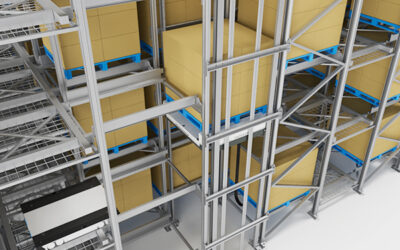
Very Narrow Aisle (VNA) Racking pushes storage density to its practical limits by shrinking aisle widths. This approach requires specialized equipment—either VNA forklifts or automated solutions like the U-bot Omnidirectional Stacker Robots—but the space savings can be substantial.
| Racking System Type | Key Advantage | Best Use Case | Accessibility | Storage Density |
|---|---|---|---|---|
| Selective | 100% Pallet Access | High SKU variety, fast-moving items | High | Low |
| Drive-In/Through | Maximized Space | Homogeneous products, LIFO/FIFO | Low | High |
| Push Back | High Density, FIFO | Medium SKU variety, FIFO or LIFO | Medium | High |
| Pallet Flow | Automatic FIFO | Perishables, high-volume single SKUs | High | High |
| Cantilever | Long/Bulky Item Storage | Lumber, pipes, furniture | High | Medium |
| VNA | Space Optimization | High-volume storage, limited floor space | Medium | Very High |
Selective Versus High-Density Storage Trade-offs
The fundamental tension in warehouse racking systems comes down to access versus capacity. Selective racking gives you immediate reach to every pallet position. High-density systems like pallet shuttle racking system or drive-in configurations pack more inventory into the same footprint by eliminating or reducing aisles.
Neither approach is inherently better. The right choice depends on your inventory profile. Operations with thousands of SKUs and constant picking activity need the accessibility that selective racking provides. Facilities storing large quantities of fewer products can sacrifice some accessibility for the space gains that high-density systems deliver. Inventory turnover rates, order fulfillment patterns, and available floor space all factor into this decision.
Matching Racking Systems to Operational Realities
Selecting the right warehouse racking system requires honest assessment of what your operation actually needs—not what sounds impressive on paper. Start with your current requirements, but build in flexibility for where the business is heading.
Product characteristics matter enormously. Heavy pallets need different structural support than lightweight goods. Temperature-sensitive inventory demands specialized materials. Cold storage racking must withstand constant exposure to freezing conditions without compromising structural integrity, which rules out standard steel configurations.
Throughput requirements shape everything. E-commerce fulfillment centers prioritize speed and accessibility because order volumes are high and picking happens constantly. Bulk storage facilities can tolerate slower access times because they’re moving full pallets rather than individual items.
Design Factors That Determine Success or Failure
Several physical constraints dictate what’s possible with your warehouse racking system design. Aisle width must accommodate whatever equipment you’re using—forklifts, reach trucks, or automated guided vehicles all have different clearance requirements.
Ceiling height determines how much vertical storage you can achieve. Taller buildings allow more rack levels, but you need equipment capable of reaching those heights safely and efficiently.
Floor load capacity is non-negotiable. The concrete slab must support the combined weight of the racking structure and fully loaded inventory. Exceeding these limits creates serious safety hazards.
Finally, your material handling equipment needs to work seamlessly with the racking configuration. Mismatches between rack design and equipment capabilities create operational friction that compounds over time.
Automation Changes What’s Possible with Warehouse Racking
The most significant developments in warehouse racking systems involve integration with automated storage and retrieval technology. This combination transforms static storage into dynamic, responsive infrastructure capable of handling volumes that would overwhelm manual operations.
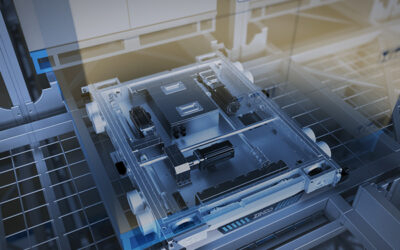
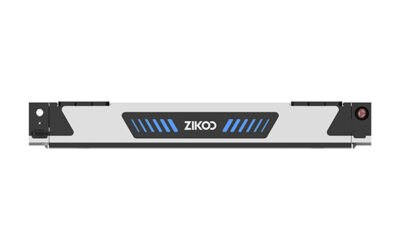
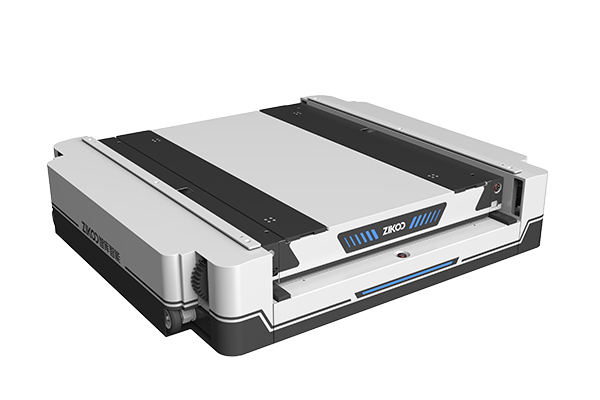
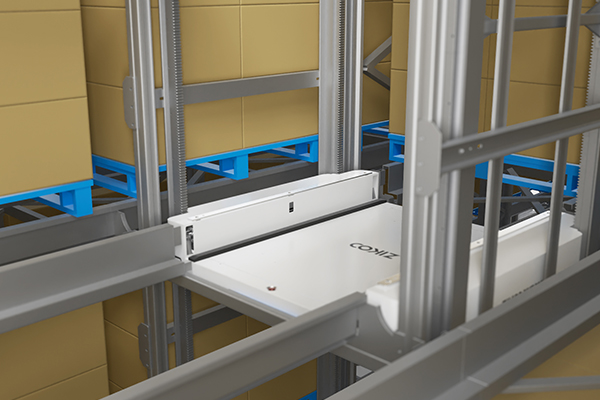
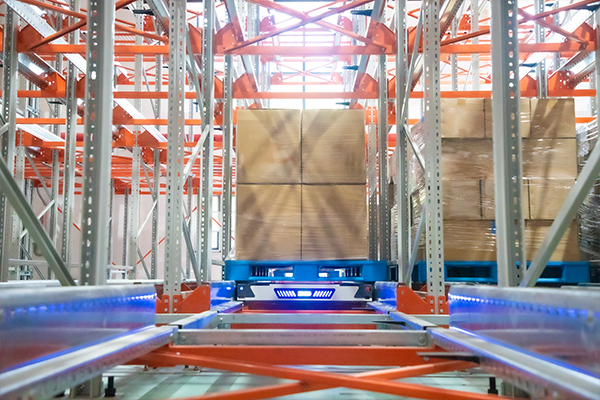
The R-bot Four-way Shuttle exemplifies this integration. Designed specifically for Dense storage environments, its slim 125 mm profile allows it to operate in tight spaces while handling loads up to 1.5 tons. The four-way movement capability means it can navigate complex rack structures efficiently. Multiple shuttles can work collaboratively within the same system, scaling throughput as demand increases.
For cold chain applications, the R-bot uses a dedicated lithium battery rated for -25°C operation, providing 6-8 hours of continuous work. The low-temperature charging port enables automatic recharging without removing the robot from the cold environment. Special PCBA coating protects electronics in high-humidity conditions that would damage standard components.
The H-bot Vertical Bidirectional Shuttle handles vertical movement within the rack structure, occupying just a single storage position. When paired with the R-bot, it creates a three-dimensional warehousing network that dramatically improves overall throughput. The Standard Type (H1800B) handles 1800 kg loads, supports various pallet sizes, and operates across a temperature range from -25°C to 45°C. Positioning accuracy reaches ±1 mm, with empty travel speeds of 1 m/s and loaded speeds of 0.5 m/s. This combination forms a spatial Six-way shuttle system that maximizes storage density while maintaining efficient access.
The U-bot Omnidirectional Stacker Robot tackles narrow aisle storage with a minimum aisle width requirement of just 2100 mm. Its U-shaped body design and 1370 mm turning radius provide exceptional maneuverability in confined spaces. Lifting heights reach 8 meters with 1000 kg rated loads. The U1080 model delivers 6-8 hours of continuous operation, making it suitable for e-commerce fulfillment, pharmaceutical storage, and manufacturing applications.
The U-bot + AMR Narrow Aisle Picking System combines pallet-level storage with split-case picking in a single integrated solution. The architecture places U-bots on upper levels for dense storage while AMRs handle lower-level picking operations. This hybrid approach achieves picking efficiency exceeding 300 pieces per hour and inbound/outbound rates above 80 pallets per hour, with storage density improvements over 30%.
PTP Smart Warehouse Software (WMS/WES/WCS/RCS) orchestrates all these components. The software manages robot movements, tracks inventory in real-time, and optimizes workflows continuously. The result enables lights-out warehouse operations where human intervention becomes the exception rather than the rule. For more detail on how these systems work together, see 《Six-Way Shuttle Drives Warehouse Upgrades: Building an Intelligent Automatic 3D Warehouse》.
How Automation Delivers Measurable Efficiency Gains
Automated warehouse racking systems improve operational efficiency through several mechanisms. Speed increases because robots don’t tire, don’t take breaks, and maintain consistent pace throughout shifts. Accuracy improves because automated systems don’t misread labels or miscount items.
Labor utilization shifts from repetitive physical tasks to oversight and exception handling. Fewer people accomplish more work, which addresses both cost pressures and labor availability challenges that affect most warehouse operations.
Inventory accuracy reaches levels that manual operations struggle to match. Real-time tracking eliminates the guesswork that leads to stockouts, overstocking, and wasted space. Warehouse safety improves because humans spend less time operating heavy equipment in close proximity to stored goods.
Understanding the Full Cost Picture for Racking Investments
The purchase price of warehouse racking systems represents only part of the total investment. Installation costs, ongoing maintenance, energy consumption, and operational savings all factor into the true cost of ownership.
Automated systems like ASRS typically require higher upfront investment than manual alternatives. However, the labor cost reductions, throughput improvements, and space optimization they enable often generate returns that justify the initial expense within a few years.
| ROI Factor | Description | Impact on ROI |
|---|---|---|
| Space Utilization | Maximizing cubic storage capacity | Reduces need for facility expansion, lowers rent |
| Labor Efficiency | Automation reduces manual handling and associated costs | Significant reduction in operational expenses |
| Inventory Accuracy | Improved tracking and reduced errors | Minimizes stockouts, overstocking, and waste |
| Throughput | Faster picking and put-away rates | Increases order fulfillment capacity and customer satisfaction |
| Safety | Reduced accidents and damage to goods | Lowers insurance premiums, prevents costly disruptions |
| Scalability | Ability to adapt to changing business volumes | Future-proofs operations, avoids costly reconfigurations |
Long-Term Cost Factors Beyond Initial Purchase
Racking maintenance costs accumulate over the system’s lifespan. Regular inspections, component replacements, and structural repairs all require budget allocation. Neglecting maintenance creates safety risks and accelerates deterioration.
Energy costs vary significantly depending on system type. Cold storage operations consume substantial power for refrigeration. Automated systems require electricity for robot operation and charging infrastructure. These ongoing expenses affect total cost of ownership calculations.
Insurance premiums may shift based on the safety profile of your racking configuration. Systems with robust damage prevention features and automated operation may qualify for lower rates.
Scalability costs deserve particular attention. Choosing a flexible system that can adapt to changing business volumes avoids expensive reconfigurations later. Rigid designs that work perfectly today may become constraints as your operation evolves.
Safety Standards and Compliance Requirements
Warehouse racking operations involve significant safety obligations. Proper adherence to industry standards protects workers, prevents product damage, and avoids regulatory penalties.
Inspection protocols should include daily visual checks for obvious damage, weekly detailed examinations of structural components, and annual professional audits that assess overall system integrity. Any damage identified requires immediate assessment and appropriate response.
OSHA standards and ANSI/RMI standards govern design, installation, and operational requirements for warehouse racking systems. Compliance isn’t optional. These regulations exist because racking failures cause serious injuries and fatalities.
Damage prevention measures reduce the frequency and severity of incidents. Column protectors absorb forklift impacts that would otherwise damage structural members. Proper operator training reduces the likelihood of collisions in the first place.
Building Warehouse Operations That Adapt to Change
The warehouse that works perfectly today may not meet tomorrow’s requirements. Market conditions shift. Customer expectations evolve. Product mixes change. Intelligent storage solutions provide the flexibility to adapt without starting over.
Modern warehouse racking systems, particularly those integrated with automation, offer scalability that traditional approaches cannot match. Adding capacity doesn’t require wholesale replacement. Throughput can increase by deploying additional robots within existing infrastructure.
Sustainable warehouse operations benefit from optimized resource utilization. Less wasted space means smaller facility requirements. Automated systems consume energy more efficiently than manual alternatives that keep lights and climate control running for human workers.
The combination of warehouse efficiency gains, operational flexibility, and long-term adaptability positions facilities for competitive success regardless of how market conditions evolve.
Frequently Asked Questions About Warehouse Racking Systems
What tangible benefits justify investment in new warehouse racking systems?
New warehouse racking systems deliver improvements across multiple operational dimensions. Space utilization increases because modern designs extract more storage capacity from existing floor space. Material flow becomes more efficient, which accelerates order fulfillment. Inventory accuracy improves through better organization and, in automated systems, real-time tracking. Safety outcomes typically improve because newer systems incorporate current design standards and damage prevention features. These combined effects reduce operational costs while increasing throughput capacity.
How do automated racking systems connect with existing warehouse software?
Integration happens through standardized communication protocols that allow different software layers to exchange data and coordinate actions. PTP Smart Warehouse Software (WMS/WES/WCS/RCS) provides a unified platform where warehouse management system directives translate into specific robot movements and storage operations. The warehouse execution system handles task prioritization and workflow optimization. The warehouse control system manages equipment-level commands. The robot control system coordinates individual robot actions. This layered architecture ensures that high-level business logic connects seamlessly to physical equipment operation.
Which safety regulations govern warehouse racking installation and maintenance?
OSHA standards establish baseline safety requirements for warehouse operations in the United States. ANSI/RMI standards provide more specific guidance on racking design, installation procedures, and usage requirements. These regulations mandate regular inspections, load capacity documentation, and proper maintenance protocols. Facilities must maintain records demonstrating compliance. Violations can result in penalties, but more importantly, non-compliance creates genuine risks of structural failure, injuries, and fatalities.
Transform Your Logistics with Zikoo Smart Technology
Elevate your warehouse efficiency and embrace the future of logistics with Zikoo Smart Technology Co., Ltd. As a global leader in pallet-to-person robotics and smart warehouse software, we offer integrated solutions designed for unparalleled performance. Contact us today for a personalized consultation and discover how our U-bot, R-bot, H-bot, and PTP Smart Warehouse Software can transform your operations. Reach out at [email protected] or call (+86)-19941778955.