Most warehouse expansions come down to a simple problem: you need more pallet storage but can’t add square footage. Four-way shuttle systems improve warehouse utilization by replacing wide forklift aisles with rail-guided pallet movement and stacking lanes deeper than any conventional setup. But the final storage density isn’t a fixed number printed in a brochure—it’s the product of shuttle dimensions, pallet types, cold-weather battery life, and the software that decides where each pallet sits. After commissioning shuttle systems for cold storage, manufacturing, and new energy facilities, I have seen identical shuttle hardware deliver anywhere from 30% to more than 60% additional pallet positions, purely because of how the system was specified and deployed.
The Core Mechanism: Dense Storage Through Reduced Aisles
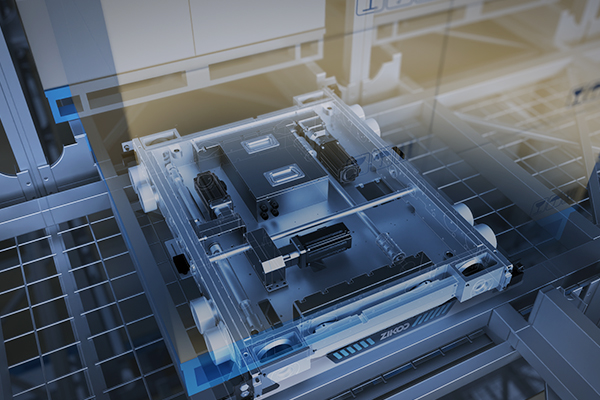
A four-way shuttle travels laterally and longitudinally along rails embedded in the rack structure, so every lane becomes a storage lane. The only aisle needed is a single maintenance and charging aisle at one end of each rack row. In a conventional very narrow aisle (VNA) layout, pallet racks face each other across 2.8 to 3.2 meter aisles for forklift turning; with a shuttle system, storage lanes run continuously from the aisle to the back wall, and the main travel lane can be as narrow as 2.1 meters. I typically begin a utilization assessment by comparing the ratio of access space to storage space in the existing layout. If forklift aisles consume 40% of your floor plate, converting to a four-way shuttle configuration regularly pushes storage density up by 50%.
For a detailed breakdown of shuttle path widths and pallet configurations, <Four-Way Pallet Shuttle> covers the layout parameters for different pallet types and their effect on storage lane geometry.
Simultaneous movement of multiple shuttles within the same lane system further maintains throughput even in deep lanes. A five-deep lane, for instance, doesn’t require a single shuttle to travel the full depth every time; the WCS can assign the nearest available shuttle to the target position, keeping retrieval times consistent across lane depths.
Physical Shuttle Design Factors That Decide Storage Density
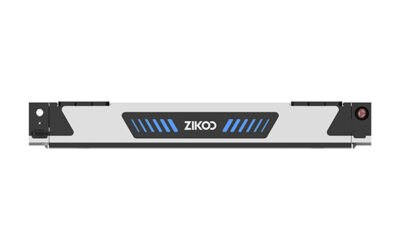
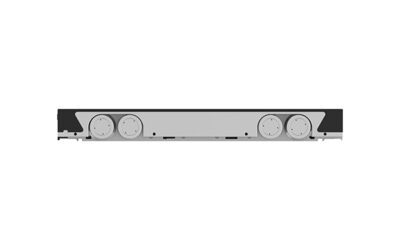
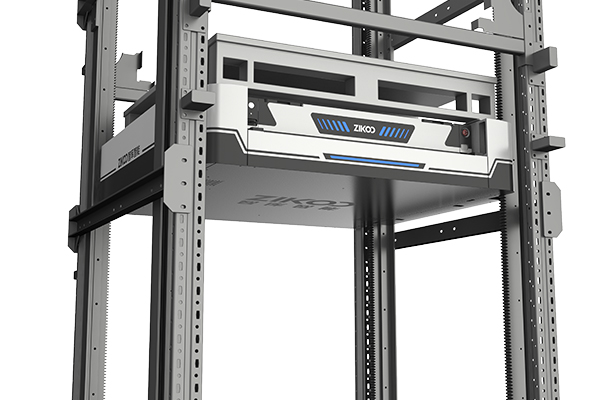
The shuttle’s body dimensions directly control how many storage levels can fit within a given building height. The R-bot four-way shuttle has a body thickness of 125 mm, which is less than the height of most standard pallet stringers. This means the vertical gap between rack tiers can be minimized to nearly the pallet load height, gaining one additional storage level for every 6 to 8 meters of rack elevation compared to a thicker shuttle design. Pallet width compatibility is even more critical: using a European-standard shuttle (972 mm width) for 1100 mm square pallets adds unnecessary lane width that wastes floor space. Our product line includes purpose-built models for 1200×800-1000 mm, 1016×1219 mm, and 1100×1100 mm pallets, each with a chassis width that exactly matches the intended lane width.
| Model | Pallet Size | Shuttle Dimensions (L×W×H) | Rated Load |
|---|---|---|---|
| R1200B (Standard) | 1200×800-1000 mm | 1000×972×125 mm | 1200 kg |
| R1200A (American) | 1016×1219 mm | 1192×840×125 mm | 1200 kg |
| R1500J (Japanese) | 1100×1100 mm | 1192×900×125 mm | 1500 kg |
| R2000B (Heavy-duty) | 1400 mm special pallet | 1250×1300×150 mm | 2000 kg |
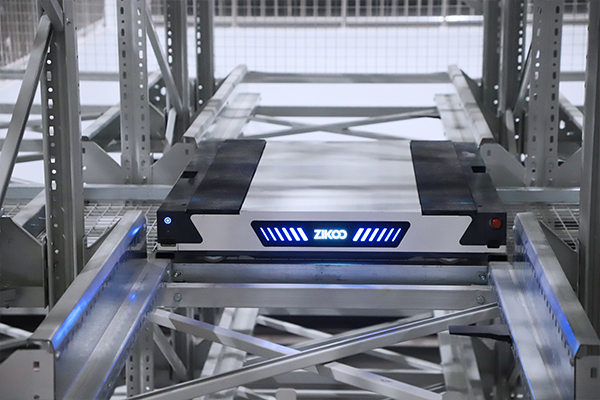
Load capacity adds another layer. Heavier pallets require stronger rack beams and columns, which often reduces the number of beam levels per bay. If your average pallet weight is 800 kg but you have 20% of loads exceeding 1200 kg, you may need to derate the entire rack structure, effectively losing storage levels. Matching the shuttle model to the actual weight distribution avoids this hidden capacity drain. If your warehouse uses mixed pallet sizes or irregular weight profiles, send your pallet dimensions and weight range to [email protected] for a precise storage level calculation.
Software Slotting: The Hidden Layer of Shuttle Utilization
Physical rack density is one part of the equation. How the warehouse management software (WMS) and warehouse control system (WCS) assign inventory slots determines whether that dense racking stays full or develops voids. PTP Smart Warehouse Software uses dynamic slotting algorithms that reshuffle inventory based on demand velocity, SKU affinity, and expiration dates. Without this, you get what I call the “post-it syndrome”: pallets get dropped into the first available slot, resulting in a checkerboard of empty spaces that cannot be consolidated. I have watched a system with ostensibly 5,000 pallet positions hold only 4,200 pallets because the slotting logic was static.
Smart software integration is the link between hardware density and operational fill rate. <Six-Way Shuttle: The Dual-Engine Solution for High-Density and High-Throughput> explains how shuttle and lift coordination via WCS keeps storage lanes full and throughput high simultaneously.
Dynamic slotting also adapts to seasonal demand shifts. During peak season, fast-moving SKUs are automatically moved to the front positions of lanes nearest the input/output point, while slow movers are pushed deeper. This rebalancing can reclaim 8-15% of usable pallet positions within the same physical rack structure, which is essentially free capacity gained through software alone.
Industry-Specific Shuttle Engineering for Cold Chain and New Energy
Cold storage warehouses impose a utilization penalty that generic shuttle specifications ignore. Standard lithium batteries in low-temperature environments deliver reduced runtime, sometimes falling to 4 hours instead of the rated 8, which forces more frequent charge cycles and lowers effective throughput. For a -25°C frozen warehouse, we deploy a dedicated low-temperature lithium battery pack that maintains a full 8-hour shift because the electrolyte chemistry is tailored to the temperature range. The shuttle’s printed circuit board assembly (PCBA) also receives a humid-environment conformal coating to prevent condensation-induced faults that would otherwise stop operation mid-shift. In a pharmaceutical cold chain project I worked on, where the temperature fluctuated between -18°C and 2°C, the standard battery clocked out after 5 hours; the cold-weather configuration kept shuttles running the entire 8-hour shift, preserving the design-day throughput.
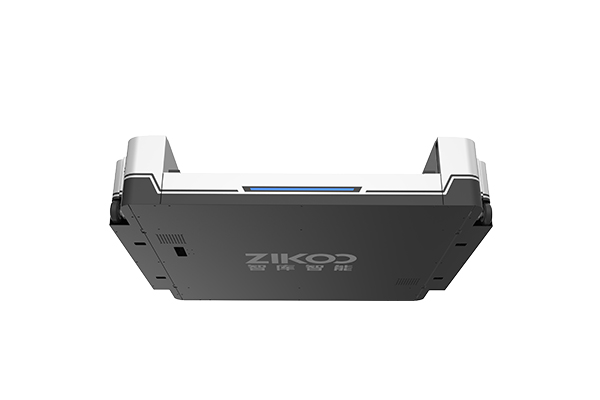
For new energy battery manufacturing, the challenge is metal contamination rather than temperature. Copper, zinc, or nickel particles from shuttle components can contaminate sensitive production environments. Our shuttle for new energy applications eliminates those metals entirely—using stainless steel frames with blackening treatment and all-rubber buffer wheels—so that the storage system can sit inside a clean production bay without isolation walls. This removes the need for separate warehouse space, effectively increasing the facility’s useful storage volume by integrating storage into production floor areas that would otherwise remain empty.
Implementing Shuttle Systems for Sustained Utilization Gains
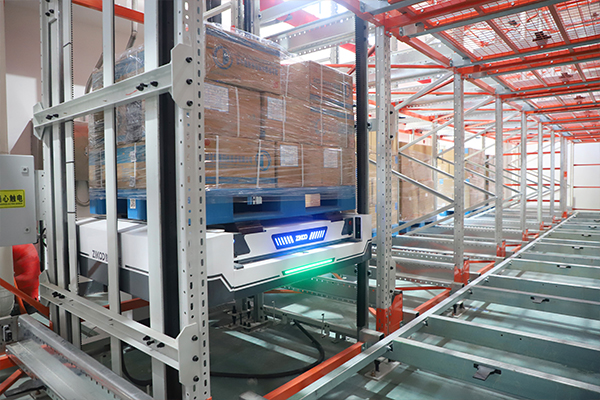
A shuttle system delivers its density numbers immediately at install, but the operational utilization increases gradually as software learns usage patterns and operators grow comfortable with the interface. During a manufacturing line-side storage project, we retrofitted a manual rack building by bringing in shuttle lanes to one section at a time over three months, never pausing daily shipments. The initial storage density was 35% above the original racks, but after six months of the slotting logic adapting to production pull rates, the system was reliably holding 50% more pallets in the same physical volume.
Phased implementation also uncovers hidden layout constraints early, such as loading dock door alignment and material flow bottlenecks, that get patched before full commissioning. When you can address these without interrupting operations, the final utilization number is stronger because the shuttle footprint fits the actual material flow instead of an idealized CAD drawing. For a tailored utilization model based on your facility’s exact dimensions and pallet data, reach out to our engineering team at [email protected] or call (+86)-19941778955. We will map out the pallet positions and throughput a four-way shuttle system can produce in your specific operation.
Common Questions About Shuttle Utilization From Engineering Teams
What is a realistic storage density improvement to expect?
Most facilities moving from standard pallet racking see a 30-50% increase in pallet positions. For sites already using narrow-aisle racking, the improvement is typically 20-35%. The final number depends heavily on ceiling height, pallet size uniformity, and required throughput. A building with a clear ceiling height of 12 meters and uniform pallet sizes will outperform a 7-meter facility with mixed pallet types.
Does battery life influence how many pallets I can store?
Indirectly, yes. If shuttles spend too much time charging, lane operations slow down, which can reduce the effective number of pallet moves per hour and force storage lane designs to be shallower to maintain throughput, sacrificing some density. Selecting a shuttle with continuous runtime that matches your shift pattern avoids this trade-off.
Can a four-way shuttle system handle mixed pallet sizes without losing density?
Mixed sizes can be managed, but density will be best if each lane serves a single pallet type. Mixing sizes in a lane wastes width. The better approach is to group lanes by pallet profile and assign a shuttle model appropriately. Our heavy-duty large pallet model, for example, handles 1400 mm pallets that a standard shuttle cannot, so you don’t lose those storage opportunities.
How long until the system reaches its peak utilization?
Physical density is achieved at the end of commissioning. However, the slotting software usually needs several product demand cycles to fine-tune placement. Expect the system to reach steady-state utilization within 4 to 8 weeks of normal operation.
What if my warehouse ceiling is relatively low?
Even with a 6-8 meter clear height, the 125 mm shuttle body enables more beam levels than a forklift or thicker shuttle would allow. I have seen sites gain 20-25% pallet positions in low-ceiling buildings purely by compacting the vertical clearance. Submit your building cross-section to [email protected] and we can verify the level count your space can support.
If you’re interested, check out these related articles:
Six-Way Shuttle: The Smart Warehousing Tool for Cost Reduction and Efficiency
PTP Intelligent Warehousing Platform: Building a Flexible and Smart Logistics Ecosystem
PTP Intelligent Warehouse Software Empowers Enterprises for Smart Upgrades
Six-Way Shuttle Powers Dense Storage: Breaking Space Limitations