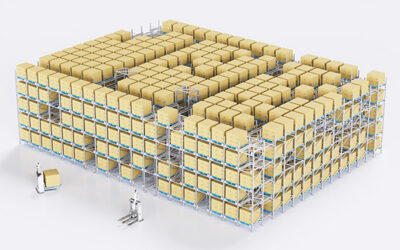
Automated order picking process design starts with a clear rule set for how orders become pallet movements, not with robot selection. In dense pallet storage, the most common failure is treating the picking floor, shuttle system, and WMS as separate projects instead of one material flow. Zikoo Smart Technology has worked through this across manufacturing, cold chain, new energy, and third-party logistics operations. The starting point is to lock the order data, pallet profile, and exception logic before any equipment list. This article explains the process design sequence, robot selection criteria, software integration points, and the checks that separate a stable launch from a fragile one.
Process Mapping Before Equipment Selection
Process mapping comes before equipment selection because the order profile decides the movement pattern. A warehouse shipping 400 pallets per day in full-pallet multiples needs different logic from one shipping 15,000 split-case lines in the same shift. We ask teams to capture three data sets first: daily order lines by single line and multi line, pallet velocity by SKU, and the peak window outbound volume. Without those numbers, any automation concept is a guess.
Then we map the physical chain from goods receipt, palletizing, storage, picking, order assembly, to dispatch. Automated order picking process design fails when a team maps only the picking step and ignores how returns, bulk replenishment, or failed order lines reenter the flow. In our system design work, exception handling often consumes more engineering time than the standard movement logic. That exception flow should be written before the equipment list is fixed.
Automated Order Picking Process Architecture
The core loop is straightforward. WMS releases a wave of orders, WES splits them into stock movements, and WCS or RCS sends those movements to the correct robot. A fully automated order picking process still needs a human exception station, but the routine flow should require no manual decision. We design the link from order line to pallet task as a sequence that can be paused and replayed. A single bad barcode should not stop the whole wave.
From WMS order to shuttle task
The WMS holds order priority and inventory allocation. The WES converts those orders into movements: bring pallet A to picking station 3, return residual pallet to reserve storage, and stage the completed pallet at outbound dock 1. The RCS handles robot-level assignments, including which R-bot picks the pallet, which H-bot performs vertical transfer, and which station receives the pallet. We insist on a closed task lifecycle from release, pickup, transport, confirmation, to completion. Open tasks without timeout look harmless in demos and cause material-flow deadlock in production.
Workstation design for pallet and case picking
At the station, the operator follows a screen prompt rather than memory. For mixed pallet and split-case picking, we use the U-bot + AMR narrow aisle picking system. Its documented performance is at least 300 picks per hour and at least 80 pallets per hour inbound and outbound. The workstation count follows from order lines and the required service time. We do not let the robot vendor fix the workstation count before the order profile is analyzed.
Order picking logic that looks clean in simulation breaks at the handoff between WMS orders and shuttle task dispatch. <Software-Driven Hardware: [Six-Way Shuttle](https://www.zikooint.com/solution/r-bot-h-bot-six-way-shuttle-dense-storage-system) Maximizes Warehouse Efficiency> covers how software-driven dispatch keeps the R-bot and H-bot synchronized when order sequences change mid-shift, which is exactly the failure point conventional picking designs underestimate.
Robot and ASRS Selection Criteria
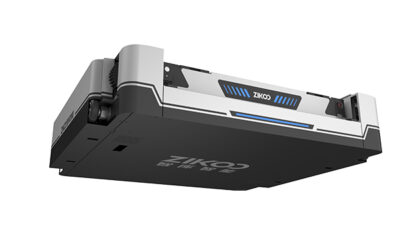
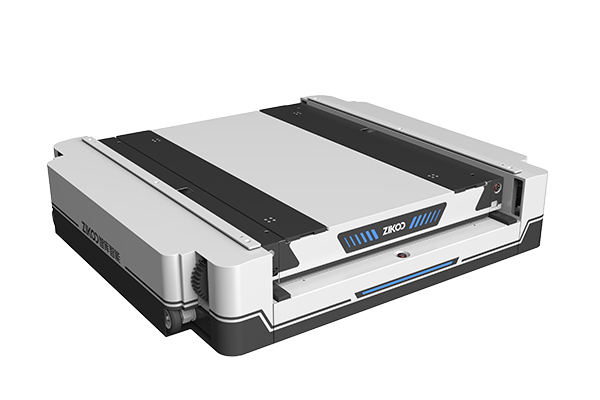
Automated order picking process design turns on four hardware decisions: storage density, vertical transfer, workstation access, and pallet type. We use the R-bot Four-way Shuttle where dense pallet storage is the primary constraint. Its body height is 125 mm and rated loads range from 1200 kg to 2000 kg depending on pallet standard. The H-bot vertical shuttle positions loads within plus or minus 1 mm and carries up to 1800 kg. The U-bot omnidirectional stacker robot works in aisles as narrow as 2100 mm with lifting heights up to 8000 mm.
| Operating requirement | Equipment choice | Relevant specification |
|---|---|---|
| Dense pallet storage | R-bot Four-way Shuttle | 125 mm body height, 1.2 to 2.0 t rated load |
| Vertical transfer in high racks | H-bot | 1800 kg load, plus or minus 1 mm positioning |
| Narrow aisle storage up to 8 m | U-bot | 2100 mm minimum aisle, 1000 kg load |
| Mixed pallet and split-case picking | U-bot + AMR | 300 or more picks per hour, 80 or more pallets per hour |
The selection sequence should start with pallet standards, warehouse clear height, temperature range, and required recovery time. If a cold store operates at minus 25 degrees Celsius, the battery and charging design have to be specified before the shuttle model. The R-bot cold chain execution uses a low-temperature lithium battery and delivers 6 to 8 hours of continuous operation. If the operation handles 1400 mm pallets, the R2000B model carries that size. These details are why quotations without a site survey cannot be compared.
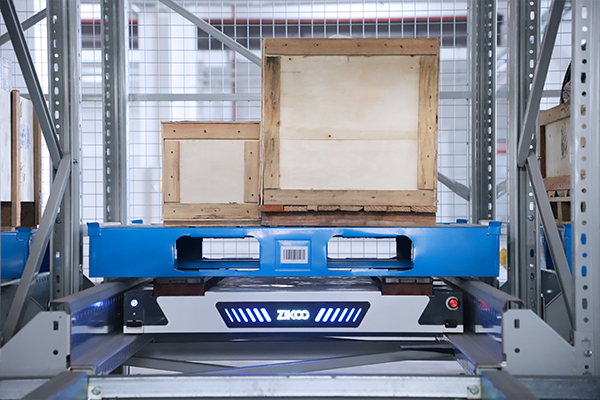
When comparing shuttle suppliers, the technical variables are easier to evaluate than project delivery consistency. <Looking for Reliable Four-Way Shuttle Manufacturers? Choose Zikoo Robotics> covers the production, inspection, and delivery evidence buying teams should request before accepting a quote, and why low-price shuttle suppliers often fail on repeatable positioning accuracy.
Automated order picking process design reaches a decision point when the SKU mix crosses from full-pallet into split-case picking. If your operation has more than 10,000 SKUs or expects more than 300 picks per hour at the workstation, the batch logic and shuttle task priority need to be confirmed before the layout is fixed. Send your SKU profile, pallet dimensions, and daily order lines to [email protected] and we will run the configuration check against those numbers.
Software Integration and Exception Logic
Software decides whether a clean layout becomes a stable operation. We group the software into four functions: WMS for inventory and order rules, WES for order waving and resource orchestration, WCS for station and conveyor control, and RCS for robot task dispatch. The RCS translates each movement into a robot route while handling blockage, battery level, and task timeout.
Exception logic needs the same detail as normal flow. A pallet may be missing from the expected location. An order may be cancelled after the shuttle has already picked it. A barcode may be unreadable. We define the recovery action for each event before commissioning. If that action is to stop and call a supervisor, the system is not fully automatic. A more useful test is to run a simulated day with one out of every twenty order lines intentionally failed and measure how much operator intervention remains.
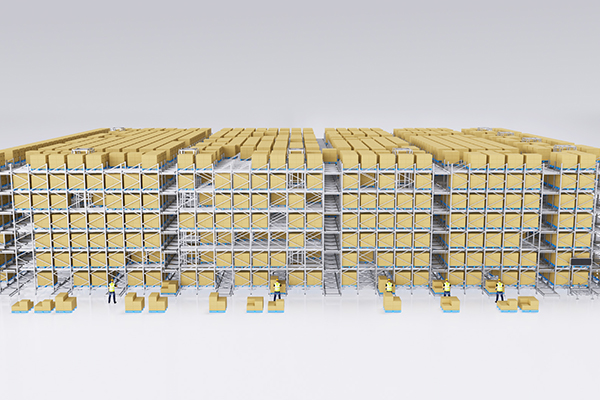
Automated picking depends on clear interfaces between WMS, WES, WCS, and RCS. <PTP [Intelligent Warehousing](https://www.zikooint.com/asrs-automated-storage-and-retrieval-system-solutions) Platform: Building a Flexible and Smart Logistics Ecosystem> covers how PTP Smart Warehouse Software coordinates multi-robot task allocation, inventory locking, and exception recovery during demand peaks, so the order picking flow does not collapse when the wave changes.
Final Inquiry Points for Your Automated Order Picking Process
Most automated order picking projects stall after quotation because the order data, pallet profile, and exception flow have not been turned into a testable control sequence. A cleaner path is to submit the current WMS order file structure, pallet dimensions, cold storage temperature range, and daily inbound and outbound volumes before layout approval. Send those numbers to [email protected] or call (+86)-19941778955. We will use them to confirm whether a four-way shuttle, U-bot plus AMR, or six-way shuttle architecture fits your flow and your rack.
Before we accept any scope, we also check the building constraints: clear height, floor flatness, column spacing, and dock configuration. Those numbers, together with your order profile, tell us more than a general request for quotation. The earlier those data arrive, the less time is spent on redesign.
Common Questions About Automated Order Picking
What is the minimum order volume that justifies an automated order picking process?
There is no universal volume threshold, but the clearest trigger is when manual picking labor and order error cost exceed the annual cost of the automation. For a dense pallet warehouse shipping at least 40 to 60 pallets per day in high rack storage, a four-way shuttle system usually becomes easier to justify. For a mixed pallet and split-case operation running 10,000 SKUs, we look at workstation throughput of 300 or more picks per hour. Volume matters less than whether the operation runs repeated waves and enough hours to use the equipment.
Can we automate picking in an existing warehouse with low ceiling height?
A low ceiling does not automatically rule out automation, but it does change the equipment choice. If clear height is under 6 meters, a high-bay R-bot plus H-bot layout may be over-engineered, while a U-bot with its 2100 mm aisle width and 4500 mm lifting height may still work. We first measure available clear height, beam level, column grid, and floor load. In existing buildings, the most realistic automated order picking process may use an upper storage and lower picking layout. The layout comes from the building dimensions, not from a standard drawing.
How long does it take to launch a fully automated order picking process?
In projects we deliver, the schedule usually splits into three stages: two to four weeks for order data and layout confirmation, eight to twelve weeks for manufacturing and software configuration, and four to eight weeks for installation and commissioning. A smaller single-shuttle system may be faster. A multi-robot six-way layout in cold storage takes longer. The controlling variable is not robot delivery. It is whether the WMS interfaces, pallet data, and exception flow are ready at the start. We fix the test scenarios before site installation begins.
What causes order picking automation failures after launch?
After launch, most failures come from three sources: dirty order data, unplanned SKU changes, and exception flows that require a supervisor decision. If the WMS releases duplicate order lines, the WES locks inventory and the RCS keeps creating tasks that cannot close. If pallet dimensions change without updating the master data, the shuttle may reject the load. The fix is a closed loop between warehouse operations, WMS configuration, and robot limits. We test a bad barcode, a missing pallet, and a cancelled order before launch so the system recovers without stopping the wave. If your program mixes full-pallet and split-case picking in the same shift, share your order profile, pallet dimensions, and temperature range with [email protected] and we will confirm the right shuttle and workstation configuration before you sign off on the layout.
If you’re interested, check out these related articles:
PTP Intelligent Warehousing Platform: Building a Flexible and Smart Logistics Ecosystem
Six-Way Shuttle Empowers 3PL Providers to Build Next-Generation Smart Logistics Hubs
Six-Way Shuttle: The Ultimate Warehousing Solution for Cost Reduction and Efficiency