Modern warehousing runs on tight margins. Space costs money, fulfillment speed determines customer satisfaction, and labor expenses keep climbing. Traditional storage methods struggle to keep pace with these pressures. Four way shuttle systems represent a practical response to these challenges, offering measurable improvements in how warehouses store and move goods.
How Four Way Shuttle Systems Change Space Utilization
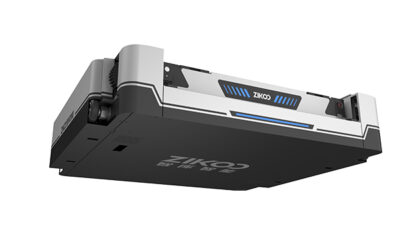
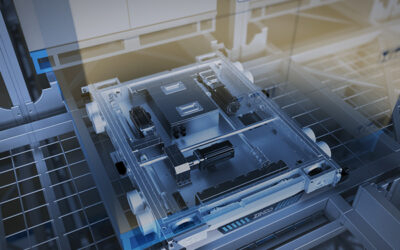
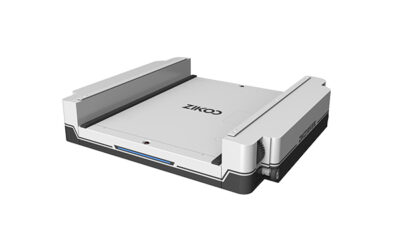
Four way shuttle systems approach storage differently than conventional methods. Instead of optimizing floor space alone, they maximize cubic utilization throughout the vertical storage envelope. The R-bot Four-way Shuttle was built specifically for dense storage applications. At just 125 mm thick, it fits into tighter racking configurations than bulkier alternatives. This compact profile means warehouses can store more inventory without expanding their footprint.
Modular Architecture Supports Phased Growth
The modular nature of four way shuttle systems makes them practical for businesses that need flexibility. Storage capacity can expand in stages as inventory requirements change. The R-bot supports multi-shuttle collaborative operation, meaning additional units integrate smoothly into existing installations. This phased approach keeps initial capital investment manageable while leaving room for future expansion. Warehouses avoid the trap of overbuilding capacity they may not need for years.
Dynamic Aisle Management Reduces Wasted Space
Dynamic aisle allocation sets these systems apart from fixed storage configurations. The R-bot’s four-directional movement capability means it can reach any storage position within its operating zone. This flexibility eliminates dead zones that plague traditional layouts. Storage density improves because the system adapts to varying product dimensions rather than forcing products into predetermined slots.
Faster Order Fulfillment Through Automated Movement
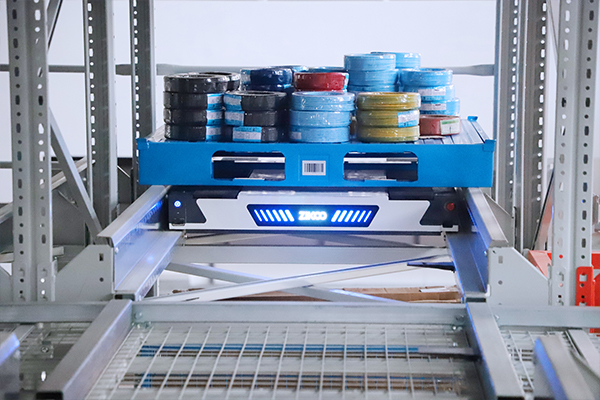
Space optimization tells only part of the story. Four way shuttle systems also accelerate how quickly orders move from storage to shipping. The R-bot handles goods autonomously, transferring pallets between storage locations and picking stations without waiting for manual intervention. Pick rates increase while order cycle times shrink.
Goods to Person Integration Cuts Travel Time
Pairing four way shuttles with goods-to-person workflows amplifies picking efficiency. Rather than sending workers into aisles to retrieve items, the system brings products directly to stationary operators. The R-bot works well in pallet-to-person configurations. Combined with the H-bot Vertical Bidirectional Shuttle, it creates a six-way shuttle system capable of both horizontal and vertical movement. This three-dimensional approach keeps goods flowing efficiently through the storage network.
The article “Six-Way Shuttle Drives Warehouse Upgrades: Building an Intelligent Automatic 3D Warehouse” covers how these components work together in greater detail.
Lower Operating Costs and Reduced Labor Requirements
Deploying a four-way shuttle system affects the cost structure of warehouse operations. Automated handling reduces reliance on manual labor, cutting wage and benefit expenses over time. The R-bot operates continuously in environments that would be difficult or unpleasant for human workers, including cold chain food storage facilities. Precise automated handling also means less product damage compared to manual methods.
Energy consumption deserves attention too. The R-bot runs on lithium batteries that provide 7-8 hours of continuous operation per charge. This efficiency compares favorably against traditional material handling equipment and contributes to reasonable automation ROI calculations.
Real Time Inventory Visibility and Analytics
Four way shuttle systems generate useful data as a byproduct of their operation. Every pallet movement gets tracked, creating accurate real-time inventory records. The PTP Smart Warehouse Software integrates with the R-bot to monitor stock levels and provide analytical tools for warehouse managers.
This visibility extends throughout the supply chain. Managers can see exactly where inventory sits at any moment, supporting better demand forecasting and stock placement decisions. The data helps warehouses respond to market shifts rather than reacting after problems develop.
Moving Forward with Shuttle Technology
Adopting four way pallet shuttle technology changes what warehouses can accomplish with their existing space and workforce. These systems deliver measurable improvements in storage density, fulfillment speed, operating costs, and inventory accuracy. The R-bot Four-way Shuttle demonstrates what current automation technology can achieve in practical warehouse environments. For operations looking to stay competitive, this technology offers a path toward sustainable efficiency gains.
Work with Zikoo Smart Technology on Your Warehouse Automation
Zikoo Smart Technology Co., Ltd. builds the R-bot Four Way Shuttle for warehouses ready to improve their operations. Our pallet-to-person robotics and PTP Smart Warehouse Software address the specific challenges facing modern distribution facilities. Reach out for a conversation about your warehouse requirements and what automation might accomplish for your operation.
Email: [email protected]
Phone: (+86)-19941778955
Frequently Asked Questions About Four Way Shuttles
What are the key benefits of a four way shuttle system for warehouse efficiency?
Four way shuttle systems improve warehouse operations in several measurable ways. High-density storage configurations reduce the physical space needed for a given inventory volume. Automated movement increases throughput and shortens order fulfillment cycles. Labor costs decrease as manual handling requirements drop, and inventory accuracy improves through systematic tracking of all pallet movements.
How does a four way shuttle compare to other warehouse automation solutions?
The R-bot and similar four way shuttle systems offer movement flexibility that conventional racking and some AGV configurations cannot match. Four-directional travel enables dynamic aisle allocation and better space utilization across varying product sizes. Integration with vertical transport equipment like the H-bot creates a six-way shuttle system that handles three-dimensional storage networks more effectively than horizontal-only alternatives.
What factors should be considered when implementing a four way shuttle system?
Implementation planning should account for current warehouse layout, existing and projected inventory volumes, and target throughput rates. A detailed assessment helps determine the right number and configuration of R-bot shuttles for specific operational requirements. Integration with existing WMS/WES software needs attention during planning, and ROI projections should reflect realistic operational assumptions.