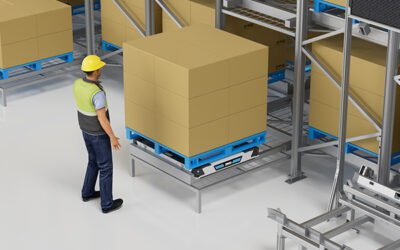
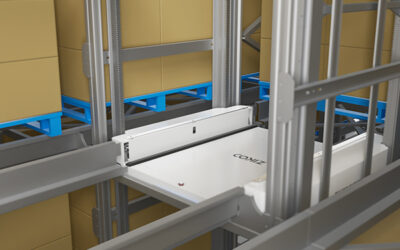
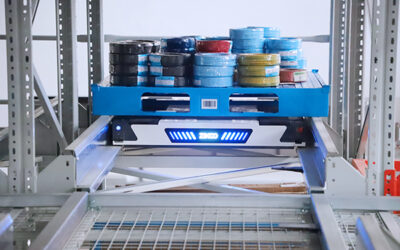
A pallet four-way shuttle system nearly always costs more upfront than a manual warehouse, but the comparison that matters is per-pallet cost over five to seven years, and on that metric, a properly specified system consistently undercuts manual operations once daily throughput passes 50 pallets. What most specs and quotes do not reveal is how labor, space, and maintenance interact across different facility scales—and that is where the real cost story unfolds. Drawing on system design experience across cold chain, pharmaceutical, and manufacturing projects, this article unpacks the full cost picture: capital outlay, ongoing operational line items, and the often-overlooked efficiency multipliers that flip the math.
What Are the Upfront Costs of a Four-Way Shuttle System vs a Manual Warehouse?
The initial investment difference is stark. A manual warehouse requires racking, forklifts, and basic warehouse management software—commonly $15 to $30 per square foot in a new build, with forklifts adding roughly $25,000 to $40,000 per unit. A four-way shuttle system adds the shuttle robots, vertical lifts, conveying equipment, and an integrated software stack (WMS, WES, WCS, RCS). A complete system for a 20,000-square-foot facility handling 1,200 pallet positions can range from $400,000 to $800,000 depending on throughput requirements, number of shuttles, and customization.
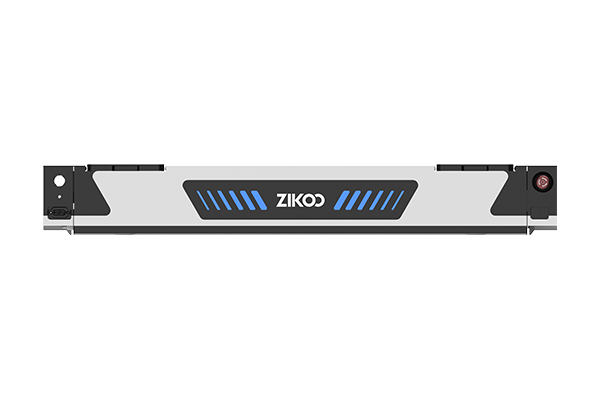
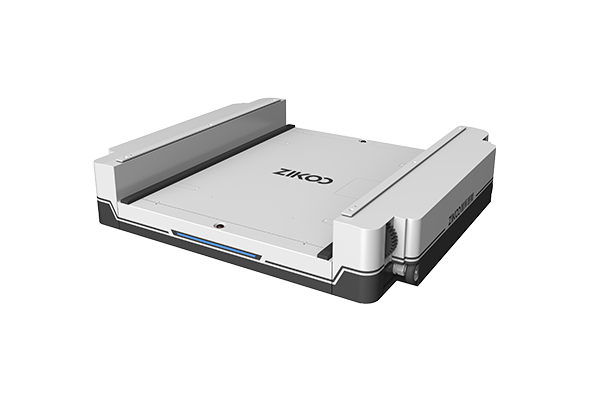
What makes the spread so wide is the specification granularity. A standard R-bot four-way shuttle, with a 1,200 kg load and 125 mm body thickness, operates at 1.6 m/s empty, but the number of shuttles per aisle directly drives cost. A six-aisle configuration with two shuttles per level and H-bot vertical lifts changes the price significantly from a smaller deployment. It is not uncommon for hardware to represent only 55% of total project cost. The rest comes from software licensing, integration with existing ERP, safety systems, and on-site commissioning. Manual warehouses rarely factor in these layers, which is why a square-foot quote comparison is misleading.
How Do Operational Costs Compare? Labor, Maintenance, and Energy
Operational cost is where the four-way shuttle system recovers ground. In manual operations, a warehouse of this scale typically runs with six to ten forklift operators per shift, plus pickers, checkers, and supervisory staff. At $35,000 to $50,000 fully-loaded per operator annually in North American or European markets, total labor for two shifts easily reaches $400,000 to $700,000 per year. A shuttle system reduces forklift operator count to one or two—primarily for inbound/outbound staging—and replaces most manual picking with system-directed task execution. In projects we have commissioned, labor reductions of 60% to 70% are typical.
How Much Labor Can a Four-Way Shuttle System Save?
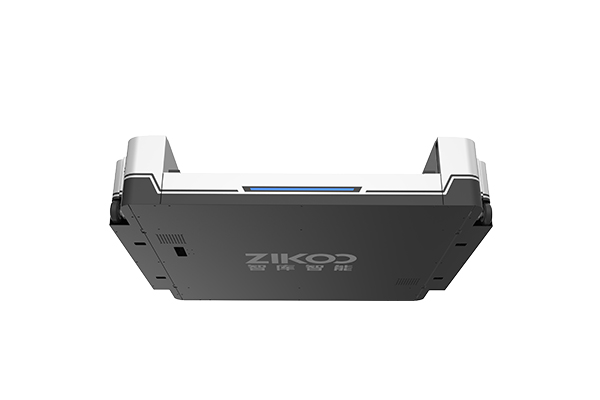
The savings are not just headcount. The software handles task allocation, travel path optimization, and real-time inventory synchronization, eliminating the wasted motion and forklift idle time common in manual warehouses. For a 1,200-pallet-position facility, total annual labor cost after automation frequently drops by $250,000 to $400,000. Maintenance costs must be accounted for: a manual fleet of six forklifts runs roughly $12,000 to $18,000 per year in service, tires, and battery replacement. R-bot shuttles use lithium batteries rated for 8-hour continuous operation and have far fewer mechanical wear points. Annual maintenance contracts for shuttle fleets typically run 3% to 5% of system hardware cost. Energy consumption is another misunderstood line. A shuttle system’s total power draw is often less than the combined charging and lighting demands of a busy manual warehouse because the system operates with high-density storage and low peak motor loads.
What Are the Hidden Costs of a Four-Way Shuttle System?
A few costs show up after go-live that procurement teams should price in from the start. Software updates and WCS configuration changes for SKU profile shifts can require annual engineering support; budgeting $15,000 to $25,000 per year avoids surprises. The facility itself may need a power supply upgrade to handle multiple fast-charging stations, and floor flatness tolerances (typically ±3 mm over 2 meters) are tighter than manual warehouse standards, so slab grinding or a new epoxy coating can add $3 to $5 per square foot. Our team addresses these during the pre-sales audit so the capital budget is complete from day one.
How Much More Efficient Is a Four-Way Shuttle System in Space and Throughput?
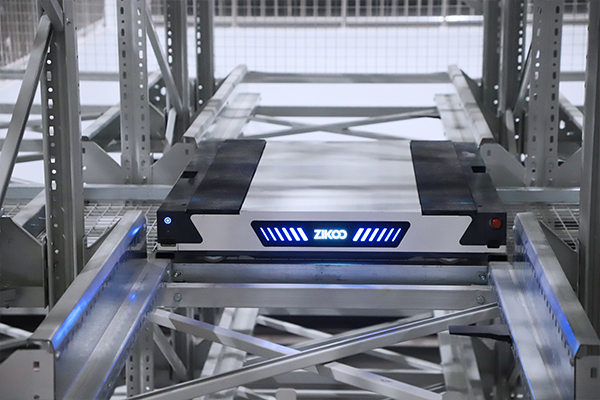
A conventional manual warehouse with counterbalance forklifts requires 12- to 14-foot aisles and often stores pallets two to three high. A four-way shuttle system compresses those aisles to just over the pallet width—the R-bot body is 125 mm tall and navigates racks at 1.2 m/s loaded—and routinely stores pallets five to seven high. The result is 50% to 80% more pallet positions in the same footprint. For a 20,000-square-foot building, that can mean moving from 2,000 pallet positions to over 3,500. In one pharma facility we engineered, shifting from racking to dense shuttle storage increased capacity by 72% without expanding the building, eliminating a planned satellite warehouse that would have cost $1.2 million in lease and build-out.
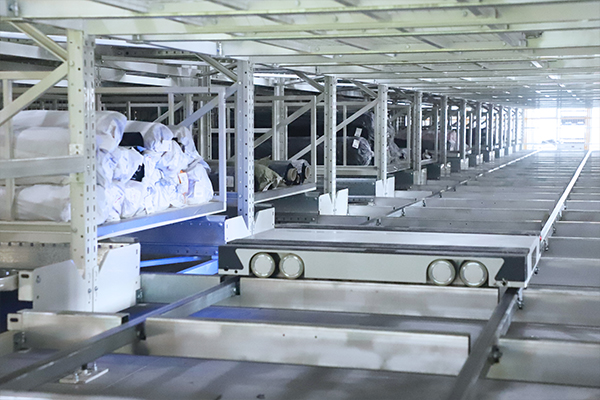
Throughput rises not just from speed but from concurrency. Multiple shuttles operate simultaneously across levels, and the H-bot vertical lifts handle pallet elevation changes so shuttles never leave their plane. The system sustains 40 to 60 dual cycles per hour per aisle, compared to 15 to 20 pallet moves per hour from a forklift in a manual setup. The labor to achieve that throughput, as noted, is a fraction of the manual equivalent.
When Does a Four-Way Shuttle System Pay for Itself? ROI and Payback
The break-even point typically arrives in two to four years, driven by the labor differential. For a $550,000 system replacing six operators at a $45,000 fully-loaded annual cost, the labor savings alone outweigh the amortized capital cost from year two onward. Add avoided building expansion, lower damage rates (shuttles handle pallets with 2 mm positioning repeatability, virtually eliminating rack strikes and dropped loads), and higher inventory accuracy—our WMS implementations regularly reach 99.8%—and the payback often compresses. The exact number depends on the local cost of labor and the system configuration, but at the daily pallet throughputs we see in most manufacturing and 3PL projects, the per-pallet cost settles well below $1.80 versus $3.50 to $5.00 in a manual warehouse after year three.
If your operation currently runs a single shift with fewer than 30 pallet moves per day, the upfront capital may be harder to justify immediately, but scalability changes the calculation. A shuttle system can increase throughput by adding shuttles and one more lift without restructuring the rack, something manual operations cannot match.
What Should You Consider Before Implementing a Four-Way Shuttle System?
A successful deployment starts with an honest assessment of current pallet profiles, SKU velocity, and future growth. We review pallet dimensions, weight distribution, and cold chain requirements if applicable—the R-bot’s cold chain version operates at -25°C with a dedicated lithium battery and coated PCBA for humidity protection, which must be specified before order. Software integration accounts for 20% to 30% of project timeline; our PTP Smart Warehouse platform delivers WMS, WES, WCS, and RCS in a unified stack, but if you run a legacy ERP, the interface development phase benefits from early vendor involvement. Budget 12 to 18 weeks from final design approval to full operational handover for a standard system, with an additional 4 to 6 weeks if the facility requires floor remediation.
Choosing a partner with full project delivery—including structural analysis, installation supervision, and after-sales support—prevents gaps that hurt uptime. Ask potential suppliers to provide a detailed cost breakdown that separates hardware, software, installation, and training so you can evaluate total ownership cost accurately.
Getting a Cost Comparison That Reflects Your Operation
The real question is not whether a four-way shuttle system is more expensive than a manual warehouse in absolute dollars; it is whether the per-pallet cost over your planned operating horizon makes the investment the cheaper option. If you are moving more than 50 pallets per day, the answer is usually yes. The variation lies in how well the system is specified for your rack footprint, pallet profiles, throughput, and growth plan. A quotation built without these details will miss the mark, and a manual warehouse cost analysis that ignores labor turnover, forklift damage, and square-footage creep will be just as incomplete. Send your facility layout and throughput requirements to [email protected] or call (+86)-19941778955, and we will prepare a line-item cost comparison calibrated to your operation—not a generic brochure figure.
Common Questions About Warehouse Automation Cost and Suitability
How long does it actually take to see the full cost benefit?
Most of our projects reach steady-state efficiency three to five months after go-live. The first month involves operator training and system fine-tuning, so labor savings ramp up. By month six, we typically see labor cost reductions of 60% to 70% and inventory accuracy above 99.5%, at which point the full ROI trajectory engages.
What is the biggest mistake procurement teams make when comparing costs?
The most common misstep is comparing equipment price tags without modeling the operation across shifts. A system that costs $100,000 more in hardware but eliminates an entire shift can save $200,000 per year in labor—and that quickly dominates the capital difference. Always run a three-year total cost model that includes labor, energy, maintenance, and inventory write-offs.
Is a four-way shuttle system suitable for cold storage?
Yes, provided the shuttles are purpose-built for low temperature. The R-bot cold chain variant uses a low-temperature lithium battery, operates continuously at -25°C, and incorporates protective coatings for high-humidity environments. For frozen food and pharmaceutical cold chain sites, we have deployed systems that maintain 60 pallet moves per aisle per hour at full low temperature without derating performance.
Can the system be expanded later if my business grows?
A properly designed four-way shuttle system is inherently modular. You can add shuttles to existing levels, extend racking in a linear direction, and install additional H-bot lifts to boost vertical throughput without re-engineering the core software. We typically reserve aisle extensions and shuttle capacity headroom in the original design so that future growth doubles the system capacity with incremental cost rather than replacement cost.
What after-sales costs should I expect after the warranty period?
Annual maintenance contracts for our shuttle systems average 3% to 4% of hardware value and cover preventive maintenance, software updates, and remote diagnostics. Lithium battery replacement cycles run four to five years under normal operation. These costs are predictable and can be built into the per-pallet operating calculation from the procurement stage. Share your pallet data and operational profile; we will provide a five-year cost forecast that includes all service line items.
If you’re interested, check out these related articles:
PTP Intelligent Warehouse Software Empowers Enterprises for Smart Upgrades
Smart Storage Revolution: Comprehensive Overview of Four-Way Shuttle Systems for Automatic 3D Warehouses