Small and medium-sized enterprises face a familiar bind: order volumes climb, warehouse footprints stay fixed, and manual processes that worked three years ago now create bottlenecks at every shift change. Four-way shuttle systems offer one path out of that bind. These automated storage and retrieval systems move palletized inventory both horizontally and vertically through dense racking structures, compressing what used to require sprawling floor space into tighter vertical configurations. For SMEs weighing whether to automate, the question is less about whether shuttles work and more about whether the operational profile justifies the capital outlay.
When Four-Way Shuttles Fit an SME Operation
The decision to install a four-way shuttle system depends on how well the technology matches the warehouse’s actual constraints. SMEs typically run into three overlapping problems: labor costs that rise faster than margins can absorb, order fulfillment windows that keep shrinking, and physical space that cannot expand without relocating. Four-way shuttles address all three simultaneously. They reduce the number of operators needed for repetitive putaway and retrieval tasks, accelerate cycle times by eliminating manual travel through aisles, and stack inventory vertically in configurations that manual operations cannot safely access.
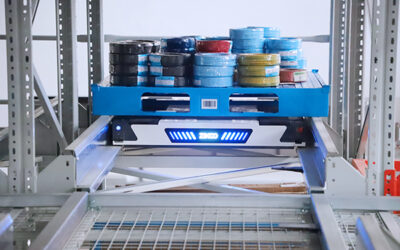
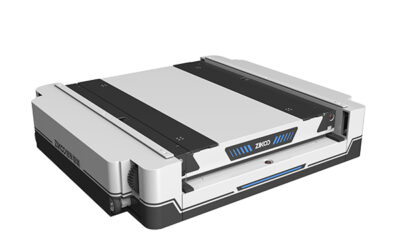
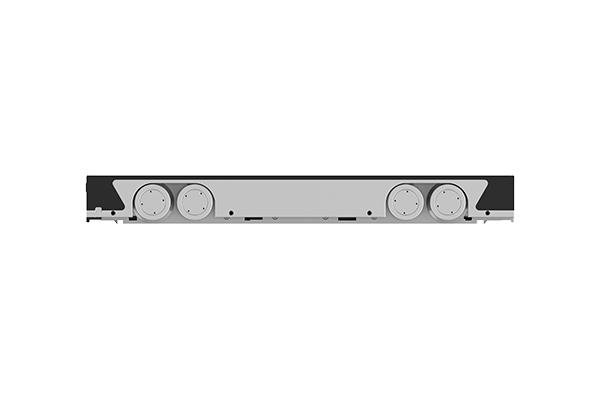
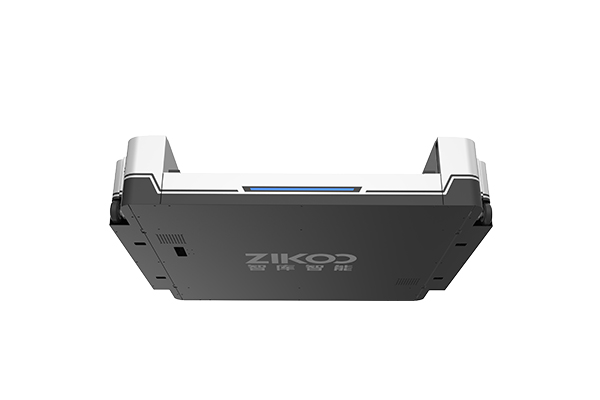
The R-bot Four-Way Shuttle, for example, uses a slim body profile that allows it to operate in narrower aisle widths than conventional forklifts require. Its multi-shuttle collaborative operation means several units can work the same racking structure without collision, scaling throughput as demand increases. The system handles standard palletized goods across a range of weights, making it applicable to distributors, manufacturers holding buffer stock, and e-commerce fulfillment centers alike.
Not every SME will see the same return. Warehouses with low SKU counts and stable, predictable order volumes may find simpler automation sufficient. The strongest fit occurs where throughput variability is high, labor availability is unreliable, and the cost of expanding physical space exceeds the cost of building upward within the existing footprint.
| Aspect | Benefits for SMEs | Considerations for SMEs |
|---|---|---|
| Space | Maximizes storage density, utilizes vertical space. | Requires initial rack system investment. |
| Labor | Reduces manual handling, lowers labor costs. | Requires skilled personnel for maintenance. |
| Throughput | Accelerates picking and putaway speeds. | System design must match demand peaks. |
| Scalability | Modular design allows for future expansion. | Initial investment can be substantial. |
| Accuracy | Minimizes human error in inventory management. | Data integration with existing systems is key. |
What Four-Way Shuttles Actually Deliver for SME Logistics
The measurable gains from four-way shuttle systems show up in three areas: storage density, throughput velocity, and labor reallocation.
Storage density improvements are often the most visible. By eliminating wide aisles and stacking pallets in configurations that extend to ceiling height, these systems routinely double or triple usable storage capacity within the same building envelope. For an SME paying per square meter in a constrained urban industrial zone, that density gain translates directly into avoided lease costs or deferred relocation.
Throughput velocity increases because the shuttles automate the slowest parts of the picking and putaway cycle. Instead of an operator driving a forklift down an aisle, locating a pallet, retrieving it, and returning to a staging area, the shuttle system executes the same sequence in a fraction of the time. Goods-to-person picking, where the shuttle delivers items directly to a stationary operator, further compresses cycle times and reduces walking distance to near zero.
Labor reallocation follows from the first two gains. Operators who previously spent shifts moving pallets can shift to quality control, packing, or customer service roles that add more value per hour. In markets where warehouse labor is scarce or turnover is high, this reallocation also reduces the operational risk of understaffing during peak periods.
A mid-sized e-commerce distributor I worked with illustrates the pattern. Their warehouse ran at capacity before seasonal peaks even began, and picking errors during high-volume periods were eroding customer satisfaction scores. After installing a Zikoo R-bot Four-Way Shuttle system, they measured a 40% increase in storage density without expanding the building. Picking errors dropped 25%, and order fulfillment speed improved 30% during their busiest quarter. The system absorbed demand spikes that would have previously required temporary labor and overtime.
Zikoo’s PTP Smart Warehouse Software orchestrates these shuttle movements. The software suite integrates Warehouse Management System, Warehouse Execution System, Warehouse Control System, and Robot Control System functionalities into a single platform. The WMS layer manages inventory records and order queues. The WES optimizes task sequencing so shuttles do not idle waiting for instructions. The WCS directs the physical equipment, and the RCS handles the real-time control loops that keep individual shuttles on path. This layered architecture allows the system to scale without requiring a complete software overhaul at each expansion phase.
How SMEs Get Past the Common Automation Hurdles
Three obstacles tend to slow SME adoption of shuttle systems: upfront capital, integration complexity, and maintenance uncertainty. None of these are insurmountable, but each requires deliberate planning.
The capital question is real. Four-way shuttle systems are not inexpensive, and SMEs rarely have the cash reserves that large enterprises can deploy. The practical response is phased implementation. Most modern shuttle systems use modular racking and scalable shuttle fleets, meaning an SME can start with a smaller installation covering the highest-turnover SKUs and expand as cash flow permits. This approach also reduces risk: the initial phase validates performance assumptions before the business commits to a full buildout.
Integration complexity is the second hurdle. A shuttle system that cannot communicate with the existing WMS or ERP creates data silos and manual workarounds that erode the efficiency gains the automation was supposed to deliver. The solution is to specify integration requirements before selecting a vendor. Direct API connections offer the most flexibility but require development resources. Middleware solutions reduce coupling between systems and can accommodate future software changes. Some vendors offer shuttle control as a module within their own WMS, which simplifies data flow but may limit customization. The right choice depends on how much the SME expects its software stack to evolve over the system’s useful life.
Maintenance is the third concern. Automated equipment that sits idle waiting for a technician costs money every hour it is down. SMEs should negotiate service-level agreements that specify response times and parts availability. Equally important is internal training: at least one on-site staff member should understand the system well enough to diagnose common faults and perform routine adjustments without waiting for external support.
How Four-Way Shuttles Connect to Existing SME Systems
Integration determines whether a shuttle system becomes a productivity multiplier or an expensive island of automation surrounded by manual processes. The shuttle’s control software must exchange data with the WMS in real time: receiving pick and putaway commands, reporting task completion, and updating inventory positions as pallets move.
Three integration patterns are common. Direct API connections link the shuttle control system to the WMS through custom-built interfaces. This approach offers the tightest data synchronization and the most flexibility for custom workflows, but it requires development effort and creates dependency on both vendors’ API stability. Middleware solutions insert a translation layer between systems, reducing direct coupling and making it easier to swap out either the shuttle system or the WMS in the future. The tradeoff is added latency and another software layer to maintain. Some shuttle vendors offer their control software as a module within a broader WMS platform, which simplifies data flow but may lock the SME into that vendor’s ecosystem for future upgrades.
| Method | Description | Pros | Cons |
|---|---|---|---|
| Direct API | Custom application programming interface connection. | Real-time data, highly customized. | High development cost, vendor dependency. |
| Middleware | Software layer connecting disparate systems. | Flexible, reduces direct system coupling. | Adds complexity, potential latency. |
| WMS Module | Shuttle system integrated as a WMS feature. | Centralized control, streamlined data. | Limited customization, vendor lock-in. |
The practical advice is to map existing data flows before selecting an integration method. Identify which inventory transactions must be real-time, which can tolerate a few seconds of delay, and which systems downstream depend on accurate position data. That mapping will clarify which integration pattern fits the operation’s actual requirements rather than a generic best practice.
Building a Warehouse That Handles What Comes Next
The case for four-way shuttle systems extends beyond solving today’s capacity crunch. These systems provide a structural hedge against demand volatility. E-commerce order profiles shift seasonally and sometimes weekly. Product mixes evolve as suppliers change and customer preferences drift. A warehouse built around fixed manual processes struggles to absorb these shifts without adding labor or expanding space.
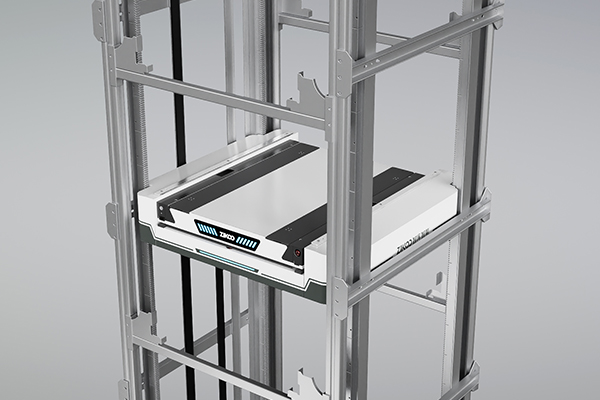
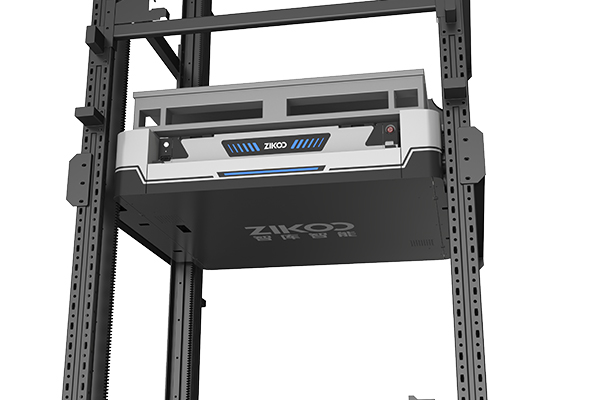
Shuttle systems offer modularity that manual layouts cannot match. Adding shuttles to an existing racking structure increases throughput without reconfiguring the floor plan. Adjusting storage zones to accommodate new product dimensions requires software changes, not physical construction. The R-bot Four-Way Shuttle and H-bot Vertical Bidirectional Shuttle can combine into a six-way shuttle configuration, adding vertical movement flexibility for operations that need to sequence goods across multiple levels before dispatch.
This adaptability matters most for SMEs that expect growth but cannot predict its exact shape. A business that doubles order volume in two years needs a warehouse that can absorb that growth without a second capital project. A business that shifts from B2B distribution to direct-to-consumer fulfillment needs a warehouse that can handle smaller, more frequent picks without redesigning every aisle. Shuttle systems provide that flexibility in a way that fixed infrastructure does not.
Frequently Asked Questions
Are four-way shuttle systems only for large warehouses?
No. The modular design of current four-way shuttle systems makes them viable for SME warehouses with limited floor area. Their strength is vertical density: they stack inventory higher and operate in narrower aisles than manual equipment, so a smaller footprint can hold more goods. The minimum viable installation depends on throughput requirements and SKU count, but systems are available that fit warehouses well below the scale of large distribution centers.
How quickly can an SME see ROI from a shuttle system?
Most SMEs that track the numbers report meaningful returns within one to three years. The timeline depends on labor cost savings, storage density gains, and how much throughput improvement the operation actually captures. Businesses with high labor costs, expensive real estate, or severe seasonal peaks tend to reach payback faster. A detailed financial model that accounts for avoided lease expansion, reduced overtime, and lower error rates will give a more accurate projection than industry averages.
What kind of inventory is best suited for four-way shuttle automation?
High-volume, high-turnover inventory benefits most. E-commerce fulfillment operations with diverse SKU counts and rapid order cycles are a natural fit. Buffer storage in manufacturing, where work-in-progress needs to move quickly between production stages, also works well. Cold chain and other controlled-environment warehouses gain from reduced human exposure to harsh conditions. Low-turnover, long-dwell inventory with infrequent access may not justify the throughput capacity these systems provide.
How much do four-way shuttle systems cost for SMEs?
Costs vary with warehouse size, storage capacity, throughput targets, and integration scope. The initial investment includes racking, shuttles, control software, and installation. Ongoing costs include maintenance, software licensing, and energy. Rather than focusing on sticker price, the more useful question is what the system costs per pallet position per year compared to the current manual operation, including labor, error rates, and space constraints. Vendors can provide detailed quotes once they understand the specific operational parameters.
What are the space requirements for a four-way shuttle system in an SME warehouse?
Four-way shuttle systems require a dedicated racking structure engineered for the shuttle’s dimensions and load capacity. The footprint depends on the number of storage locations, pallet sizes, and ceiling height. Because these systems maximize vertical space and minimize aisle width, they typically require less floor area per pallet position than conventional racking served by forklifts. A site survey will determine whether the existing building can accommodate the racking or whether structural modifications are needed.
If your operation is running into the limits of manual processes and you want to understand how a four-way shuttle system might fit your specific warehouse layout and order profile, contact us at [email protected] or (+86)-19941778955.
If you’re interested, check out these related articles:
Reshaping Warehouse Value: Six-Way Shuttle Leads the Digital Transformation
Smart Cold Chain Era: Six-Way Shuttle System Redefines Storage Efficiency with Maximum Density
Six-Way Shuttle: The Smart Warehousing Tool for Cost Reduction and Efficiency
Six-Way Shuttle: The Ultimate Warehousing Solution for Cost Reduction and Efficiency