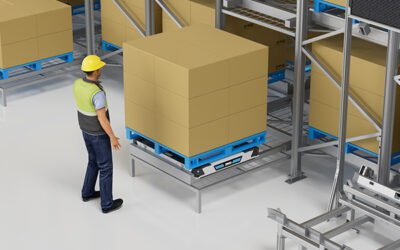
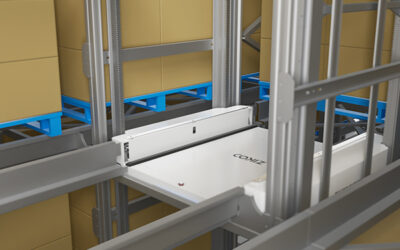
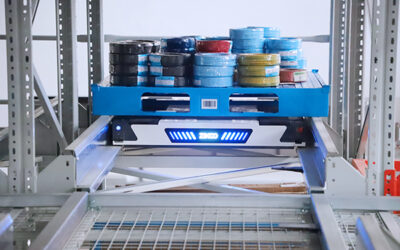
Even in warehouses where forklifts still dominate the aisles, the question surfaces with increasing urgency: is warehouse automation a smart investment, or an expensive bet on technology that might not fit? As a robotics engineer who has spent over a decade designing pallet-to-person systems, I see the same tension in almost every evaluation meeting. The potential gains in density, throughput, and labor independence are real, but they only translate into a positive return when the system is engineered to match the actual material flow, not a PowerPoint simulation. This article breaks down the cost drivers, ROI levers, and risk factors that determine whether pallet storage automation pays off. The conclusion is clear: the investment is worth it when you prioritize system scalability and integration depth over an attractive upfront sticker price.
Pallet Automation Delivers Tangible Value Beyond Labor Savings
Most discussions about warehouse automation start and end with headcount reduction, and that misses the more durable financial advantages. In the pallet-to-person systems we design, three value drivers consistently outweigh labor savings over a 5-to-7‑year lifecycle.
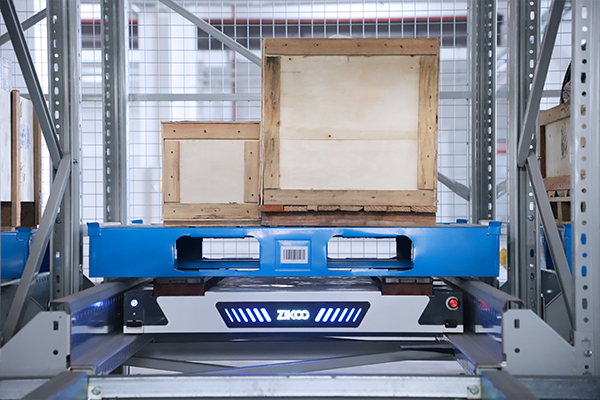
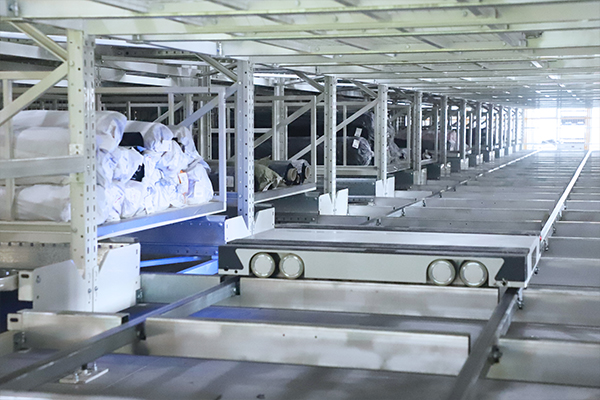
First, floor space utilization. A properly designed four‑way shuttle system, using R‑bot shuttles with a body thickness of just 125 mm running on rails 120 mm deep, can fit 40% more pallet positions into the same building footprint compared to a conventional very‑narrow‑aisle (VNA) rack layout. When land or lease costs in Tier‑1 logistics hubs exceed $15 per square meter per month, the rent avoidance alone often covers the shuttle investment.
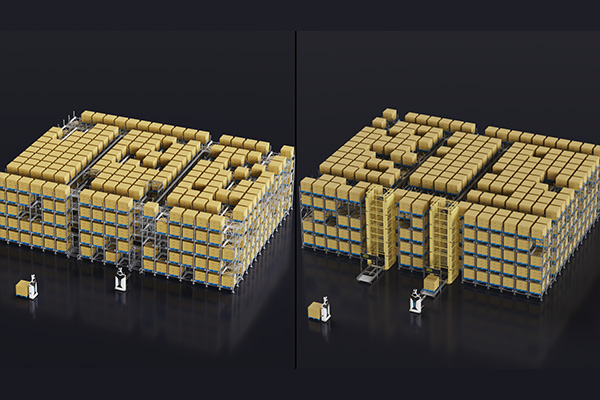
Second, throughput elasticity. With a six‑way configuration that pairs R‑bot shuttles with H‑bot vertical bidirectional elevators, the system routes pallets simultaneously across horizontal and vertical axes without creating choke points at the rack face. One new‑energy site we delivered can ramp from 80 pallets per hour to 140 during quarter‑end peaks without adding equipment—a level of surge capacity that manual fleets simply cannot replicate without significant overtime and temporary labor pools.
Third, product integrity. In pharmaceutical and cold‑chain environments, every manual fork‑lift touch adds a probability of damage. Automated shuttles operating at 1.2 m/s under load with ±1 mm positioning accuracy remove much of that variable, reducing write‑offs and the associated documentation burden.
Total Cost of Ownership Runs Deeper Than the Capital Outlay
The line item that procurement teams fixate on—the system price—usually accounts for roughly 60% of the 10‑year total cost of ownership. The less visible components determine whether the investment truly performs.
Facility readiness is the first hidden cost. Older warehouses often need slab flatness upgrades to meet the ±10 mm floor tolerance that omnidirectional stacker robots like the U‑bot require before they can navigate 2,100 mm‑wide aisles safely. We have seen projects where the civil works bill exceeded the robotics hardware cost because the existing floor was poured with undulations exceeding 30 mm per 5 linear meters. An early geotechnical survey prevents this from becoming a surprise line item.
Software integration carries a similarly under‑budgeted cost. The PTP Smart Warehouse Software platform we use synchronizes WMS order waves with the WCS layer that dispatches shuttles and H‑bot elevators in real time. If the host ERP cannot send the task priorities or inventory attributes that the WCS needs to optimize battery‑swap timing and travel paths, the system defaults to first‑in‑first‑out scheduling, which can reduce overall throughput by 15–20% in high‑SKU environments. Mapping the data handshake before cutting the purchase order avoids a very expensive over‑provisioning of robotics that then underperforms.
The table below illustrates how the cost components stack up across a hypothetical 5,000‑pallet‑position dense storage project over a decade. The figures are drawn from actual project estimates, adjusted for generic industry conditions.
| Cost Component | Approximate Share of 10‑Year TCO | Key Lever for Reduction |
|---|---|---|
| Hardware (shuttles, elevators, rack, rails) | 55‑60% | Standard pallet size, load requirements |
| Facility modification (floor, power, fire system) | 10‑15% | Early slab survey, reuse existing infrastructure |
| Software license and integration | 8‑10% | Pre‑validated API connections, in‑house WMS capability |
| Maintenance contract (parts, labor) | 10‑12% | On‑site spares inventory, remote diagnostics |
| Energy and consumables | 3‑5% | Lithium‑iron‑phosphate battery cycle count, ambient temperature |
Warehouse Automation ROI Requires a Data‑Driven Calculation
Any spreadsheet can project a three‑year payback, but credible ROI analysis for pallet shuttle systems starts by mapping the actual order profile to the system’s design envelope. In our workflow, we feed 12 months of WMS data—every SKU, every pick line, every replenishment—into a dynamic simulation before proposing a layout. What that simulation reveals is that ROI is highly sensitive to two variables that generic calculators ignore.
The first is slotting volatility. When a site running a four‑way shuttle configures the rack to hold 8,000 pallets but must re‑slot 15% of the SKU mix every quarter because of product rotation or seasonality, the WCS rebalancing cycles consume shuttle‑hours. In the worst case, this can reduce effective throughput by 10‑20% that the original ROI model never accounted for. The mitigation is to reserve a buffer of throughput capacity—typically 15% above the baseline demand—from the outset and to schedule re‑slotting during low‑activity windows that the WMS automatically negotiates with the order pool.
The second is order‑profile homogeneity. Businesses with consistent case‑pick patterns generally break even within three to four years. In a cold‑chain project we supported for a frozen food distributor, the combination of single‑shift 6‑hour shuttle battery runs at −25°C and irregular pallet‑pick volumes pushed the payback to the fifth year, but the investment still cleared the client’s 18% IRR hurdle because the alternative—manual operation in freezer aisles—carried a staff turnover cost exceeding 2× the annual maintenance contract. That kind of context does not appear in a simple cost‑per‑pallet‑move formula, yet it is exactly what determines whether the board signs off.
Labor reduction, while important, is frequently over‑discounted in ROI models. A well‑configured pallet shuttle system can cut fork‑lift driver headcount by 60‑70%, but those savings must be offset against the need for a small maintenance team (usually one technician per 20‑30 shuttles) and the cost of upgrading in‑house IT support to manage the WCS database. I have seen companies capture a net labor saving of 50‑55% after accounting for these roles, not the 70‑80% figures initially promised. Setting expectations correctly prevents the perception of under‑delivery later.
Industry Factors Determine When Pallet Automation Pays Off
Not every warehouse profile benefits equally from dense shuttle‑based automation. The decision becomes clearer when you evaluate three operating characteristics against the technology’s sweet spot.
High‑SKU complexity: Pallet systems with more than 5,000 active SKUs demand a WMS‑WCS integration that supports dynamic wave planning across multiple shuttle gangs operating simultaneously. If the IT infrastructure can run that smoothly, the automation layers in flexibility; if not, the throughput degrades as the system spends more time repositioning shuttles between lanes.
Throughput density: A site moving fewer than 170 pallets per hour through the receiving and shipping dock doors will struggle to justify six‑way shuttle deployment purely on throughput grounds. That volume can often be handled with a more modest U‑bot omnidirectional stacker model, lifting to 8 meters in aisles 2.1 meters wide, at a fraction of the per‑position capital cost. Yet even at lower volume, the space‑saving argument can still win: we have deployed a 1,600‑location U‑bot‑plus‑AMR system in a manufacturing site that recovered 30% of its floor area, allowing the plant to bring a previously outsourced sub‑assembly inside the main building and save over $400,000 annually in transport costs. The automation was a secondary enabler; the real payback was a supply‑chain architectural decision.
Temperature‑controlled operations, despite their harsh environment, often shorten the payback period. The R‑bot’s ‑25°C lithium battery, with the special PCBA coating, operates for 6‑8 continuous hours in deep‑freeze environments where human pickers can safely work only 45‑minute rotations. The shuttle effectively doubles the picking window, which compresses the order‑to‑dispatch cycle time. Cold‑storage facilities where time‑defrost labor constraints are the primary bottleneck therefore reach breakeven faster than ambient facilities of similar size.
Managing Risk Prevents Automated Investment Erosion
Automation projects fail most often not because the technology breaks, but because the organizational preparation unfolds too slowly. Three risks appear repeatedly in global project delivery and have straightforward mitigations.
The first is business‑process misalignment during the phased cutover. When the automated storage area goes live while the legacy manual warehouse still operates, inventory accuracy must be maintained across both systems simultaneously. A single missing pallet ID can trigger hours of manual exception handling. The precaution we insist on is a 4‑to‑6‑week parallel‑operation test with a dedicated master‑data team that reconciles every movement between WMS and RCS logs before final handover. The cost is modest—one extra resource for a month—and virtually eliminates the most common cause of stressed go‑lives.
The second is the assumption that shuttle reliability eliminates the need for on‑site engineering support. Even lithium‑iron‑phosphate batteries with 8‑hour cycles require periodic cell‑life diagnostics. We recommend clients keep a critical spares kit—a spare shuttle battery pack and two drive‑wheel assemblies—and train one internal technician to perform the first‑line swap. This ensures that a failed shuttle on a Saturday night does not become a weekend‑long outage. Remote diagnostics via the RCS platform handle the rest.
A third risk that sometimes gets overlooked is power‑outage resilience. Pallet shuttles can brake safely and park on the nearest docking station during a grid outage, but the WCS database must be protected to continue from where it stopped. A small‑footprint UPS specifically for the server rack—not the entire facility—costs roughly $3,000 and ensures that the system does not require a full inventory recount on restart. In 24‑hour manufacturing operations, that single investment frequently pays for itself the first time a thunderstorm cuts power.
Placing these risk‑mitigations on the table during the procurement phase may appear to increase the initial budget, but it actually protects the projected ROI by preventing the startup‑phase throughput dips that would otherwise eat into the calculated savings curve.
Common Questions About Pallet Storage Automation
Is a pallet shuttle system as versatile as a manual forklift fleet?
A pallet shuttle system is designed for repetitive, predictable movement of full or partial pallets in a high‑density configuration, not for ad‑hoc tasks like loading a truck in a remote yard. In a manufacturing warehouse we deployed, the shuttles handled 100% of the raw‑material replenishment and finished‑goods put‑away, while a small counterbalance truck continued to serve the shipping dock. The value of the shuttle was that it decoupled fast‑moving inventory from dock‑dependent labor, not that it replaced every piece of material‑handling equipment.
How much disruption should we expect during installation?
In an existing brownfield warehouse, the rack installation, floor‑grinding, and shuttle commissioning typically require 10–14 weeks with the affected aisles walled off from live operations. We stage the cutover aisle‑by‑aisle and keep a temporary manual storage buffer for inventory that cannot be disrupted. The throughput impact during those weeks is usually 15–25% of normal volume, but a well‑planned cutover schedule that coordinates with seasonal low‑demand periods makes the dip almost invisible to downstream customers.
What distinguishes a system that yields ROI from one that lingers at break‑even?
Beyond the obvious throughput requirements, the systems that generate the strongest return almost always integrate the software layer from day one to run automatic order‑batching and wave‑cut optimization. Without that, the shuttle hardware simply runs at the pace dictated by manual order‑release decisions. In our experience, the gap between a reactive WCS dispatch and a demand‑driven WCS dispatch is between 18% and 25% in annual throughput. If the business case already shows marginal payback, this single capability flips the decision from borderline to clearly positive.
Do four‑way shuttles work in cold‑chain environments with constant condensing humidity?
Yes, with the correct material choices. The R‑bot cold‑chain variant uses stainless‑steel structural frames with blackening treatment and a low‑temperature charging port that prevents condensation from entering the battery enclosure during automatic charging cycles. The PCBA coating is applied to all printed circuit boards, which is essential because standard conformal coating breaks down after repeated freeze‑thaw cycles. Facilities operating below −20°C should also specify silicone‑sealed connectors throughout the power distribution. A humidity‑controlled docking station for battery change‑out, even a small one, further improves long‑term reliability and is worth the minor capital addition.
Will the system still perform if our SKU mix changes substantially in year three?
The physical shuttle fleet can handle almost any pallet configuration that fits within the 1,200 mm × 1,000 mm standard footprint, but a substantial SKU‑mix shift does require re‑evaluating the WMS slot‑optimization algorithm. We typically recommend an annual simulation review as part of the maintenance contract to confirm that the slotting logic remains efficient. If the client’s business evolves into a significantly different order profile—such as moving from full‑pallet‑out to a high‑mix case‑pick operation—the original shuttle system may need to be supplemented with an AMR underpass layer to maintain pick rates. The underlying storage backbone, however, continues to deliver the density benefit that drove the original ROI. If your operations team suspects a pivot in the next 24 months, it is worth mapping that future scenario before finalizing the layout; share your current inventory profile and growth projection with our engineering team at [email protected] to run a sensitivity simulation that accounts for the expected SKU shift.
If you’re interested, check out these related articles:
Six-Way Shuttle Powers Dense Storage: Breaking Space Limitations
Reshaping Warehouse Value: Six-Way Shuttle Leads the Digital Transformation
Stacker Crane vs Four-Way Shuttle: Which Fits Your ASRS Warehouse Best