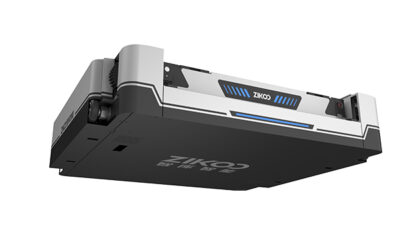
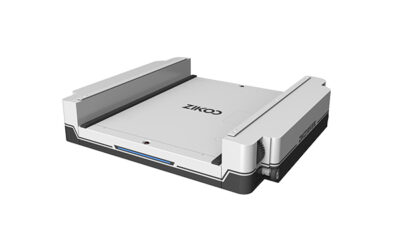
Bringing advanced automation such as four-way shuttles into an existing warehouse management system (WMS) is rarely plug-and-play. From what we’ve seen, success rests on careful planning, a solid technical backbone, and a measured rollout so the operational upside actually shows up. The focus here is on the integration hurdles, the interoperability patterns that hold up in the field, and the path to value with minimal disruption and a clear return.
Addressing Warehouse Automation Integration Challenges
Implementing automated systems such as four-way shuttles into existing warehouse infrastructures often runs into real obstacles. A major one is WMS integration, especially when multiple, mismatched systems are involved. Data synchronization issues appear quickly, since many older WMS platforms lack the interfaces or real-time processing modern robotics expect. The result can be inventory inconsistencies and avoidable delays.
Legacy compatibility adds another layer of difficulty. A lot of WMS solutions in use today were never built to communicate with advanced robotics, which drives the need for custom development or substantial middleware. Complexity and timelines grow. Four-way shuttle deployment issues can also trace back to network limitations, bandwidth shortfalls, or security concerns around data exchange. Any of these can choke the information flow between the shuttle system and the WMS.
Operational disruption during integration is a known risk. Downtime must be kept in check, yet modifications and testing still have to happen. Without a phased plan and disciplined validation, teams can face extended interruptions and financial impact. Tackling these issues upfront sets the stage for a smoother automation journey.
Strategic Solutions for Four Way Shuttle WMS Interoperability
Achieving effective interoperability between four-way shuttles and WMS calls for a deliberate, multi-layered approach. We advocate for WMS integration best practices centered on modular design and open communication standards. API-driven integration is the anchor of our methodology. By developing robust Application Programming Interfaces (APIs) that support real-time data exchange between the shuttle control system and the existing WMS, systems communicate cleanly without heavy changes to the core WMS.
Middleware solutions in warehouse deployments can bridge gaps between older WMS and modern automation. These software layers translate data and commands so different systems can talk and respond reliably. Our PTP Smart Warehouse Software benefits significantly from this modular integration architecture, providing a unified platform that integrates WMS, Warehouse Execution Systems (WES), Warehouse Control Systems (WCS), and Robot Control Systems (RCS). This software suite acts as the central intelligence hub, orchestrating the complex interactions between various automated components.
Our approach emphasizes a structured integration process:
1. Discovery and Planning: Conduct a thorough assessment of existing WMS infrastructure and operational workflows.
2. Data Mapping and Interface Design: Define data exchange formats and develop custom APIs or configure middleware.
3. System Configuration: Configure the four-way shuttle system and PTP Smart Warehouse Software to align with WMS commands.
4. Testing and Validation: Perform rigorous testing, including simulation and live trials, to ensure seamless data flow and operational accuracy.
5. Phased Deployment: Implement the integrated system in stages to minimize disruption and allow for iterative adjustments.
This structured methodology delivers a smooth transition and reliable performance.
| Integration Methodology | Description | Advantages | Disadvantages |
|---|---|---|---|
| API-Driven | Direct communication via standardized interfaces. | Real-time data, high flexibility, future-proof. | Requires API availability in WMS, custom development may be needed. |
| Middleware Solutions | Intermediate software layer translates data between systems. | Bridges legacy system gaps, reduces WMS modification. | Adds complexity, potential latency, additional software to maintain. |
| Direct Database Access | Systems read/write directly to shared database. | High performance for specific tasks, simpler for homogeneous systems. | Security risks, data integrity issues, tight coupling, less scalable. |
| Message Queues | Asynchronous communication via message brokers. | Decoupled systems, high scalability, fault tolerance. | Increased complexity in message handling, potential for message ordering issues. |
For a deeper understanding of how our software drives intelligent warehousing, consider reading 《PTP Intelligent Warehouse Software Empowers Enterprises for Smart Upgrades》.
Maximizing Operational Value from Integrated Shuttle Systems
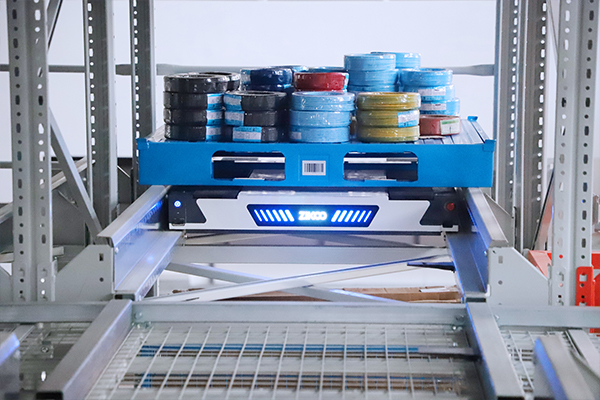
The successful integration of four-way shuttle systems with a WMS unlocks substantial operational value. Warehouse efficiency gains show up through higher storage density and faster retrieval. Our R-bot Four-Way Shuttle, with its slim 125mm body and 1.5-ton capacity, excels in pallet-to-person dense storage scenarios, significantly improving space utilization. That efficiency reduces operating costs and lifts throughput.
Inventory accuracy improvement is another clear benefit. Real-time data synchronization between the automated shuttle system and the WMS keeps tracking precise. Errors fall, stockouts shrink, and inventory management tightens. Better visibility supports sharper demand forecasting and more disciplined stock rotation.
Order fulfillment speed accelerates. Integrated systems enable automated picking and transport, cutting manual touches and processing time. This agility matters for modern supply chains, especially in e-commerce. The scalability warehouse automation provides ensures that operations can adapt to fluctuating demands and future growth without significant infrastructure overhauls.
The return on investment (ROI four-way shuttle) is realized through reduced labor costs, higher efficiency, and better customer satisfaction driven by faster, more accurate fulfillment. The long-term advantages are significant, making these systems a sound strategic investment.
Zikoo Smart Technology Integration Expertise
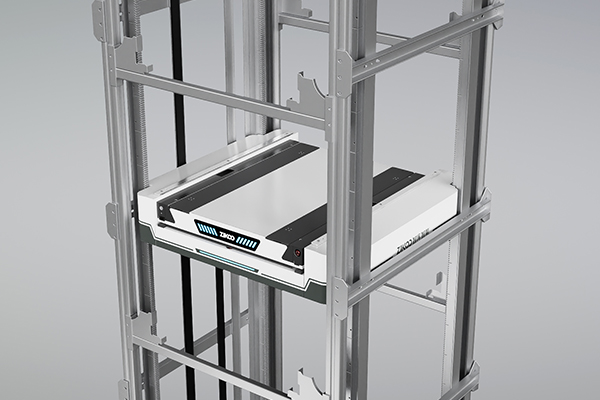
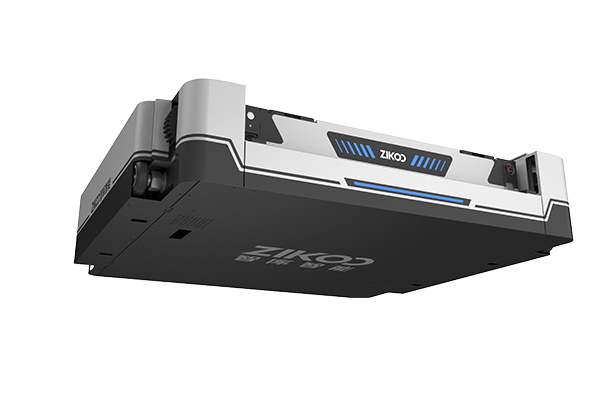
Zikoo Smart Technology stands as a leader in pallet-to-person robotics, offering comprehensive solutions for warehouse automation. Our expertise in integrating advanced robotic systems, such as the R-bot Four-Way Shuttle, with complex warehouse management infrastructures is unparalleled. The R-bot Four-Way Shuttle is designed for dense storage, offering flexible four-way movement and multi-shuttle collaborative operation. When combined with our H-bot Vertical Bidirectional Shuttle, it forms a six-way shuttle system, creating a truly three-dimensional warehousing network.
Our PTP Smart Warehouse Software integration capabilities are central to our offering. This unified platform encompasses WMS, WES, WCS, and RCS functionalities, providing a holistic solution for managing and orchestrating automated storage and retrieval systems. This software ensures seamless communication and coordination between all robotic components and the overarching WMS. We specialize in tailoring integration strategies to fit diverse operational needs, from cold chain storage to manufacturing and e-commerce.
We deliver robust, scalable, and efficient automated storage and retrieval systems (ASRS). Our solutions are designed to optimize space, improve throughput, and enhance inventory accuracy. We work closely with clients to understand their specific challenges and implement integration plans that minimize disruption and maximize operational benefits.
Optimize Your Warehouse Operations with Zikoo
Get more from your warehouse operations with Zikoo Smart Technology’s advanced integration solutions. Our R-bot Four-Way Shuttles and PTP Smart Warehouse Software are engineered for seamless interoperability, driving strong efficiency and scalability. Contact us today to discuss how our experts can tailor a robust integration strategy for your existing warehouse management system. Visit zikoo-int.com or email [email protected] for a personalized consultation, or call us at (+86)-19941778955.
FAQs
What are the essential steps to integrate a four-way shuttle with an existing WMS?
Effective integration of a four-way shuttle into an existing WMS starts with a thorough discovery phase, detailed data mapping, API development for clean communication, rigorous testing, and a phased deployment. Zikoo’s PTP Smart Warehouse Software provides a robust framework for managing these complex interactions. This structured approach reduces risk and preserves operational continuity during the transition.
How does Zikoo’s PTP Smart Warehouse Software facilitate four-way shuttle integration?
Zikoo’s PTP Smart Warehouse Software (WMS/WES/WCS/RCS) acts as a unified control layer. It provides the necessary interfaces and intelligence to orchestrate the R-bot Four-Way Shuttle’s movements, inventory management, and task execution. This ensures real-time data exchange and operational harmony with your existing WMS. The software centralizes control, streamlining complex automation processes.
What data exchange protocols are commonly used for WMS and four-way shuttle integration?
Common data exchange protocols for WMS and four-way shuttle integration include RESTful APIs, SOAP web services, and sometimes direct database connections or message queues. The choice depends on the existing WMS architecture and the required level of real-time interaction and data integrity. We prioritize secure and efficient protocols to ensure reliable communication.
What are the key benefits of integrating a four-way shuttle into a warehouse management system?
Integrating a four-way shuttle with your WMS significantly enhances inventory accuracy, boosts order fulfillment speed, optimizes storage density, and provides greater operational flexibility. This seamless integration leads to substantial improvements in overall warehouse efficiency and a strong return on investment. It turns traditional warehouses into intelligent, agile distribution centers.